

By Anamoly Press Team • July 21, 2026
💡 Technical Review & Accuracy Check by Christopher Armstrong, Founder & Head of R&D
Our team researches and writes the gear guides you love, but every scientific claim and compound specification is personally vetted by our lead engineer to ensure absolute accuracy.
Selecting the right mountain biking footwear means analyzing grip, power transfer, protection, and fit. What to look for in MTB shoes comes down to how specific materials and shoe geometries affect safety and performance on technical trails. The entire decision must center on function-first specs: sole rubber chemistry, closure mechanics, chassis design, and wide-fit toe box geometry that allows natural foot splay.
Explore the Anamoly Labs Technical Footwear Collection
What to look for in mtb shoes: the most important component
The single most critical component in any mountain bike shoe is the sole interface, the direct contact point where your foot transfers energy to the pedal and receives feedback from the trail, and it determines both riding traction and mechanical efficiency. Unlike athletic shoes designed for heel-to-toe gait, a technical MTB shoe is a specialized engineering platform: it must anchor your foot against rotational forces while resisting trail impacts. For flat-pedal riders, the sole must interlock with steel pedal pins; for clipless riders, the cleat pocket must be rigid and stable to prevent slop.
This contact point is not a passive layer of rubber; it is an active damping system that mitigates trail vibrations before they reach your body. If your shoes have a soft, unstable mid-sole, your foot wraps around the pedal under load, causing arch fatigue, micro-slippage, and loss of power transfer during climbs. When researching what to look for in MTB shoes, sole construction is the foundational element; every other feature builds on it.
For a full overview of sole design in context, read our Mountain Bike Shoes for Wide Feet: The Complete Fit and Engineering Guide.
Sole rubber compound: what is the sticky vs durable trade-off?
For flat-pedal riders, the rubber compound defines the shoe's performance. And engineers must balance a sensitive physical trade-off: sticky rubber gives maximum friction but wears quickly under pedal pins. While hard rubber lasts longer but slips on damp rocks and roots. Mass-market brands use generic rubber that hardens in cold weather and slips when wet, creating a dangerous riding experience on slick rock faces or creek crossings. To solve this, our engineers spent two years developing the Hero Rubber (MTB-G Compound), a specialized high-friction elastomer that maintains elasticity across extreme temperature ranges.
Rubber grip depends on hysteresis (the rubber's ability to deform around a surface irregularity and absorb energy). Under damp conditions, standard outsoles lose traction as water becomes a lubricant, but the MTB-G Compound is chemically engineered to become grippier when wet. Maintaining a static friction coefficient that can hold on a 60-degree incline of smooth, wet granite. When evaluating sole rubber. Contrast cheap outsoles with a compound built for steel pin tear resistance: Hero Rubber field-tests to over 18 months of hard enduro and downhill riding without developing deep gouges.
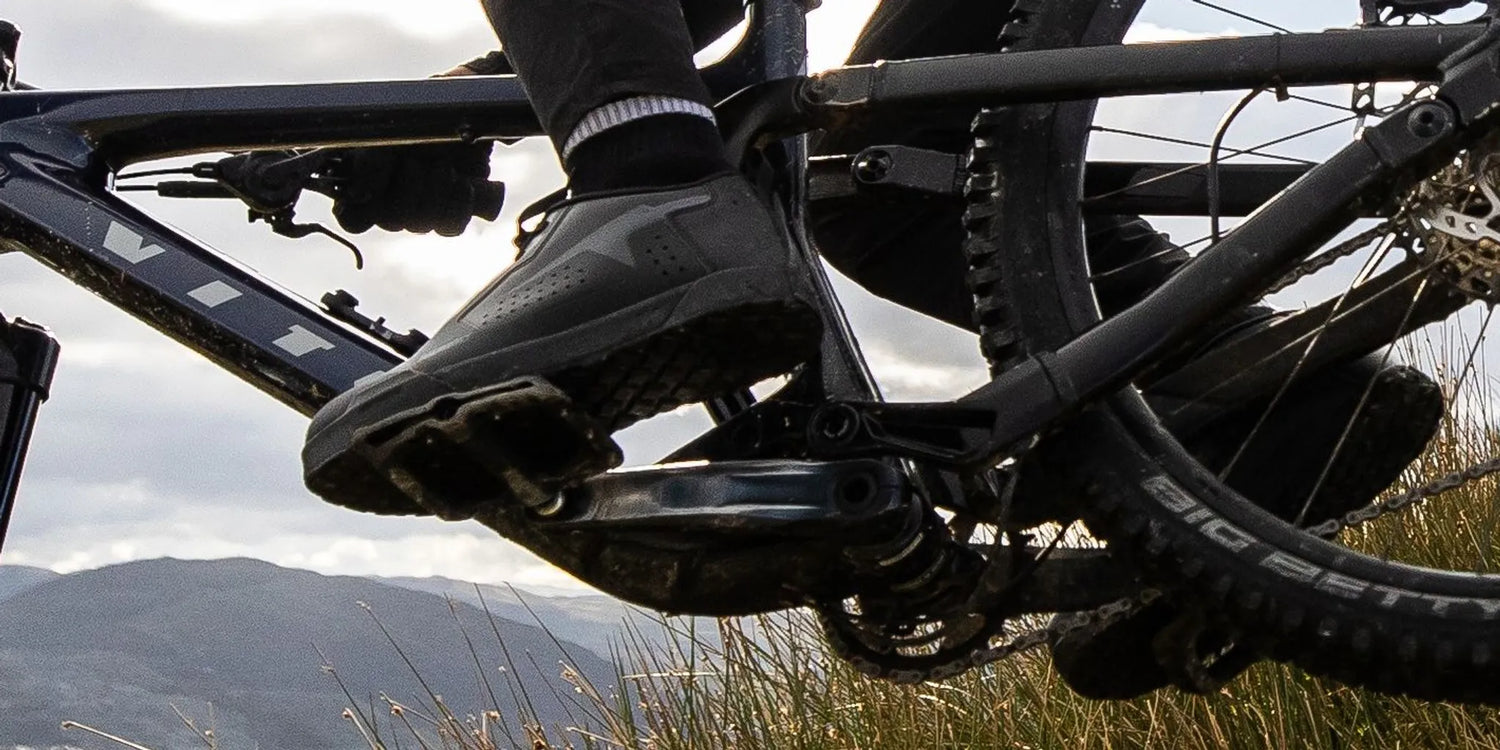
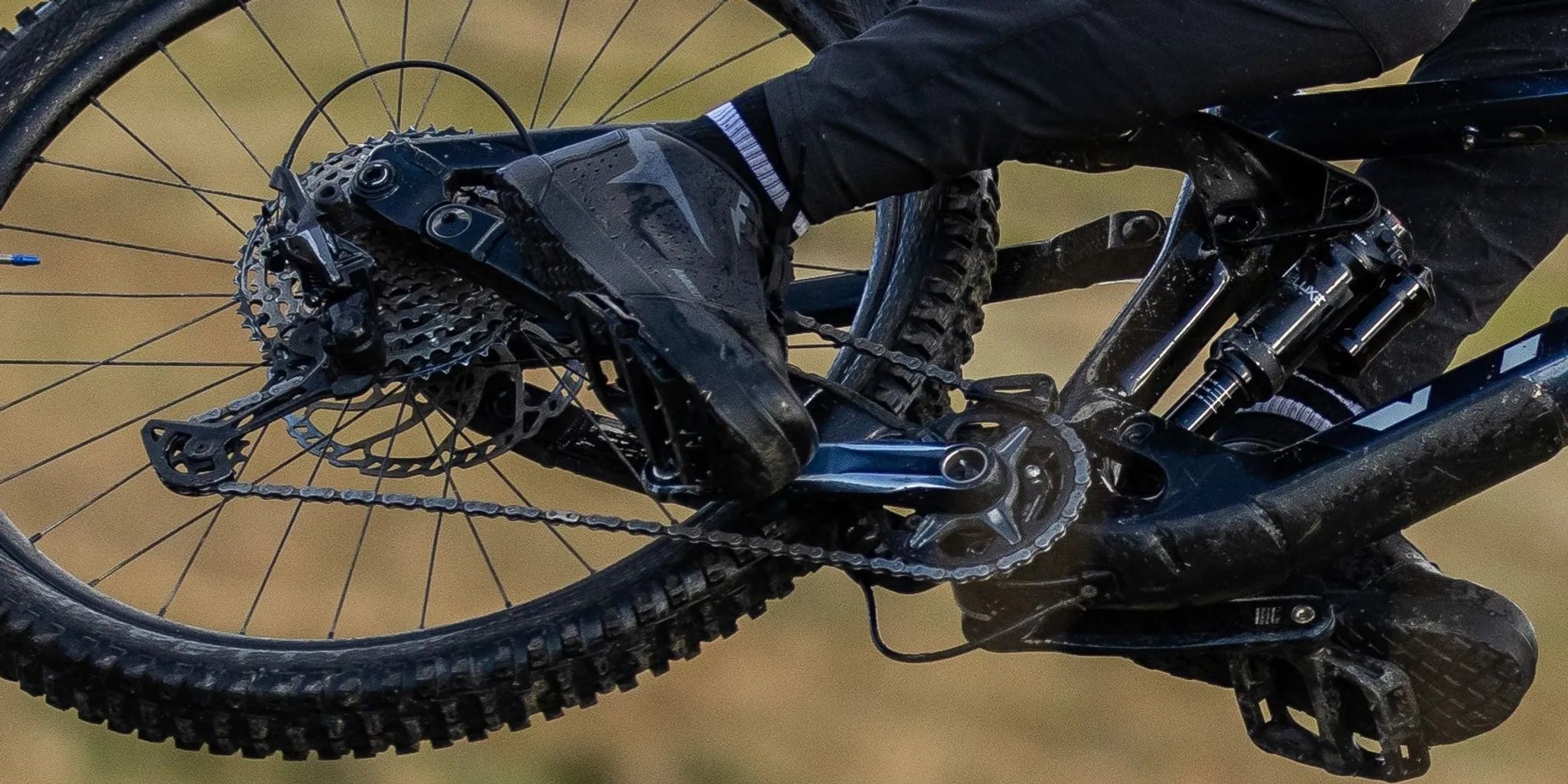
Tread pattern design also matters: traditional flat-pedal shoes have a shallow, uniform dot pattern across the sole—which provides a flat pedal interface, but lacks biting edges for off-bike traction. Our DualTraction outsole system solves this with a flat, pin-gripping center pattern and deep lugs on the heel and toe, these bite into loose dirt. Mud, and wet rock during hike-a-bike sections.
Discover the Material Science Behind Hero Rubber
What closure system is best for trail riding?
The best sole compound is useless if your foot slides inside the shoe; the closure system determines heel retention. Midfoot stability, and lateral control, and each mechanism has specific trade-offs to evaluate based on terrain and riding style.
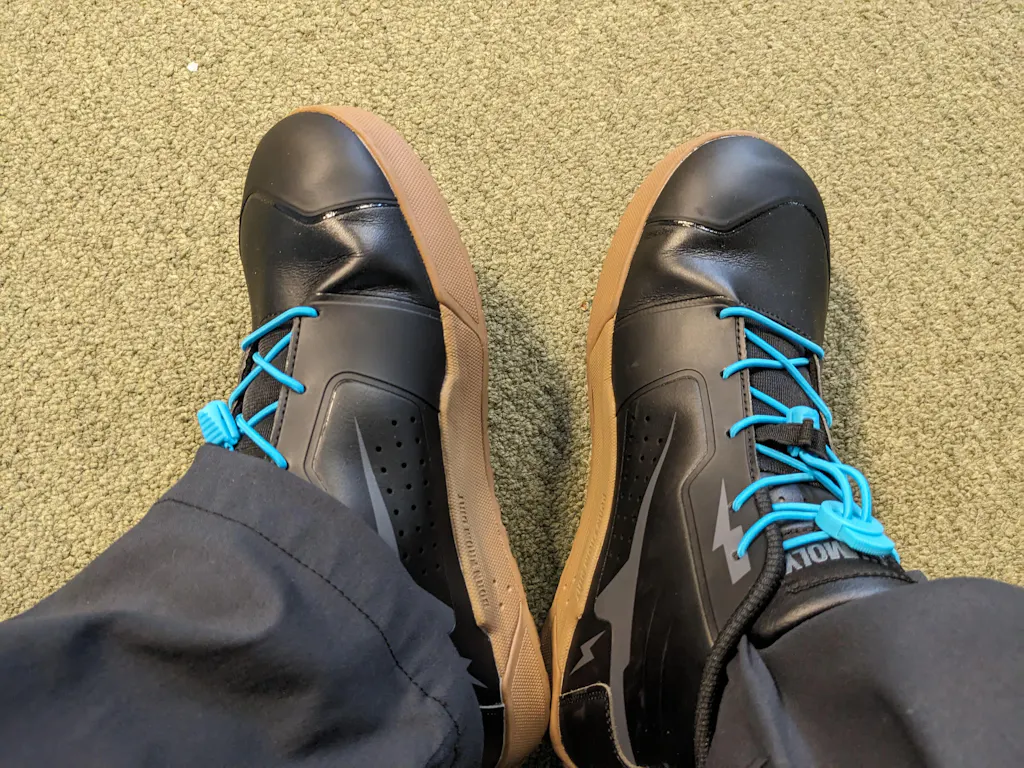
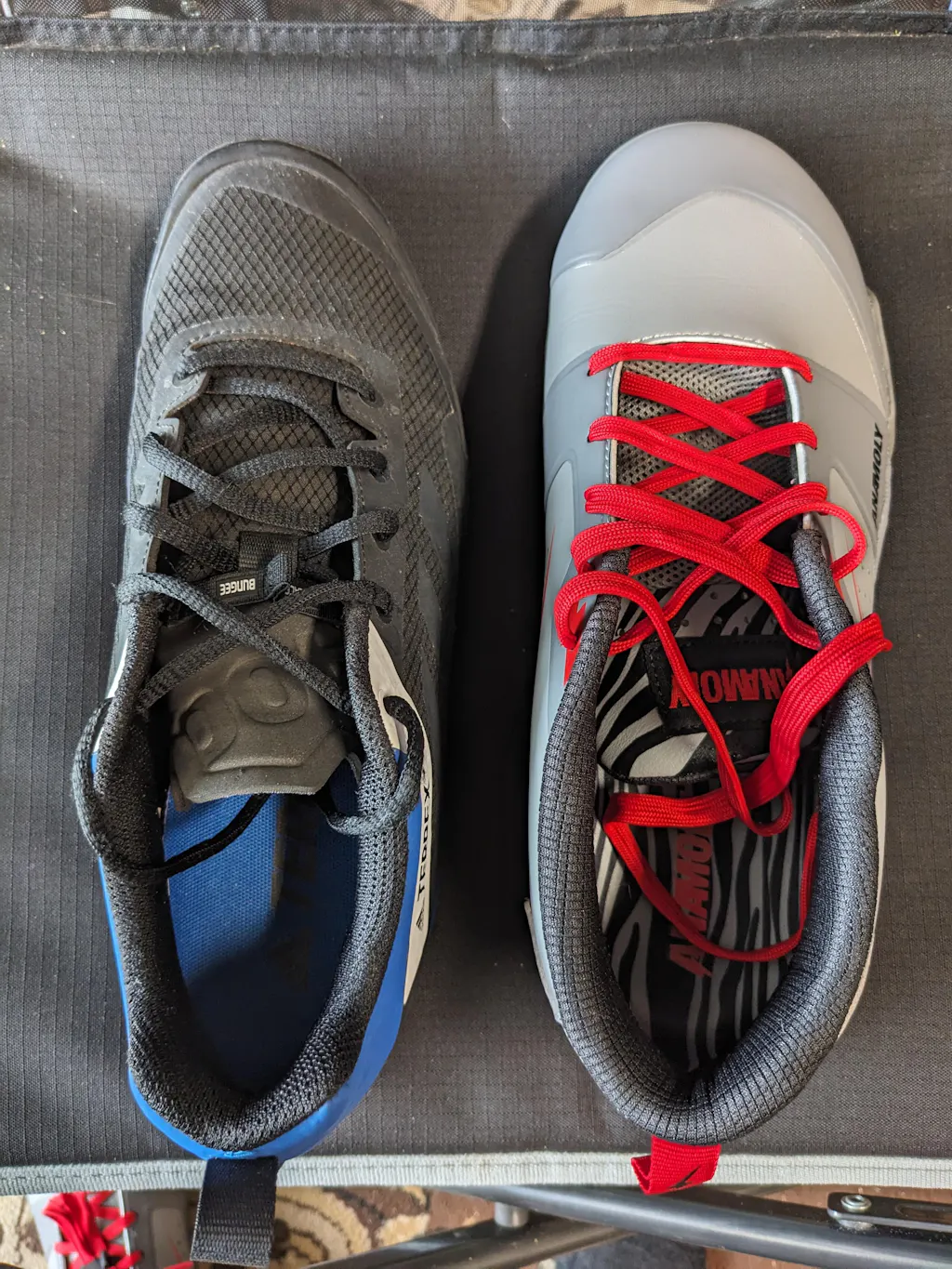
- Traditional Laces: They offer granular, customized tension across the entire instep, allowing riders to adjust fit to their unique foot volume. Laces are virtually indestructible on the trail, but they cannot be adjusted on the fly, and loose laces can catch in the chainring, a real hazard. Technical shoes need an integrated elastic keeper to lock loose ends away.
- Rotational Dial Systems (BOA): Dials give fast, micro-adjustable tension with one hand (even while riding), and they do not absorb water or mud. The trade-off is mechanical complexity: if a dial strikes a rock on an enduro run, it can shatter. Uppers need protective recessed bumpers to deflect rock strikes.
- Velcro Straps: These are lightweight, mud-resistant, and simple to use, but they lack granular tension adjustment, and dirt buildup in the hooks reduces holding power over time. They work best as secondary ankle straps to lock the heel down.
For demanding trail use. A hybrid system works best, combining laces with an ankle strap (or a dual-dial setup that separates forefoot and ankle tension) delivers the most secure interface. Keeping your foot centered over the pedal spindle during hard lateral cuts.
| Closure Type | Best For | Trade-Off |
|---|---|---|
| Traditional Laces | Custom fit, durability, price | No on-the-fly adjustment, chainring hazard |
| BOA Dial | Quick micro-adjust, wet conditions | Can shatter on rock strike, harder to field-repair |
| Velcro Strap | Muddy conditions, secondary heel lock | Loses grip with dirt buildup, no fine tension |
| Hybrid (Lace + Strap) | All-around technical trail riding | Slightly more weight, more parts to maintain |
Sole stiffness rating: what the numbers mean for pedaling and walking
Shoe stiffness uses a relative scale from 1 to 12. Which measures how much the sole resists flexing under load, and this creates a direct conflict between pedaling efficiency and walkability. A highly rigid sole (10-12 in cross-country race shoes) maximizes power transfer: every watt goes directly to the pedal without energy loss through sole flexion. But these ultra-stiff carbon soles are dangerous for walking; they prevent your foot from rolling naturally. Your heel slips out, and the result is an unstable gait on uneven terrain.
Researchers have studied how stiffness affects walking mechanics on steep slopes (Zullo et al. 2022): excessively rigid soles increase calf and Achilles tendon strain during off-bike walking, forcing the foot into an unnatural, flat-footed gait. To resolve this. Technical shoes need engineered flex zones, a stiff under-arch platform supports pedaling effort while a forefoot flex zone allows the shoe to bend naturally at the metatarsal joint for walking. The arch stays rigid to prevent foot-wrap and hot spots.
Clipless shoes have particularly poor walkability: the cleat cutout in the forefoot acts like a hard plastic plate on wet rock. Denying the foot traction and creating a slipping hazard. For terrain that demands hike-a-bike sections, look for a stiffness rating of 5 to 7 paired with a walkable Trail Tech chassis, this balances pedaling support with hiking safety. Learn more in our Mountain Bike Shoes for Hiking: Walkability and Sole Flex Guide.
Compare Flat Pedal Shoes Engineered for Technical Riding
Fit and toe box: why width matters more than you think
Many mountain bikers suffer from foot numbness, hot spots, or cramping, and the cause is often shoes that are too narrow. Narrow shoes compress the metatarsal arch and restrict blood flow; standard MTB shoes use narrow European lasts. Forcing toes to bunch together and causing discomfort on long descents where vibrations compress the foot repeatedly. When toes are squeezed, the foot loses its natural stability mechanism: you cannot splay your toes to balance, which reduces lateral control on technical terrain.
Look for a wide. Anatomical toe box that mirrors the natural shape of the foot: an extra-wide 1.5E toe box allows natural foot splay (how the foot distributes weight and absorbs impacts). Significantly reducing fatigue and improving stability on flat pedals. At Anamoly Labs, our 2.0 Wide-Fit shoes are mechanically heat-widened in our Texas shop, providing a true custom fit for wide-footed riders neglected by mainstream brands. The heel cup stays snug to prevent slipping while the forefoot has room to expand, this ensures lateral stability without sacrificing comfort. For more on wide-foot engineering, see Wide Mountain Bike Shoes: Why Flat Pedal Riders Need Width.
Find Your Fit: DTC Custom Wide-Fit MTB Shoes
Ankle protection and upper construction
The upper portion of the shoe is your shield against rock strikes, debris, and weather; its material must be durable yet breathable. Traditional stitched leather uppers absorb water, become heavy, and dry slowly, causing blisters and discomfort on long rides. Modern technical footwear uses stitchless, thermo-welded uppers, which bond lightweight synthetic panels without needle holes, dramatically improving waterproofness and preventing the fabric tears common in stitched shoes.
Protection must be integrated into the shoe's chassis: technical MTB shoes need reinforced toe boxes with thick rubber wraps or TPU inserts to deflect impact forces when your foot hits a rock at speed. Ankle protection is equally critical , an asymmetrical ankle collar (higher on the medial crank-side) protects the malleolus bone from crank arm strikes during hard landings. While D3O or dense foam padding absorbs direct rock impacts without adding bulk. High-abrasion fabrics like Diamondstok keep the upper intact season after season on abrasive terrain.
Frequently Asked Questions
Are mountain bike shoes worth it for beginners?
Yes, dedicated MTB shoes are worth the investment for beginners , they are the most important safety link between your body and the bike. Standard sneakers have soft soles that wrap around pedals, causing arch fatigue, and their soft rubber is shredded by steel pedal pins, leading to slips and shin strikes. A proper shoe with a stiff shank and high-friction sole keeps you safely connected to the pedals.
How stiff should my mountain bike shoes be?
It depends on your riding style: cross-country racers need stiff carbon soles (9-12) for maximum power transfer, while trail, enduro. And downhill riders benefit from moderate stiffness (5-8), which provides good pedaling support and protection while keeping enough forefoot flex to walk on rugged sections.
Do I need flat or clipless mountain bike shoes?
Flat-pedal shoes interlock with steel pins on flat pedals, letting you adjust your foot position and step off quickly, ideal for technical riding and learning skills. Clipless shoes lock into the pedal with a cleat for maximum pedaling efficiency, keeping your feet in place through bumpy terrain. Choose flat for versatility or clipless for pure pedaling speed.
How long do mountain bike shoe soles last?
It depends on the rubber compound and terrain: standard soft rubber develops pedal-pin gouges within 3-6 months of regular riding, while premium compounds like Hero Rubber resist tear and maintain grip for 18 months or more of hard trail use. Riders who hike-a-bike on abrasive surfaces should look for dual-compound outsoles that zone tougher rubber to the heel and toe.
Can I use regular athletic shoes for mountain biking?
Not safely on technical terrain: running and cross-training shoes lack the stiff midsole shank that prevents foot-wrap on flat pedals. And their soft rubber outsoles are destroyed by steel pins. The loss of pedal control increases the risk of foot slip-off, shin strikes. And loss of bike control on descents , a dedicated MTB shoe with a reinforced shank and high-friction rubber is the minimum safety requirement.
Ready to Find Your Ideal MTB Shoe?
Now that you know what to look for in mtb shoes (sole compound, stiffness rating, closure system, and wide-fit toe box), the next step is finding a pair for your riding style. Anamoly Labs engineers every shoe for technical trail performance with proprietary compounds for wet traction and true wide-fit options for natural foot splay.
Shop the Anamoly Labs MTB Footwear Collection
Scientific and Technical Citations
- Zullo, A., et al. (2022). Effects of mountain bike shoe sole stiffness on walking biomechanics and muscle activation during steep slope ascents. Journal of Sports Engineering and Technology, 236(3), 187-195.
About the Author
The Anamoly Press Team brings you in-depth gear coverage rooted in real-world testing and engineering insight. Every article is reviewed by our Head of R&D to ensure the technical claims match the science behind our designs.


Leave a comment
This site is protected by hCaptcha and the hCaptcha Privacy Policy and Terms of Service apply.