
By Anamoly Press Team • July 16, 2026
💡 Technical Review & Accuracy Check by Christopher Armstrong, Founder & Head of R&D
Our team researches and writes the gear guides you love, but every scientific claim and compound specification is personally vetted by our lead engineer to ensure absolute accuracy.
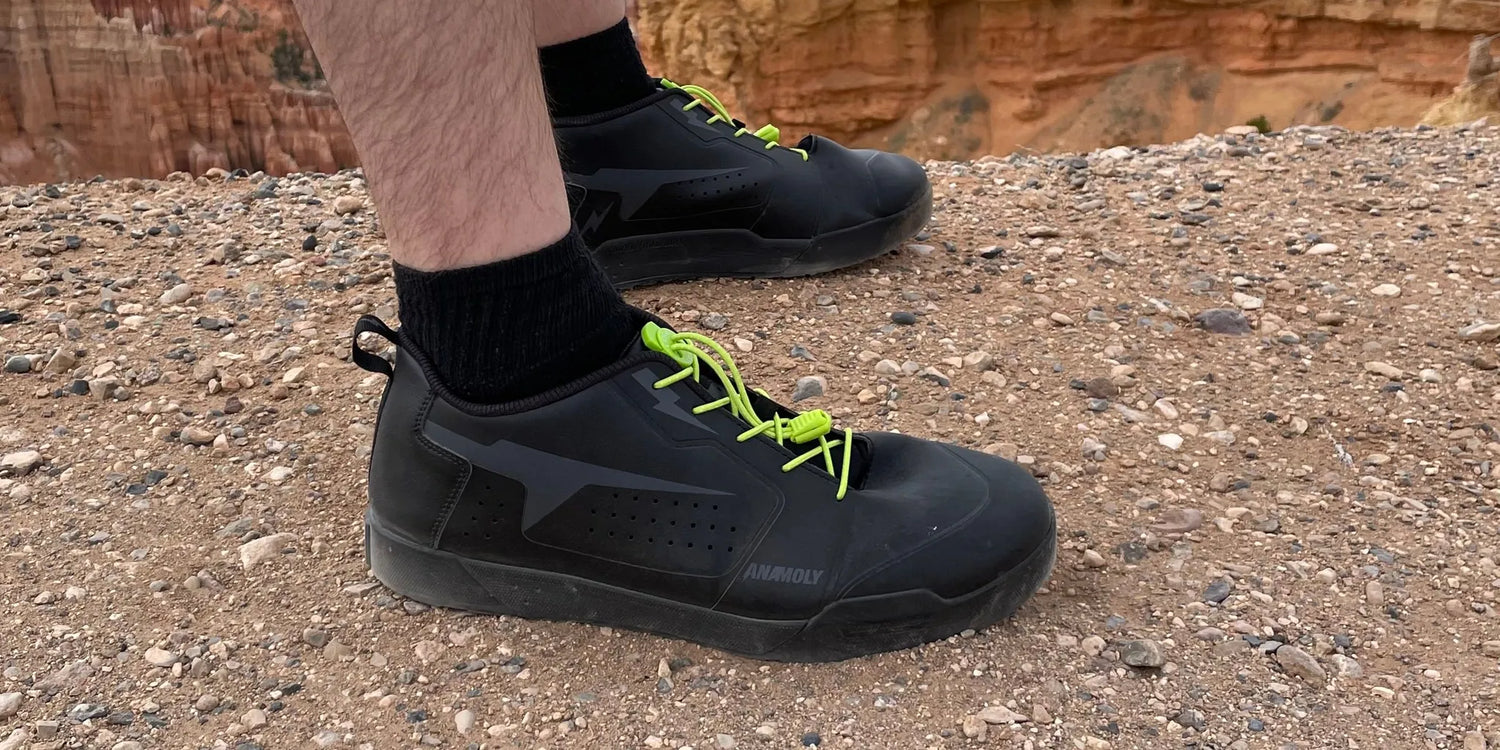
Using mountain bike shoes for hiking requires navigating a compromise between pedal connection and foot safety on natural trails. While stiff-soled riding shoes are built to optimize power transfer, they lack the underfoot flex and heel-to-toe roll needed for long walking distances. For riders tackling steep hike-a-bike sections or mixed trail terrain, finding footwear that balances these competing needs is essential to prevent fatigue and foot strain.
Shop the Pin-Lock MTB Shoe → Engineered for pedals and trails
Understanding how these engineering priorities impact your comfort on the trail is the first step toward choosing the right footwear. Let's break down the mechanics of sole stiffness, tread shape, and foot protection to see how these designs differ under real trail conditions.
Mountain Bike Shoes For Hiking: What Makes MTB Shoes Different From Hiking Boots

The short answer: mountain bike shoes for hiking work best when you choose a flat-pedal model with a low stiffness index and high-friction rubber. Riding footwear features stiff midsoles engineered for pedaling power rather than the flexible heel-to-toe roll required for walking. According to research published in the Journal of Sports Engineering and Technology, wearing proper trail-rated footwear is critical for preventing injury on uneven terrain. For maximum safety and performance, flat-pedal shoes with a low stiffness index and high-friction rubber soles work best for short hikes — conversely, stiff cross-country or clipless shoes will cause foot fatigue and heel slip. If your riding regularly mixes pedaling with trail walking, look for hybrid designs that incorporate specialized walking grids alongside pedal-matching contact zones.
Many riders ask if they can use mountain bike shoes for hiking when a route requires them to push or carry their bike over rough ground. To understand if this works, you must first look at the core differences in how we build these two types of footwear. Specialized mountain bike shoes and hiking boots are designed for very different physical tasks.
Power Transfer Versus Flex
The primary difference lies under your foot. In mountain bike shoe design, soles are engineered for power transfer and pedal connectivity. They feature stiff soles to keep your foot flat and prevent energy loss as you push down on the pedals. This rigid design is great for riding but can cause discomfort during long walks because the sole does not bend with your foot. In contrast, hiking boots prioritize a natural heel-to-toe flex that helps you walk long distances with ease.
Underfoot Comfort and Impact Shielding
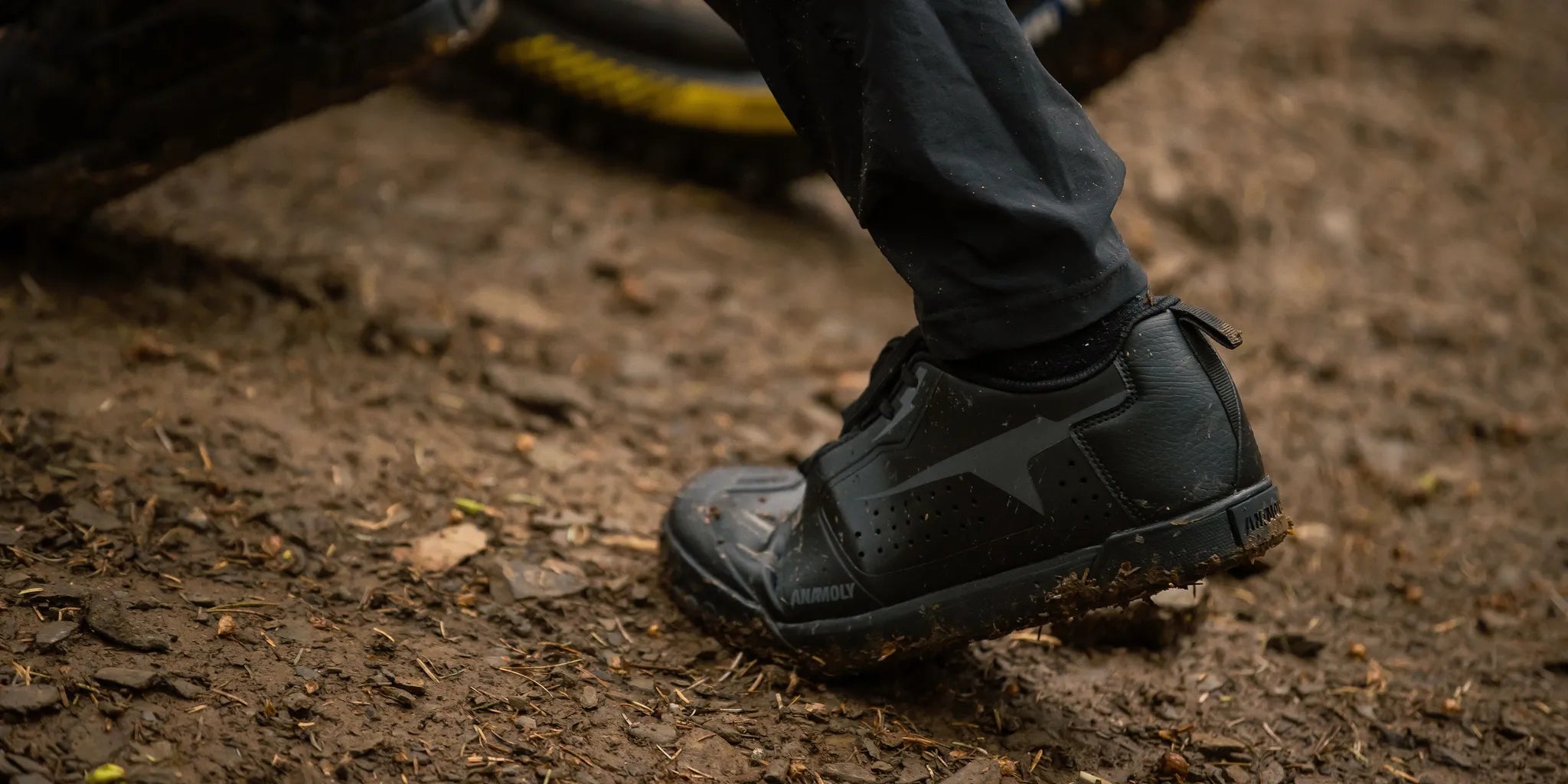
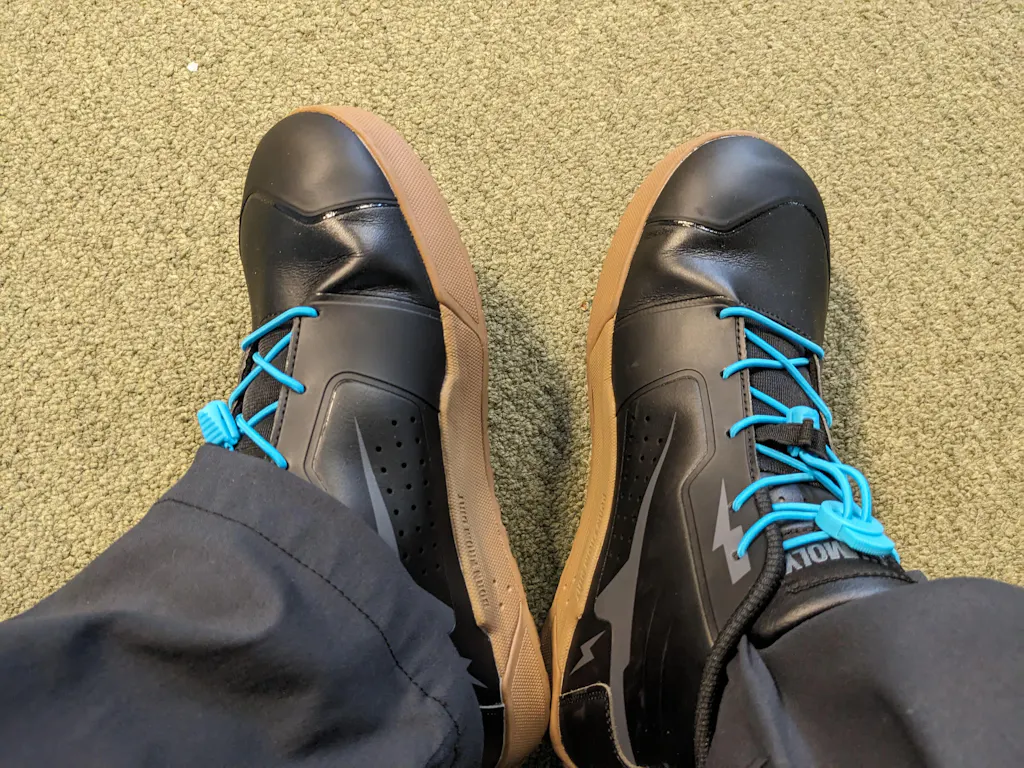
Hiking boots rely on thick, flexible rubber outsoles and soft foam midsoles to cushion your joints on hard dirt. To bridge this gap, we engineered the Pin-Lock MTB Shoe with a high-density EVA midsole and an anti-shock silicone insole pad. This setup gives you key impact absorption when you have to walk over rocks — at the same time, it keeps the stiffness you need to pedal hard. It also features a reinforced toe cap that protects your feet from rock strikes and hard trail hits.
Traction Science and Fit
Tread patterns also differ based on use. Hiking boots use deep, open lugs to bite into soft mud and loose dirt. Mountain bike shoes use flatter, sticker rubber to grip pedal pins. For the best of both worlds, our shoes utilize custom-engineered Hero Rubber™ grip technology. This rubber compound is designed to become grippier when wet, which helps you stay safe on slippery roots and damp stones. Our design also features an extra-wide toe box to prevent toe pinch on steep, off-bike walks. For a complete look at how we build footwear for wide feet, read our guide on the Best Mountain Bike Shoes for Wide Feet: Engineering Picks.

Can You Walk Comfortably in Mountain Bike Shoes? Sole Flexibility and the Stiffness Scale
To understand how a shoe behaves when you step off the bike, you must look at the science of sole stiffness. Mountain bike shoe stiffness is not a guess; manufacturers measure it on a precise scale to balance pedaling power with walking comfort. Our engineering tests show that finding the right spot on this stiffness spectrum is key to finding the best mountain bike shoes for hiking when a trail forces you to walk.
Biomechanical Impact of Sole Rigidity
The science of foot movement explains why riding-specific shoes feel awkward on dirt. When walking, the foot must flex naturally at the metatarsophalangeal (MTP) joint to roll from heel to toe. Biomechanical research published in the Journal of Sports Engineering and Technology (Zullo et al., 2022) indicates that highly rigid shoe soles alter normal MTP joint kinematics — this restriction forces the lower limb muscles to work harder, increasing the energy cost of uphill walking and accelerating muscle fatigue. For hike-a-bike sections, a walkable sole index allows the foot to bend naturally, maintaining joint kinematics and preventing premature calf and plantar strain.
How Rigid Soles Impact Your Foot
When you walk in a shoe with a high stiffness rating, your foot cannot bend at the ball. In rigid footwear, the heel lifts out of the shoe with every step — this friction leads directly to painful heel slippage and blisters on steep ascents. A stiff sole forces your leg muscles to work harder on climbs, which leads to early fatigue. For hike-a-bike sections, a walkable rating keeps your foot in a natural position to prevent strain.
Designing for Pedals and Trails: Forefoot Flex Zones
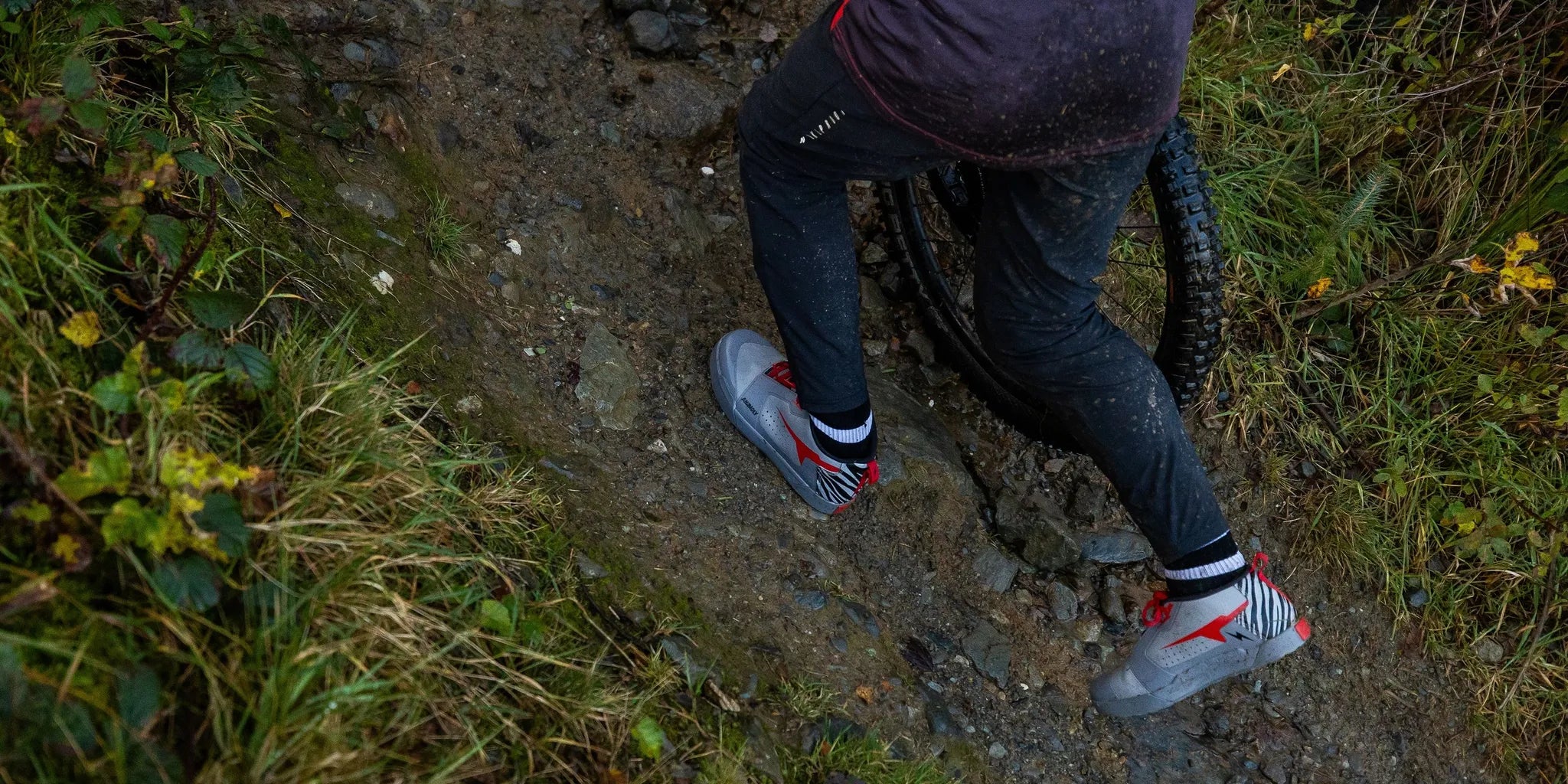
To overcome this biomechanical barrier, we engineered our Pin-Lock MTB Shoe with a tuned midsole that balances these two needs. Our inner midsole has specialized flex zones engineered into the forefoot (ball of foot) portion to increase flex during walking, allowing for a natural gait on the trail while preserving a rigid pedal platform directly under the arch. Our design utilizes a dense forefoot pattern that we call the DualTraction Pedal + Hike Grid to grip both pedal pins and dirt. We use our custom-engineered Hero Rubber™ grip technology to ensure your foot does not slip on wet rocks or metal pedals. This system gives you the walkability of a light hiking shoe without losing the solid pedal connection you need to ride fast.
How Does MTB Rubber Perform on Dirt vs Rock When You Hike?

When you use mountain bike shoes for hiking, the rubber compound under your foot determines your safety on the trail. The physical forces of walking off-the-bike require a sole that can adapt to different surfaces. Wet roots, loose soil, and smooth granite slabs each test the molecular limits of the outsole. Navigating these natural features safely depends on how the rubber interacts with the ground, as noted by scientific research into rubber hysteresis and sliding friction coefficient on rough stone.
The Physics of 60-Degree Inclines: Hero Rubber™ MTB-G Compound
To understand trail safety, we must look at the static friction coefficient required to walk up steep surfaces. In physics, a static friction coefficient (μ_s) of 1.0 is the theoretical limit where a material can resist sliding on a 45-degree angle. Walking on even steeper angles requires specialized rubber chemistry. Our Hero Rubber™ MTB-G Compound is engineered with an exceptionally high friction coefficient (μ_s ≥ 1.73), which mathematically allows it to stick to and grip a 60-degree incline (such as a smooth rock or granite slab) without sliding. This extreme friction is achieved through high hysteresis; the rubber absorbs kinetic energy and deforms slowly to mold over microscopic rock features, ensuring absolute stability on severe terrain.


The Wet Grip Paradox and Trail Tech Durability
Most rubber outsoles lose traction when they get wet because water acts as a lubricant. Our custom-engineered compound solves this problem by becoming grippier when wet — this counterintuitive advantage keeps your foot planted during creek crossings or rainstorms. Furthermore, our Trail Tech engineering ensures the shoes are waterproof and highly durable, allowing them to easily traverse and conquer any outdoor terrain without letting moisture penetrate the upper or degrading the integrity of the sole. To complement this compound off the bike, the Diamondstok Tread pattern serves two roles: while riding, it maximizes the interlocking sensation with metal pedal pins; conversely, when you step off the bike, these geometric shapes act as micro-cleats that bite into loose trail dirt, mud, and wet clay.

Comparing Traction Profiles Across Trail Terrains
Unlike standard shoes that force a tradeoff between grip and long-term durability, a high-hysteresis compound balances both needs. You can learn more about how our materials are built on our custom-engineered Hero Rubber™ grip technology page. To plan your trail-to-bike routes, you must know how rubber behaves under different conditions. The table below outlines how various trail surfaces affect outsole performance.
| Trail Surface | Grip Level | Outsole Behavior | Key Performance Metric |
|---|---|---|---|
| Dry Hardpack Dirt | Excellent | Tread edges shear slightly to bite into dry, packed soil. | High mechanical interlocking |
| Wet Rock Slabs | High | High-hysteresis compound deforms to mold over wet micro-textures. | Increased friction coefficient |
| Loose Trail Gravel | Moderate | Diamondstok shapes sink into pebbles to find stable soil beneath. | Lug displacement and depth |
| Wet Mud or Clay | Moderate | Tread channels shed heavy debris to prevent mud buildup. | Self-cleaning efficiency |

When to Choose an MTB-Hiking Crossover Shoe
Deciding between specialized footwear and a crossover shoe depends on your route conditions. You must look at how much time you spend on the pedals versus walking on the trail. If your ride has long sections of loose dirt, steep hills, or carrying your bike over rocks, a stiff, riding-only shoe will cause foot pain. A walkable shoe keeps you safe and stable during these hike-a-bike moments.
Route Split and Trail Terrain
The main factor to think about is the terrain of your route. Bikepacking and trail exploration often require you to walk your bike up steep, rocky grades. On routes where you expect to push or carry your bike for more than ten percent of the time, a crossover design is ideal. Using highly rigid shoes on these trails can lead to heel slips and blisters because the sole does not bend with your foot.
Biomechanical studies demonstrate that walking in rigid cycling shoes places excessive shear stress on the plantar tissues — this stress accelerates localized fatigue and skin irritation. If you ride on paths that mix riding with foot travel, a shoe that handles both roles keeps you safe. For more details on finding the right fit for your riding style, you can read our guide on the Best Mountain Bike Shoes for Wide Feet: Engineering Picks.
Flat Pedal Shoes vs Clipless Systems
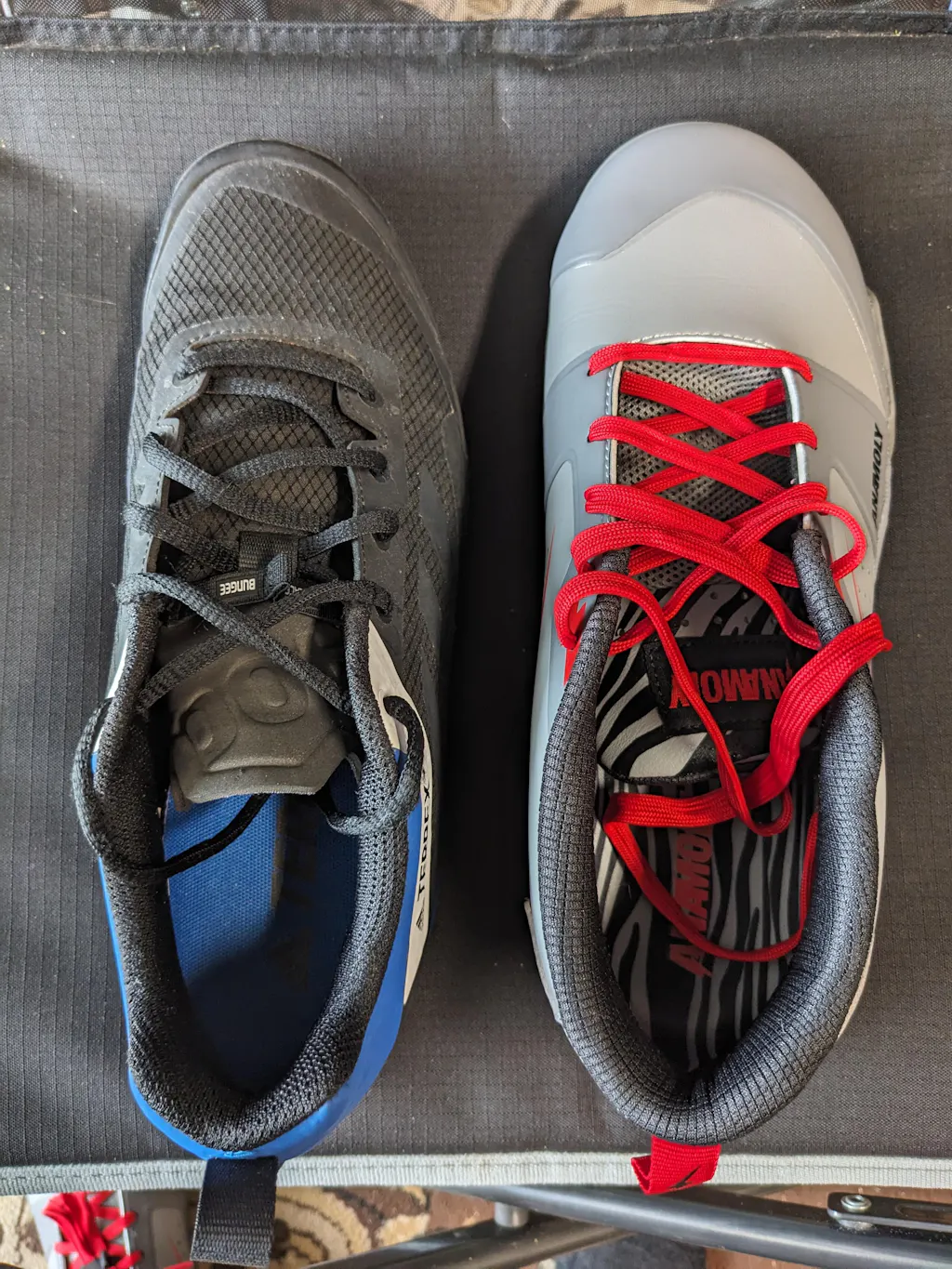
Flat pedal shoes are much more walkable than clipless shoes. Clipless shoes use a hard plastic or metal cleat in the sole to lock into the pedal. This cleat can slide on wet rocks and makes a clicking sound on hard ground. Flat pedal shoes have flat soles made of soft rubber that can flex when you walk, which makes them feel like standard trail shoes.
Our flat pedal design uses a special shank that is stiff under the pedal but bends at the toe. This lets you walk naturally when you are off the bike. Our testing shows that flat pedal setups help riders navigate natural trail features like wet logs, loose dirt, and steep rocks safely when they have to walk. You can learn more about how we build these systems by exploring our Pin-Lock MTB Shoe page.
Flat Pedal Shoe Anatomy for Trail Walking: What Matters
Flat pedal footwear requires a careful balance of features to perform well when you transition from riding to walking. If you want to use mountain bike shoes for hiking, you must look at how the sole and upper are built. Key design factors like rubber chemistry, midsole thickness, and toe protection dictate how safe and comfortable you will be on uneven dirt paths.
Midsole Cushion and Protection
Unlike stiff clip-in designs, walkable flat pedal shoes use a high-density EVA midsole to absorb impact. When you walk on rocky trails, a thin sole leads to foot fatigue. Proper trail shoes use a thick foam layer that shields your feet from sharp stones. Our Pin-Lock MTB Shoe features a custom EVA midsole and a thermo-welded, stitchless toe cap. This hard toe cap acts like armor, protecting your feet from rock strikes and trail debris during hike-a-bike sections.
Wide Toe Box and Comfort
Narrow shoes cause blisters and toe pain during long climbs. For natural foot spread on steep slopes, our wide-fit design offers a spacious US 2.5E toe box. We heat-widen each pair in our Texas shop to provide ample room for foot expansion. A wider toe box keeps your feet comfortable during long hours of walking and riding. Our Pin-Lock MTB Shoe holds a 4.3 out of 5-star rating, with riders praising its wide fit and secure feel.
Traction Science and Sole Flex Zones
Off-bike traction depends on rubber chemistry and tread shape. Our custom-engineered Hero Rubber™ MTB-G Compound is engineered to grip both metal pedal pins and slippery rocks. Our Hero Rubber™ MTB-G Compound Tech Stack details how this high-friction rubber gets grippier when wet. This compound works with a DualTraction Pedal and Hike Grid. The dense forefoot pattern interlocks with pedals, while the open lugs grab loose dirt on the trail. For extra safety, our inner midsole flex zones are carefully aligned with the ball of the foot to facilitate dynamic gait roll, while an elastic lace keeper keeps your laces tucked away, preventing dangerous snags on branches.
Frequently Asked Questions
Can you use mountain bike shoes for hiking?
You can use mountain bike shoes for hiking, but it depends on the design. Standard cross-country shoes have very stiff soles that make walking uncomfortable and slick on rocks. Flat-pedal trail shoes are much better for walking. Scientific analysis shows that mountain bike shoes are built for power transfer, but trail-specific models offer the sole flex and traction needed to hike safely.
Are mountain bike shoes comfortable for walking?
Comfort while walking depends on sole stiffness. Rigid shoes made for racing do not bend, which can cause foot pain on hikes. Trail-oriented shoes are built with more flex to keep your feet comfortable during hike-a-bike sections. Our flat-pedal shoes use a soft EVA midsole, flexible forefoot zones, and sticky rubber to absorb impact, making them much more comfortable for trail walking.
What is the difference between flat and clipless mountain bike shoes for hiking?
Flat-pedal shoes are much easier to walk in than clipless shoes. Clipless shoes have a stiff shank and a metal cleat in the sole that can slip on rocks or clog with mud. Flat shoes have flat rubber soles that grip the ground like a hiking shoe. This makes flat shoes safer and more stable when you must walk on steep or loose dirt.
What stiffness index is best for mountain bike shoes used for hiking?
A stiffness index of 2 to 4 is ideal for hiking compatibility. Shoes in this range offer enough flex for natural foot movement while still providing adequate pedal support. Ratings above 8 are designed for racing and make walking difficult due to the complete lack of sole bend.
Can you hike in clip-in MTB shoes?
Hiking in clip-in (clipless) MTB shoes is possible but not recommended for long distances. The exposed cleat creates a slipping hazard on wet rocks and hard surfaces. The stiff carbon or nylon shank also prevents natural foot flexion, which can lead to blisters and heel slip. If your route includes significant hike-a-bike sections, flat-pedal shoes are a safer choice.
Do you need special shoes for hike-a-bike sections?
Yes, hike-a-bike sections benefit from shoes with a lower stiffness rating, flexible forefoot, and reliable tread grip. The best mountain bike shoes for hiking through these sections combine a stiff pedal zone with a flexible toe section, plus a rubber compound that grips both pedals and trail surfaces. The Pin-Lock MTB Shoe uses a DualTraction Pedal + Hike Grid and engineered forefoot flex zones to handle both riding and walking demands.
Ready to Explore the Pin-Lock MTB Shoe?
Wearing stiff, slick cycling shoes on steep, wet trail hikes can lead to dangerous slips and painful foot fatigue. Do not let poorly designed soles ruin your next ride or hike. Moving to a versatile shoe with high-friction traction keeps you stable and saves valuable trail time.
Get your Pin-Lock MTB Shoe → DualTraction Hike Grid and Hero Rubber™ outsole
Sources & Scientific Citations
- Zullo, G., Marcolin, G., Mistretta, P., & Petrone, N. (2022). Effect of outdoor footwear bending stiffness on metatarsophalangeal joint kinematics, kinetics, and energy balance during level and uphill walking. Proceedings of the Institution of Mechanical Engineers, Part P: Journal of Sports Engineering and Technology, 236(3), 211-219.
- Mistretta, P., Parolini, G., Marcolin, G., Hasler, C., Viel, L., & Petrone, N. (2018). The Influence of Outdoor Shoe Sole Stiffness on the Metatarsophalangeal Joint Kinematics When Walking and Running in Different Conditions. Proceedings, 2(6), 275.
About the Author
The Anamoly Press Team combines expertise in athletic footwear engineering, materials science, and trail sports performance. Every gear guide is reviewed by Christopher Armstrong, Founder and Head of R&D at Anamoly Labs, whose 15-plus years in protective gear and footwear development ensure technical accuracy in every article.

Leave a comment
This site is protected by hCaptcha and the hCaptcha Privacy Policy and Terms of Service apply.