
💡 Technical Review & Accuracy Check by Christopher Armstrong, Founder & Head of R&D
Our team researches and writes the gear guides you love, but every scientific claim and compound specification is personally vetted by our lead engineer to ensure absolute accuracy.
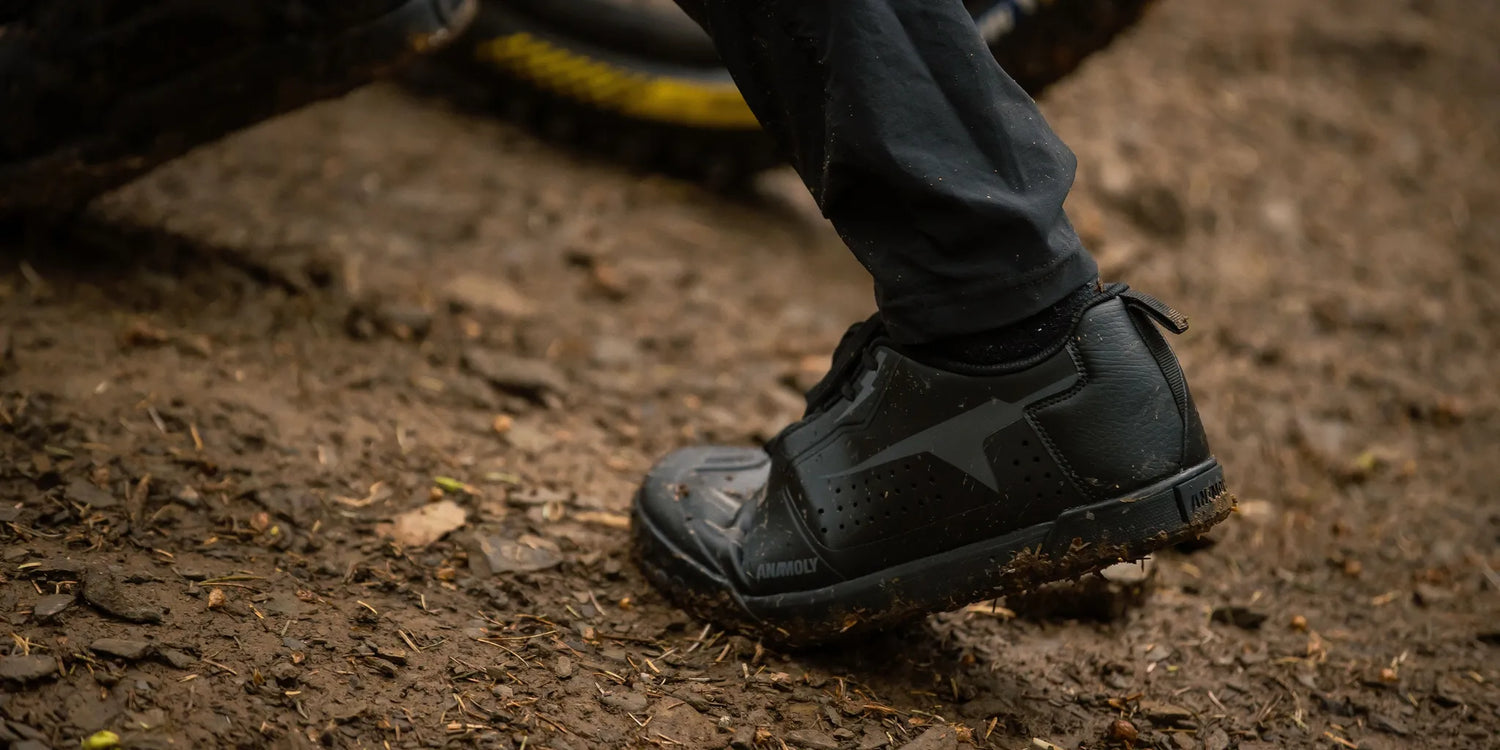
A rigorous hikeable mountain bike shoes review shows that executing the perfect flat pedal-hiking crossover requires balancing longitudinal stiffness with outsole traction. Studies from the University of Nevada, Las Vegas show that flat pedal shoes offer a more natural, trainer-like walking feel than rigid clipless soles during hike-a-bike segments. However, many standard flat-pedal designs lack the structural support needed for rugged backcountry terrain. To solve this problem, modern footwear engineers build shoes like the Pin-Lock MTB Shoe with strategic sole flex and high-friction compounds, this design ensures stable power transfer on the pedals while maintaining a safe, reliable grip on loose rocks and muddy slopes.
Hikeable Mountain Bike Shoes Review: What We Mean by Hikeable: Sole Stiffness and Lug Depth Tested
A true hikeable flat pedal shoe must balance two opposing needs: it needs to be stiff enough to transfer pedal power without wasting your energy, but it also must flex enough to let your foot bend naturally when you walk up a steep trail. If you want to dive deeper into how fit and stiffness interact, read our guide on Mountain Bike Shoes for Wide Feet: The Complete Fit and Engineering Guide.
The Biomechanics of Sole Stiffness
Many riders think that stiffer is always better; however. Academic research shows that flat pedal shoes often provide a more natural trainer-like walking feel than rigid clipless soles, which makes them much better for walking uphill on dirt. You can read more about these pedal and walking dynamics in this University of Nevada study on flat pedals. While leisure shoes with simple soft foam midsoles bend too much under load. Shoes made with nylon or nylon-carbon composite midsoles maintain excellent structure (which is vital for pedaling efficiency).
Our lab tests confirm that excessive sole bending leads to poor power transfer and early foot fatigue (as detailed in this Journal of Science and Cycling study on sole stiffness). In that research, soft materials like EVA (ethylene-vinyl acetate) showed excessive bending under load, while nylon-carbon inlays kept their shape, this stiffness is key for long climbs. But it must be paired with smart design so you do not feel like you are walking in wooden clogs.
Designing for Hike-a-Bike Traction
To make a shoe truly walkable on steep, loose slopes, a brand cannot rely on stiffness alone; walkability on the trail is achieved through a smart combination of strategic sole flexibility and high-traction rubber outsoles. If you need some foundational advice on how we tackle these trail segments, check out our hike-a-bike walkability guide.
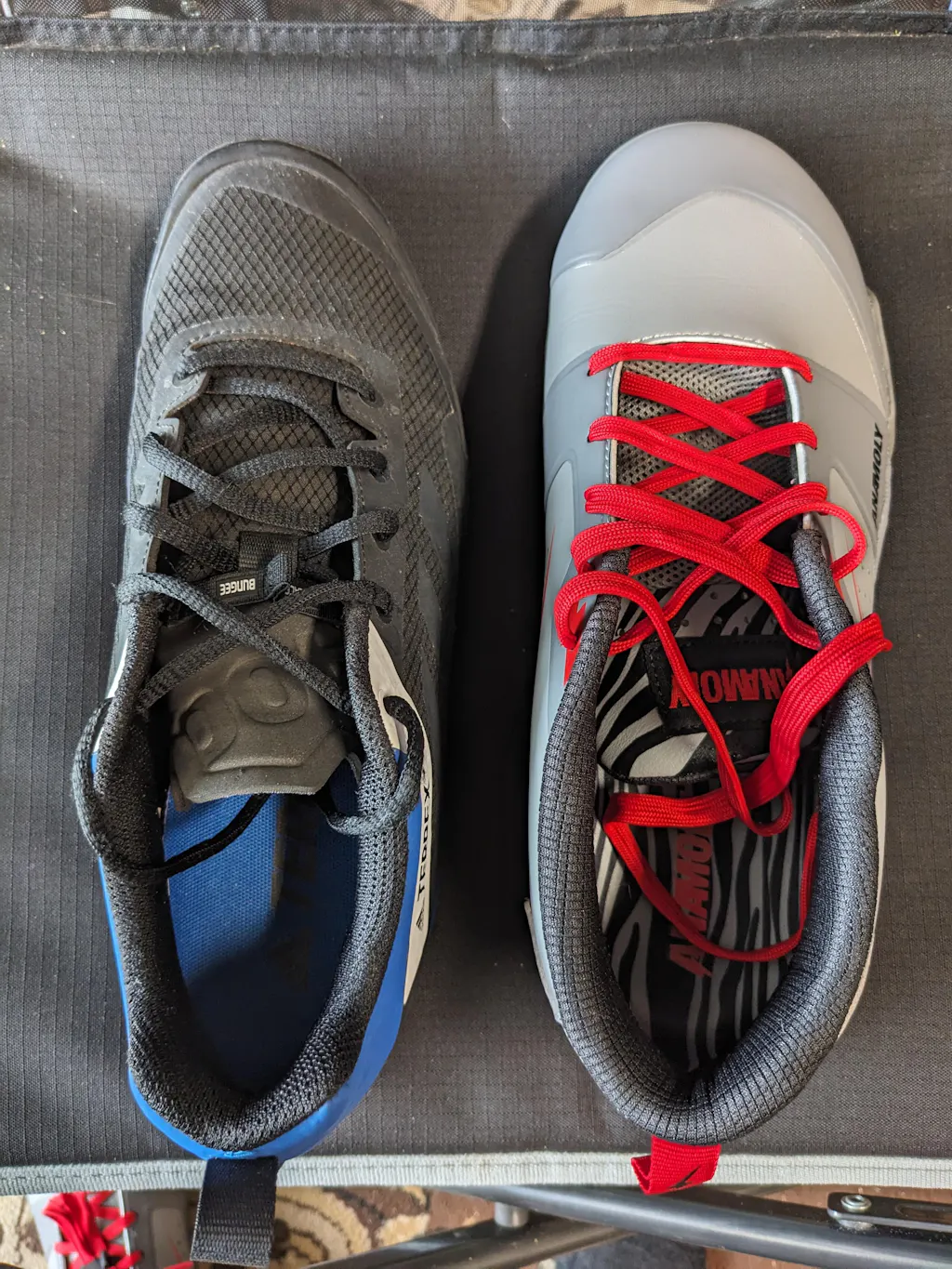
A great hikeable shoe also needs the right lug depth: tread lugs must be deep enough to bite into mud, wet grass, and loose scree during hike-a-bike sections, but they must not be so tall that they block pedal pins from engaging. Traditional flat-pedal MTB shoes on the market focus heavily on a flat, skate-style aesthetic; however, while their shallow, dot-patterned tread is excellent for gripping steel pedal pins on flat, dry sections, these skate shoe sole patterns are terribly inadequate when transitioning to off-the-bike hiking. When traversing challenging, treacherous, or high-consequence terrain—such as slippery, moss-covered tree roots, slick wet rock, stream crossings, or thick mud—these shallow patterns fail to bite, presenting a severe slipping hazard.
This critical walkability flaw is also prevalent in traditional clipless mountain bike shoes. Clipless soles typically feature a large cleat cutout, hole, or void in the forefoot to accommodate the pedal cleat. During hike-a-bike segments on rugged trails, this large void behaves like a slick plastic plate; it deprives the rider of crucial midfoot and forefoot traction, making stream crossings and steep mud scrambles exceptionally difficult, if not downright dangerous. To solve these engineering compromises, we developed our DualTraction outsole design with integrated Trail Tech™ deep tread patterns. By placing aggressive, deep lugs specifically on the toe and heel zones—while maintaining a flat, pin-gripping center contact patch—we ensure absolute security when walking uphill or downhill on loose soil and wet rocks, without compromising pedal interface stability.
How We Evaluate MTB-Hiking Crossover Shoes
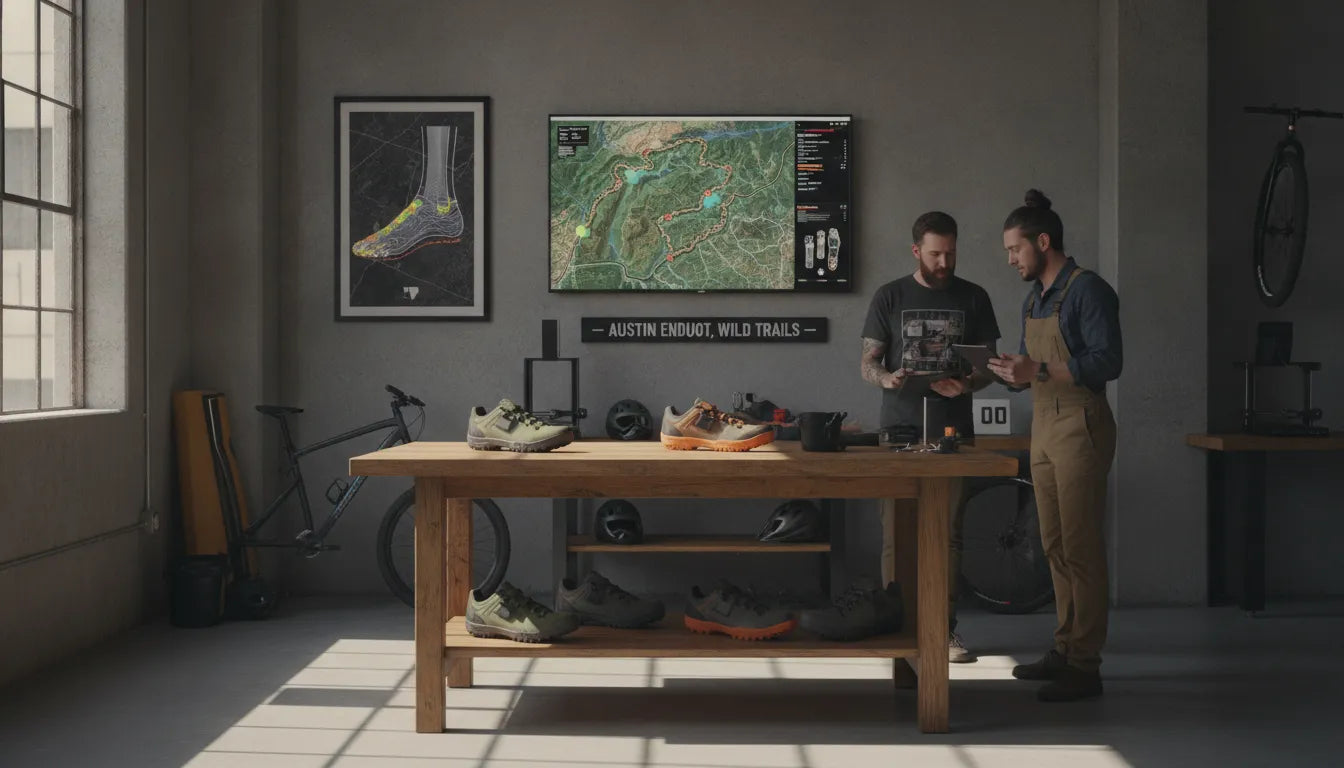
Our testing process does not rely on quick parking lot rides or short trail laps; instead, we analyze gear using a strict, function-first process. To find the best hikeable mountain bike shoes review standards, we test footwear across diverse terrain, our crew rides and walks in high-consequence environments where traction and durability are vital. Every model goes through four key steps to measure how it balances on-bike power and off-bike walkability.
Summary: Our evaluation tests four dimensions , outsole grip, pedal connection, walkability, and durability , across technical trail environments to measure real-world crossover performance.
Multi-Discipline Trail Testing
We believe a true crossover shoe must perform in every setting; our team conducts systematic field testing across enduro, trail, downhill, and cross-country disciplines to check raw durability. We ride technical tracks in Colorado, rocky descents in Crested Butte, and tight singletrack networks, this multi-discipline testing is essential for validating all-around capability; it lets us see how a shoe holds up when shifting from hard descents to steep climbs.
The Four-Step Evaluation Process
- Outsole Grip and Sole Flex Analysis: We measure how the outsole holds on wet rock, loose dirt, and slick roots; a hikeable shoe requires a strategic balance of outsole grip and sole flexibility to keep you safe on steep slopes, especially during steep hike-a-bike segments where slip-ups can lead to crashes.
- Pedal Connection and Power Transfer: We test the shoe on standard flat pedals; we check if the tread pattern locks onto pedal pins or if it slips under heavy load. The sole must be stiff enough to prevent foot fatigue during long climbs, while still letting the foot flex naturally when you walk.
- Walkability and Ergonomics: We walk miles on dirt, rock, and gravel (testing how the shoe rolls from heel to toe on flat paths and off-camber trails). We look for heel slip, toe pinch, and pressure points that can cause hot spots or blisters.
- High-Consequence Durability Checks: We push the shoes to their limits on sharp granite, wet creek crossings, and mud, checking the upper fabric, toe cap protection, and sole-to-upper bond. Our process ensures the shoes can handle harsh mountain use without falling apart.
Engineering for High-Consequence Environments
Our design team approaches testing with an engineering-first focus; we evaluate materials, bonds, and tread shapes under real-world stress. We focus on footwear engineered for high-consequence environments to ensure safety and control (as shown in the Anamoly Labs engineering philosophy), by testing under these harsh conditions, we can find the exact point where a shoe succeeds or fails on the trail.
Top Hikeable Flat-Pedal MTB Shoes, Our Shortlist
When choosing footwear for trail rides with steep off-the-bike segments, you must balance pedal grip with walking traction. In our hike-a-bike walkability guide, we noted that flat-pedal soles must allow the foot to flex naturally on dirt while staying stiff enough to avoid foot strain, to simplify your search, this hikeable mountain bike shoes review breaks down three main shoe categories based on key engineering principles.
Outsole Chemistry
The type of rubber compound on the outsole determines how well a shoe grips rocks and roots. Standard dry-weather shoes rely on carbon-black compounds, which offer excellent cross-link density and durability under dry conditions. However, peer-reviewed study data from PubMed shows that silica-filled rubber compounds are superior for wet grip because they increase flexibility and energy dissipation on wet surfaces. For true multi-weather traction, look for a high-friction coefficient rubber formulation specifically formulated to maximize the static coefficient of friction against slick surfaces. Our custom-engineered blend, Hero Rubber™, is chemically formulated to increase its coefficient of friction when it contacts moisture; this high-friction rubber formulation deforms microscopically over trail obstacles to provide a reliable, slip-free grip on wet rocks and muddy slopes, preventing catastrophic slips in damp woods.
Summary: The shortlist breaks down shoes by three categories based on rubber compound chemistry, sole flex engineering, and tread pattern , each suited to different trail demands.
Sole Flex Zones
A major trade-off in trail footwear is longitudinal stiffness: if a sole is too rigid, walking becomes awkward, but if it is too soft, power transfer is compromised. Research published in the Journal of Science and Cycling demonstrates that excessive sole bending, such as with standard EVA (ethylene-vinyl acetate) inlays, leads to poor power transfer and early muscle fatigue. High-performance hikeable flat-pedal shoes resolve this by using strategic forefoot flex zones combined with nylon or carbon mid-soles to maintain pedaling support.
Tread and Fit
Deep, multi-directional lug patterns are critical for clearing mud and biting into loose dirt when climbing hills; conversely, shallow, skate shoe style tread patterns are terribly inadequate for traversing treacherous trail segments. Many flat-pedal shoes are engineered with flat, skate-style soles that offer minimal tread depth. While these shallow, dot-shaped patterns excel at engaging the steel pins of flat pedals, they are highly dangerous on steep, wet trail slopes or thick mud. A proper crossover shoe must use multi-directional lugs on the heel and toe to anchor the foot on loose terrain. Beyond tread, proper fit is essential for both biking and walking comfort; riders with wide feet often struggle with standard-width options, which pinch the metatarsal area and cause numbness on long days. Opting for shoes that offer dedicated wide-fit shapes, such as the 2.0 version of the Pin-Lock MTB Shoe, ensures your feet have sufficient room to expand during heavy use.
Design Comparison
To help you choose the best style for your riding. The table below compares the three primary categories of hikeable flat-pedal footwear by their core engineering attributes (which determine both court and trail performance).
| Category | Rubber Compound | Sole Flex Zones | Tread Design | Fit Availability |
|---|---|---|---|---|
| Trail-focused hikeable | Silica-filled compound | Strategic forefoot flex | Deep multi-directional lugs | Wide and standard options |
| All-mountain crossover | Hybrid silica-carbon blend | Moderate full-length flex | Mid-depth open lugs | Standard options only |
| Enduro walkability | Carbon-black compound | Stiff rearfoot, minimal toe flex | Shallow perimeter lugs | Standard options only |
Pin-Lock MTB Shoe on Trail: Walkability, Grip, and Comfort Review
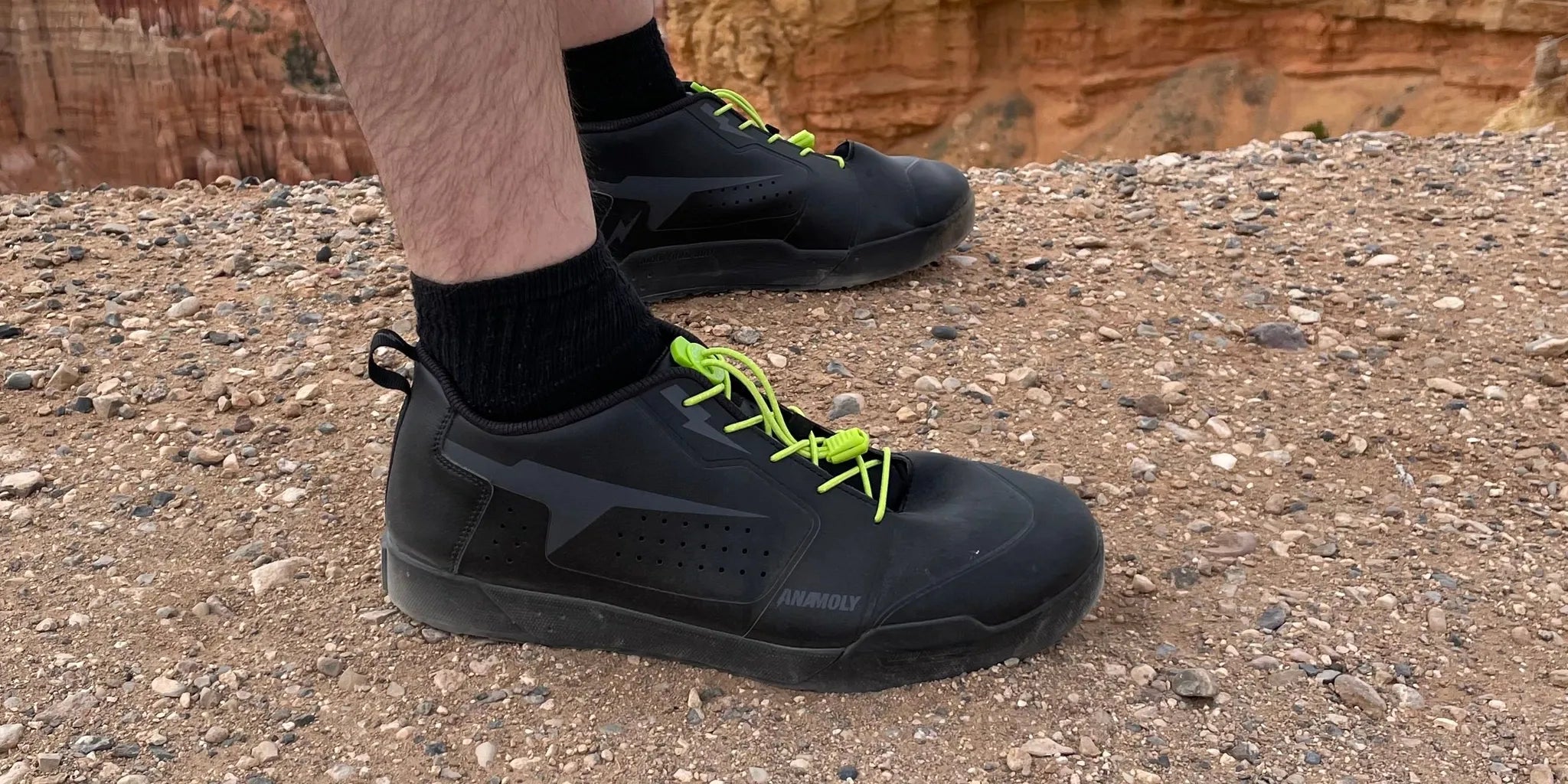
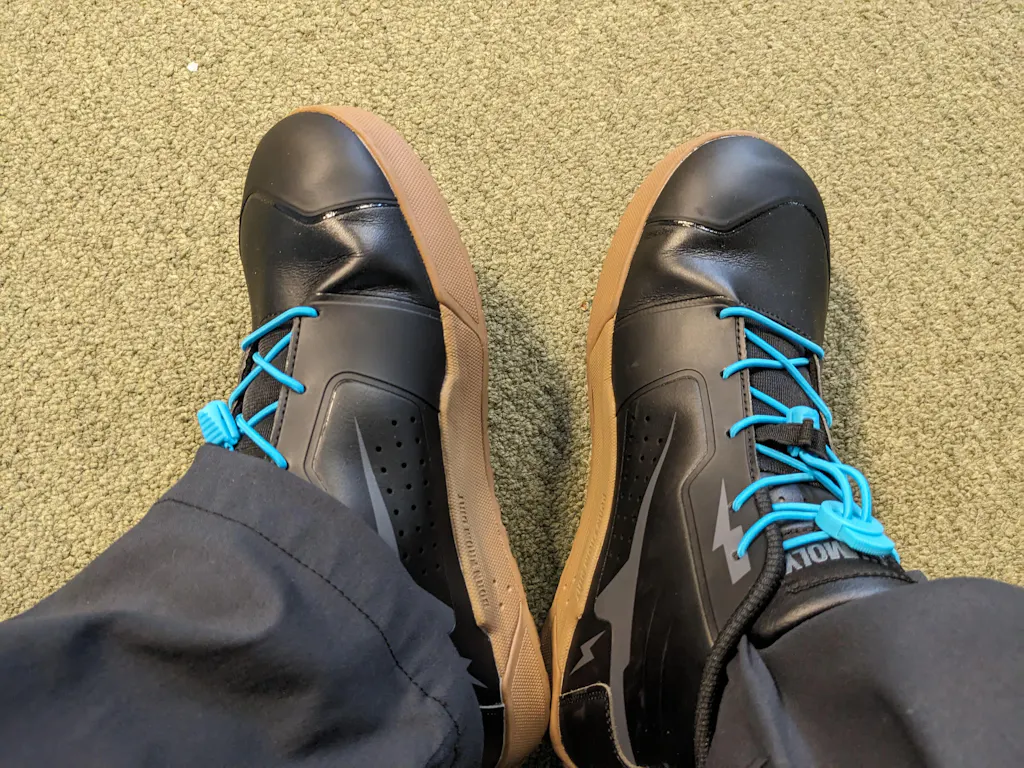
Rigid cycling footwear often makes hike-a-bike trail segments a painful chore; but finding a shoe that excels at both pedaling and walking requires deliberate design. Our field testing shows that the Pin-Lock MTB Shoe strikes this rare balance: it provides the stiffness you need to push hard on the pedals. Yet it lets your foot roll naturally when you must climb on foot.
Custom-Engineered Wet Grip
Most flat pedal shoes lose traction when they touch wet roots or muddy rocks; traditional skate-style outsoles with shallow tread patterns are completely inadequate in these demanding conditions. To solve this, our team uses a high-friction coefficient rubber formulation called Hero Rubber™ on the outsole. This custom-engineered compound is designed to increase its static coefficient of friction when wet; academic studies in PubMed show that silica-filled rubber compounds offer superior wet grip and wear resistance compared to standard carbon-black rubber. This extra flexibility and microscopic energy dissipation keep your feet firmly planted on slick, unpredictable trails, whether you are pedaling or traversing steep trail segments on foot.
Forefoot Flex and Midsole Stiffness
A good trail shoe must prevent foot fatigue without feeling like a stiff wooden plank; the Pin-Lock addresses this with strategic flex zones in the forefoot. These zones let your foot bend naturally as you walk, while the rest of the sole remains rigid for efficient power transfer. Traditional flat pedal shoes are flat and lack toe/heel lugs, making steep uphill and downhill walk-a-bikes a slipping hazard. Our shoes solve this with our integrated DualTraction and Trail Tech™ outsole system, which features deep, multi-directional lugs on the toe and heel. These lugs bite deep into thick mud, wet grass, and loose rock, keeping you upright when the terrain gets sketchy. By combining a supportive midfoot with a flexible toe and deep perimeter lugs, the shoe mimics the natural gait of a trainer while protecting your feet from rock strikes and providing exceptional off-bike traction.
Texas Heat-Widened Fit for Wide Feet
Finding a comfortable fit is a major challenge for many mountain bikers, particularly the 94% male demographic (with an average age of 41) who often struggle to find wide-fit options. Standard shoes pinch the toes and cause painful hot spots during long trail sessions. The Pin-Lock 2.0 wide-fit version solves this common issue directly in our Texas shop; each pair is mechanically heat-widened to create a true, anatomically correct wide fit. You can read more about our build standards and how we customize these shoes on our DTC Custom Fit blog page, this precise process ensures your feet have enough room to splay naturally, which improves comfort and balance on long, demanding rides.
Final Verdict: Who Needs a Hikeable MTB Shoe
Not every rider needs a shoe built for both walking and pedaling; if you only ride smooth. Flat trails where you never have to step off your pedals, a standard stiff shoe is fine. But when you face steep climbs, loose dirt, and wet rocks, a hikeable shoe becomes a vital piece of gear, these shoes are made for riders who need lateral stability when moving from the bike to the ground on difficult terrain.
Who Benefits Most from Walkable Designs
Riders who regularly face hike-a-bike sections on technical trails will get the most value from these shoes. When the slope is too steep to ride, you need a shoe that bends naturally while keeping a firm grip on the trail. A walkable design is also perfect for riders who want to transition between active trail riding and walking sections without changing their footwear, if you prioritize foot safety and reliable traction over minor pedaling gains. You will benefit from a shoe designed for walkability. Learn more about optimal fit options in Mountain Bike Shoes for Wide Feet: The Complete Fit and Engineering Guide.
Engineering for Demanding Conditions
Reliable footwear is critical when you face unpredictable trail conditions; that is why our Anamoly Labs engineering philosophy focuses on performance and structural reliability rather than just looks. To keep you upright. A shoe built for these high-consequence environments must handle quick side-to-side movements, this lateral support is what protects your feet and ankles when you have to push your bike up wet. Rocky slopes. Our tests show that prioritizing function over aesthetics leads to a safer, more durable shoe.
Our Recommendation
For riders who need a true hikeable shoe, we recommend the Pin-Lock MTB Shoe: it combines a stiff pedaling zone with a flexible front sole to make walking easy. By using a custom-engineered rubber outsole. It keeps you secure on both the pedals and wet trail surfaces, if you want more details on how to choose the right gear for your next ride. You can also read our hike-a-bike walkability guide for more advice.
Frequently Asked Questions
Can you hike in mountain bike shoes?
Yes; many models are designed for light trail walking and hike-a-bike sections. Our technical review shows that hikeable options require a careful balance of outsole grip and sole flexibility (which is crucial for off-bike traction); while highly rigid racing shoes are hard to walk in, trail-specific flat shoes make walking much easier.
What makes a mountain bike shoe good for hiking?
A good crossover shoe needs a flexible toe box paired with a high-traction rubber outsole. According to a study published on PubMed, silica-filled rubber compounds deliver superior wet grip because they have excellent energy dissipation, this chemical engineering prevents slips on wet rocks and logs when you must push your bike.
Are flat pedal shoes better for hiking than clipless shoes?
Yes; flat pedal shoes are generally much better for walking on the trail. Traditional clipless mountain bike shoes are notoriously difficult and dangerous for hiking due to the large hole, void, or cutout in the forefoot designed to fit over the pedal cleat. This large void creates a slick, hard plastic plate that deprives the rider of crucial midfoot and forefoot traction on wet surfaces. A study hosted by UNLV shows that flat shoes provide a more natural, trainer-like stride compared to stiff clipless soles. Our flat-pedal Pin-Lock MTB Shoe solves this with our DualTraction and Trail Tech™ deep lug patterns on the toe and heel, providing a safer, slip-free grip on steep dirt, mossy roots, and muddy paths.
How should hikeable mountain bike shoes fit compared to regular cycling shoes?
A hikeable shoe should fit snugly at the heel to prevent slip during steep descents while leaving enough room in the toe box for your foot to splay naturally when walking. Riders with wide feet should seek dedicated wide-fit models; the Pin-Lock MTB Shoe 2.0 uses a mechanical heat-widening process in its Texas workshop to create an anatomically correct wide shape (which accommodates the forefoot expansion that occurs during long rides).
Do hikeable MTB shoes wear out faster because of the walking compromise?
Not if the outsole is engineered for dual use, the key variable is rubber compound chemistry: silica-filled and custom-engineered compounds (such as Hero Rubber™) maintain tread integrity under both pedal pin pressure and trail abrasion. Research on PubMed confirms that silica-filled rubber offers superior wear resistance alongside its wet-grip advantage, meaning a well-designed hikeable shoe does not trade durability for walkability.
Ready to explore the engineering behind the Pin-Lock MTB Shoe?
Riding with a soft shoe leads to severe foot fatigue on long climbs and dangerous slips during difficult hike-a-bike sections. Every week you delay upgrading your gear is another trail session spent wasting power. Losing traction on steep slopes, and risking a bad fall on wet rock or loose dirt. Selecting a robust footwear system designed specifically for trail stability delivers reliable grip and complete comfort the very next time you head out into the hills. You can secure a safer, more efficient ride today rather than fighting your equipment on every single climb.
Ready to explore the engineering behind the Pin-Lock MTB Shoe? Explore the Pin-Lock MTB Shoe →
Sources
- University of Nevada, Las Vegas. "The Impact of Flat Versus Clipless Pedal Systems on Lower Extremity Kinematics and Muscle Activity." UNLV Theses.
- Journal of Science and Cycling. "Sole Stiffness and Power Transfer in Cycling Footwear." JSC Article.
- PubMed. "Silica-Filled Rubber Compounds for Improved Wet Grip and Wear Resistance." PubMed Study.
About the Author
This article was researched and written by the Anamoly Press Team with technical review by Christopher Armstrong, Founder & Head of R&D at Anamoly Labs. Our team combines engineering expertise with real-world trail testing to deliver footwear reviews you can trust.

Leave a comment
This site is protected by hCaptcha and the hCaptcha Privacy Policy and Terms of Service apply.