
By Anamoly Press Team • July 15, 2026
💡 Technical Review & Accuracy Check by Christopher Armstrong, Founder & Head of R&D
Our team researches and writes the gear guides you love, but every scientific claim and compound specification is personally vetted by our lead engineer to ensure absolute accuracy.
Every mountain biker knows the feeling: the gradient tilts past vertical; the dirt crumbles into loose shale; riding becomes physically impossible. It is time for a hike-a-bike.
For bikepackers tackling remote passes, walking is part of the sport. For everyday riders facing technical pushes, it is unavoidable. Yet many riders overlook walking performance until they slide backward on loose loam. The best MTB shoes for hike-a-bike must bridge two opposing needs: a sole must be rigid for power transfer, but it must also flex for walking and grip loose trail surfaces with aggressive tread.
Explore the Pin-Lock MTB Shoe 2.0 - engineered for pedaling efficiency and hike-a-bike traction with Hero Rubber™ and Trail Tech stability chassis.
What Is Hike-a-Bike and Why Shoe Choice Matters

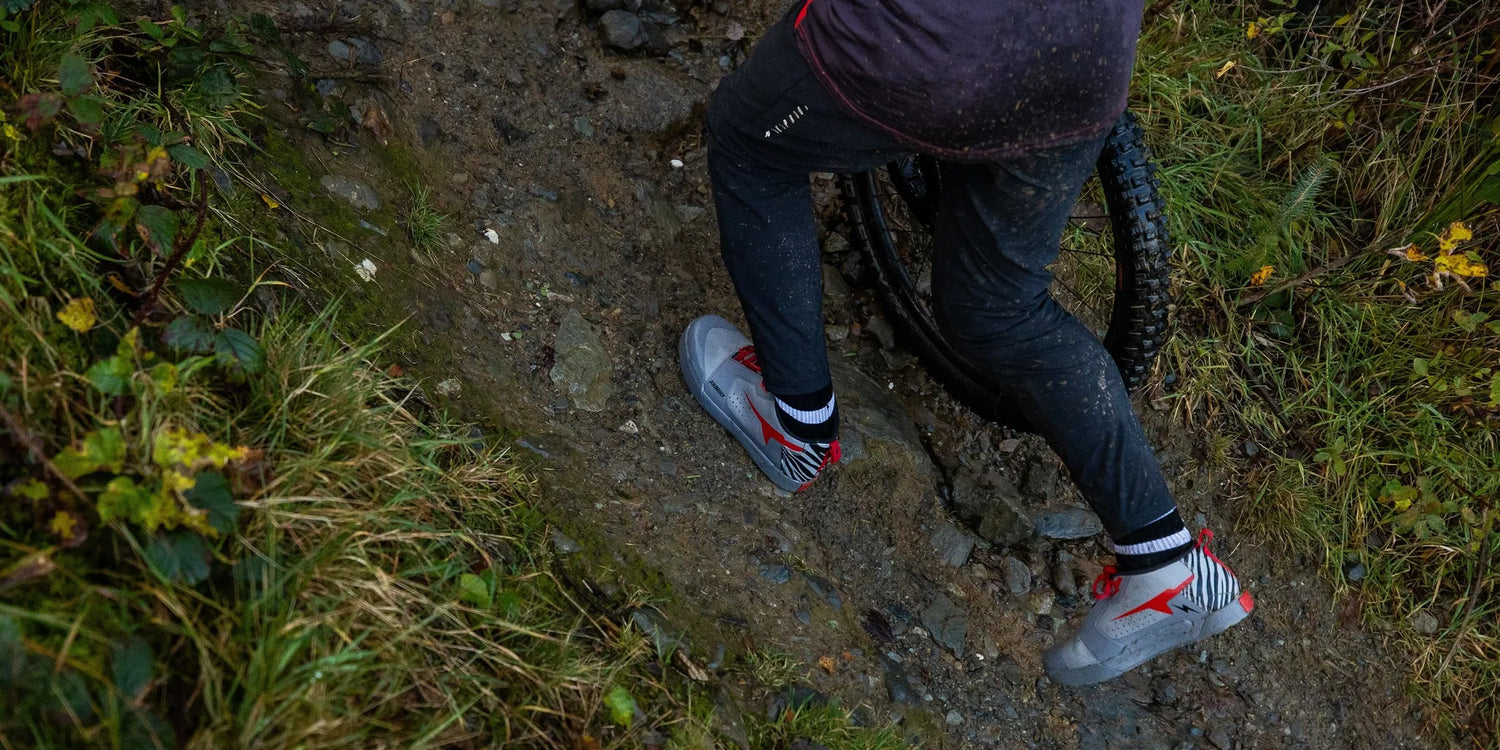
Hike-a-bike means any trail section where riding is no longer viable. You dismount and push, carry, or drag your bicycle. These sections are steep and technical; they feature loose gravel, wet roots, jagged granite, or deep mud. When pushing a 30- to 40-pound bike uphill, your feet are your only traction engine.
A shoe without proper walkability turns hike-a-bike into a hazard: heel slippage, blisters, and dangerous slips become routine. The best MTB shoes for hike-a-bike use aggressive tread patterns, progressive sole flex, and high-friction rubber compounds. These features grip rock, dirt, and scree on technical trail surfaces.
Flat Pedal vs. Clipless: Which Is Better for Hike-a-Bike?
The flat pedal versus clipless debate changes when you add hike-a-bike sections. Both systems have distinct profiles that affect ground performance.
Flat pedal shoes offer a natural walking experience. Without a recessed metal cleat, the outsole makes full contact with the trail. Flat-pedal outsoles use toe-rocker geometry and progressive flex, so your foot rolls naturally through each step. That makes flat pedals popular for bikepacking and adventure riding.
Clipless shoes have several disadvantages for hike-a-bike. The exposed cleat contacts rock directly, creating a slippery surface. The cleat prevents full ground contact and reduces the traction area. The carbon or nylon shank resists forefoot flex, which impedes the natural walking motion your foot needs.
For riders who split their time between pedaling and pushing, modern flat pedal systems offer the best compromise. The Pin-Lock MTB Shoe features a full-surface DualTraction outsole for maximum trail contact.
Sole Stiffness vs. Walkability: The Engineering Trade-off

At the center of MTB footwear engineering lies a classic conflict: cycling efficiency demands a stiff midsole shank. This prevents the shoe from flexing around the pedal. A stiff shank wastes less muscle energy and reduces hot spots during climbs. But a completely rigid sole makes hiking almost impossible; carbon cross-country racing shoes are dangerous on loose terrain.
The engineering solution is progressive flex and strategic zoning. Advanced footwear uses a stiff shank under the pedal contact zone—the midfoot area. At the same time, the toe box retains flexibility. This zoned stiffness supports your foot during pedaling, maximizing energy transfer. When you dismount and walk, the forefoot bends at the metatarsophalangeal joint, allowing a natural heel-to-toe stride.
| Feature | Stiff Sole (Racing) | Walkable Sole (Hike) | Balanced (Pin-Lock Trail Tech) |
|---|---|---|---|
| Midfoot stiffness | Carbon shank, zero flex | Soft, limited support | Rigid midfoot for power transfer |
| Forefoot flexibility | Completely rigid | Full flex | Progressive flex at MTP joint |
| Tread depth | Smooth or minimal | Deep, aggressive lugs | DualTraction: Diamondstok + Hike Grid |
| Torsional compliance | Zero twist | High twist | Controlled for off-camber terrain |
| Best use case | XC racing, smooth trails | Extended hike sections | Mixed pedaling and hike-a-bike |
A walkable shoe must balance vertical stiffness with torsional compliance. This allows the shoe to twist slightly on uneven ground. It prevents ankle rolls on off-camber terrain. The Trail Tech stability chassis uses this exact engineering philosophy: it combines a supportive midfoot with a forgiving forefoot that adapts to trail contours.
Traction Underfoot vs. Traction on Pedal: Different Rubber Requirements

A common mistake is thinking rubber that grips pedal pins also grips wet dirt. Pedaling traction and walking traction need different material properties; they also need different tread engineering.
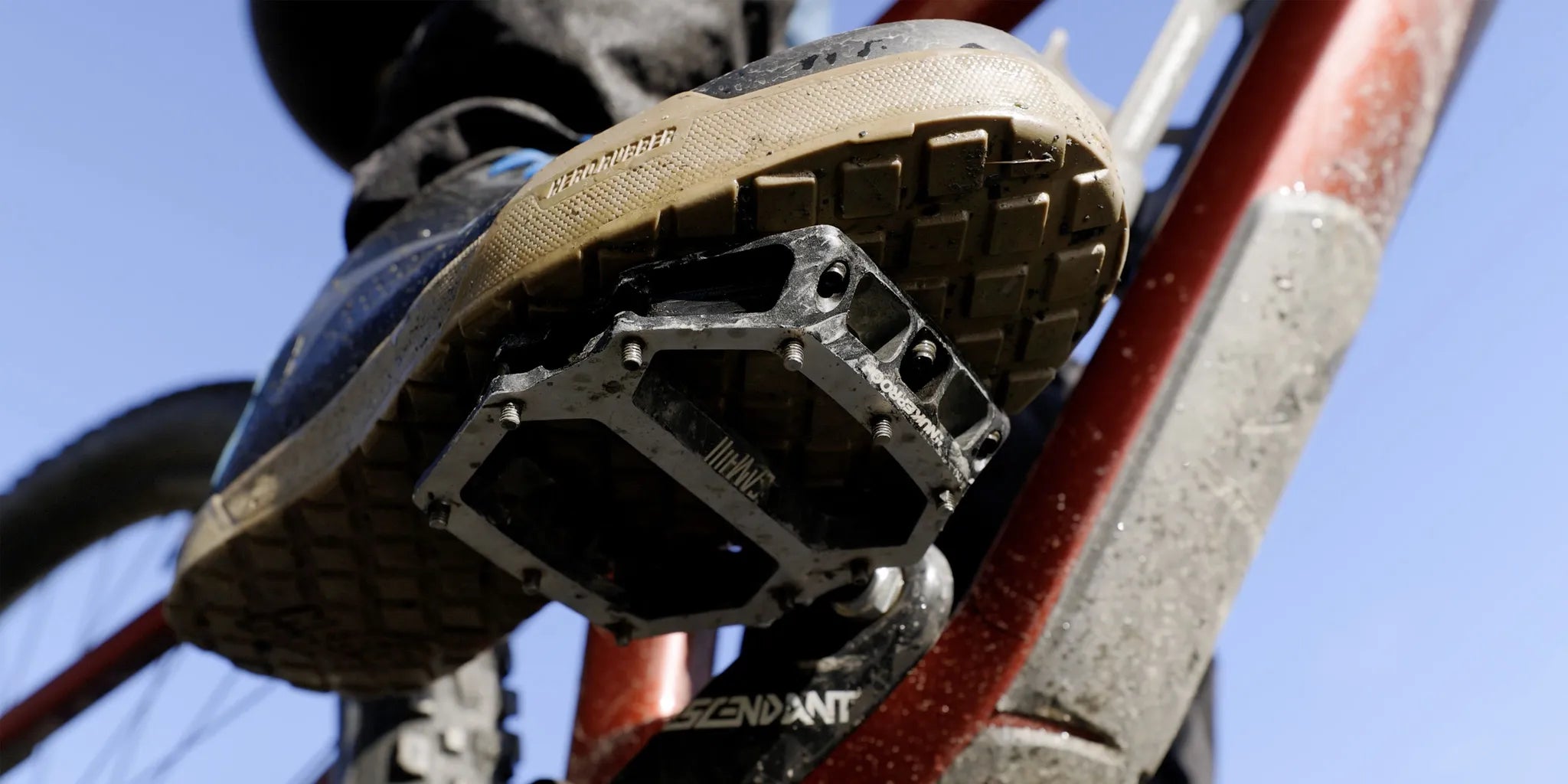
Pedal traction depends on surface friction and shear resistance: to grip a flat pedal, the outsole relies on the highest contact patch—or surface area—of rubber possible, letting sharp steel pins sink into the rubber and interlock the shoe and pedal. The compound must be soft and low-rebound: it dampens vibrations and resists tearing from metal pins. On a steep, muddy trail, that same flat, high-contact patch of solid rubber performs poorly. Without deep tread lugs, the rubber slides across mud like a slick tire on wet grass.


Walking traction needs mechanical keying from aggressive tread depth and lug geometry. Reverse-angled lugs on the heel provide braking stability when walking downhill. Wide-spaced lugs on the toe dig in and climb. The compound must resist abrasion from sharp rocks while staying grippy. Hero Rubber™ MTB-G compound increases its friction coefficient when wet, becoming stickier on moist surfaces while maintaining durability.


Best MTB Shoes for Hike-a-Bike by Terrain Type
Different trail environments need different outsole designs. The best MTB shoes for hike-a-bike match their tread to the conditions you ride most.
- Slick Rock and Granite: Mud lugs cannot penetrate hard, polished stone. Traction depends solely on compound friction; you need a sticky rubber with a flat, high-surface-area contact patch. It molds into microscopic rock textures for grip.
- Loose Shale and Scree: Sliding rock fields need lateral support and ankle protection. A reinforced chassis keeps your foot stable as the ground shifts. Deeply lugged heel and toe sections capture available traction.
- Wet Clay and Deep Mud: Mud shedding is the primary goal. Clogged tread turns your shoe into a smooth surface. Widely spaced, open-channel lugs eject mud naturally with every step.
Compare the Pin-Lock MTB Shoe 2.0 - its DualTraction Hike Grid uses reverse-angled lugs for climbs, with a Diamondstok center for flat-pedal grip.
How Does the Pin-Lock Trail Tech Sole Handle Both Pedaling and Walking?

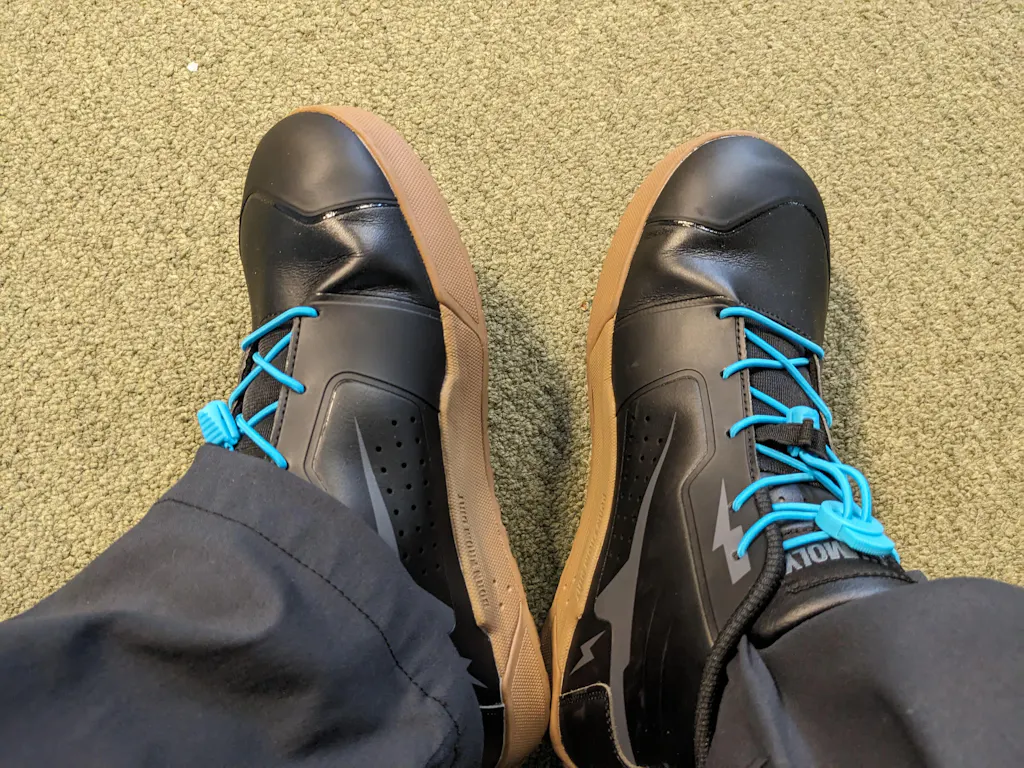
Anamoly Labs engineered the Pin-Lock MTB Shoe to eliminate the compromise between pedaling and walking. The proprietary Trail Tech stability chassis handles technical hike-a-bike pushes without sacrificing pedaling performance.
The foundation is Hero Rubber™ MTB-G compound. Standard rubber hardens and gets slick when wet. Hero Rubber™ is chemically engineered to increase friction in moist conditions; it becomes stickier on mud, water, and wet rock. The outsole features dual-zone tread engineering:

- The Diamondstok Tread (Center Zone): A dense, low-rebound grid under the ball of the foot. It interlocks with metal pedal pins and absorbs high-frequency trail vibrations.

- The DualTraction Hike Grid (Toe and Heel): Aggressive, deeply channeled, reverse-angled lugs at the front and rear. They bite into loose dirt, clay, and gravel; they clear mud dynamically as you walk.

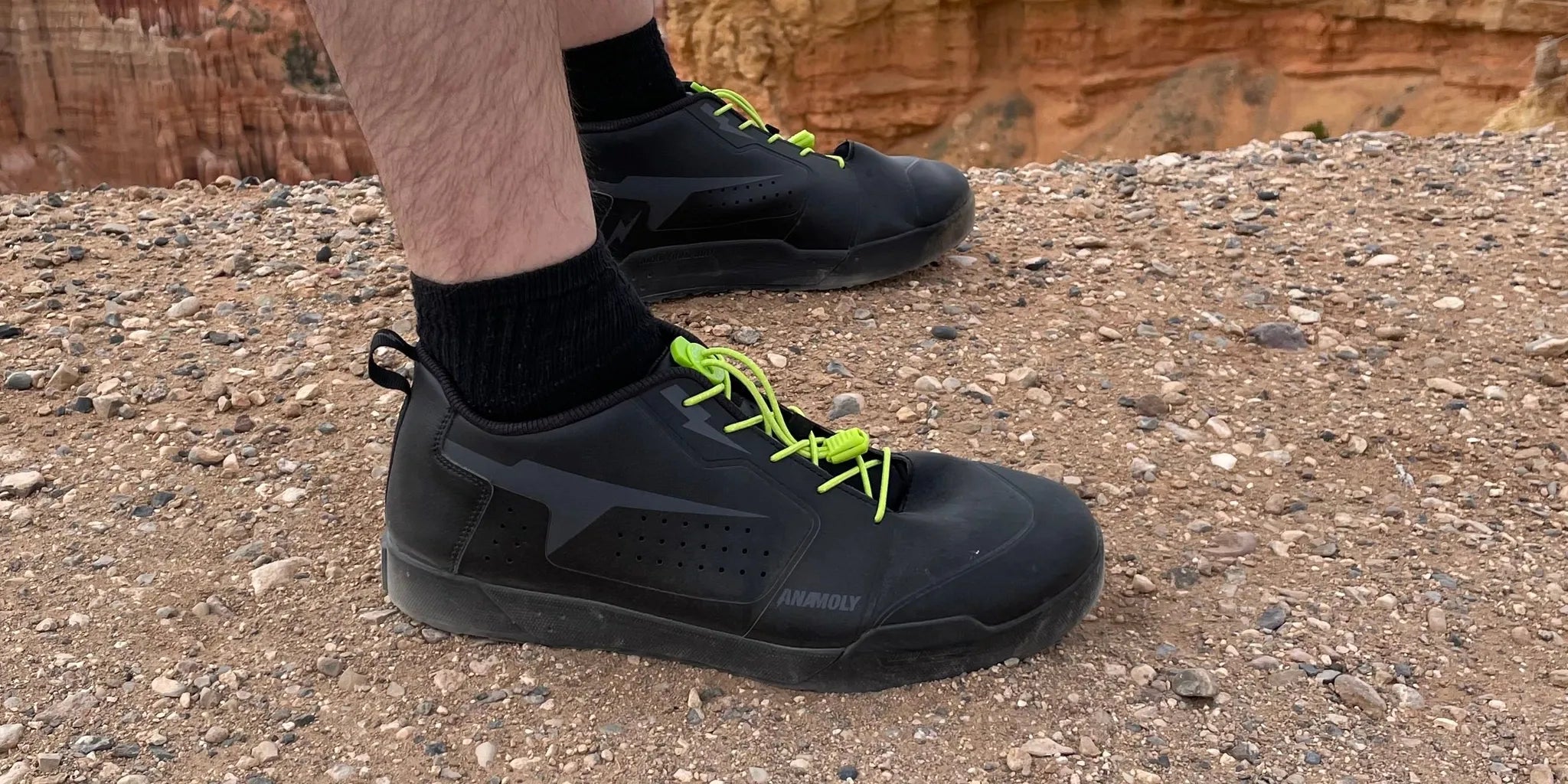
This dual-zone design sits on a high-density EVA midsole. An anti-shock silicone insole pad softens rough trail impacts. The Pin-Lock 2.0 Wide Fit features an extra-wide toe box (US 2.5E): your toes splay naturally for balance during hike-a-bike sections. This is a critical feature that conventional MTB footwear rarely addresses. Each pair is mechanically heat-widened in our Texas shop, guaranteeing a true wide fit.
Built to “the G-Shock of shoes” standard, the Pin-Lock combines stitchless uppers with a reinforced 3D heat-molded toe cap. It delivers durability and protection for the backcountry.
Why Walkability Analysis Matters for Gear-Intensive Mountain Bikers

Performance-minded mountain bikers analyze every equipment choice: tire compound, suspension setup, and frame geometry all get systematic evaluation. Footwear walkability deserves the same attention.
Hike-a-bike sections are not rare exceptions. A typical backcountry ride can include multiple dismounts. Each push taxes your lower body differently than pedaling. The wrong sole design forces your calf muscles to work overtime; your ankles fight for stability on every uneven step. Over a multi-hour ride, this accumulated strain affects your overall performance.
Consider the energy cost difference: walking in a rigid-soled shoe requires about 15 to 20 percent more energy per step compared to a shoe with forefoot flex. That energy comes from muscles already fatigued from climbing. Over twenty push sections in a single ride, the penalty adds up. It reduces the reserve you have for technical descents.
The best MTB shoes for hike-a-bike minimize this penalty. They let you transfer energy efficiently during pedaling; they also allow natural foot mechanics during walking. This dual capability is what separates purpose-built MTB footwear from road cycling shoes adapted for trail use.
Riders who track performance metrics will notice the difference. Faster hike times, better balance on technical terrain, and less post-ride foot fatigue are real benefits. The engineering behind walkable MTB soles directly contributes to trail performance. It is not a compromise; it is a performance feature.
Check the Pin-Lock MTB Shoe 2.0 Wide Fit - the Trail Tech chassis and DualTraction outsole deliver the balanced performance gear analysts demand.
How to Choose the Best MTB Shoes for Hike-a-Bike
When evaluating the best MTB shoes for hike-a-bike, prioritize these five factors::
- Tread Depth and Lug Geometry: Look for multi-directional lugs at least 3-4 mm deep. Heel-braking bars and toe-climbing zones are essential; avoid flat-soled shoes with only surface texture.
- Progressive Sole Flex: The shoe should flex at the forefoot while staying rigid under the midfoot. Hold the shoe and twist: it should resist torsion but bend forward at the toe.
- Rubber Compound: A high-friction compound like Hero Rubber™ is essential. It must perform on both wet and dry surfaces; avoid hard rubber optimized only for pedal pin engagement.
- Wide Fit and Toe Box: A wide toe box (1.5E or wider) allows natural toe splay for balance. Heel lift during steep pushes is common with narrow shoes.
- Ankle Support and Chassis Stiffness: A reinforced heel cup and supportive midfoot prevent ankle rolls on off-camber terrain.

For riders with wider feet, the Pin-Lock MTB Shoe 2.0 Wide Fit addresses all five factors. It has a mechanically widened 2.5E toe box, Trail Tech chassis, and DualTraction outsole. Our FAQ page provides sizing guidance and fit comparisons.
Frequently Asked Questions About Hike-a-Bike Footwear
What makes the best MTB shoes for hike-a-bike different from regular cycling shoes?
The best MTB shoes for hike-a-bike use aggressive heel and toe tread patterns. They have progressive forefoot flex for a natural walking gait. They use high-friction rubber compounds that grip loose, wet, and rocky trail surfaces. Standard road or cross-country cycling shoes lack these features.
Can I use clipless MTB shoes for hike-a-bike sections?
Yes, but with significant limits. The exposed cleat slips on rock and gravel. The stiff shank resists forefoot bend. Recessed cleat shoes improve walkability but still lose ground contact compared to flat pedal shoes.
How does sole stiffness affect hike-a-bike performance?
Sole stiffness directly impacts walking comfort and safety. A rigid sole forces an unnatural, heel-heavy gait. This reduces stability on loose terrain. The best shoes use zoned stiffness, with a rigid midfoot and a flexible forefoot for a natural toe-off motion.
Are wide-fit MTB shoes better for hike-a-bike stability?
Yes. A wider toe box (2.5E or wider) lets your toes splay naturally. This creates a larger, more stable base on uneven surfaces. Wide shoes also reduce heel lift during steep ascents, which prevents blisters and instability.
How does Hero Rubber™ improve hike-a-bike traction?
Hero Rubber™ MTB-G compound increases its friction coefficient in moisture. Standard rubber gets slippery on wet rock or mud. Hero Rubber™ gets grippier on damp surfaces where most shoes lose grip. Its durability also maintains aggressive lug shapes through rocky terrain.
Ready to Conquer Every Section of the Trail
The best MTB shoes for hike-a-bike let you pedal efficiently and walk safely. Zoned sole stiffness, dual-zone tread, and advanced rubber compounds make this possible. Whether bikepacking across mountain passes or pushing through technical singletrack, the right footwear makes every step as confident as every pedal stroke.
Shop the Pin-Lock MTB Shoe 2.0 Wide Fit - engineered with Trail Tech stability chassis, Hero Rubber™ dual-zone outsole, and mechanically heat-widened 2.5E fit for riders who demand on- and off-pedal performance.
About the Author
The Anamoly Press Team combines expertise in athletic footwear engineering, materials science, and trail sports performance. Every gear guide is reviewed by Christopher Armstrong, Founder and Head of R&D at Anamoly Labs, whose 15-plus years in protective gear and footwear development ensure technical accuracy in every article.

Leave a comment
This site is protected by hCaptcha and the hCaptcha Privacy Policy and Terms of Service apply.