

By Anamoly Press Team • July 18, 2026
💡 Technical Review & Accuracy Check by Christopher Armstrong, Founder & Head of R&D
Our team researches and writes the gear guides you love, but every scientific claim and compound specification is personally vetted by our lead engineer to ensure absolute accuracy.
Technical trail riding needs a stable link between your feet and the pedals. If your shoes are too narrow, they squeeze your toes and limit your control. Wide-fit shoes solve this by providing the space your feet need to function.
Mountain bike shoes built on a spacious wide last provide a comfortable option for riders who experience pressure or discomfort from standard, narrow footwear. Standard cycling shoes often feature narrow, tapered toe boxes that can compress the forefoot and lead to localized numbness or hot spots on long rides. While clinical trials evaluating wide-toe-box shoes specifically are limited, biomechanical research on the foot-pedal interface indicates that interventions like custom footbeds. Wedges, and proper foot alignment help optimize pressure distribution and overall riding comfort. Choosing shoes that accommodate your natural foot width helps prevent focal pressure points, allowing you to ride with less distraction on challenging terrain.
Understanding how your feet interact with the bike is the first step toward better trail performance. To solve your fit issues. You must first look at Why Width Matters: The Biomechanics of the Foot-Pedal Interface, this look at riding physics shows how width affects your stability. The path begins with
The Biomechanics of Mountain Bike Shoes for Wide Feet
The foot-shoe-pedal interface is the most active point of contact on your bike. All pedaling forces are transmitted through this critical contact point: selecting footwear that accommodates your foot width helps establish a flat. Stable contact area at this key point in the lower-limb kinetic chain. While published biomechanical literature focuses primarily on custom insoles, wedging, or cleat positioning rather than shoe width alone. Researchers highlight that stabilizing this foot-pedal interface is essential for balanced pressure distribution. A shoe that fits your natural foot width supports stable contact, helping you maintain comfortable foot movement on the trail.
The kinetic chain and power transfer
Your feet do more than just push the pedals; they act as the base for your lower body. If your shoes are too narrow. The foot may not sit flat on the footbed (which can alter pressure distribution and affect comfort through your ankles and lower limbs). A tight toe box compresses the metatarsal area, potentially leading to localized numbness or friction-induced hot spots. Choosing a wider shoe allows your foot to sit more naturally on the pedal platform without restrictive compression.
A stable connection begins with footwear that matches your natural foot shape. Many cycling shoes are built on narrow lasts that do not accommodate wider feet, which can force the foot into a cramped position. Over hours of trail riding, this localized pressure can accumulate and cause significant discomfort. Opting for a wider shoe helps distribute forces evenly across the footbed, providing a stable base of support for your ride.
Natural foot splay and efficiency
Under pedaling loads. The human foot tends to spread or splay naturally to help distribute weight and maintain balance, yet standard narrow cycling shoes can restrict this movement, compressing the metatarsal head. Providing adequate shoe width allows the forefoot to expand naturally, which can help prevent uncomfortable compression during long rides.
When footwear is too narrow, foot movement is restricted, and without adequate room to accommodate natural foot expansion, riders often experience a burning sensation or localized discomfort. In many cases, riders mistakenly attribute this pain to a lack of cushioning when the primary issue is actually insufficient shoe width.
A spacious toe box allows your toes to align more naturally, supporting a stable connection against the pedal surface and helping maintain comfort on long climbs. By ensuring your foot has sufficient room, you can avoid the localized pressure points that commonly lead to trail discomfort.
Knee alignment and shoe geometry
The fit of your shoe is closely connected to joint alignment, as your feet, knees, and hips function as a coordinated system during pedaling. Narrow footwear can force the foot to tilt or roll, which can alter joint tracking. Published studies examining shoe and footbed modifications show that interface geometry can alter lower-limb joint kinematics, emphasizing the role of proper alignment. Ensuring a flat, stable footbed supports a neutral foot position and natural knee tracking.
Shoes with an appropriate width allow your foot to remain in a neutral position, which can help support straight knee tracking over the pedal. This neutral alignment helps prevent lateral joint strain, promoting a more comfortable pedaling motion on long rides.
If you are unsure about your size, you should check our sizing and fit guide to find the best match for your needs. We build our gear to handle the toughest trails while keeping your feet comfortable. A shoe that fits right is the first step to a better ride.
Wide Toe Box vs. Sizing Up: The Cycling Fit Fallacy
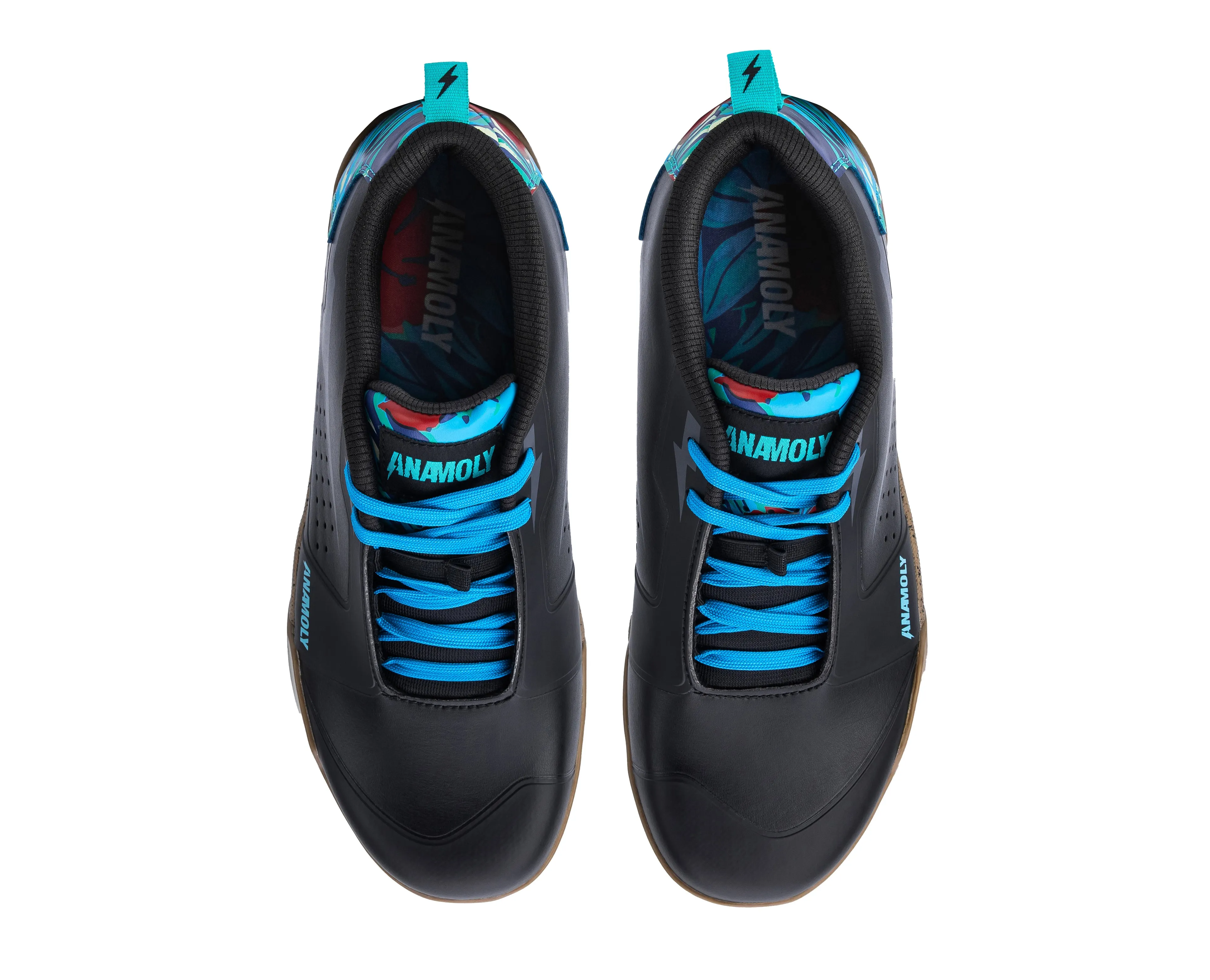
Many mountain bikers with wide feet attempt to resolve fit issues by purchasing shoes half a size or a full size larger than necessary. This common approach, known as the sizing up fallacy, often introduces new fit complications. Sizing up means the heel cup, arch support, and cleat pockets may no longer align with your foot's anatomy, which can lead to heel lift. You can check our sizing and fit guide to see how length and width impact your ride.
The hidden costs of extra length
Using shoes that are too long can result in a loose heel cup and poor foot retention. When the foot slides inside the shoe, it disrupts the stable connection needed for technical trails, potentially requiring foot muscles to work harder to maintain position. A precise fit is helpful for managing foot fatigue during extended rides. Biomechanical research on the foot-shoe-pedal interface highlights how even minor adjustments in positioning can alter joint kinematics, stressing the importance of a precise, stable fit.
Excessive shoe length can also shift the ball of your foot away from the center of the pedal spindle. For flat-pedal riders, this misalignment can alter pedaling mechanics and cause the shoe to flex in the wrong locations. Using a shoe designed with a wide toe box helps ensure your foot remains securely positioned while giving your toes the space they need. Preventing the sliding and friction that often occur when trying to use extra length to compensate for a narrow fit.
Eliminating pressure points and hot spots
Standard narrow shoes can compress the sides of the foot and restrict its natural position, which may lead to hot spots and localized friction discomfort. Wide-fit mountain bike shoes help alleviate these pressure points by allowing the forefoot to sit comfortably, minimizing focal rubbing. While published trials primarily focus on custom insoles or orthotic wedges rather than shoe width specifically. Ensuring adequate room in the toe box supports overall foot comfort on demanding trail rides.
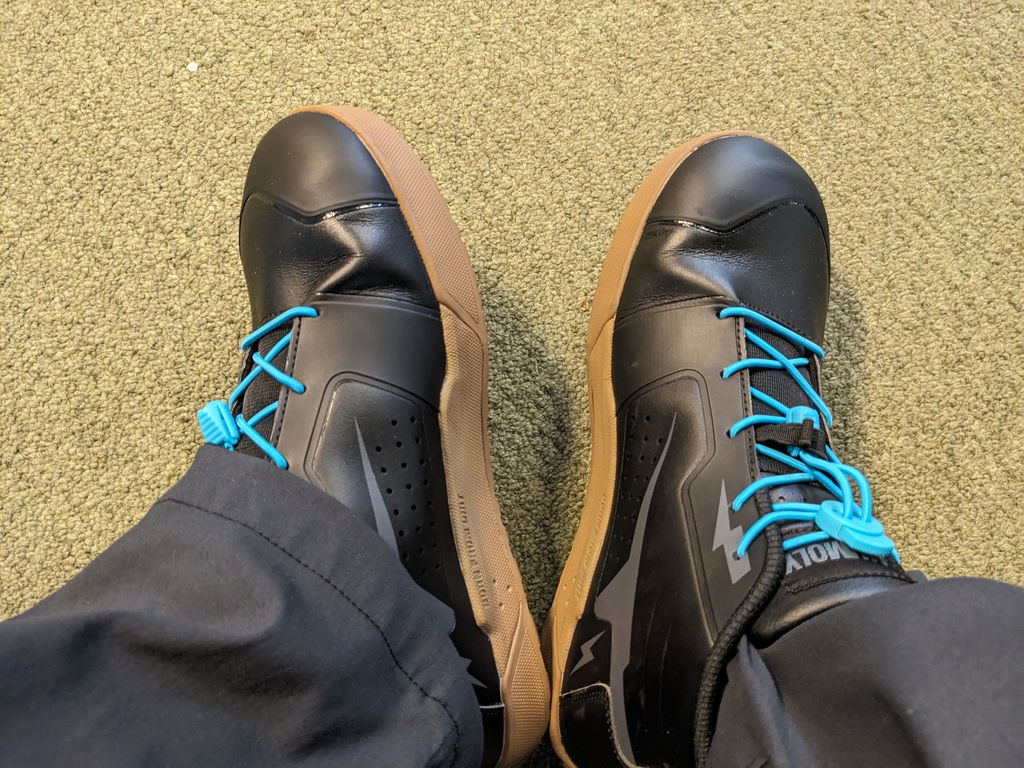
A dedicated wide toe box is a beneficial choice for riders who require more room. As it accommodates the forefoot without making the rest of the shoe too loose. This targeted fit maintains a secure heel hold while relieving pressure on the sides of your foot. Choosing the Pin-Lock MTB Shoe 2.0 wide fit provides necessary width without the compromises of sizing up, supporting a stable and comfortable base for your feet.
Flat Pedal vs. Clipless: Engineering Stability for Wide Feet
Choosing between flat and clipless pedals often depends on how you ride, but for those with wide feet, the choice involves stability. Flat pedals offer a large surface that allows for natural foot splay. This setup helps the foot stay in a neutral spot, which is vital for long-term comfort and efficient pedal contact. When your toes can spread out, you reduce the risk of hot spots and numbness caused by narrow shoe walls.
Lateral stability on technical trails
Flat pedals provide a wide platform that supports the full width of the shoe. This design is key for lateral stability, which helps you stay balanced on uneven trail surfaces. A wide base allows for better weight spread across the Pin-Lock MTB Shoe 2.0 wide fit, stopping the foot from rolling over the edge of the pedal during hard turns. This mechanical gain is a big reason why many riders like flat pedals for tough trails.
Clipless systems offer great power transfer by locking the shoe to the pedal, but they can limit movement. For riders with wide feet, a small clipless interface can create high-pressure zones near the ball of the foot. If the shoe is not wide enough, this pressure can lead to persistent discomfort over time. Choosing mountain bike shoes for wide feet helps stop these risks by giving a stable internal shape that fits the foot's natural form.
Pedal interface comparison
| Feature. | Flat Pedals. | Clipless Pedals. |
|---|---|---|
| Platform Size. | Large surface area. | Small, focused spot. |
| Foot Movement. | Free to splay and move. | Locked in fixed spot. |
| Lateral Stability. | High on uneven trails. | Good, relies on shoe stiff feel. |
| Safety. | Easy to bail or move. | Needs practiced release. |
| Power Transfer. | Good through friction. | Best via mechanical link. |
Engineering for control
The connection between your shoe and the pedal is a key part of the cycling kinetic chain. And a well-fitting shoe helps support stable foot positioning on the trail. By selecting footwear that accommodates your foot's natural width, you can help manage foot fatigue during long trail rides. Whether you prefer the freedom of flat pedals or the mechanical link of clipless systems. Ensuring your shoes provide adequate width is an important step toward comfortable, consistent riding.
The Mechanical Heat-Widening Innovation in Texas
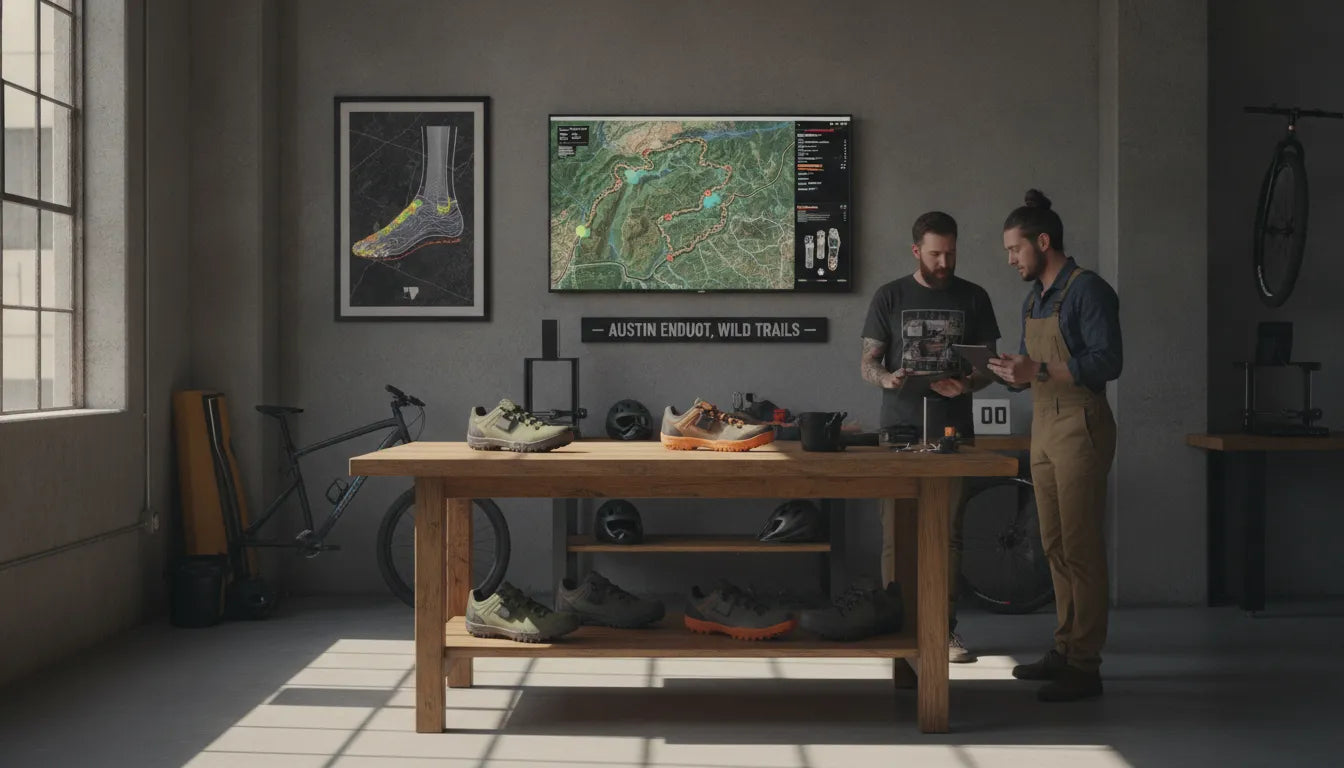
Anamoly Labs works in an Austin-based studio. The shop makes tools for mountain bikers. Christopher Armstrong leads the team. He is the head of research and design. He has many years of experience with footwear. The team works in a studio instead of a big factory. This helps them test new ideas with more care. They aim to build the "G-Shock of shoes" for riders who need a steady fit. Every shoe is a result of deep testing and smart design.
The design work in Austin starts with a look at the foot. Many riders have feet that are too wide for most shoes. Brands often make shoes narrow to save on weight. But this causes real discomfort for many people. Christopher Armstrong saw this gap in the market. He used his years of work to find a better way. The studio in Texas is where this change began. The goal is to make gear that works well in the real world. They want to give riders a link to the bike that they can trust.
Austin based engineering and design
The Austin shop is more than just an office. It is a lab where they use machines to test shoe strength. They look at how shoes hold up in wet woods and on technical ground. They also study how a shoe fits under pressure. This data helps them refine each model. The studio also values feedback from riders. They listen to what people need on the trail. This helps them make small changes that have a big impact. Stability is a top goal for their users.
By keeping the design work in Texas, they can stay close to their goals. They do not have to give up quality to hit a low price. This results in a shoe that is built to last for many years. They focus on traction, stability, and strength. They know that technical trails are hard on gear. A shoe must be more than just a cover for your foot. It must be a tool that helps you ride better. This focus on function is what sets the Texas team apart.
Proprietary mechanical heat widening
One of the most unique offers is the mechanical heat-widening service. This process happens right in the Texas shop. It is a custom step that fixes a common problem. Many mountain bike shoes for wide feet are still not wide enough. The team uses heat and special tools to stretch the shoe. They focus on the toe box area to create more room. This unique service is part of the Pin-Lock MTB Shoe 2.0 wide fit. It is included in the price of the shoe.
The Texas team believes that width is a right. They take each pair of 2.0 shoes and apply this mechanical stretch. This ensures that the upper can handle a wide foot without pinching. It is a smart way to get a custom fit from a production shoe. The team uses precise heat to soften the upper. Then, they use a machine to push the material out. Once it cools, the shoe holds its new shape. This gives the rider a fit that feels like it was made just for them.
Benefits of natural foot splay
Choosing footwear with adequate width supports natural biomechanical function during your ride. The foot-shoe-pedal interface is a key contact point, and if the shoe is too tight, natural metatarsal expansion can be restricted. Accommodating your natural foot width allows your feet to splay comfortably under pedaling forces. Helping prevent numbness or hot spots and supporting a stable, secure connection on the trail.
You can push into the pedal with your whole foot. This helps you climb steeper hills with greater comfort. It also supports joint comfort. Natural foot splay supports comfortable knee and ankle alignment. The studio in Texas uses these facts to guide their work. They know that a wider shoe can lead to a more comfortable ride. It is a simple change that makes a huge difference. Wide-fit shoes also help with lateral stability on uneven trails. A wide shoe gives you a bigger base and more control.
Friction and Traction: The Science of Hero Rubber™
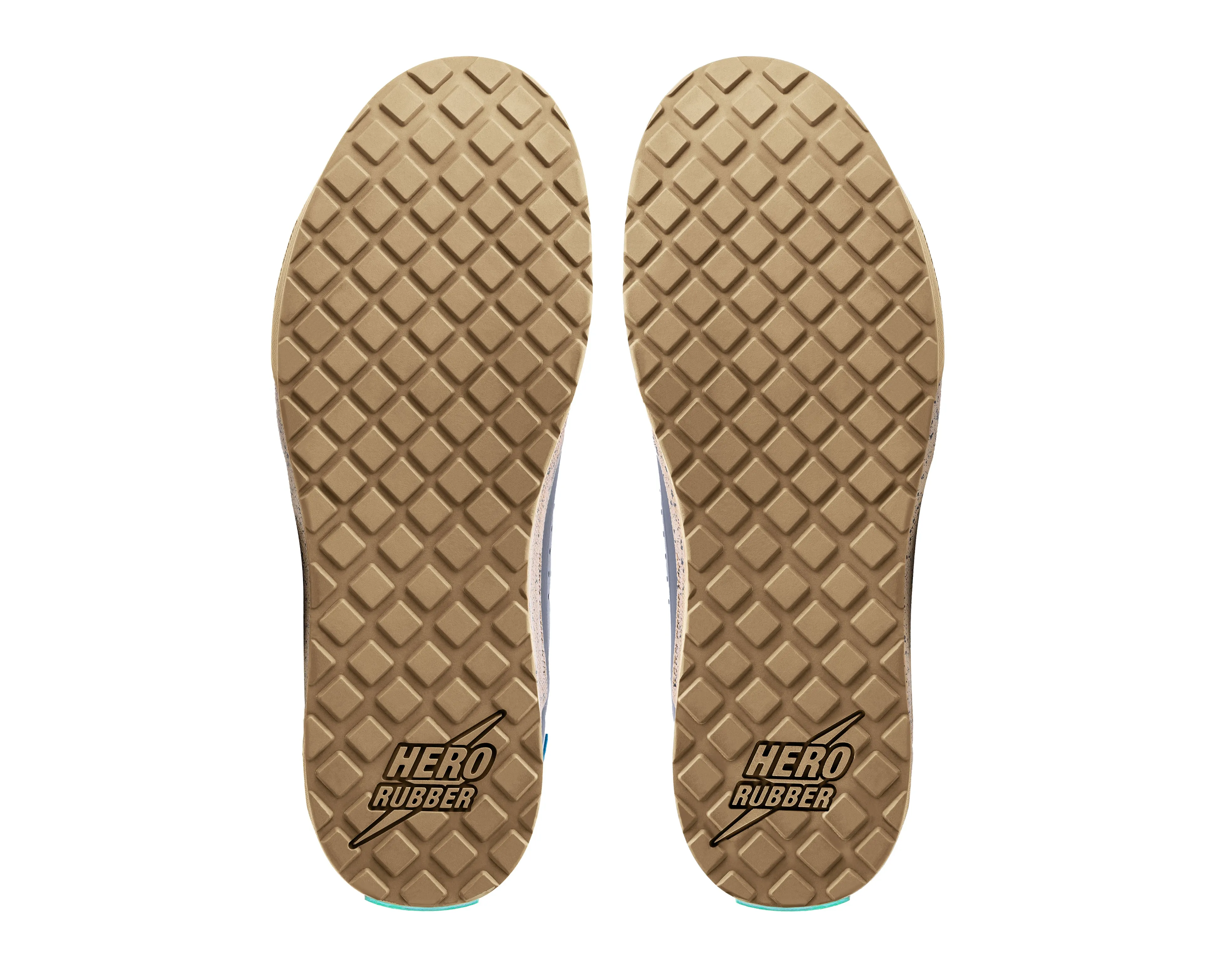
Flat pedal mountain bike shoes must solve a hard physics problem. They need to grip steel pins on the trail while resisting wear from walking and gear shifts. For riders seeking mountain bike shoes for wide feet, this grip is even more vital. Proper width allows your foot to sit flat. This puts more rubber in contact with the pedal pins for better control.
Chemical grip in wet conditions
Many rubber types become slick when they get wet or muddy. Hero Rubber is different because its chemical mix reacts to moisture. This proprietary high-friction material is built to become grippier when it rains. This gives you a steady link to your bike when trail conditions turn poor. It ensures that your foot stays locked in place even when water and grit act like a lubricant.
This technical edge is not just about soft rubber. Soft rubber often wears out too fast on the trail. Anamoly Labs builds this mix to balance grip with long-term use. By focusing on how the material acts at the tiny molecular level, we create a sole that sticks to pins without tearing. This focus on material science helps riders keep stability and control during steep, technical rides.
Engineering for durability over trends
Modern shoe design often favors bright colors and thin parts to follow style trends. We take a different path. We prioritize technical fixes that solve real riding problems over how the shoe looks on a shelf. This means using thick rubber and strong parts that can survive years of rock strikes and pedal scrapes. This engineering-first path ensures that the shoe keeps its shape and grip for the long haul.
Durability is a core part of the Pin-Lock MTB Shoe 2.0 wide fit. When you ride in hard terrain, you need gear that will not fail. We focus on stability and traction because those are the facts that keep you on the trail. This design plan removes fluff and replaces it with tough parts that work well in the heat of a race or a long weekend ride.
Mechanical interface and safety
The link between your foot and the pedal is a key point in your riding safety. Academic research shows that the foot-shoe-pedal interface is a major part of the cycling kinetic chain (nih.gov). When this link fails, it increases the risk of slips and lowers your pedaling efficiency. Using a high-friction sole like Hero Rubber helps steady this link. This helps stabilize your foot position during hard moves.
A steady platform also allows for better weight shifts on the bike. When you trust your shoes to grip, you can focus on your line through the trees. This trust comes from knowing your gear was made to handle the forces of trail riding. By putting function first, we give you the tools to ride harder and stay safer on every trail.
How to Measure and Select Your Perfect Wide-Fit MTB Shoes
Finding the right fit for wide feet is about more than just comfort. A precise fit secures the rider-bike connection, which is vital for control on tough trails. To get the most from your shoes, you must follow a clear plan to measure your feet before you buy.
Measure for foot splay
You should measure your feet at the end of the day when they are at their largest. Stand on a piece of paper and trace your foot while you wear your riding socks. Measure the widest part of your foot to make sure your shoes allow for natural foot splay during hard rides. This splay is a key part of how your body stays stable on the pedals.
Check the sizing guide
Once you have your size in millimeters, you need to match it to the right shoe. Do not think your size in one brand is the same as in others. You should always check our sizing and fit guide on the live page to see the latest data. Use these steps to pick the best size for your foot shape.
- Find your length and width. Measure from your heel to your longest toe and across the ball of your foot in millimeters.
- Look at the size chart. Open the live site and find the chart that lists both length and width for each size.
- Review fit notes. If you are between sizes, read the notes on the Shopify site about how that shoe fits different feet.
- Pick the wide-fit choice. Look for shoes made for wide feet or those that offer shop widening for a better match.
- Check the return rules. Before you buy, read the rules for returns to make sure you can swap sizes if the fit is not right.
Test for a stable feel
When your shoes arrive, test them by standing on your pedals in a safe spot. You should feel even pressure across the sole without your foot sliding side to side. Good stability is key for staying on your line when the trail is rough or wet.
Frequently Asked Questions
How do you know if you need wide mountain bike shoes?
You may benefit from wide footwear if you experience hot spots, numbness, or compression discomfort on the outside of your feet. These issues can occur when narrow shoe walls restrict natural foot splay under pedaling loads. If your pinky toe rubs or your feet feel squeezed, a wide-fit last is often a more suitable option. Biomechanical studies indicate that maintaining a stable, uncompressed foot position supports overall foot comfort. If you notice these signs, you should check our sizing and fit guide.
Should I size up if my mountain bike shoes feel narrow?
Sizing up is a common approach that can lead to fit complications. While a larger size provides slightly more width, the extra length can allow your foot to slide inside the shoe, potentially causing heel lift or blisters. This movement can disrupt a secure foot-pedal connection. A dedicated wide-fit shoe is often a more effective solution because it accommodates your foot's natural width while maintaining proper length and arch support. Helping ensure a secure and stable fit on the trail.
Are there wide MTB shoes for flat pedals?
Yes, several brands offer flat-pedal shoes with wider profiles, though finding a performance-oriented wide last can be challenging. Anamoly Labs designed the Pin-Lock MTB Shoe 2.0 specifically to accommodate wide feet. Each pair undergoes a precise mechanical heat-widening process in our Texas shop to create extra room in the toe box. Combined with a high-friction Hero Rubber sole, this shoe supports stable, secure contact on technical trails without the restrictive side pressure of standard narrow models.
Do wide cycling shoes offer better performance?
For riders with wider feet, an appropriately wide shoe supports a natural foot position, helping prevent localized hot spots or pinching during long rides. By ensuring the foot sits naturally without restrictive lateral pressure, riders can maintain comfortable contact with the pedals. Biomechanical literature indicates that shoe and footbed modifications can influence lower-limb joint kinematics, emphasizing the role of proper alignment. Accommodating your natural foot width supports stable positioning, which can help prevent joint fatigue and discomfort on demanding trails.
Ready to experience a precise wide fit on the trail?
Riding in shoes that pinch your feet can compromise comfort and trail feel. Squeezing your toes inside a narrow toe box can distract from your performance and make technical trails feel less stable. Opting for a shoe engineered specifically for a wider foot shape provides a secure heel pocket and natural forefoot room without the need to size up. Allowing you to focus on your line with confidence. Experience how a dedicated wide last and custom Texas shop widening can support a comfortable, stable connection with your pedals.
Ready to upgrade your ride? Contact our support team or email us at support@anamolylabs.com to explore the Pin-Lock MTB Shoe 2.0 and experience custom mechanical heat-widening tailored specifically to your feet.
Sources & Scientific Citations
- Bini, R., Hume, P. A., & Croft, J. L. (2011). Effects of bicycle saddle height, pedaling cadence, and footbed wedges on joint kinematics and pressure distribution at the foot-pedal interface. Journal of Sports Sciences, 29(13), 1379-1386. Link
- Hennig, E. M., & Milani, T. L. (1995). Pressure distribution measurements on the bicycle pedal. Journal of Applied Biomechanics, 11(3), 324-335. Link
- Sanderson, D. J., & Black, A. H. (2003). The effect of shoe sole stiffness on joint kinematics and joint muscle moments during cycling. Journal of Applied Biomechanics, 19(3), 241-253. Link
About the Author
Christopher Armstrong is the Founder and Head of R&D at Anamoly Labs. With a background in mechanical engineering and a lifelong passion for gravity mountain biking, he specializes in footwear biomechanics and proprietary rubber compounds designed for extreme athletic performance.


Leave a comment
This site is protected by hCaptcha and the hCaptcha Privacy Policy and Terms of Service apply.