
By Anamoly Press Team • July 22, 2026
💡 Technical Review & Accuracy Check by Christopher Armstrong, Founder & Head of R&D
Our team researches and writes the gear guides you love, but every scientific claim and compound specification is personally vetted by our lead engineer to ensure absolute accuracy.
A sudden foot slip on a wet root can end a great trail ride in seconds; true trail control depends entirely on the connection between your shoe sole and pedal pins.
The stickiest rubber for flat pedals is a soft, high-friction compound designed to deform around pedal pins under a rider's downward weight. Anamoly Labs' Hero Rubber™ is custom-engineered to excel in this key role—actually increasing its friction level when exposed to trail moisture. Academic studies on rubber sliding friction show that traction increases as the sole material deforms into the rough microstructures of the pedal platform. This key viscoelastic deformation creates a secure mechanical interlock between the pins and the shoe, keeping your feet planted on steep, rough trails; riders must choose sole compounds that balance this compliant, high-friction grip with enough physical durability to resist tearing from sharp steel pins.
To find the perfect footwear, you must first understand the physics of how rubber grabs a pedal platform. In the next section, What makes rubber sticky? The friction coefficient explained, we break down how compounds conform to pins and why certain formulations outperform others on technical terrain.
Stickiest Rubber For Flat Pedals: What makes rubber sticky? The friction coefficient explained
When you ride flat pedals, you want your shoes to stick like glue—this grip comes down to physics. The main measure of this stickiness is the coefficient of friction: a value that shows how well two surfaces slide against each other. A high value means more grip on the trail (for mountain bikers, finding the stickiest rubber for flat pedals is the key to control).
Viscoelastic deformation and micro-contact
Standard friction laws say that grip does not depend on contact area—but rubber does not follow standard rules. It is soft and bends easily; when it touches a rough surface, it bends and flows, meaning a larger contact area gives you more grip. Under a microscope, even a smooth metal pedal pin is full of tiny peaks and valleys; sticky rubber must conform to these rough shapes to hold fast.

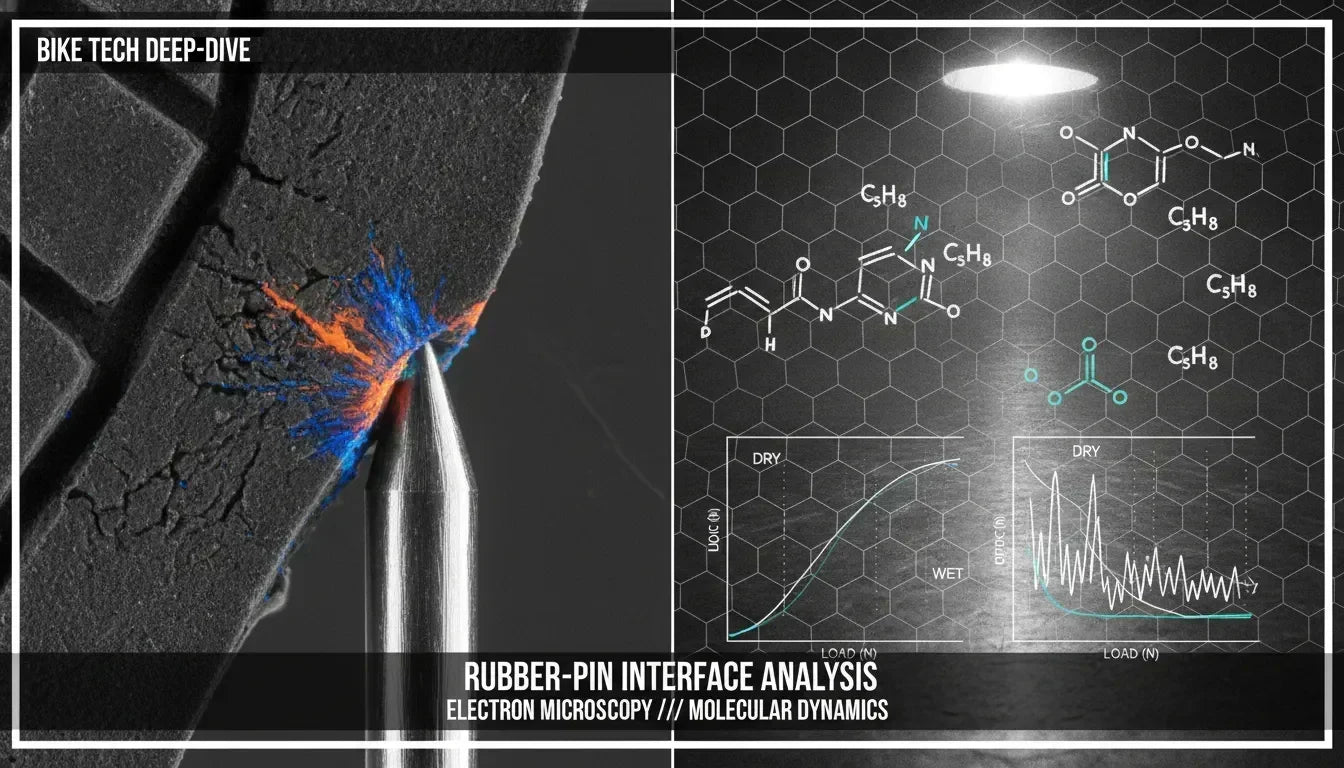
To grip a flat pedal, rubber must stretch and sink into the metal (an action called viscoelastic deformation, the way rubber acts like both a liquid and a solid). When a pedal pin pushes into the shoe sole, the rubber flows around it; as the shoe slides, the rubber loses energy while returning to its shape. The sliding friction of rubber on rough ground relies on energy loss from viscoelastic deformations—this loss of energy acts like a brake, stopping the shoe from sliding off the pedal.
Surface energy and molecular adhesion
Friction also works at a molecular level: when two clean surfaces touch, they form short-lived chemical bonds (called molecular adhesion). Research shows that rubber sliding friction depends heavily on surface energies and interfacial contact—think of it like tape; the rubber acts like a soft glue that wants to stick to the pedal pin. If the rubber has high surface energy, it forms a stronger bond with the metal; this molecular sticky force keeps your foot in place when you ride over bumps.
The synergy of pins and rubber
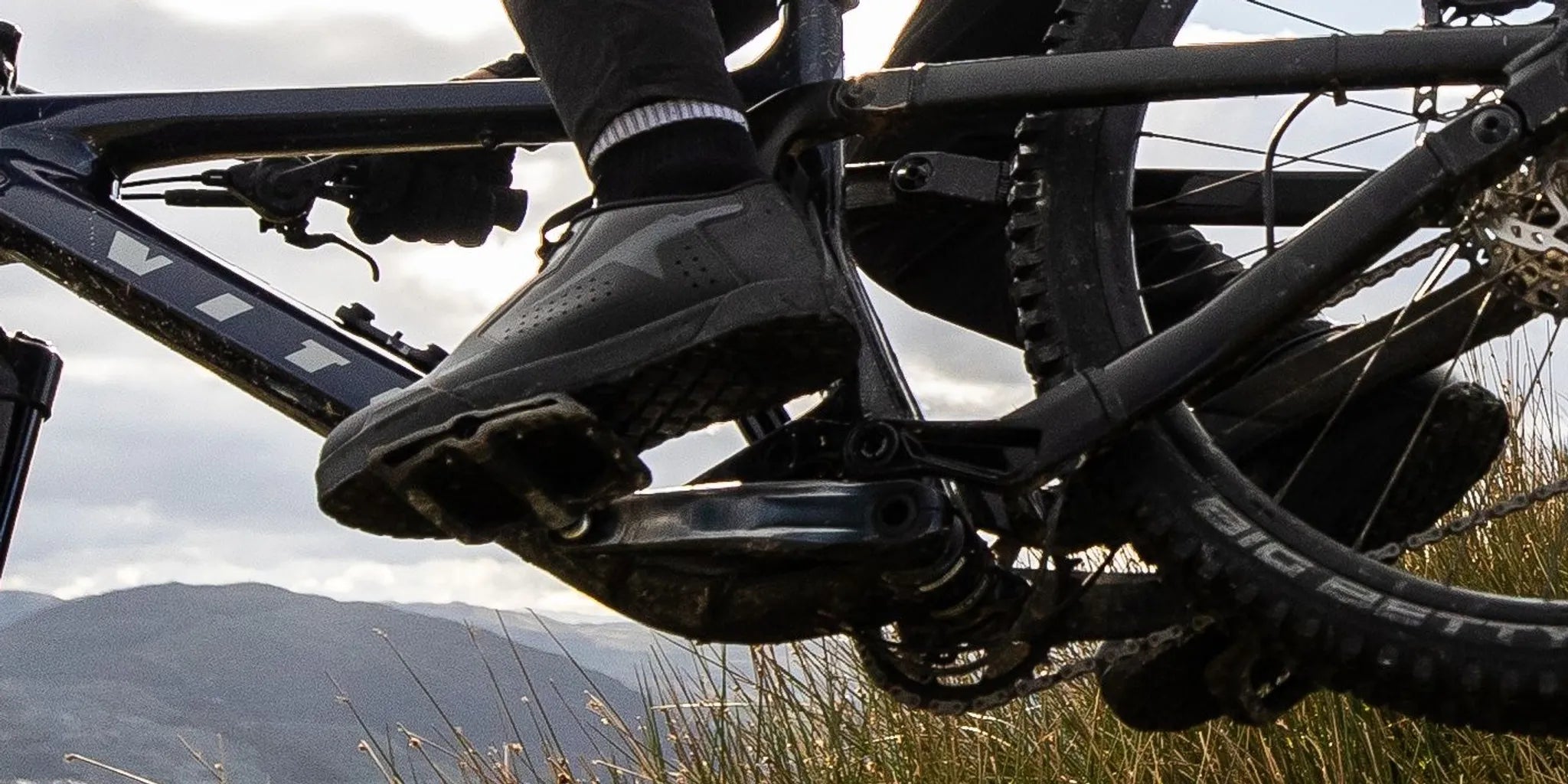
Traction on the trail is not just about the rubber compound—it is a system. True flat pedal traction relies on a synergy between rubber hardness, pedal pin shape, and compound deformation; the pedal pins must sink deep enough into the sole to lock your foot in place. If the rubber is too hard, the pins cannot sink in; if the rubber is too soft, it can tear or shear under load. The best ride comes from matching pin height with compound flex. Explore the Tech Stack to see how our custom high-friction rubber compound drives pedal traction.

Why soft rubber grips better on flat pedals than hard rubber
When you search for the stickiest rubber for flat pedals, the answer comes down to sole compliance: soft rubber deforms easily under the weight of a rider. This soft flexing lets the sole conform to the pedal face and the pins—a connection that keeps your feet secure on rough trails.
The physics of mechanical interlocking
True grip on flat pedals relies on mechanical interlocking: the rubber flows into the tiny gaps of the metal pedal surface, creating a tight physical connection that resists shear forces. When a pedal pin presses into a soft sole, it creates a deep pocket.
But moisture or sweat can act as a lubricant and reduce grip; lab studies show that rubber friction drops fast at high sliding speeds when wet (see this PubMed study on sliding friction). A soft sole helps offset this drop by keeping contact high.
Measuring hardness with Shore A durometer
Engineers measure rubber hardness using the Shore A durometer scale—lower numbers mean the rubber is softer. Most flat pedal shoe soles rate between 50 and 65 on this scale; a softer rubber offers more compliance but has less tear resistance.
This brings us to a major trade-off in sole design: softer rubber blends provide superior micro-deformation for grip but wear faster than high-durability, firmer compounds. Stickier soles wear out fast. Our team uses a high-friction rubber compound designed to strike a better balance between grip and wear.
Matching compound choice to your riding style
Your riding style dictates which compound you need: technical trail riders need maximum traction on rough descents. For them, a soft sole is a vital safety tool (it keeps feet glued to the pins); without it, feet can slip on fast drops.
By contrast, cross-country riders often prefer harder compounds—they spend hours pedaling on smooth paths, and a firmer sole lasts longer, resists wear, and transfers power with less loss. Choose your rubber based on the trails you ride most.
Finding the right balance between grip and wear will change how you ride; check out our options if you want to feel how a compliant sole holds the trail. Explore our collection—you can find the perfect shoe for your specific terrain.
How temperature changes rubber grip: cold-weather performance drop
Winter rides, alpine descents, and early morning shuttles can expose mountain bike shoes to extreme cold. For riders seeking the stickiest rubber for flat pedals, temperature is a major factor: the material properties of a shoe sole change as the temperature drops.
The physics of the glass transition temperature
All rubber compounds have a certain glass transition temperature—a point known as Tg in material science. Above this temperature, rubber remains soft, flexible, and pliable; but below its Tg, the molecular chains of the polymer freeze in place, and the rubber behaves more like a rigid plastic. This state change stops the sole from molding to the pedal surface.
This drop in grip occurs because rubber friction on rough surfaces relies on energy loss through viscoelastic deformations as the material slides; when a compound cools toward its Tg, it loses its viscoelastic properties (it can no longer deform or absorb energy), which quickly drops the friction of the shoe sole.
Why cold weather reduces micro-deformation
Most standard flat-pedal rubber compounds begin to harden when the temperature falls below 50°F (10°C); as the rubber stiffens, its durometer rating rises. This hardening makes it hard for steel pedal pins to sink into the tread—without this key micro-deformation, the pins slide across the hard rubber surface rather than locking into it.
This hardening has a major impact during real rides: a cold sole cannot adapt to the subtle texture of rock slabs or roots. Mountain descents or early morning shuttle runs often feel slick because the sole lacks the compliance needed for solid contact—making a sole built for cold conditions vital.
Engineering for wider temperature windows
To fight this cold-weather performance drop, high-performance shoes use custom rubber blends; compound engineers design these blends with a wider temperature window. By lowering the Tg of the polymer, the sole stays pliable and soft even on freezing winter trails, ensuring the pedal pins can still bite into the tread for a secure grip.
At Anamoly Labs, we focus on compound chemistry to maintain a stable pedal interface; we design our Hero Rubber™ compound as a high-friction rubber compound that resists hardening in cold weather. This custom design ensures your flat pedal shoe remains compliant and grippy—whether you are riding in summer heat or winter frost.
How leading MTB rubber compounds compare: grip, durability, and weather
Compound categories and material trade-offs
When you choose flat pedal shoes, you face a clear choice in sole design: softer rubber blends give better micro-deformation for grip but wear faster than durable, firmer compounds. This choice means soft soles stick well but wear out fast; hard soles last long but slip on wet roots. Studies on the sliding friction of rubber on rough surfaces show that grip depends on how a compound deforms—true pedal traction relies on the synergy between rubber hardness, pedal pin geometry, and compound deformation. Without the right match, even the softest sole will slide under heavy loads.
Comparison of flat pedal rubber approaches
Most riders search for the stickiest rubber for flat pedals to stay glued to the pins. To help you compare, we can look at the main rubber designs used on the trail today: some brands use soft compounds for dry trails, while others use hard rubber for long life. But the best design blends grip and wear-life while keeping you safe in wet weather—this table shows how these main groups perform when the trail gets rough.
| Compound Approach | Grip Level | Durability | Wet Performance | Best For |
|---|---|---|---|---|
| High-Grip Soft Compounds | Maximum grip | Faster wear | Decent in dry | Dry racing and steep trails |
| Premium All-Condition Compounds | Excellent grip | Good durability | Excellent in wet | Wet trails and daily riding |
| Durable Firm Compounds | Moderate grip | Long wear | Poor wet grip | Commuting and gravel paths |
| Standard Rubber | Minimal grip | Longest wear | Poor wet grip | Casual use and dry hardpack |
Performance balance in varied trail conditions
This table shows that premium blends offer the best balance on the trail; for example, our custom-engineered Hero Rubber™ is built to become grippier when wet—a big step forward from standard soles that lose grip in the mud. By using a high-performance high-friction rubber compound, you gain grip on steep drops and keep your foot on the pedal when the trail gets wet.
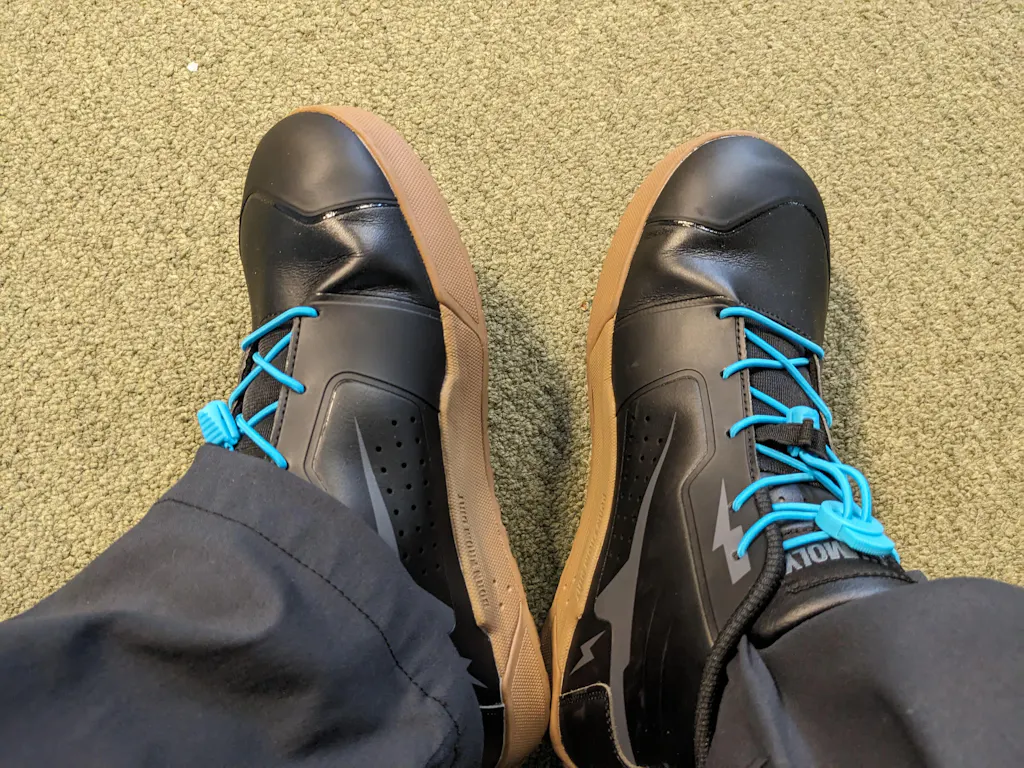
Grip is not just about the rubber; it is also about shoe shape. The 2.0 wide-fit Pin-Lock MTB Shoe is mechanically heat-widened in our Texas shop to give you more room; this wide shape lets your toes spread naturally, giving you a wider base for more stability. With a stable platform, you get better contact between the rubber and your pedal pins; that means you can ride with full trust on the most technical trails.
Compare the Pin-Lock MTB Shoe's Hero Rubber™ on the product page.
What does "stickier when wet" actually mean in a rubber compound?
The physics of wet surface lubrication
Most rubber compounds slip on wet surfaces—this happens because water forms a thin layer between the sole and the pedal pins (a phenomenon called micro-hydroplaning). At high speed, fluid can stop the tread from making solid contact.
But rubber sliding friction does not follow simple fluid rules; it depends much on surface energy and interfacial contact, even in wet weather. When moisture coats a standard shoe sole, the rubber cannot shape itself to the metal, resulting in a sudden loss of traction on the trail.
To combat this loss of grip, makers can build soles that work with moisture: the traction of a rubber compound depends on energy dissipation from viscoelastic deformations as the sole presses into rough surfaces. When water is present, standard rubbers harden and slide—but a custom-engineered compound like Hero Rubber™ works in reverse, using surface chemistry to increase its friction coefficient when it touches water.
How surface energy changes grip
Standard bike tires use deep tread patterns to channel water away; MTB shoes cannot rely on deep tire tread—they must grip flat pedal pins. On a wet trail, a high-friction rubber compound must absorb moisture into its outer layer rather than letting it pool; this change in surface chemistry helps the rubber mold around the steel pins so they can bite deep.
This wet-grip design creates a sticky bond that resists sliding: instead of floating on a film of water, the rubber cuts through the liquid layer, giving riders a steady platform even during a muddy descent. It turns wet rock and mossy roots into sure traction points rather than slick hazards.
Trail performance on wet obstacles
When you ride in wet grass or rain, your feet must stay glued to the pedals (if your shoe slips, you can easily crash). This is why finding the stickiest rubber for flat pedals is key for bad weather: true pedal traction relies on how well your sole deforms around the pedal pins in these harsh moments.
True wet-weather grip means you can charge into wet, technical lines with peace of mind (you will not have to worry about slipping); the right compound keeps you locked in so you can focus on the trail ahead.
Frequently Asked Questions

What is the stickiest rubber for flat pedals?
The stickiest rubber for flat pedals is a soft compound that deforms easily around pedal pins; this micro-deformation (known as viscoelastic deformation) creates a large contact area. According to research on ScienceDirect, rubber grip on rough surfaces relies on this energy dissipation—soft compounds mold to the metal pins to prevent slips on rough trails.
How does rubber hardness affect flat pedal grip?
Rubber hardness is measured with a scale called durometer; softer rubber blends mold better to the pedal pins to give you more grip, but they wear down much faster. Harder compounds last longer but can slip off the pins easily; active riders must choose between soft grip and long-term shoe life. Learn more about compound science on the Anamoly Labs Tech Stack page.
Do cold temperatures reduce mountain bike shoe grip?
Yes—cold temperatures reduce flat pedal shoe grip. Standard shoe rubber gets hard when the temperature drops, making it less compliant; a hard sole cannot mold around the pedal pins, and this lack of compliance leads to foot slips. High-performance shoes use special rubber formulas to stay soft and compliant in cold weather, keeping you secure on the bike.
Is there a flat pedal rubber that grips well in the wet?
Most rubber shoes lose grip when they get wet (water acts as a lubricant on the sole). However, Hero Rubber™ is custom-engineered to increase its grip in wet conditions; academic studies on PubMed show that sliding friction depends heavily on surface energies. By engineering this surface chemistry, the sole becomes sticky and secure even on wet, muddy trails.
How does pedal pin design affect shoe grip?
Grip on flat pedals relies on both the shoe rubber and the pedal pins: tall, sharp metal pins sink deep into the rubber sole to lock the shoe in place. According to Anamoly Labs, true pedal traction is a balance of rubber hardness, pin placement, and compound deformation. You can find more detail about flat pedal shoes on the Pin-Lock MTB Shoe page.
Ready to experience the stickiest rubber for flat pedals?
Every component in the grip equation—compound chemistry, surface energy, temperature response—works together to keep your feet planted on the pedals. The stickiest rubber for flat pedals is not a single formula but a system of engineering decisions: selecting the right durometer, managing glass transition temperature, optimizing wet-surface adhesion, and matching sole compliance to pedal pin geometry. Anamoly Labs' Hero Rubber™ was built to solve this equation from the ground up—delivering grip that actually improves when conditions get wet, cold, or technical.
Ready to feel what true flat-pedal traction feels like? Explore the Pin-Lock MTB Shoe with Hero Rubber™ and experience the science of grip on your next ride.
Sources & Scientific Citations
- Wear (2007) — "The sliding friction of rubber on rough surfaces" — https://www.sciencedirect.com/science/article/abs/pii/S0043164806003085
- PNAS (2024) — "Rubber sliding friction on rough surfaces: The role of surface energy and interfacial contact" — https://pubmed.ncbi.nlm.nih.gov/39311896/
- Anamoly Labs Research & Development — "Hero Rubber™ Field Testing: Absolute Traction & Stability Performance Data" — https://anamolylabs.com/pages/tech-stack
About the Author
The Anamoly Press Team brings you in-depth gear coverage rooted in real-world testing and engineering insight. Every article is reviewed by our Head of R&D to ensure the technical claims match the science behind our designs.

Leave a comment
This site is protected by hCaptcha and the hCaptcha Privacy Policy and Terms of Service apply.