
By Anamoly Press Team • July 3, 2026
💡 Technical Review & Accuracy Check by Christopher Armstrong, Founder & Head of R&D
Our team researches and writes the gear guides you love, but every scientific claim and compound specification is personally vetted by our lead engineer to ensure absolute accuracy.
Mountain bikers need reliable traction to stay upright when the trail gets sketchy. The technical specifications of your footwear determine how much control you have over rough terrain. Building the right rubber interface between your sole and pedal keeps you locked in when conditions deteriorate.
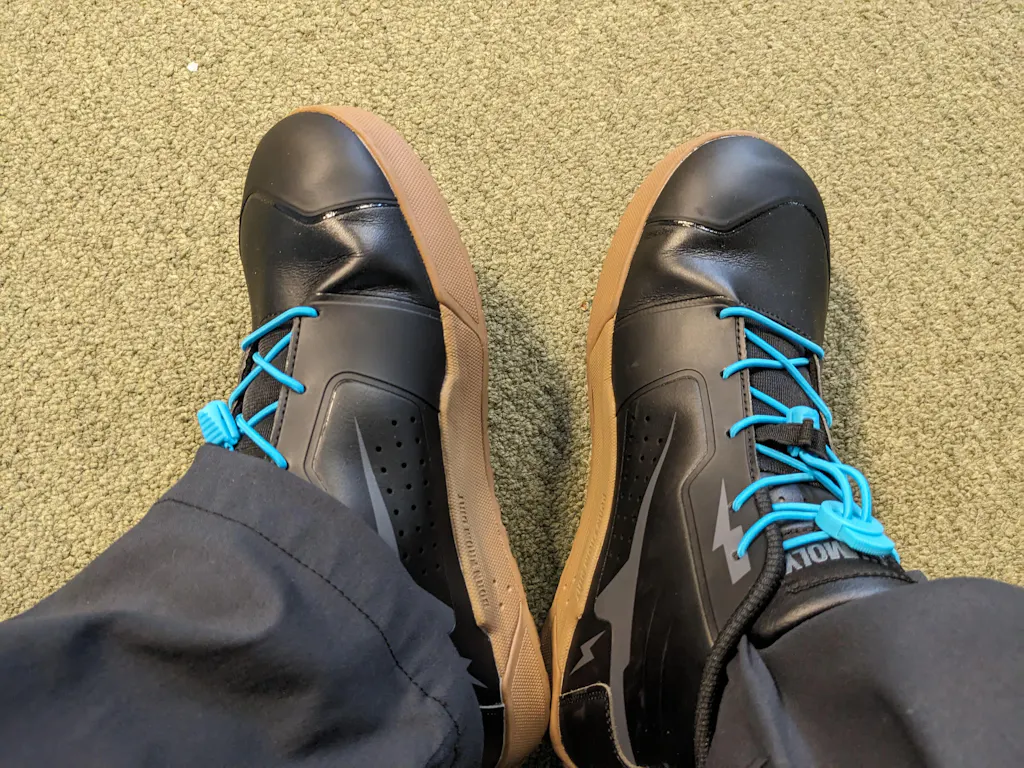
Ready to experience real MTB shoe grip? Whether you ride rocky singletrack in dry conditions or muddy descents in a downpour, the Pin-Lock MTB Shoe from Anamoly Labs delivers the traction you need. Check the Pin-Lock MTB Shoe 2.0 and upgrade your trail confidence today.
MTB shoe grip is the product of deliberate rubber engineering that keeps your feet locked to your pedals through every turn and descent. Good traction comes from the way the shoe sole meets the pedal pins while shedding mud and standing up to rain. On wet trails, water forms a thin layer between the shoe and the pedal that reduces friction. Premium shoes use specially formulated rubber blends to maintain a strong bond and displace water at the contact interface. Research published in Nature demonstrates that advanced rubber composites improve the slip-resistant layer at the pedal interface, giving riders the stable platform they need for aggressive trail riding. By choosing footwear engineered with high-friction rubber compounds, you gain the control required for steep climbs, rock gardens, and high-speed descents in any weather.
Riders often wonder why some shoes feel sticky on the bike while others slip at the first sign of moisture. Understanding the friction science behind rubber technology helps you select gear that performs when it matters most. The path to better control starts with the physics of how rubber meets the trail.
How Does Rubber Physics Determine MTB Shoe Grip?

MTB shoe grip is governed by the physics of friction at the interface between rubber and metal pedal pins. The static friction coefficient of rubber is not a fixed property. It changes with load, pressure, and the geometry of the contact area. When you stand on your pedals, your body weight forces the rubber sole to mold around the pedal pins, creating a mechanical lock. Micro-sliding at this interface releases shear stress gradually, letting the shoe maintain grip even during small movements. This is why a shoe that feels secure under static weight may slip under dynamic trail conditions if the rubber compound cannot manage these micro-transitions.
MTB shoe grip is the critical link between your pedaling power and the trail beneath you. Many riders assume grip depends solely on how soft the rubber feels to the touch. But the real science unfolds at the microscopic level where the sole meets the pedal pins. Understanding how rubber behaves under stress and reacts to applied load reveals why some shoes hold firm while others let go at the worst moment.
How pressure and load change friction
Research published in Nature Scientific Reports demonstrates that the static friction coefficient of rubber is not a fixed material property. It varies based on the applied load, surface pressure, and the geometry of the contact interface. For mountain bikers, this means your weight distribution and stance directly affect how the shoe grips the pedal. A heavier rider generates more normal force at the contact patches, which can increase friction. But only if the rubber compound can handle the higher pressure without deforming excessively.
The shape of the sole plays an equally important role. When you stand on the pedals, the rubber molds around the metal pins, creating the mechanical lock that riders call stickiness. Anamoly Labs engineers this interface carefully, leveraging mtb rubber technology to maximize the real contact area between sole and pedal. The goal is to ensure consistent grip during hard cornering and steep climbs where traction matters most.
Creating air pockets for wet grip
Wet trails present one of the biggest challenges for mtb shoe grip. Water fills the microscopic gaps between the shoe sole and the pedal surface, reducing the real contact area and creating a lubricating film that promotes sliding. To combat this, rubber engineers incorporate specific fillers like activated carbon into the compound. These additives create small surface depressions in the rubber that trap air pockets and help displace water from the contact zone.
Research published in Nature Scientific Reports confirms that these micro-features improve the slip-resistant interface by maintaining direct rubber-to-pin contact even in wet conditions. While brands like Ride Concepts and Five Ten offer quality options, Anamoly Labs focuses on refining this engineering detail. The Pin-Lock MTB Shoe uses micro-depression technology to keep the sole sticky when the trail turns to slop.
Micro-sliding and shear stress management
The transition from static grip to sliding is not instantaneous. Tiny movements called micro-sliding occur at the rubber-pin interface before full grip loss happens. These sub-millimeter shifts, driven by your body weight on the bike, help release shear stress in the rubber compound gradually. This allows the shoe to maintain a high coefficient of friction even during the small relative movements that happen when you shift your weight through a turn.
A shoe engineered to handle micro-sliding will not suddenly release when you hit a rock garden or drop into a steep chute. Instead, it provides continuous feedback and a progressive feel that lets you sense the limit of traction before it breaks away. By focusing on the interface physics, Anamoly Labs builds shoes that keep you upright in the worst trail conditions. Leveraging science to solve the problems riders face every day.
- Static friction changes with load, not just material softness
- Micro-depressions in the rubber trap air and displace water for wet grip
- Micro-sliding releases shear stress gradually for progressive feel
What Makes a Mountain Bike Sole Sticky? Rubber Compounds Decoded
The stickiness of an MTB shoe sole comes from the precise formulation of its rubber compound. Modern outsoles are complex blends of polymers, fillers, and chemical additives engineered to balance softness for pin penetration with rebound resilience for durability. The polymer base determines how well the rubber molds around pedal pins, while additives like activated carbon create micro-structures that improve wet traction. Rebound characteristics matter too. A slow-rebound (dead) rubber keeps pins embedded, while high-rebound rubber can bounce the foot off on rough terrain.
Mountain bike shoe grip starts with the chemistry of the rubber compound itself. Modern MTB soles are not simple solid blocks of material. They are sophisticated composites of polymers, reinforcing fillers, and chemical modifiers, each chosen to tune specific performance characteristics. Creating a sticky sole requires balancing softness for pin penetration with resilience for long-term durability.
Polymer blends and molecular friction
The foundation of any high-performance sole is its polymer matrix. Brands like Five Ten and Ride Concepts use different base polymers and plasticizer ratios to achieve specific goals for traction and wear life. A softer rubber compound deforms more easily around pedal pins, increasing the real contact area and creating a stronger mechanical lock. This is a central principle of mtb rubber technology. The rubber must flow around the pins without tearing or chunking out over time.
Friction at the molecular level is governed by more than just softness. Research shows that the static friction coefficient depends on the applied load, the pressure distribution, and the geometry of the contact area. When you stand on the pedals, your body weight forces the rubber into the crevices of the pedal surface. This mechanical interlocking, combined with molecular adhesion between the rubber and metal, creates the high-friction bond that riders experience as stickiness.
Chemical additives and surface engineering
Chemical fillers play a critical role in how an outsole handles both wet and dry conditions. Many premium outsoles incorporate additives such as activated carbon or sodium chloride to modify the rubber surface at a microscopic level. These materials create small voids or depressions in the sole that trap air and actively displace water from the contact patch. This micro-engineering approach has been shown to improve the slip-resistant interface between footwear and the contact surface.
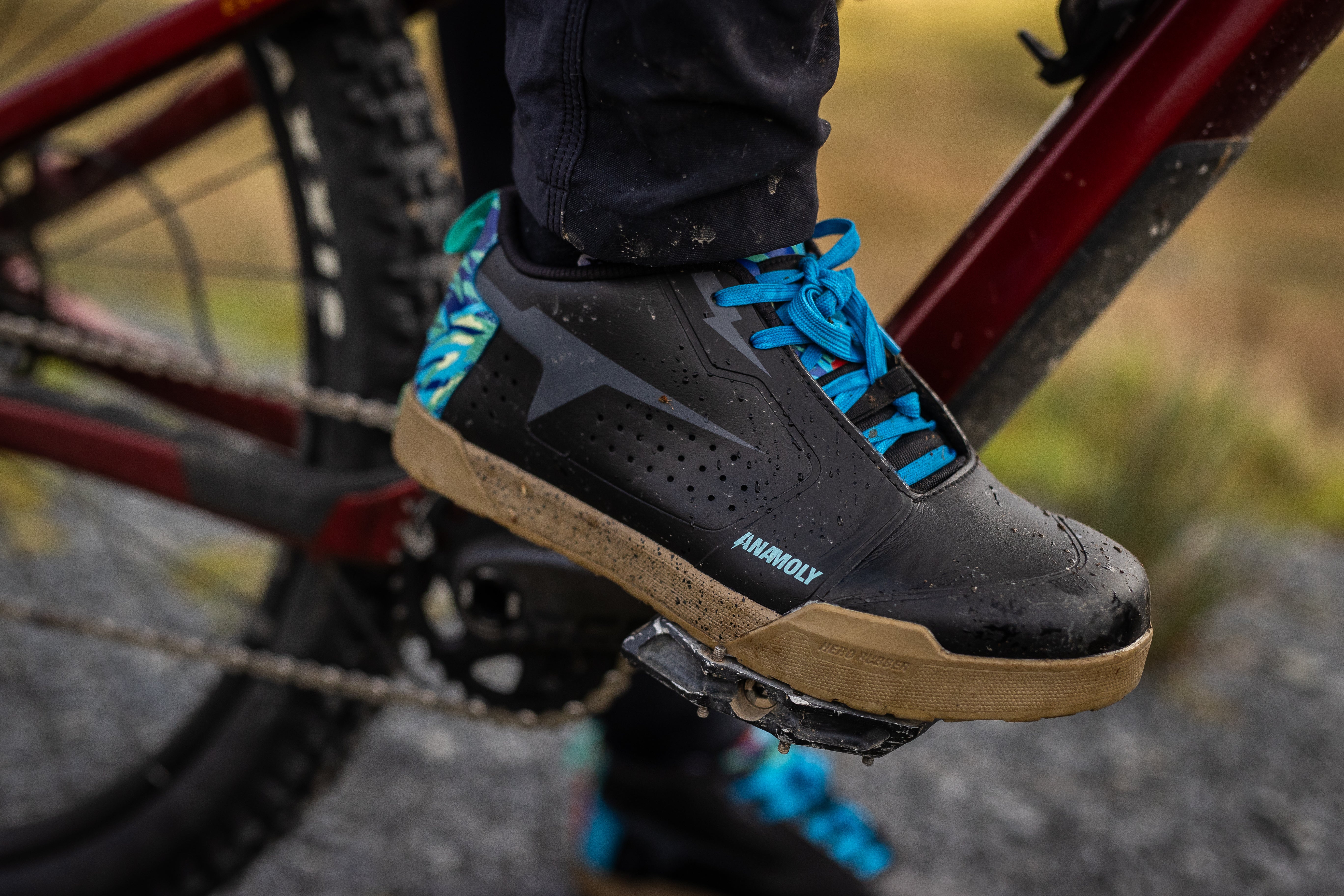
Anamoly Labs takes this further with the Hero Rubber compound. Most rubber compounds become slicker when wet as water reduces direct contact. Hero Rubber is formulated to reverse this effect. It becomes grippier when damp, providing active wet-weather performance rather than simply resisting degradation. Riders can trust their Pin-Lock MTB Shoe during stream crossings and wet-rock traverses because the compound actively improves traction as moisture increases.
Why rebound matters for pedal feel
Rebound resilience, how quickly the rubber returns to its original shape after compression, is the final piece of the stickiness equation. Low-rebound (dead) rubber absorbs the energy of pedal pin impact and holds the deformation, keeping the pins embedded. High-rebound rubber acts like a spring, potentially ejecting the foot on sharp impacts. Most top-tier MTB shoes aim for slow rebound, allowing the pins to sink in and stay locked through repeated impacts on technical terrain.
How Do MTB Shoes Perform in Rain and Mud? Wet-Traction Science

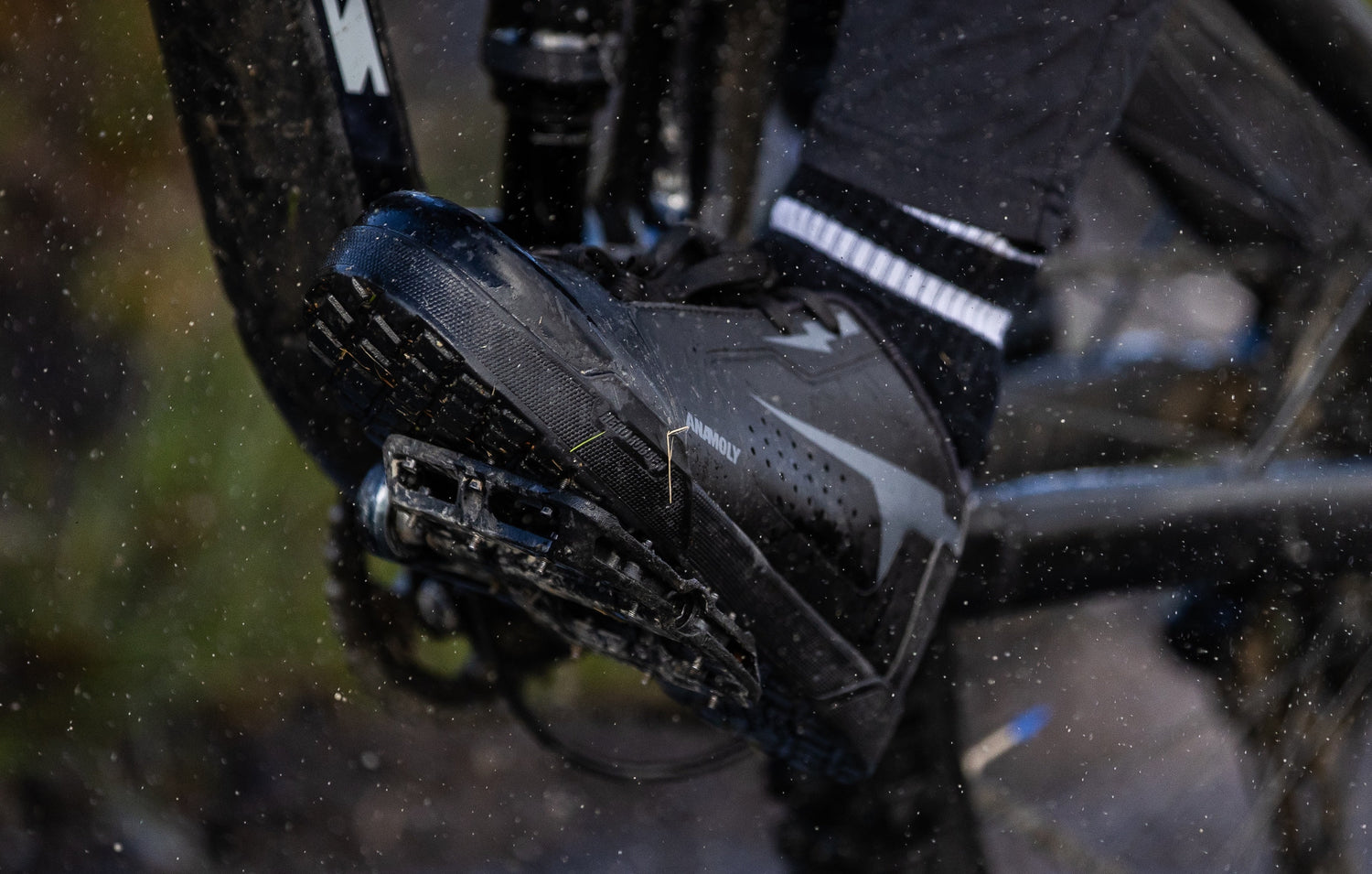
Riding in wet conditions changes the physics of pedal grip. Water forms a lubricating film between the sole and pedal that reduces the real contact area and lowers friction. Advanced rubber compounds combat this through micro-depressions that trap air and displace water, maintaining direct rubber-to-pin contact. Hero Rubber from Anamoly Labs is engineered to become grippier when wet, providing active traction enhancement rather than passive water resistance. Sole tread pattern also matters. Deep channels and wide spacing help shed mud so the rubber can maintain contact with the pins.
Riding in the rain fundamentally alters the grip dynamics between your shoe and pedal. When water enters the interface, it creates a thin lubricating film that separates the rubber from the metal pins. Drastically reducing the real contact area and the friction available to keep your foot planted. Understanding how water affects the rubber-pin interface is essential for choosing footwear that performs in wet conditions.
How water changes the grip equation
Mud and rain form a barrier that prevents rubber from directly engaging pedal pins. In standard shoe soles, this water fills the microscopic gaps in the rubber, creating a slick surface that promotes sliding. However, the physics is not uniformly negative. Research indicates that non-uniform wetting can, in some cases, help maintain contact patches that preserve higher friction levels. Designing a sole for wet conditions means working with the physics of water rather than simply fighting it.
Anamoly Labs engineers the Pin-Lock MTB Shoe for these exact conditions. The sole pattern and compound are designed to channel water away from the contact patch while maintaining maximum rubber-to-pin engagement.

Engineering that works with moisture
The question many riders ask is whether any MTB shoe can deliver reliable grip in muddy conditions. The answer lies in the rubber chemistry. While most outsoles harden and lose traction when wet, Hero Rubber uses a specialized formulation that increases grip as moisture levels rise. This responsive technology ensures a consistent bond even when the trail turns to deep mud and wet clay.
Traction in extreme conditions
Keeping a rider safe in the worst trail conditions is the fundamental purpose of grip engineering. When you hit a wet root or slick rock slab, the shoe must establish an immediate high-friction bond with the pedal pins to prevent a catastrophic slip. High-friction rubber compounds help the sole wrap around the pins even in the presence of mud. Providing the confidence to ride through adverse weather without second-guessing every pedal stroke.
Flat Pedal vs Clipless: How Grip Science Differs

Flat pedals and clipless pedals achieve foot retention through fundamentally different mechanisms. Flat pedals rely on friction between the rubber sole and metal pins, with grip determined by rubber compound, contact area, and rider weight distribution. Clipless pedals use a mechanical cleat that locks into the pedal, providing a rigid connection that maximizes power transfer. Flat pedals excel in situations requiring quick foot-out maneuvers on steep or jump terrain, while clipless systems favor endurance riding and racing where pedaling efficiency matters. Mud affects both systems differently. It can fill the gaps on flat pedal soles while clipless pedals shed debris more effectively.
The way a rider stays connected to the bike changes fundamentally based on pedal choice. Flat pedals and clipless pedals use entirely different mechanisms to keep feet planted, and understanding these differences helps match your pedal system to your riding style and terrain.
Friction and surface contact
Flat pedal shoes depend entirely on friction between the rubber sole and metal pedal pins. The rubber must be soft enough to allow pins to penetrate and create a mechanical lock, yet resilient enough to maintain this engagement through repeated impacts. The friction force is governed by the normal load, your weight on the pedal, and the real contact area between rubber and pins. This is why a wide sole platform with a carefully engineered tread pattern makes such a difference in flat pedal grip.
Research confirms that static friction at the contact interface depends on load and contact geometry. When you stand on the pedals, your body weight generates the normal force that drives the rubber into the pins. A wider stance and larger sole surface area distribute this load more effectively, creating a stronger bond. Anamoly Labs engineers the mtb rubber technology specifically to optimize this weight-driven friction mechanism.
Mechanical lock and power transfer
Clipless pedals use a metal cleat that snaps into a retention mechanism on the pedal. This creates a solid mechanical connection that does not rely on rubber friction for foot retention. The result is superior power transfer. You can pull up on the pedals during the recovery phase of the pedal stroke and push down during the power phase. Delivering more total force to the drivetrain.
While flat shoes prioritize rubber compound and tread design for grip, clipless shoes focus on cleat interface and retention tension. The rubber outsole on a clipless shoe primarily serves walking traction and secondary pedal contact during engagement. The primary grip comes from the cleat lock, which provides unwavering retention through rough rock gardens and high-speed descents.
Mud performance comparison
Mud affects these two systems differently. On flat pedals, mud fills the gaps between the pins and the rubber sole, reducing the effective contact area and causing the foot to slide. On clipless pedals, mud can clog the cleat mechanism, but most modern designs clear debris quickly with a stomp of the foot. Choosing between them depends on where you ride most. Flat pedals offer unmatched freedom for steep trails and jump lines, while clipless systems excel on long endurance days and race courses.
| Grip Detail | Flat Pedals | Clipless Pedals |
|---|---|---|
| Grip Mechanism | Rubber friction + pin penetration | Metal cleat mechanical lock |
| Wet/Mud Grip | Good with premium rubber; can slip when clogged | Very good; cleat clears debris quickly |
| Foot Removal Speed | Instant, no mechanism to release | Requires practice; predictable release |
| Power Transfer | Good, limited to downstroke | Excellent, full 360-degree stroke |
| Best Application | Technical trails, jumps, bike parks | Endurance, XC racing, long climbs |
How Anamoly Labs Engineers Proprietary Traction Technology
Anamoly Labs builds traction from the ground up by combining proprietary rubber chemistry with precision fit engineering. The Hero Rubber compound is formulated to become grippier when wet, reversing the usual friction loss most soles experience in rain. The Pin-Lock MTB Shoe 2.0 is mechanically heat-widened in the Texas workshop to accommodate wide-foot riders, ensuring the foot sits flat for maximum sole-to-pedal contact. Every design decision focuses on keeping the rider locked in through the most demanding trail conditions.
Good shoe design starts with a single goal: keeping the rider upright through every trail condition. In technical terrain where a slip means a crash, grip is the only thing that matters. Anamoly Labs builds shoes for these exact moments, engineering every element of the sole and fit to maximize control when the trail gets wild.
Traction engineering is not just about the rubber compound. It is about how the tread block shape, sole stiffness, and contact geometry work together under load. Static friction depends on the pressure distribution at the contact interface, and Anamoly Labs designs its soles to optimize this distribution for aggressive riding positions. Every element of the shoe works to deliver more controlled grip.

Wet grip as a design philosophy
Most rubber soles lose their grip when the trail gets wet because water forms a barrier between the rubber and the contact surface. Anamoly Labs solved this with the Hero Rubber compound, a proprietary formulation that increases traction as moisture levels rise. This was not an accidental discovery. It was engineered specifically for riders who do not let a little rain stop their ride.
The mechanism relies on how the rubber interacts with water at the molecular level. Research supports that non-uniform wetting can improve footwear grip by maintaining high-friction contact patches even in the presence of moisture. Anamoly Labs optimized Hero Rubber grip around this principle, delivering consistent traction on slick logs, wet slabs, and mossy rocks.
Micro-features for maximum friction
Getting the best grip requires managing water at the contact interface intelligently. The sole incorporates micro-depressions that trap air pockets, helping the rubber maintain direct contact with the ground even when the surface is wet. These features are tested on the most rugged trails in Texas, where real-world validation confirms the engineering performs under actual riding conditions.
Friction is not a simple property of the rubber alone. It changes based on tread geometry and contact shape. Anamoly Labs designs tread blocks and siping to maximize the real contact area, allowing the rubber to sink into the micro-texture of rock and root surfaces. This depth of design is what sets mtb rubber technology apart from mass-market approaches.
Heat-widened fit for maximum pedal contact
A shoe can only grip effectively if it fits the foot properly. If the shoe is too narrow, the rider cannot distribute weight evenly across the sole, creating pressure points that reduce the effective contact area with the pedal. Anamoly Labs addresses this with a unique process. The Pin-Lock MTB Shoe 2.0 is mechanically heat-widened in the Texas workshop to provide a true wide fit that accommodates riders who struggle with narrow cycling shoes.
This heat-widening process allows the foot to sit flat and comfortable inside the shoe. When the foot is flat, the entire sole surface makes optimal contact with the pedal, allowing the Hero Rubber compound to do its job. The result is a shoe that keeps you steady and controlled on every trail feature, delivered with the precision of a small-shop operation.
How Tread Geometry Affects MTB Shoe Grip on the Trail

The tread pattern of an MTB shoe sole is as important as the rubber compound. Tread lug depth, spacing, and shape determine how the sole interacts with both the pedal and the ground. Large flat blocks maximize contact area for pedal pin engagement, while deeper lugs with wide spacing work better for muddy conditions by shedding debris. Siping, small slits in the tread blocks, allows the rubber to flex and conform to irregular surfaces, increasing the real contact area. A split design with a low-profile center for pedaling and deeper perimeter lugs for hiking provides the best balance for trail riding.
The design of an MTB shoe sole involves more than choosing the right rubber. While the compound provides the fundamental stickiness, the tread geometry determines how effectively that grip is applied to both the pedal and the trail surface. Engineering the correct pattern requires balancing lug depth, spacing, and shape against the specific demands of your local terrain.
Contact area geometry and its effect on friction
In tribology, the study of friction, the coefficient of friction for rubber is not a fixed material property. Research confirms that static friction depends on the geometry of the contact area and the applied pressure. For mountain bikers, this means the shape and size of tread blocks directly influence how much grip the shoe delivers. Large, flat blocks beneath the ball of the foot create a broad surface for pedal pins to bite into. While narrower, deeper lugs work better for soft terrain and hike-a-bike sections.
Engineers must also consider how load transfers through the sole. When you stand on the pedals, your weight pushes the rubber into the pins. A well-designed tread pattern distributes this pressure evenly across the contact patch, preventing localized deformation that could lead to sudden release. Many top brands use hexagonal or dimpled patterns to optimize this pressure distribution.
Terrain-specific tread patterns
Different trail conditions demand different tread designs. In dry, rocky terrain, a high-contact-area sole with minimal tread spacing maximizes friction against the pedal. On muddy trails, those same flat soles trap mud and lose grip. Deep lugs with generous spacing allow the sole to shed mud so the rubber can maintain contact with the pedal pins.
Chevron patterns and directional tread blocks act like scoops in loose terrain, providing forward bite when climbing and braking traction when descending. Small siping cuts across the tread blocks allow the rubber to flex and conform to irregular surfaces such as rocks and roots. This flexibility is a key element of mtb rubber technology, enabling more of the sole surface to remain in contact with the trail.
Balancing pedal feel with walking traction
Good grip requires the rubber compound and tread pattern to work as a unified system. Soft rubber is naturally sticky, but without the right lug geometry, the sole can squirm under lateral load during hard cornering. Engineers avoid tall, thin lugs in the pedal contact zone for this reason. They tend to fold over, creating an unstable feel.
Most premium flat pedal shoes use a split-sole design: a low-profile, high-contact-area center section optimized for pedal engagement. With deeper, more aggressive lugs at the toe and heel for walking traction. This dual-purpose approach gives riders a stable platform for pedaling while maintaining the ability to hike up steep sections or push through technical portages.
- Identify your primary terrain type: rocky, loamy, wet, or mixed
- Match tread depth to conditions: shallow for hardpack, deep for loose or muddy
- Verify the pedal contact zone uses large, flat blocks for pin engagement
- Check for siping cuts that allow tread blocks to conform to irregular surfaces
- Look for a split design with walking lugs at toe and heel if you hike-a-bike frequently
Choosing the Right MTB Shoe for Your Riding Conditions
Selecting the right MTB shoe depends on matching the rubber compound, tread pattern, and fit to your local terrain and climate. For dry, rocky trails, prioritize a high-contact-area sole with sticky rubber for maximum pedal engagement. For wet or muddy conditions, choose a compound like Hero Rubber that maintains or improves grip when wet, paired with deeper tread spacing for mud shedding. Fit is critical. A shoe that is too narrow reduces contact area and compromises grip. The Pin-Lock MTB Shoe 2.0 offers a heat-widened option for riders who need a true wide fit for optimal power transfer.
Selecting the ideal MTB shoe requires matching the technical specifications of the footwear to your local trail conditions, climate, and riding style. An informed choice considers the rubber compound, tread pattern, sole stiffness, and fit as an integrated system that determines how much control you have on the trail.
Assess your local trail terrain
Your starting point should always be the terrain you ride most often. Riders on dry, rocky trails benefit from high-contact-area soles with sticky rubber compounds that maximize friction against pedal pins. Loose or loamy terrain demands deeper tread with spaced lugs that can dig into soft surfaces. Riders who encounter a mix of conditions should look for a versatile sole that balances pedal feel with walking traction.
Think about the climate and weather
If you ride year-round in a wet climate, prioritizing wet-traction technology is essential. Look for compounds like Hero Rubber that are engineered to maintain or increase grip when wet. The tread pattern should include channels that allow water and mud to escape from the contact patch. For dry-climate riders, an aggressive tread pattern may be less important than a maximized contact area and softer compound.
Fit and sizing considerations
A shoe can only deliver its designed grip performance if it fits correctly. A shoe that is too tight prevents the foot from sitting flat, reducing the effective sole-to-pedal contact area and compromising grip. Anamoly Labs addresses this with the Pin-Lock MTB Shoe 2.0. Which is mechanically heat-widened in the Texas workshop to accommodate wide-foot riders who cannot find comfortable performance footwear elsewhere.
This fit-first approach ensures the Hero Rubber compound can operate as designed, with the full sole surface engaging the pedal pins under load. Check the Pin-Lock MTB Shoe 2.0 sizing guide to find your ideal fit and experience the difference that proper sole contact makes on the trail.
Frequently Asked Questions
Do I need special shoes for flat pedals?
Yes. Specialized flat pedal shoes use sticky rubber compounds and stiff soles to keep your feet firmly on the pedal pins. Regular athletic shoes lack the rubber formulation and sole stiffness needed for reliable grip, especially in wet or technical terrain. A proper flat pedal shoe like the Pin-Lock MTB Shoe delivers the traction and control that general footwear cannot match.
Can I use hiking shoes for mountain biking?
You can, but hiking shoes perform poorly on rocky trails. Hiking boots have deep, rigid treads designed for trail walking, not pedal engagement. The lugs are too tall to let pedal pins penetrate effectively, and the rubber compounds are formulated for durability on rock rather than stickiness on metal. This combination results in poor grip and reduced control compared to a dedicated MTB shoe.
How do mountain bike shoes grip in wet weather?
Wet weather reduces grip by creating a thin lubricating layer between the sole and the pedal. High-performance MTB shoes use specialized rubber compounds and tread patterns to combat this. Hero Rubber from Anamoly Labs is engineered to become grippier when wet, using micro-depressions in the sole to maintain direct rubber-to-pin contact even in rain and mud.
Does shoe width improve mountain bike pedal grip?
Yes. A wider shoe increases the contact area between the rubber sole and the pedal surface, distributing your weight more effectively across the pins. This larger contact patch generates more friction and provides a more stable platform. The Pin-Lock MTB Shoe 2.0 is mechanically heat-widened to ensure riders with wider feet get the full benefit of the sole contact area.
What is the difference between Stealth rubber and Hero Rubber?
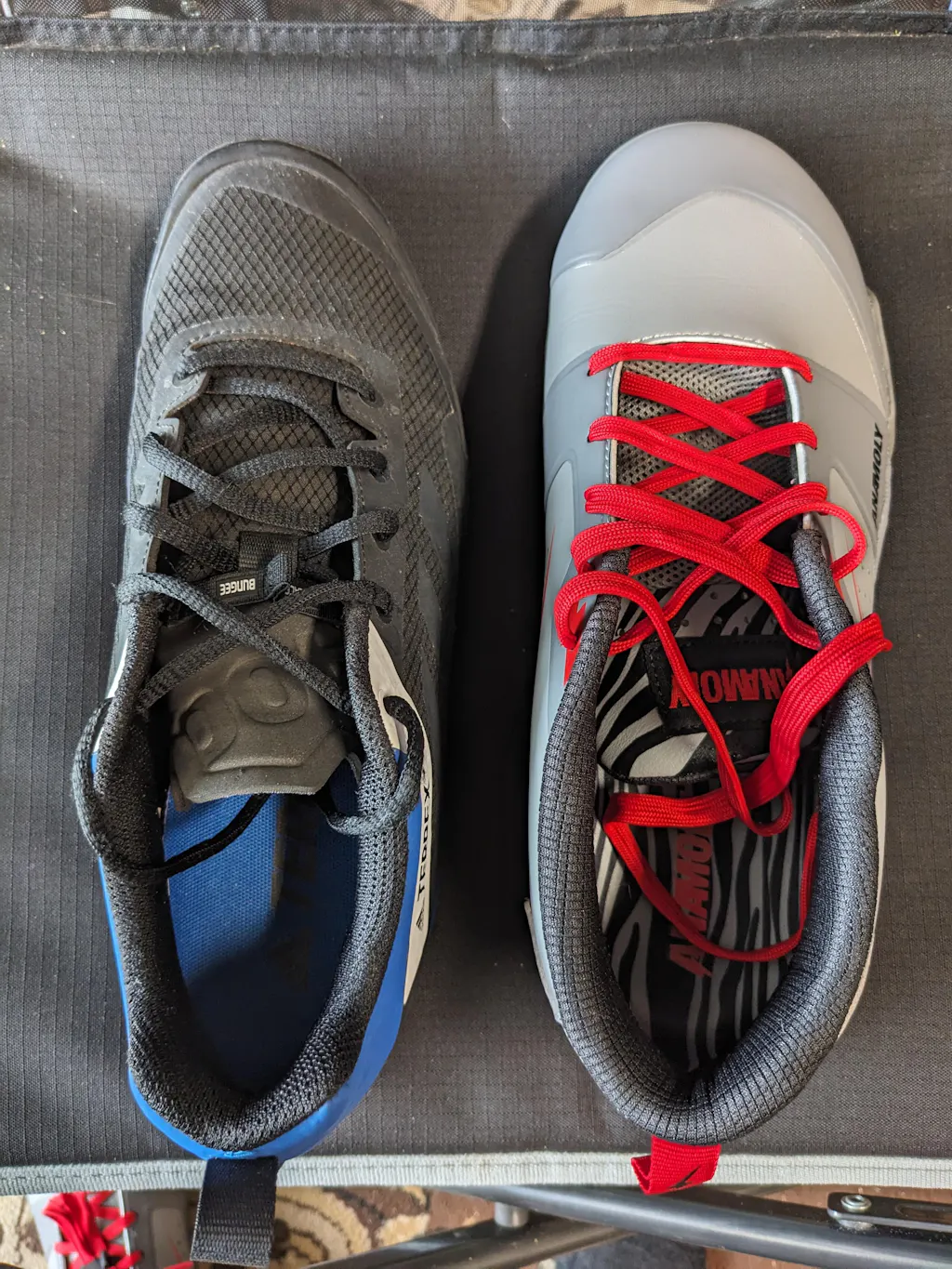
Stealth rubber (used by Five Ten/Adidas) is a high-friction compound formulated for dry conditions and provides reliable grip on flat pedals. Hero Rubber from Anamoly Labs is engineered with a different approach. It becomes grippier when exposed to moisture, making it specifically optimized for wet-trail riding. This wet-active response gives Hero Rubber an advantage in the rainy and muddy conditions that cause most other compounds to lose traction.
Ready to upgrade your grip on the trail?
Bad shoes make every wet ride a risk to your safety because you lose traction on steep climbs and fast turns. This lack of control turns challenging terrain into a hazard. Do not let subpar footwear hold you back from riding the trails you love in any weather.
Anamoly Labs built the Pin-Lock MTB Shoe 2.0 from the ground up for riders who demand technical performance. The Hero Rubber compound delivers active wet grip, the heat-widened fit accommodates riders who need real wide sizing. And the precision sole engineering provides the pedal contact that keeps you planted through every turn and descent.
Order the Pin-Lock MTB Shoe 2.0 and experience engineering-first traction on your next ride.
About the Author
The Anamoly Press Team combines expertise in athletic footwear engineering, materials science, and trail sports performance. Every gear guide is reviewed by Christopher Armstrong, Founder and Head of R&D at Anamoly Labs, whose 15-plus years in protective gear and footwear development ensure technical accuracy in every article.

Leave a comment
This site is protected by hCaptcha and the hCaptcha Privacy Policy and Terms of Service apply.