
Technical Review & Accuracy Check by Christopher Armstrong, Founder & Head of R&D
Our team researches and writes the gear guides you love, but every scientific claim and compound specification is personally vetted by our lead engineer to ensure absolute accuracy.
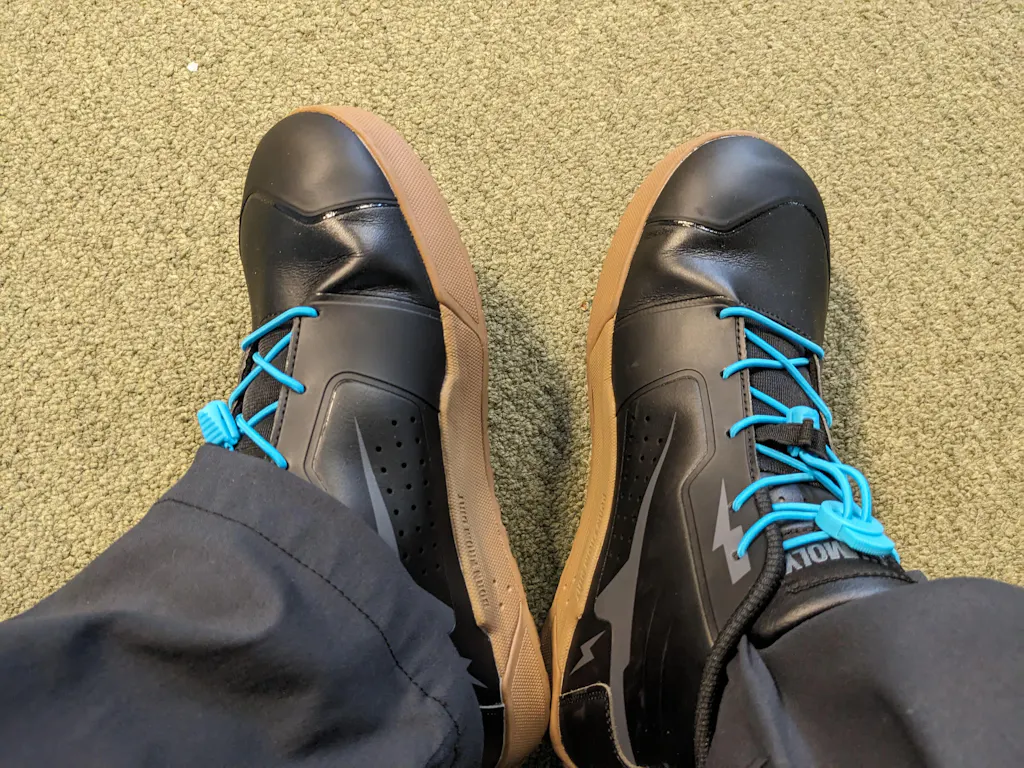
The Anamoly Labs Pin-Lock 2.0 stands apart from conventional flat-pedal mountain bike shoes through a focus on traction science and wide-fit engineering. While typical flat-pedal designs rely on generic, skate-style aesthetics and narrow lasts, this footwear prioritizes mechanical performance and absolute foot stability. Our custom-engineered Hero Rubber™ compound becomes significantly grippier when wet, which directly prevents sudden pedal traction failures on slick, wet rock slabs. Furthermore, our Austin-based workshop utilizes a mechanical heat-stretching process to customize the toe box volume, ensuring proper forefoot accommodation while reducing fatigue on long trail rides. Biomechanical research confirms that adequate forefoot accommodation is associated with lower injury risks (PMC11118738), allowing evidence-driven riders to maintain consistent bike control.
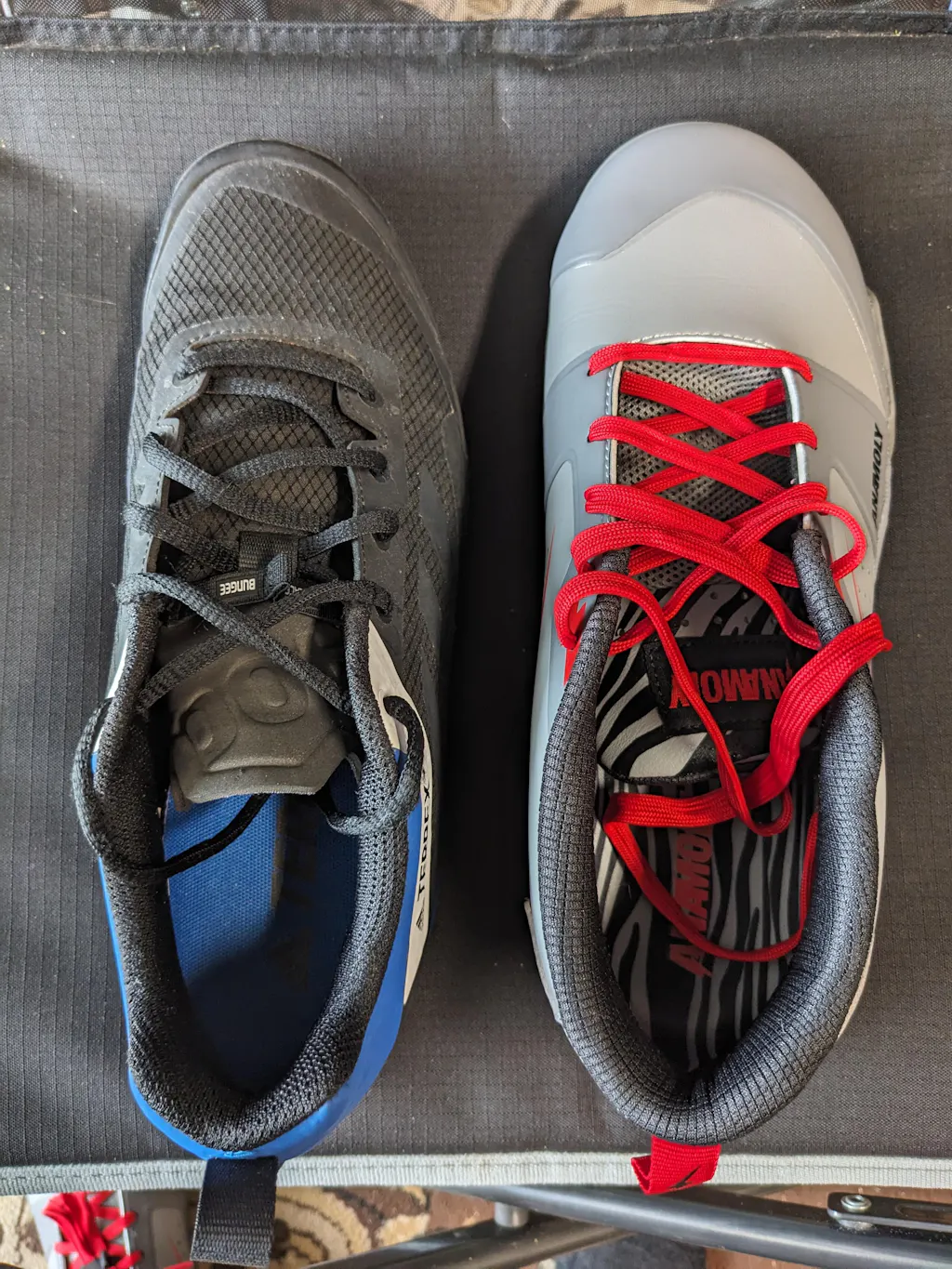
Anamoly Labs Pin-lock 2.0 Vs Five Ten Freerider Pro: Why Flat Pedal Riders Need to Evaluate Shoe Engineering
Many mountain bike riders view flat pedal shoes as simple pieces of gear. But the link between your foot and the pedal guides how you control your bike on technical trails. When evaluating options like the Anamoly Labs Pin-Lock 2.0 and the Five Ten Freerider Pro, riders are comparing two distinct approaches to flat-pedal shoe design. While the Freerider Pro represents a widely recognized standard in traditional flat-pedal footwear, modern engineering demands a deeper look at how rubber formulation, midsole stiffness, and footbed geometry interact to solve clashing trail requirements.Stiffness and pedal feedback balance
To ride well, flat pedal shoes need a balance between sole stiffness and trail feedback. Traditional designs like the Five Ten Freerider Pro utilize a relatively stiff midsole plate paired with their proprietary Stealth S1 rubber outsole to maximize pedaling efficiency. However, a sole that is too rigid can prevent your foot from wrapping around the pedal, which reduces absolute control during technical maneuvers. Conversely, a sole that is too soft causes foot fatigue and limits power transfer. The Pin-Lock 2.0 addresses this by engineering a tuned flex zone under the forefoot: this allows the shoe to roll naturally when walking while maintaining optimal arch support and pedaling stiffness. When you stand on a flat pedal, you need to feel where the pins sit. This feedback lets you make quick body shifts without lifting your feet from the platform. Our engineering team designs outsoles to hit this sweet spot, which gives steady power transfer and good pedal feel across changing terrain. You can read more about these biomechanical targets in our Mountain Bike Shoes for Wide Feet: The Complete Fit and Engineering Guide.Consistent traction across technical trails
For riders on steep or wet trails, steady grip on the pedal is the main factor in shoe performance. When a shoe slips, even for a brief split second, it can lead to a dangerous loss of bike control. Standard rubber soles often lose traction when the weather changes or when dust covers the pins. True performance relies on a careful sole shape that holds tight under any condition. Many standard brands overlook this link, leaving riders to slide around in wet weather. Our research focuses on how foot position on the pedal pins impacts flat pedal performance during hard rides.Biomechanical shoe design for absolute stability
A flat pedal shoe must also keep your foot stable inside the shoe itself. If your foot slides sideways or your toes are pinched, you lose the power to balance. Biomechanical research shows that shoe shape and volume affect forefoot pressure distribution, which is vital for foot stability. Instead of chasing brief style trends, shoe design should focus on absolute stability as a main need. When a shoe holds your foot secure, you can ride through rough rocks with full trust in your gear. This function-first build makes sure the shoe acts as a reliable platform, letting you focus on the trail ahead.Sole Rubber Technology: How Hero Rubber™ Compares to Conventional Compounds
The role of material and structure design
Traction on wet trails relies on two main pillars: material design and structure design; although many brands focus solely on tread shape, the rubber compound itself remains crucial for high-slip trail conditions—demanding a system where both design elements work together in perfect harmony.
Rubber elasticity and surface roughness on a micro-scale directly impact the real contact area—which is proportional to friction—because on dry ground, soft rubber stretches and molds to the pedal; this maximizes the touch points, but when water gets in the way, the physics of rubber friction change completely.
Why water reduces standard flat-pedal grip
On wet trails, water acts as a barrier between standard rubber and the metal pedal pins; this water intervention causes a low contact area, which results in low friction as standard rubber outsoles tend to float on a thin film of water—meaning that when you lose direct contact, your feet slip off the pedals.
To solve this, outsoles can use porous materials like activated carbon to trap air: this process creates non-uniform wetting (which produces higher friction) because when the diameter of these surface pores is less than 10 to 100 micrometers, water cannot penetrate them—the trapped air forms small pockets that keep water from slicking across the whole sole.
By trapping air in these tiny spaces, the sole prevents a uniform sheet of water from forming—this non-uniform wetting promotes real contact formation: the negative pressure around the dry contact spots pulls the rubber closer to the surface, and this mechanical suction increases the friction coefficient to keep your foot planted on the pedal.
Hero Rubber™ custom engineering
Anamoly Labs developed Hero Rubber™ to address these specific wet-weather trail failures: this compound is custom-engineered to make the Pin-Lock MTB Shoe 2.0 become grippier when wet (as detailed on our Tech Stack page), meaning that instead of losing traction in the rain, the rubber interacts with water to keep your feet locked on the pins.
By optimizing the pore diameters under 100 micrometers, our shoe compound keeps water from entering the micro-pores; this traps a tiny layer of air beneath your sole—a custom-engineered formulation that turns a wet trail from a slipping hazard into a stable riding platform.
Stealth S1 vs. Hero Rubber™: A Technical Comparison
To fully evaluate the traction landscape, riders must analyze the industry's historical benchmark: Five Ten's proprietary rubber, known as Stealth S1. Originally developed by founder Charles Cole, the high-friction compound set early standards for flat-pedal grip on challenging terrain; however, shifts in ownership and manufacturing have altered the rubber's physical properties.
Following the 2011 acquisition of Five Ten by the Adidas Group (Adidas AG) in 2011, the company's dedicated R&D lab and engineering division were relocated to Adidas' headquarters in Germany. Subsequently, the rubber mixing and compounding facility—which originally batched and processed original Stealth formulations in Southern California (The Redlands, home of Five Ten's original founding HQ)—was fully moved to overseas suppliers in Asia. This geographical and operational shift introduced notable changes to the rubber's chemical composition and physical characteristics: many riders have observed a deviation from the original compound's legendary grip and elasticity as a result.
This manufacturing transition highlights a common trade-off in modern footwear production: balancing high-friction performance against mass-production economics. On technical trails, steel pedal pins exert immense shear stress on outsoles; current Stealth formulations are frequently critiqued by users across Instagram, Reddit, and YouTube for exhibiting reduced tear resistance. This vulnerability often manifests as premature wear, with steel pins tearing the outsole or gouging holes in the contact zones—a byproduct of thinner outsole profiles and more fragile rubber.
Conversely, feedback from our community—spanning product reviews on our website and active Kickstarter backers—confirms that Hero Rubber™ maintains its structural integrity and high-friction grip even after 18 months of rigorous enduro, downhill, and park riding. These riders routinely report that Hero Rubber™ provides superior durability and a more secure, slip-free interface than current Stealth rubber variations, establishing a new performance baseline for flat-pedal control and proving that our custom compound is even grippier than contemporary Stealth iterations from Five Ten.
| Feature | Hero Rubber™ Compound | Standard Rubber Compounds |
|---|---|---|
| Wet grip | Increases friction; gets grippier when wet. | Slicks over; water film reduces contact area. |
| Dry grip | Excellent tackiness; molds around pedal pins. | Good tackiness when dry. |
| Durability | High tear resistance; built for rocky trails. | Varies; soft compounds wear down quickly. |
| Compound approach | Custom-engineered with micro-scale surface pores. | Standard uniform rubber blends. |
Fit Philosophy: Wide Toe Box vs Standard Narrow Lasts
Many flat pedal shoes use a narrow shape (often called a narrow last) that brands utilize to make you feel closer to the pedal; however, this tight shape hurts your feet on long rides, whereas a wide toe box is much better for your foot because it lets your toes spread out when you pedal—which is why we design our shoes to fit your natural foot shape to keep you pain-free from the start of the trail to the end (learn more in our guide on wide mountain bike shoe fit).
Forefoot room and injury prevention
Toes need room to splay: if your shoes are too tight, your toes rub and pinch during the ride, whereas a wide toe box reduces the risk of toe injuries—allowing your toes to spread to avoid painful sores and blisters while preventing foot fatigue on rough trails as your foot moves in a natural way that keeps your muscles fresh.
In-shoe stability on flat pedals
Your foot needs a stable base on flat pedals: tight shoes cause your foot to slide and shift inside the shoe (a movement that can hurt your balance), whereas proper toe box volume changes how pressure is spread across your foot—giving you better stability during hard trail efforts while keeping your foot steady, reducing sliding, and helping you stay in control on fast trail descents so your feet stay locked to the pedals when the terrain gets rough.
Intentional heat widening versus sizing up
Many riders are not pleased with standard wide shoes because most brands just scale the shoe up in every way—making the whole shoe loose and hurting your heel hold—but we do things in a different way: we use a special tool in our Texas shop to stretch the toe box with heat; this heat-stretching is a smart, precise fix for wide feet that widens the front but keeps the heel snug to ensure you get the perfect fit without losing heel grip on steep climbs.
For a full breakdown of footwear fit, check out our guide: read Mountain Bike Shoes for Wide Feet: The Complete Fit and Engineering Guide to find your match—a proper fit will change how you ride, improve your grip, and keep you smiling on long trail days.
Upper Construction and Ankle Protection
Most flat-pedal shoes use a simple, one-piece upper, with brands often choosing thin mesh to keep the shoe light: but this choice often drops needed foot support; mountain bike riders need strong support on rough trails because without a solid upper, your foot can slide inside the shoe during steep turns.
Engineering for Stability
Anamoly Labs takes a new path—utilizing a direct business model to design its shoes—a setup that lets the team build engineering-first gear rather than trend-driven styles; the team builds for absolute stability as a main design goal, which comes from years of testing in the shop.
To reach this goal, the team built a strong upper for the shoe: while most flat-pedal shoes use a soft outer shell, the Pin-Lock 2.0 features stiff heel cups and a secure lace setup—complemented by a thick, padded ankle collar to hold your foot in place and provide real support when you push hard on the pedals.
Solving Real Trail Problems
The shoe is built to solve real trail issues, not just to look good: riders often face thick mud, loose rocks, and hard hits on the trail; the shoe uses a tight upper that sheds mud quickly, combined with tough layers around the toes and heel to block flying rocks—elements you can see in action on our Tech Stack page.
This design keeps debris out of the shoe while locking the foot down so it does not lift during hard efforts: this secure fit helps you maintain bike control when riding through wet, messy terrain—aiming for safety and function to build a shoe that works when the trail gets bad.
Reducing In-Shoe Displacement
When you ride, your foot can move around inside your shoe—lab tests show that in-shoe displacement is a key metric to check how well a shoe keeps you stable: if your foot moves too much, you lose power and can hurt your toes; the Pin-Lock upper stops this movement by keeping the foot locked firmly in place.
To get the best results, you need both a secure upper and a proper fit: a wide mountain bike shoe fit gives your toes room to spread, while the tight upper keeps your heel from lifting—a combination of comfort and control that makes the shoe stand out on the trail.
Weight, Durability, and Value Structure
Standard trail shoes often force a hard choice: riders must select either a light shoe that wears out fast or a tough shoe that feels like a brick—a trade-off many trail riders accept as a fact of mountain biking; however, we believe performance footwear should not force you to choose, so we design our gear to offer both strong protection and high trail performance.
The Durability and Weight Equation
Most flat-pedal shoes trade toughness to save a few grams of weight (a thin design that often leads to fast wear on the trail as rubber outsoles split and uppers tear after one hard season); in contrast, our Pin-Lock MTB Shoe 2.0 uses a strong build to resist trail wear—employing compounds that add long-term strength without making the shoe feel heavy on your feet.
We use custom-engineered compounds to protect key wear zones—ensuring our footwear survives seasons of hard abuse—which is critical because mountain bikers focus on grip in technical sections where steady foot placement is required even in wet, wild trail conditions: our focus on build quality means you do not have to worry about shoe failure when you are far from home.
Evaluating Your Footwear Investment
Choosing the right footwear is a key step to improve your ride: we use a unique business model to build better shoes; to find the best option for your needs, you can follow these four steps:
- Evaluate your riding conditions. Think about how many rides you take each season and the type of ground you ride on: if you ride in rough, wet terrain, you need performance footwear built for extreme wear.
- Compare material construction across alternatives. Look at how other shoes are made: many options use cheap foam or weak fabric to save weight, whereas we build our shoes with tough, custom-engineered rubber and strong uppers to handle rough trail use.
- Assess the DTC value model. Our direct-to-consumer (DTC) model allows faster product updates and direct support from the founder: this short loop ensures that rider feedback goes straight into shoe design—while also removing retail markup so we can put more value directly into the shoes.
- Factor in the heat-widening service as a long-term fit investment. Giving your feet enough room when you move helps prevent injuries from tight or badly shaped toe boxes: our Texas shop uses a unique wide-fit custom shoe process to widen each shoe—preventing foot pain so you can ride with comfort and read the science on how proper toe boxes prevent toe injuries during trail riding.
Who Should Choose the Pin-Lock 2.0 Over Standard Flat-Pedal Designs
Not every rider needs a shoe built like a tank: but for those who face tough trails and wet rocks, typical shoes often fall short; Anamoly Labs designed the Pin-Lock 2.0 for riders who want real technical specs instead of vague marketing hype.
Technical Performance and Pedal Feel
The Pin-Lock 2.0 is ideal for riders who value precise gear: safe riding in rough spots depends on a steady connection to the pedal; as an engineering-first studio, Anamoly Labs sets a high standard for footwear design to solve real trail issues—giving riders a fine balance between sole stiffness for power and compliance for trail feedback (making it the clear choice for those who want a design built on facts rather than trends).
Wide Toe Box Design and Stability
This shoe is a prime pick for riders with wide feet who struggle with standard, narrow lasts (common shoes often pinch the forefoot, leading to foot fatigue or toe pain): a wide toe box allows natural toe splay to help you stay stable on the pedals; in fact, medical studies in the National Institutes of Health database show that proper toe box room prevents toe-related injuries—and if you need a more specific fit, our custom wide-fit process utilizes mechanical heat-stretching in our Texas shop to match your exact foot shape.
Reliable Wet-Weather Traction
Typical flat-pedal shoe soles get slick when they touch water—wet trails can ruin your ride and make you lose control—making the Pin-Lock 2.0 a smart choice if you often ride in damp weather: it features our custom-engineered Hero Rubber™ compound (designed to become grippier when wet); because we sell direct to you, we can build high-spec gear without high retail markups—as highlighted in our best flat pedal shoes for wide feet guide.
Who might prefer other options? If you have narrow feet, you may not need our wide-fit last; also, if your primary goal is to save every single gram on your bike, you might choose lighter shoes that wear down fast—but we do not make thin shoes that wear out in a few months: instead, we focus on strength, traction, and foot safety for riders who push their limits on tough trails.
Frequently Asked Questions
Which flat pedal mountain bike shoes offer the best grip?
Grip on wet trails needs a large contact area between rubber and pedal: a study in Nature shows that water on surfaces blocks contact and lowers friction; flat-pedal shoes with custom-engineered rubber compounds like Hero Rubber™ solve this by becoming grippier when wet—where surface roughness ensures a steady hold on technical trails.
How does wide-fit construction affect MTB shoe performance?
A wide toe box allows your toes to spread out: a study in PMC shows that proper forefoot space cuts toe injuries and foot fatigue—while also helping to spread pressure across your foot to keep you stable inside the shoe for better control on rough trails.
Can you customize flat pedal shoes for wide feet?
Yes, you can get a custom fit for wide feet: instead of just buying a larger size, you can use a custom wide-fit process—a Texas-based service using mechanical heat-stretching to adapt the shoe to your exact foot shape; this method solves the common fit issues that riders face with standard, off-the-shelf shoes.
How do Pin-Lock flat pedal shoes compare to standard flat pedal shoes?
Standard flat pedal shoes often focus on trends and simple style: in contrast, Pin-Lock shoes focus on stability, traction, and durability (using a function-first design to solve real trail issues); buying directly from the brand also allows for direct technical support from our founder and faster product updates.
Ready to upgrade your flat-pedal mountain bike shoes today?
Riding on standard flat soles in wet weather leads to pedal slips that can cause painful falls and ruin your entire day on the trail—but you do not have to accept these slips as inevitable: if you delay upgrading your shoes, you will continue to lose grip on wet rock and miss the chance to ride with total trail confidence; choosing the right design today ensures your feet stay secure so you can tackle steep mountain lines safely on your very next epic trail ride.
Ready to contact our Austin studio? You can check our size guide online to find your perfect fit: our team is here to help—so get your custom-engineered shoes today to explore the Pin-Lock MTB Shoe 2.0.
Sources and Citations
- Nature.com , "Non-uniform wetting promotes real contact formation, which enlarges friction coefficient." https://www.nature.com/articles/s41598-021-04102-0
- National Institutes of Health (PMC) , "Wearing raised toe box shoes resulted in a significant reduction in vertical and antero-posterior ground reaction forces." https://pmc.ncbi.nlm.nih.gov/articles/PMC11118738/
- National Institutes of Health (PMC) , "The effect of shoe toe box shape and volume on forefoot pressure distribution is significant for stability." https://pmc.ncbi.nlm.nih.gov/articles/PMC3737013/
- Anamoly Labs Tech Stack , https://anamolylabs.com/pages/tech-stack
- Anamoly Labs , "Where to Buy Wide Toe Box MTB Shoes." https://anamolylabs.com/blogs/news/where-to-buy-wide-toe-box-mtb-shoes
About the Author
The Anamoly Press Team brings you in-depth gear coverage rooted in real-world testing and engineering insight. Every article is reviewed by our Head of R&D to ensure the technical claims match the science behind our designs.

Leave a comment
This site is protected by hCaptcha and the hCaptcha Privacy Policy and Terms of Service apply.