
By Anamoly Press Team • October 6, 2026
💡 Technical Review & Accuracy Check by Christopher Armstrong, Founder & Head of R&D
Our team researches and writes the gear guides you love, but every scientific claim and compound specification is personally vetted by our lead engineer to ensure absolute accuracy.
📌 Short Answer
For muddy mountain-bike trails, clipless shoes provide a defined connection but can be harder to re-engage when debris packs around the cleat. Flat pedal shoes allow faster foot removal and repositioning, yet depend on pin-to-rubber contact, tread clearance, and technique. Choose the system that matches your dabbing, walking, and recovery demands: the interface determines performance, so there is no universal winner—the right choice depends on your riding style, terrain, and personal preference.
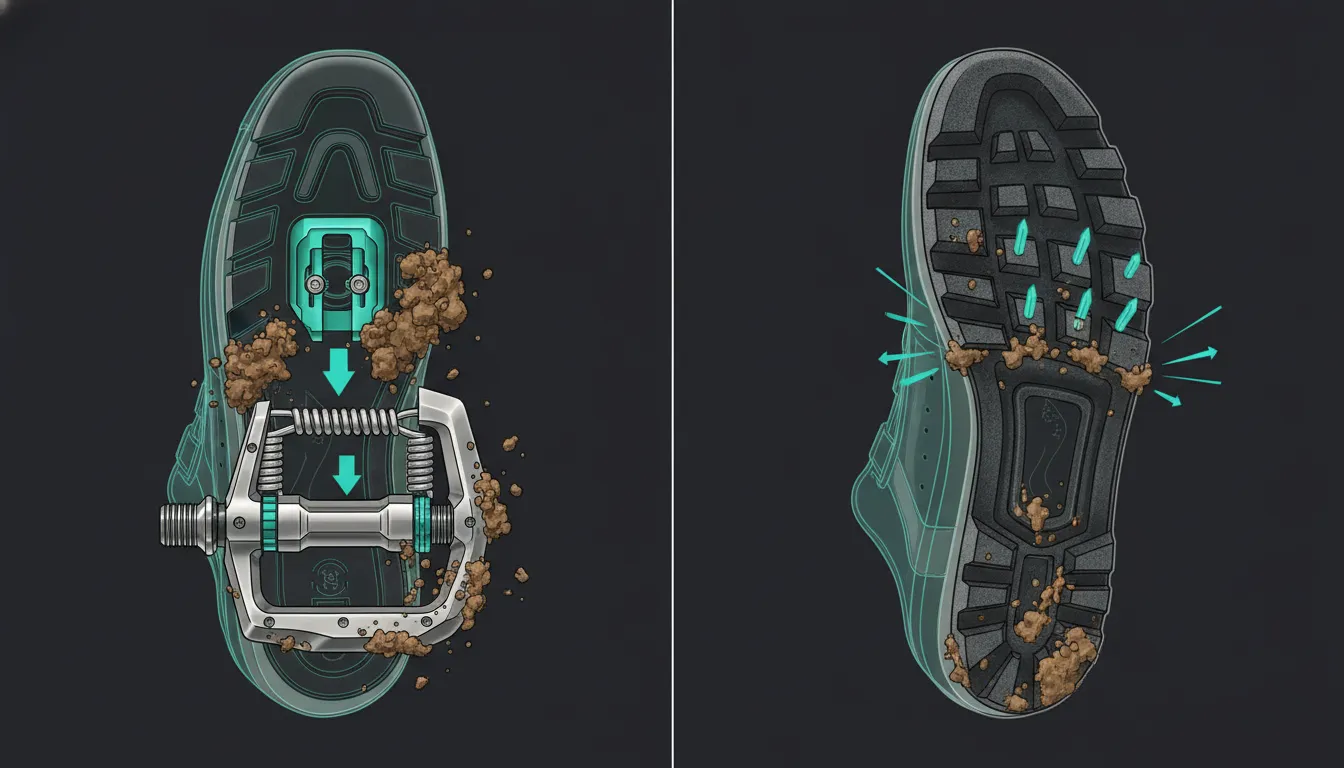
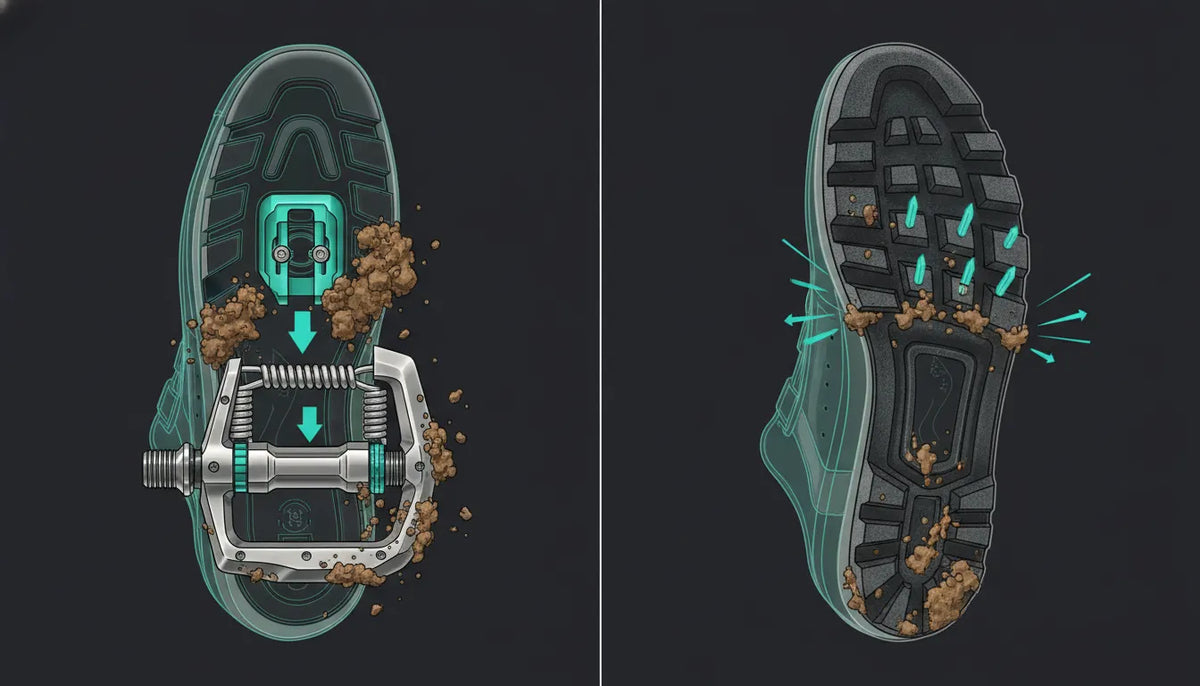
Mud changes the pedal interface before it changes your riding technique, a cleat can lose clearance, and pins can lose a clean rubber contact patch. Either setup may require a deliberate recovery after the foot moves. The useful comparison is not which system is universally better; it is how each one handles engagement, release, repositioning, and the hike-a-bike sections between them.
🔬 Technical insight: Mud changes the usable contact patch
The relevant variable is not a universal grip ranking. It is whether the cleat or pin interface can establish clean contact when contamination, foot movement, and recovery demands change.
That distinction makes the pedal interface the right place to start: once mud occupies the spaces where cleat or pin engagement normally occurs, clearance and recovery become practical performance variables rather than minor inconveniences.
Test drive the Pin-Lock MTB risk-free
What Changes When Mud Enters the Pedal Interface?

Mud changes the pedal interface by adding a moving layer between the shoe, pedal, and release or repositioning mechanism. Water can reduce surface consistency; clay can pack into tread or cleat cavities; grit and small debris can alter how contact points meet. The result is not a universal verdict for clipless or flat pedals, it is a change in the amount and quality of usable contact available at a specific moment.
On a clipless system, the cleat must enter the pedal mechanism far enough to establish its mechanical connection. Foreign material can interfere with that process, while some mountain-bike pedal designs use open spaces intended to let dirt and mud pass through. That distinction matters: a pedal may be designed for debris clearance, yet a heavily contaminated cleat can still require cleaning or a deliberate second attempt before engagement. A patent describing mountain-bike pedal mechanisms identifies mud and pebbles as potential impediments to retention and explains that rotation of the cleat relative to the pedal creates the release position. Those are mechanical conditions, not guarantees about every pedal, cleat, or trail surface.
Flat pedals use a different interface. A large platform and replaceable pins create multiple contact points, while the shoe sole supplies the rubber, tread, and deformation that interact with those pins. Mud can fill tread voids or form a slippery film over the sole; it can also be scraped away as the shoe moves against the pins. The rider can lift the foot, clear contamination, and reposition it, but that foot repositioning freedom does not remove the need for sound technique or consistent contact.
This is why mud performance deserves more than a simple grip label. Tread clearance, compound behavior, pin shape, cleat access, and the rider's ability to recover foot position all influence the interface. For the role of outsole geometry and contact pressure, see our guide to mountain bike shoe traction science. Our mud-shedding MTB shoe tread guide covers contamination and off-bike movement in more detail, while the article on wet-weather pedal-pin grip explains why wet conditions should not automatically be treated as mud-specific proof.
How Clipless Shoes and Cleats Behave in Mud
Clipless systems separate two jobs that are easy to confuse: the shoe upper supports and protects the foot, while the cleat and pedal create the mechanical connection. In muddy riding, the critical variable is usually the interface beneath the shoe. Mud or small debris can interfere with retention between a clipless pedal and its cleat. One pedal-design reference identifies pebbles and mud as possible impediments to engagement (source discussion of clipless pedal retention).
That does not make every clipless pedal equally vulnerable. Some mountain-bike pedal designs leave open space around the retention mechanism so dirt and mud have a path to clear. Other systems use a recessed cleat, dual-sided entry, or a mud-shedding layout. Those features can improve the odds of finding the mechanism, but they do not remove the need to inspect and clear a heavily packed cleat. The practical result depends on the pedal design, the cleat condition, and the consistency of the rider's entry angle.
Engagement after a dab
Re-entry is where muddy conditions expose the difference between connection and access. After a foot touches the ground. The cleat may carry a layer of wet soil that changes its shape at the exact point where the pedal must capture it. A guide to MTB pedal systems lists mud-packed cleats that inhibit clipping back in. The distinction matters: debris can obstruct the engagement path without eliminating the retention mechanism (Liv Cycling's MTB pedal comparison).
Riders can reduce that friction through technique, pedal choice, and maintenance. Mountain-bike clipless pedals commonly offer two-sided mechanisms, so the rider has another entry face available after a dab. Even then, re-entry is a timed mechanical action rather than simple downward contact; the cleat must meet the pedal in a usable position.
Release is a separate behavior
Release and re-engagement should not be treated as opposites. A clipless cleat can be released by rotating the shoe relative to the pedal. In the described mechanism, continued rotation brings the cleat to a position where the shoe can lift free (retention and release description). That gives the rider a repeatable foot-out movement, but returning the foot to the pedal still depends on a clean cleat, a compatible interface, and a deliberate angle.
For a muddy route, clipless may suit riders who value a consistent retained connection and are willing to manage cleat clearance. It may be less convenient when frequent dabs, hike-a-bike sections, or rapid foot repositioning make access to the engagement mechanism the dominant concern. The upper can remain comfortable and protective in either case; it does not determine whether mud has blocked the cleat interface.
How Flat Pedal Shoes and Pins Behave in Mud
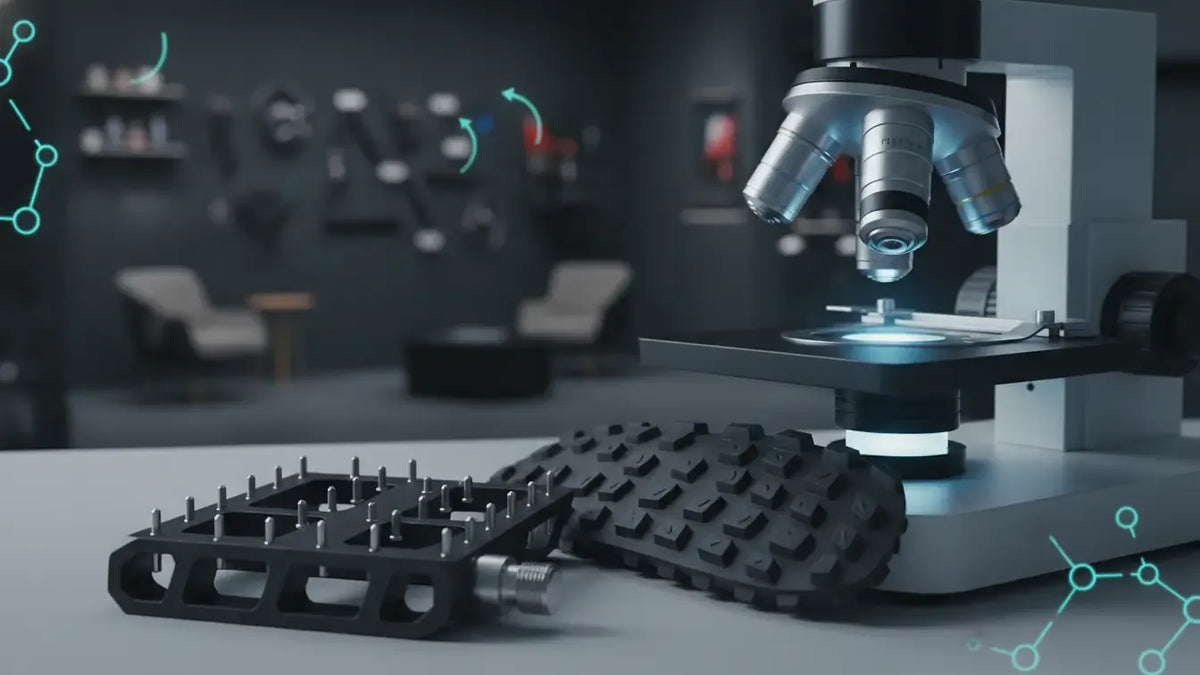
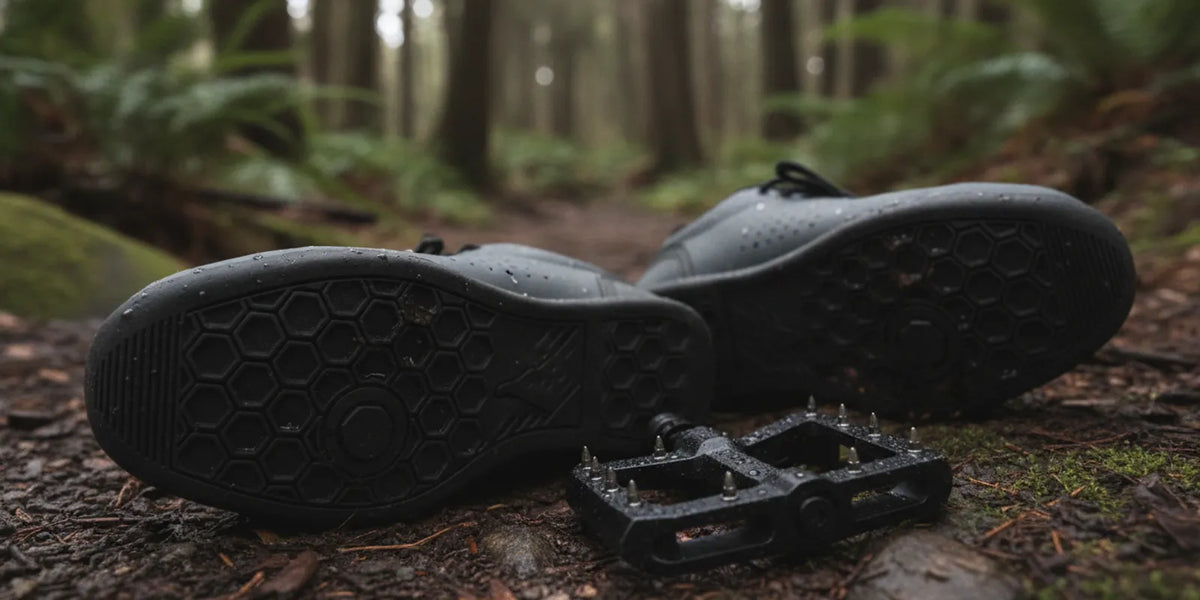
A flat pedal creates broad contact between the outsole and platform. Replaceable pins press into the shoe's tread instead of locking into a cleat. In mud, that interface becomes a moving balance between surface contact, rubber compliance, and how much debris remains between the pin heads and sole. A dedicated flat-pedal shoe uses grippy rubber and a tread pattern shaped around those pins, rather than relying on a running-shoe outsole or a clipless engagement mechanism.
The rider also retains a different kind of control. A flat setup allows foot repositioning while moving, which can matter when a dab, a rut, or a slick off-camber surface changes the required stance. If the foot shifts, the rider can lift and reset it without first rotating out of a cleat. That does not make the interface immune to slip; technique, pedal design, mud depth, and the condition of the tread all still matter. The practical advantage is the ability to respond to movement directly.
Rubber and tread clearance matter
Rubber compound and tread geometry work together. Softer, higher-friction rubber can conform around pin heads, while open spacing gives mud somewhere to clear as the shoe loads the platform. A heavily packed sole has less direct rubber-to-pin contact, so tread clearance is part of the mud equation, not a cosmetic detail. The same outsole must also support walking when the trail becomes a hike-a-bike section; lug shape and spacing influence how much traction remains on soft ground.
🔬 Technical insight: Foot recovery is an interface feature
A muddy route tests more than retention. It tests how quickly a rider can regain a usable foot position after a dab, a slip, or a short hike, so platform access, outsole contact, and practice belong in the same decision.
Our Pin-Lock MTB Shoe is purpose-built for the flat-pedal interface. The Hero Rubber™ MTB-G compound delivers dependable grip in dry conditions and becomes stickier when wet. Underfoot, the DualTraction Pedal + Hike Grid is designed to interlock with metal pedal pins while providing consistent traction across hiking terrain. Together, these features address the two surfaces muddy rides commonly alternate between—the pedals and the trail—helping keep your feet firmly planted whether you’re riding or hiking through loose, wet terrain.
For riders who frequently put a foot down, walk short sections. Or need to reset stance after a dab, this recoverability is a central part of the flat-pedal choice. For a deeper explanation of the material side, see wet-weather flat-pedal traction.
How Clipless vs Flat Pedal Shoes for Mud Handle the Same Trail
Mud changes the contact surfaces, but it does not change the basic job of each system. Clipless footwear depends on a cleat and retention mechanism establishing a mechanical connection; flat footwear depends on outsole rubber, pedal pins, platform contact, and rider technique. The practical difference is how each setup handles contamination, foot movement, and the moment a rider needs to put a foot down.
| Dimension | Clipless shoes and pedals | Flat pedal shoes and pedals |
|---|---|---|
| Interface | Cleat engages a retention mechanism for a defined connection. | Outsole rubber contacts a large platform and its pins. |
| Mud sensitivity | Mud or debris can interfere with cleat engagement; open pedal designs may help shed contamination. | Mud can reduce clean rubber-to-pin contact, so tread, rubber, and technique remain important. |
| Foot repositioning | Position is constrained while engaged; repositioning generally requires release and re-engagement. | The rider can adjust foot position on the platform while moving, within the limits of available grip. |
| Release and re-entry | Release uses a deliberate rotational movement; re-entry can be affected by a mud-packed cleat. | A rider can step off without unclipping, then place the foot back on the platform. |
| Walking traction | Recessed-cleat MTB shoes can be walkable, with outsole lugs or studs contributing off-bike grip. | MTB flat shoes are designed for pedal-pin grip and can be practical for walk or hike-a-bike sections. |
| Learning and technique | Requires practice for consistent entry and release, especially when timing matters. | Requires active foot placement and pressure control; poor technique can allow the foot to come off. |
Neither row is universally superior in mud. Clipless systems offer a defined engagement when the cleat and mechanism meet cleanly; flats make rapid foot removal and repositioning more direct. For a flat setup, shoe construction matters: our Pin-Lock MTB Shoe is built around pedal-pin contact, and we describe our Hero Rubber™ for dry grip and increased wet stickiness, not as a blanket mud-performance guarantee. The choice should follow the route's balance of pedaling, technical recovery, and hike-a-bike rather than a claim that one interface eliminates mistakes.
Which Setup Fits Your Muddy Route and Riding Style?
There is no universal muddy-trail winner, the useful choice is the one that matches how often your feet leave the pedals. How much uncertainty the route contains, and how confidently you can manage the interface when it is dirty. Use the following checks before treating a clipless or flat setup as the default.
- Estimate the amount of hike-a-bike. If the route includes long carries, steep pushes, stream crossings, or repeated muddy dismounts, give walking traction and easy foot release more weight. Flat pedals let you step off without unclipping first; MTB shoe tread and rubber nubs can also support off-bike movement. That does not make every flat shoe equally capable in mud, so inspect the outsole rather than relying on the pedal label.
- Predict how often your foot will move. Some muddy sections reward a stable, repeatable position; others require frequent dabs, balance corrections, or deliberate repositioning. A flat system permits the rider to lift and reset the foot without completing a cleat-release motion. That freedom can be useful when the trail changes quickly, but it also places more responsibility on pedal-pin engagement and technique. A clipless system offers a defined release movement, yet mud or debris can interfere with establishing the cleat-pedal connection in some designs: the mechanism still depends on a clean interface.
- Account for pedal familiarity. Choose the system you can release, re-enter, and recover with while tired and distracted. Clipless pedals require practice for both entry and exit, and muddy conditions can make re-engagement less predictable when the cleat is packed. Flats remove that particular entry step, but they do not remove the need for controlled foot placement. If you are changing systems, practice on low-consequence terrain before taking the new setup onto a technical mud route.
- Separate mud type from mud quantity. Sticky clay can pack into cleat or tread spaces; loose, wet soil may shed differently; deep ruts can demand repeated foot movement. Look for the clearance and shedding behavior of the complete pedal-shoe interface, not just a marketing claim about grip. Open pedal architecture can help debris pass through, but no design guarantees clean engagement in every soil.
- Check walking traction and fit together. A shoe that grips while walking but pinches your toes is not a sound route choice. Prioritize a secure heel, adequate toe room, and a sole that supports both pedal contact and the hike sections you actually ride. A wide toe box can improve comfort for some riders, but fit is individual: test the volume, closure, and foot hold with the socks you normally wear.
- Use the broad guide only for context. This article is narrower than our broader flats-versus-clips comparison; it focuses on mud-driven clogging, foot recovery, and walking demands. Make the final decision from your route and technique, not from a blanket verdict about either pedal system.
Why Foot Recovery Can Matter More Than Raw Retention
In mud, the useful question is not only how firmly a shoe stays connected to the pedal, it is how quickly you can recover when your foot shifts. The bike loads a different direction, or a dab becomes necessary. A flat setup leaves room for deliberate repositioning: you can move the foot on the platform, step off, or place it again without completing a release sequence. That flexibility can matter on slow, technical ground where balance changes faster than the surface can be read.
That does not make flats automatically safer, and it does not remove the need for technique. Flat pedals rely on the shoe, pins, platform, and rider input working together; poor technique can still let a foot come off unexpectedly. Liv Cycling describes both the ability to adjust foot position while riding and the quicker step-off as practical flat-pedal characteristics, not guarantees of control. The broader flats-versus-clips comparison is useful context, but muddy recovery remains a terrain-specific decision.
Retention changes the recovery sequence
Clipless retention can preserve a consistent shoe-pedal interface while the bike moves through rough terrain. When the foot needs to leave that interface, however, the rider must rotate the shoe to release, then establish the cleat connection again before normal pedaling resumes. A technical description of a mountain-bike clipless mechanism identifies rotation as the release action. The cleat lifts free only after reaching the release position: the documented release sequence is mechanical, not instantaneous by default.
Mud adds another variable. Foreign material can interfere with the mechanical link between cleat and pedal, while mud-packed cleats can inhibit clipping back in. Open pedal spaces and mud-shedding designs may reduce that problem, but they do not turn re-entry into a universal certainty. If your route demands frequent emergency dabs, choose the system whose recovery sequence you can execute cleanly while tired, off line, and in poor visibility. If you value a fixed interface and have the practice to release and re-engage deliberately, retention may fit your priorities. The correct comparison is not maximum grip versus minimum grip; it is predictable recovery for the rider and terrain in front of you.
Test drive the Pin-Lock MTB risk-free
Frequently Asked Questions
Do clipless pedals stop working when mud gets into the cleat?
Not automatically, but mud and debris can interfere with the mechanical link between cleat and pedal; some mountain-bike pedal designs use open spaces to help shed contamination. A mud-packed cleat can still make re-entry less predictable, so inspect and clear the interface when conditions are severe.
Can flat pedal shoes be repositioned more easily in mud?
Yes, a flat-pedal setup lets you lift, rotate, and reset the foot without first releasing a cleat. That flexibility is useful when the shoe shifts during a dab or a slippery corner. But it depends on technique and a sole whose tread and rubber work effectively with the pedal pins.
Are flat pedal shoes easier to walk in during muddy sections?
Usually, yes, because there is no cleat mechanism to manage while stepping off the bike. Actual walking traction depends on outsole geometry, rubber, and mud depth and consistency. A cycling shoe designed for pedal contact and hike-a-bike is a more relevant comparison than a road shoe.
How should I choose between clipless and flat pedals for muddy riding?
Choose clipless when consistent cleat engagement and a fixed foot interface are central to your riding. Choose flats when rapid foot repositioning, simple dismounts, and walking are higher priorities. Then match the shoe to fit, pedal interface, route, and your ability to recover after a foot movement rather than treating one system as universally superior.
Sources & Scientific Citations
- Mountain-bike pedal retention and release mechanism description.
- Liv Cycling: clipless versus flat pedals for mountain biking.
About the Author
The Anamoly Press Team brings you in-depth gear coverage rooted in real-world testing and engineering insight. Every article is reviewed by our Head of R&D to ensure the technical claims match the science behind our designs.
Ready to Test a Purpose-Built Flat Pedal Shoe?
If muddy rides leave you thinking about pin contact, foot repositioning, and practical walking traction. Our Pin-Lock MTB Shoe gives you a focused flat-pedal option to evaluate against your terrain and riding style. Get started by testing the shoe and judging its interface on the trails you actually ride.
Every pair of Pin-Lock MTB Shoes is backed by our 30-Day Trail/Court Test Guarantee: order your size, ride them on your own flat pedals, test the Pin-Lock sole interface on real mountain bike terrain, and feel the difference in grip, support, and forefoot comfort. If they do not deliver the fit, traction, and control you need, return them within 30 days for a hassle-free exchange or refund.

Leave a comment
This site is protected by hCaptcha and the hCaptcha Privacy Policy and Terms of Service apply.