

💡 Technical Review & Accuracy Check by Christopher Armstrong, Founder & Head of R&D
Our team researches and writes the gear guides you love, but every scientific claim and compound specification is personally vetted by our lead engineer to ensure absolute accuracy.
📌 Short Answer
Sticky rubber flat pedal shoes maintain control in wet conditions through a combination of compliant compound formulation, molecular adhesion, and mechanical pin engagement. Hero Rubber™ MTB-G is engineered specifically for this: its chemistry enhances wet adhesion at the pedal interface, keeping your feet locked in when water reduces ordinary friction.

Rain changes the pedal interface before the trail feels difficult. A thin film of water can lubricate the contact between shoe and pedal, reducing friction and making every weight shift, corner entry, and technical climb less predictable. That is why wet-weather footwear cannot rely on tread pattern alone; the rubber compound must keep working when the surface is slick. the Pin-Lock MTB Shoe.
The engineering question is not simply whether a sole feels soft or tacky in the dry. It is how the compound deforms, conforms, and dissipates energy at the pedal interface when rain and mud are present. The physics of that failure begins at the microscopic contact points between rubber, water, and pin.
🔬 Key Technical Insight
The coefficient of friction between a flat pedal sole and the pedal surface can drop by up to 40% when a continuous water film forms at the interface. Rubber compounds engineered for wet adhesion can recover a significant portion of that lost friction through molecular interaction with the pedal surface.
How Water Destroys Traction: The Physics of Flat Pedal Grip in Wet Conditions
On a dry trail, a flat pedal shoe gets grip from several mechanisms working together: the rubber conforms to the pedal surface. Pedal pins engage the sole, and molecular forces help the two materials resist sliding. Water changes that interface, it acts as a lubricant between the sole and the pins, lowering friction and making a small shift in foot position much more likely.
Why microscopic contact matters
Traction does not depend only on the large tread blocks you can see. Microscopic roughness on the soling surface is a major determinant of slip resistance on lubricated surfaces, according to footwear slip-resistance research1. Those tiny high and low points create opportunities for the rubber to contact and conform to the pedal rather than riding across a continuous film of water. When water occupies the interface, the real contact area and the quality of that contact become critical.
Mechanical interlocking also becomes less reliable on a dry pedal: pins can press into the rubber and help resist movement. When water fills microscopic valleys around the contact patch, it separates parts of the sole from the pedal surface and reduces the material-to-material engagement that supports that lock. The pins still matter, but tread geometry alone cannot restore friction that the compound is unable to create in the wet.
Adhesion and hysteresis carry more of the load
In wet conditions, wet adhesion is a major contributor to the total coefficient of friction between rubber and the contact surface2. That is why compound chemistry matters when mechanical friction is compromised by water: a rubber formulation designed for high friction can increase molecular interaction with the pedal surface. Helping the sole maintain contact instead of sliding over it.
Compound hysteresis provides another part of the answer. As rubber deforms against microscopic surface features, it dissipates energy, that energy loss helps oppose sliding on a wet surface. The compound must balance compliance with resilience: it needs enough compliance to conform to roughness and pedal pins, but enough resilience to recover its shape under repeated loading.
For that reason, sticky rubber flat pedal shoes should be evaluated by compound behavior, not tread pattern alone. The tread creates the contact architecture; the rubber determines how effectively that architecture holds when rain, spray, or damp trail debris enters the interface. For a deeper explanation, read our guide to weather-resistant rubber performance.
What Happens to Flat Pedal Grip in Mud and Trail Debris
Flat pedal grip depends on more than a rubber sole touching a pedal: the pins need to engage the tread and create a form of mechanical interlocking, and the rubber also needs enough friction at the contact points to resist movement. That relationship works well when the sole and pedal are clean, but mud, water, and trail debris can interrupt it quickly.
When mud fills the tread and pin channels
Wet soil can pack into the grooves around the sole, while small stones, leaves, and grit occupy the spaces where pedal pins should meet the rubber. As the tread fills, the pins have less room to penetrate and less rubber to hold them in place. The result is a less defined connection between shoe and pedal, instead of the pins engaging the sole directly. The rider is partly standing on a layer of contaminated material that can shear or move under load.
Mechanical engagement is a defining feature of an effective flat pedal system; this loss of direct contact matters most during braking, cornering, technical climbing, and sudden weight shifts. Even a shoe with an aggressive tread pattern cannot create reliable pin engagement when that pattern is clogged.
Why water changes the rubber interface
Water creates another problem by acting as a lubricant between the sole and pedal. A standard rubber compound may struggle to displace the thin water film, reducing the direct contact needed for dependable friction. When simple mechanical friction is compromised, the compound's chemistry and its ability to develop adhesion become more important.
That is why sticky rubber flat pedal shoes need two properties that can seem opposed: resilience and compliance. Resilience helps the sole maintain its shape against repeated pin pressure instead of collapsing or deforming permanently. Compliance lets the rubber flow around the pedal texture and pins, increasing the real contact area.
The strongest wet-weather grip comes from combining both behaviors. A suitable compound supports pin engagement while also contributing friction through mechanical interlocking and adhesion. Mud cannot be eliminated on a real trail, but a sole engineered to preserve these contact mechanisms gives the rider a more consistent platform as conditions deteriorate.
Why Sticky Rubber Flat Pedal Shoes Get Better in the Rain
Most rubber compounds lose some of their grip when water creates a lubricating film between the sole and pedal. Hero Rubber™ takes a different approach: its MTB-G compound is engineered to increase contact at the interface, so the sole becomes stickier as conditions turn wet. That is the difference between merely surviving a rain-soaked trail and maintaining confident control through it.
Built around molecular adhesion
Hero Rubber™ is a proprietary high-friction compound developed specifically for mountain biking. Across a 2.5-year development cycle, Anamoly Labs focused on the molecular behavior that determines whether rubber stays connected to a slick surface. The formulation enhances molecular adhesion at the rubber-to-pedal interface, maximizing the number and strength of molecular interactions available when water is present.
This is not a claim that water magically makes every rubber compound grip harder. The result depends on compound chemistry, surface contact, and how the rubber responds under load. In high-friction formulations, however, adhesion becomes increasingly important when water compromises simpler forms of mechanical friction. Hero Rubber™ is designed to preserve that connection in the conditions where ordinary soles begin to feel vague.
Grip without sacrificing service life
Extreme softness can feel sticky in a showroom, but it may deform excessively, wear quickly, or fail to support consistent pedal contact. The engineering challenge is to balance durability with high traction: the rubber must remain compliant enough to conform to the pedal surface yet resilient enough to return to shape and withstand repeated impacts. Braking forces, and trail debris.
That balance is central to MTB-G. It gives riders a compound built for sustained performance rather than a short-lived sensation of softness; the goal is dependable viscoelastic deformation, allowing the sole to interact with the pedal while retaining the toughness required for technical riding.
A magnet-like connection to pedal pins
Wet adhesion is only part of the system. The pedal pins also press into the sole, creating mechanical interlocking that helps resist unwanted movement as the rider shifts weight. Hero Rubber™ is designed to create a magnet-like connection to those pins: molecular adhesion holds the contact surface, while the rubber physically engages the pin pattern.
That combined interface is the reason the Pin-Lock MTB shoe is built around Hero Rubber™ technology. For a deeper explanation of the science behind sticky rubber compounds, see our technical guide; here, the key point is practical: when rain changes the trail. The sole is engineered to keep working with the pedal rather than giving up grip.
Why Wide Cycling Shoes Give You Better Control in Wet Weather
Wet-weather control is not only a question of how much grip sits under the shoe. It also depends on how effectively your foot can stay aligned, distribute force, and respond when the trail or road surface becomes unpredictable. A wide cycling shoe gives the foot a more stable working platform, this matters for both flat-pedal and clipless riders.
More toe room keeps the foot stable under load
A narrow forefoot can compress the toes during sustained pedaling, climbing, or repeated corrections on slick ground. That crowding encourages cramping and makes it harder to maintain a consistent position inside the shoe. A wide toe box gives the toes room to support the foot instead of forcing them together; this can reduce cramping and help preserve stability over a long ride.
The benefit applies whether the shoe is connected to the pedal with pins or a cleat. Flat-pedal riders need a broad, predictable contact position when the shoe is loaded at an angle. Clipless riders still need the forefoot to remain settled around the cleat interface, especially when braking, cornering, or moving through uneven terrain. Toe room is not excess space for its own sake, it is usable space that helps the foot stay organized.
Force distribution matters when the surface is slick
A wide-fit shoe distributes force across the foot more evenly than a restrictive fit. Reducing the tendency to load one small area of the forefoot while the ankle works to compensate. On wet roots, rocks, or irregular trail features, the combination of a wide toe box and supportive upper construction can improve ankle stability and give the rider a more controlled base.
This is where fit and traction work together: sticky rubber flat pedal shoes can help maintain contact with the pedal. But the rider still needs a stable foot platform to use that grip effectively. A supported ankle reduces unwanted movement, while the wider forefoot helps distribute pressure during changes in direction and body position.
Controlled freedom, not a loose fit
The goal is not for the foot to slide inside the shoe; it is controlled freedom: enough toe room for the foot to adapt to uneven surfaces, with enough structure to keep the heel and ankle supported. That balance can reduce fatigue, helping you stay precise later in the ride when wet conditions demand more frequent corrections.
For a deeper look at fit and platform design, see the cycling shoes for wide feet guide and the guide to wide fit flat pedal shoes platform performance.
Keeping Your Feet Locked In While the Trail Gets Slippery
When a trail turns slick, traction becomes the primary interface between rider and bike. The shoe is not simply covering the foot; it is the connection that lets you direct the bike, absorb movement, and stay balanced when the surface stops cooperating. That connection depends on three parts working together: a rubber compound that grips. A sole that applies force efficiently, and a platform that supports the foot without unwanted movement.
Secure grip enables foot-out control
Foot-out control is useful when cornering or navigating a technical feature. The rider shifts weight, lowers the outside foot, and may need to reposition the foot quickly without losing contact with the pedal. That movement only works when the shoe stays secure as the rider changes position. If the sole slides across the platform, the rider has to spend attention recovering the foot instead of managing the corner.
Sticky rubber helps create this security through both adhesion and mechanical engagement with the pedal pins. The result can feel almost magnet-like: the foot remains planted under pressure, yet the rider can still lift, weight, and unweight the bike deliberately. In wet conditions, that confidence matters because water can reduce the effectiveness of simple mechanical friction. Compound design and adhesion help preserve the connection when the trail is slick.
Stiffness and platform width turn grip into control
Grip alone is not enough. A properly tuned sole stiffness improves force application and power transfer, so pressure from the foot reaches the pedal instead of being lost through excessive flex. That efficiency supports controlled weighting through a turn, precise pressure on a climb, and quick unweighting when the trail demands it.
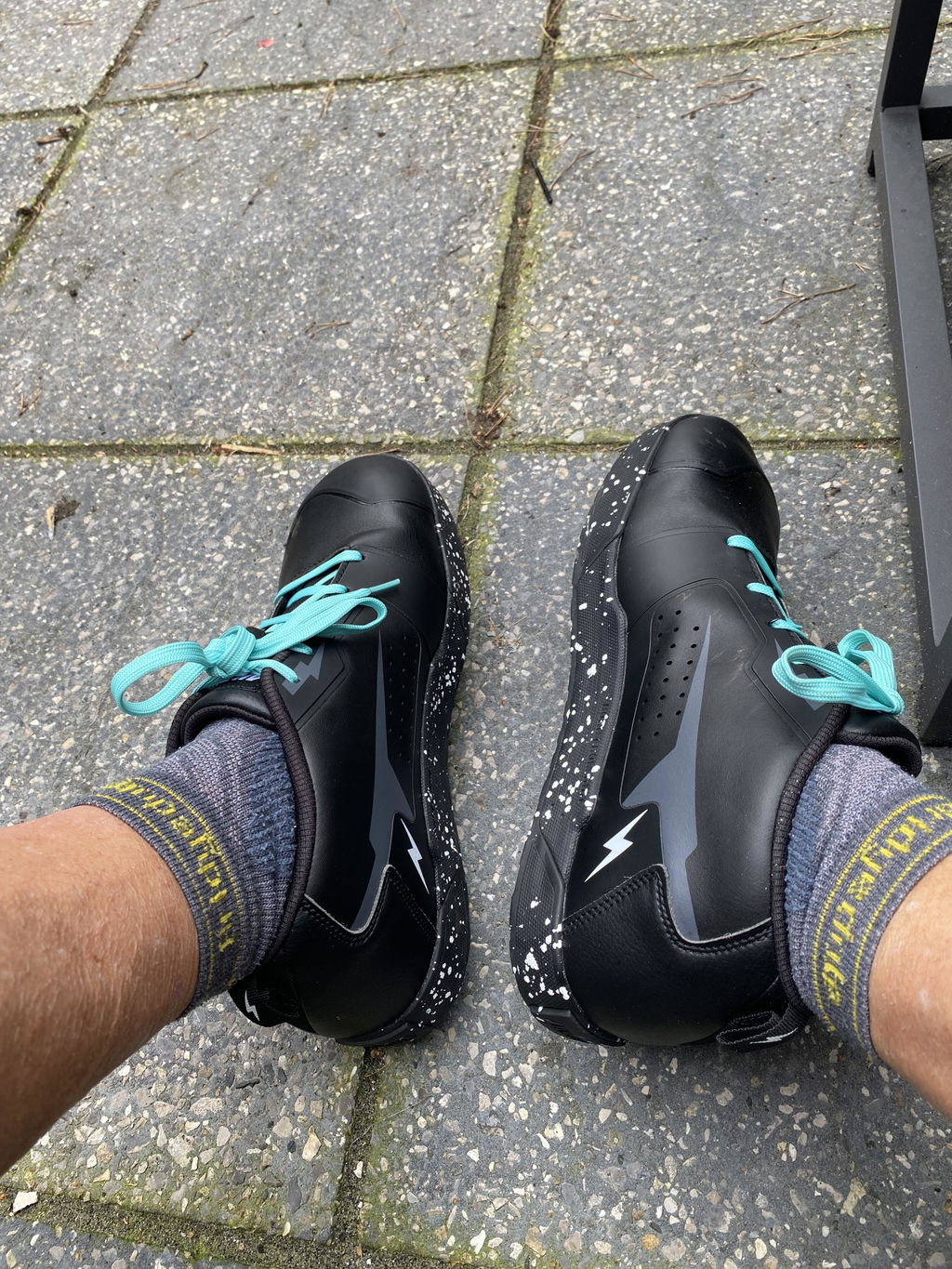
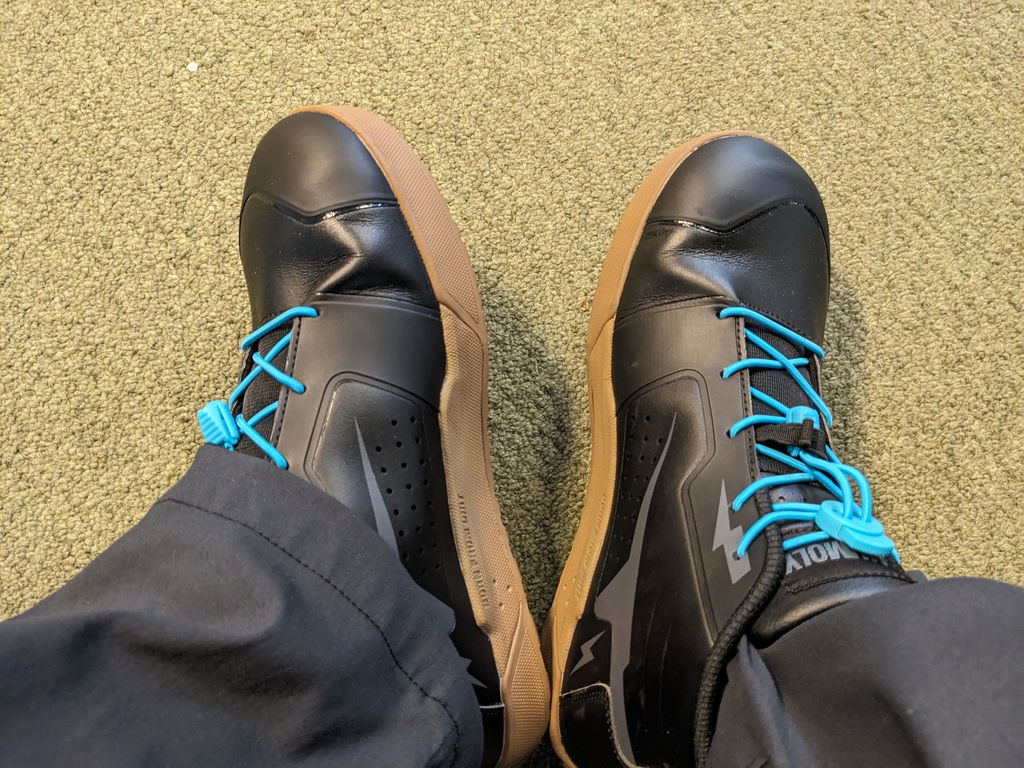
A wide, stable platform gives that force a more dependable foundation. Combined with Hero Rubber™, the wide platform supports the absolute-stability approach: the shoe holds the foot in place while giving the rider enough support to respond to changing terrain. This combination is especially valuable in adverse conditions, when a small slip can interrupt balance and line choice. The Pin-Lock MTB shoe brings those elements together for riders who need a secure pedal connection when the trail gets wet, loose, and unpredictable.
| Condition | Standard Rubber Compound | Hero Rubber™ (MTB-G) |
|---|---|---|
| Dry trail | Moderate grip; relies on tread pattern | High grip through molecular adhesion and pin engagement |
| Light rain / damp | Noticeable grip reduction; water film lubricates contact | Grip maintained; compound enhances wet adhesion |
| Heavy rain / mud | Significant slip; tread clogs, pins lose engagement | Preserved traction; viscoelastic deformation aids contact |
| Durability over time | Softer compounds wear quickly | Balanced resilience; designed for sustained performance |
Frequently Asked Questions
What makes rubber sticky for flat pedal MTB shoes?
Sticky rubber is formulated to increase surface contact with pedal pins while remaining compliant enough to conform around them. Its polymer chemistry also supports adhesion and compound hysteresis, which helps dissipate energy at the rubber-trail interface. The result: a more secure connection when water reduces ordinary friction.
Why is grip important in wet weather mountain biking?
Water acts as a lubricant between the shoe and pedal, reducing friction and making foot movement more likely during braking, cornering, or a sudden weight shift. Reliable traction keeps the foot planted so the rider can maintain control instead of compensating for a slipping shoe.
Do I need waterproof flat pedal shoes?
Not necessarily. Waterproofing can improve comfort during sustained rain, but it does not replace a high-friction sole and secure pedal-pin engagement. For wet trail performance, prioritize a rubber compound that maintains grip when wet, plus construction that manages moisture without compromising fit or foot control.
How does rubber compound affect flat pedal shoe performance?
Hardness and chemical composition determine how readily the sole conforms to pedal pins and how much adhesion it can produce. A very hard compound may resist wear but provide less conformity; a very soft compound may grip well but wear faster. Effective MTB compounds balance resilience, compliance, traction, and durability.
What should I look for in a wet-trail flat pedal shoe?
Look for a purpose-built high-friction sole, dependable mechanical engagement with pedal pins, and a stable fit that does not allow the foot to slide inside the shoe. A supportive wide toe box can also provide useful toe room and balance when the trail surface becomes uneven or slick.
Sources and Scientific Citations
- The Surface Roughness of a Rubber Soling Material Determines the Coefficient of Friction on Water-Lubricated Surfaces, Footwear Science, ScienceDirect. Research establishing the relationship between microscopic surface roughness and slip resistance in wet conditions
- Modeling of Rubber Friction: A Quantitative Description of the Hysteresis and Adhesion Contribution, André Le Gal and Manfred Klüppel, Journal of Materials Science (2017). Springer. Foundational research on how compound chemistry determines wet traction behavior
- The Vanderbilt Rubber Handbook, R. T. Vanderbilt Company. Internet Archive. Reference on rubber compound formulation, viscoelastic behavior, and filler reinforcement in high-friction compounds
About the Author
The Anamoly Press Team brings you in-depth gear coverage rooted in real-world testing and engineering insight. Every article is reviewed by our Head of R&D to ensure the technical claims match the science behind our designs.



Leave a comment
This site is protected by hCaptcha and the hCaptcha Privacy Policy and Terms of Service apply.