
By Anamoly Press Team • August 5, 2026
💡 Technical Review & Accuracy Check by Christopher Armstrong, Founder & Head of R&D
Our team researches and writes the gear guides you love, but every scientific claim and compound specification is personally vetted by our lead engineer to ensure absolute accuracy.
📌 Short Answer
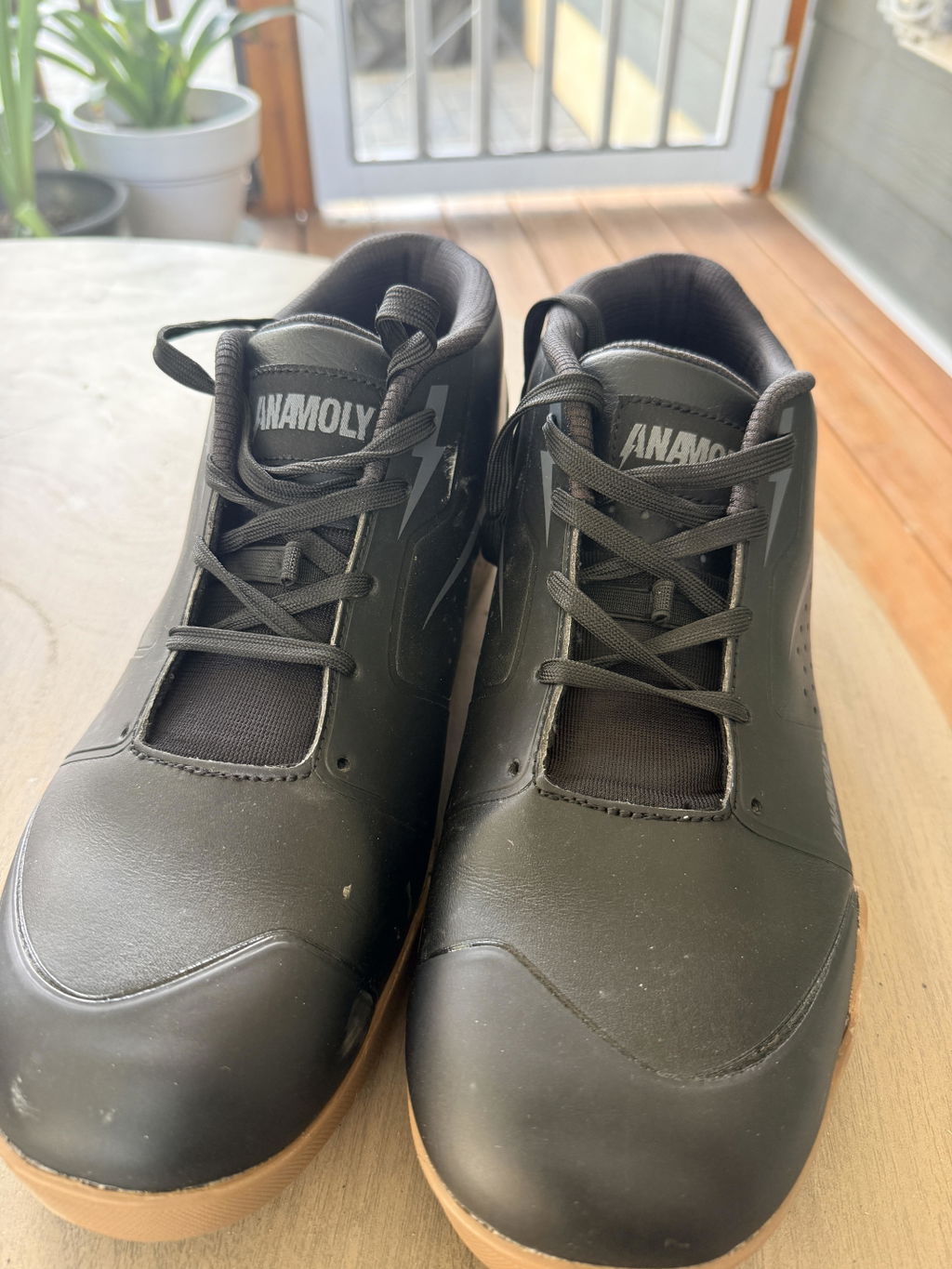
The running shoes vs pickleball shoes decision comes down to structure and traction: running shoes are tuned for forward propulsion, while a court shoe uses lateral support, controlled sole stiffness, and a flatter outsole for cuts and pivots. Our Lateral Control Pro adds Lateral Stability Outriggers (LSO) to manage side loads, and our Hero Rubber™ compound is designed to become grippier in wet conditions.
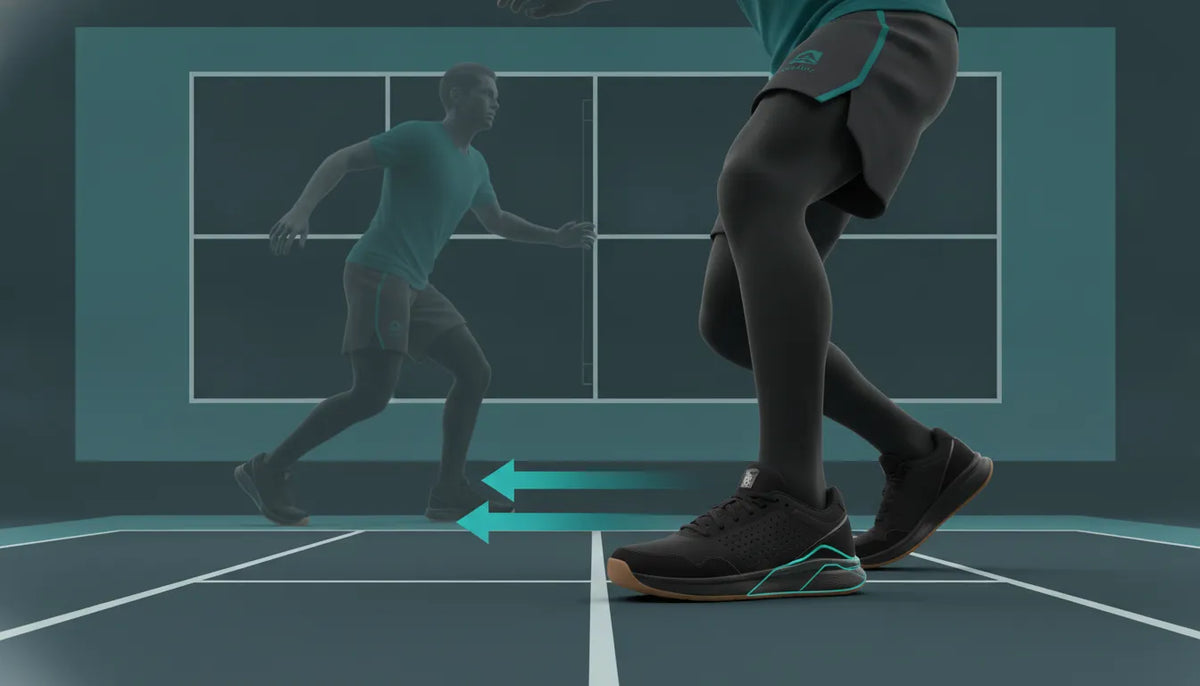
A pickleball point can shift from a split step to a hard lateral cut in less than a second—that changes what the shoe must control: not just impact from forward travel, but the rolling, twisting, and braking forces created when you chase a ball across the court.
The real difference between a court shoe and a trainer is the load path—running shoes are tuned for forward propulsion, while pickleball shoes manage lateral ground reaction forces during cuts, pivots, and abrupt stops. Our Lateral Control Pro relies on a wider platform, reinforced sidewalls, and a sole built for controlled rotation, so the foot stays centered when force arrives from the side.
Test drive the Lateral Control Pro risk-free
The distinction is not a marketing label; it is a response to how force travels through the shoe. A soft running midsole can absorb forward impact yet deform when loaded from the side, leaving the foot to manage forces the shoe was not built to stabilize—understanding that mismatch makes court-specific design choices easier to evaluate.
Why Running Shoes Fail on the Pickleball Court
Running shoes are built around a forward stride: the foot lands, rolls from heel to toe, and pushes ahead. Pickleball asks the shoe to solve a different mechanical problem—players brake, shuffle, pivot, and accelerate sideways, often in rapid succession, so a shoe optimized for linear propulsion can feel comfortable during warm-up yet become unstable when the movement changes direction.
🔬 Key Technical Insight
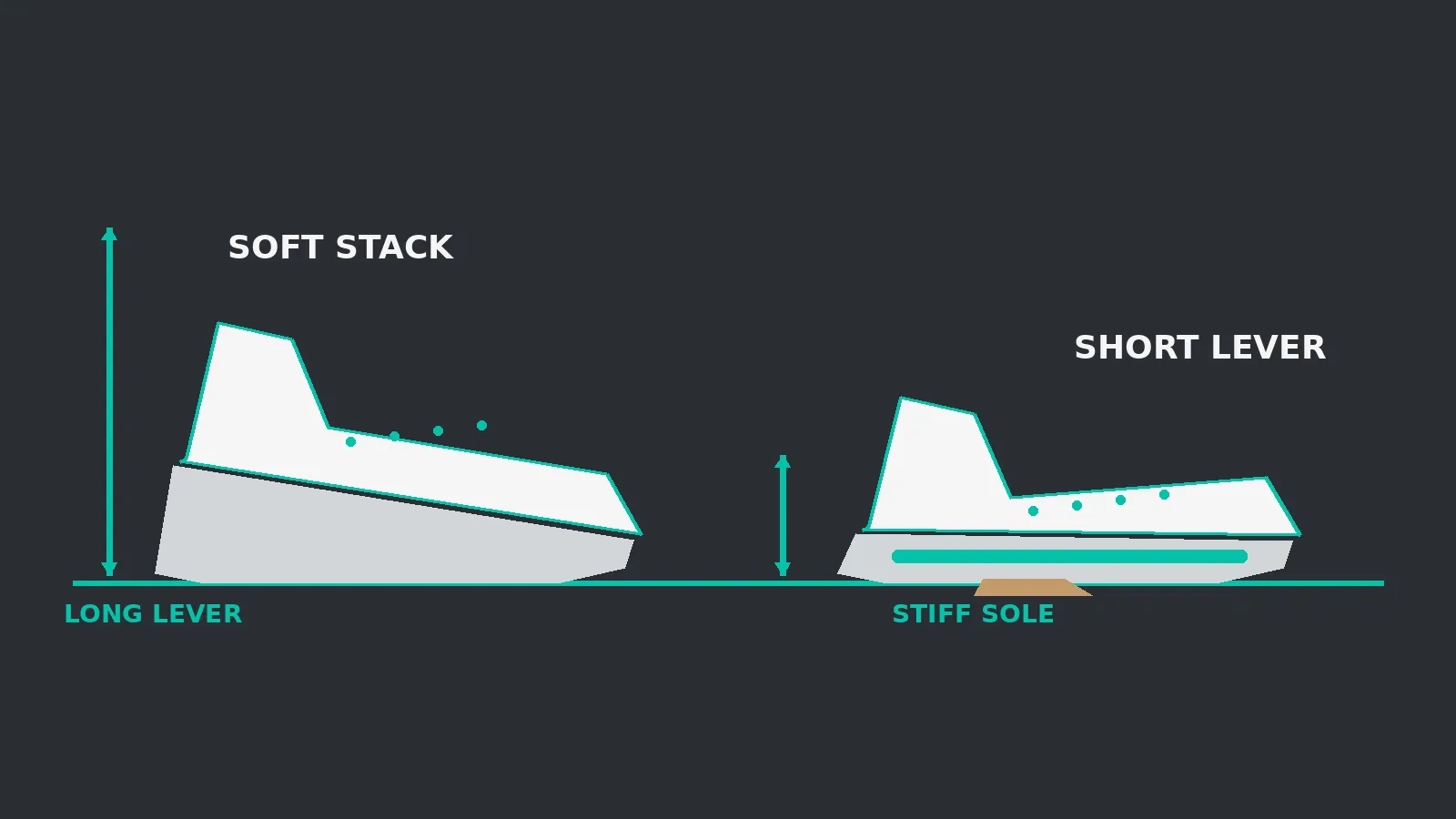
Every millimeter of midsole stack height increases the ankle's lever arm during a lateral cut: a running shoe's tall, soft stack places the ankle joint farther from the court, which gives a side load more leverage; a lower court platform shortens that lever arm.
The central mismatch is the midsole—running shoes commonly use soft cushioning to absorb repeated forward impacts, but that foam can deform when the load arrives from the side instead of keeping the foot centered over the base. Under lateral pressure, the midsole behaves like a soft foam wedge: it compresses on one edge and allows the upper and ankle to lean beyond the outsole. This is not a defect in running-shoe design; it is a consequence of designing the cushioning for a different loading pattern. Research on footwear torsional stiffness shows that managing lateral load, not just absorbing forward impact, is what court movement requires from a shoe (biomechanical study on torsional stiffness during side-step cutting).
Running footwear also tends to lack the lateral sidewall stiffness needed to resist fast side-to-side forces. The upper may hold the foot securely during a straight stride, but secure fit is not the same as structural containment during a cut. Without a stiffened sidewall, the shoe can flex or roll at the lateral edge while the player's body continues moving. That delay increases the work required from the ankle and lower leg to recover alignment.
Forward geometry creates a lateral compromise
A soft heel-to-toe rocker and a tall, curved stack help guide forward motion. On a pickleball court, however, a taller stack can increase the distance between the foot and the ground, raising the ankle roll-over angle when the outsole is loaded from the side. The result is a less direct connection to the court during a defensive shuffle or wide recovery step—a flatter, court-oriented platform gives lateral forces a broader and more predictable base.
No outrigger means less support at the edge
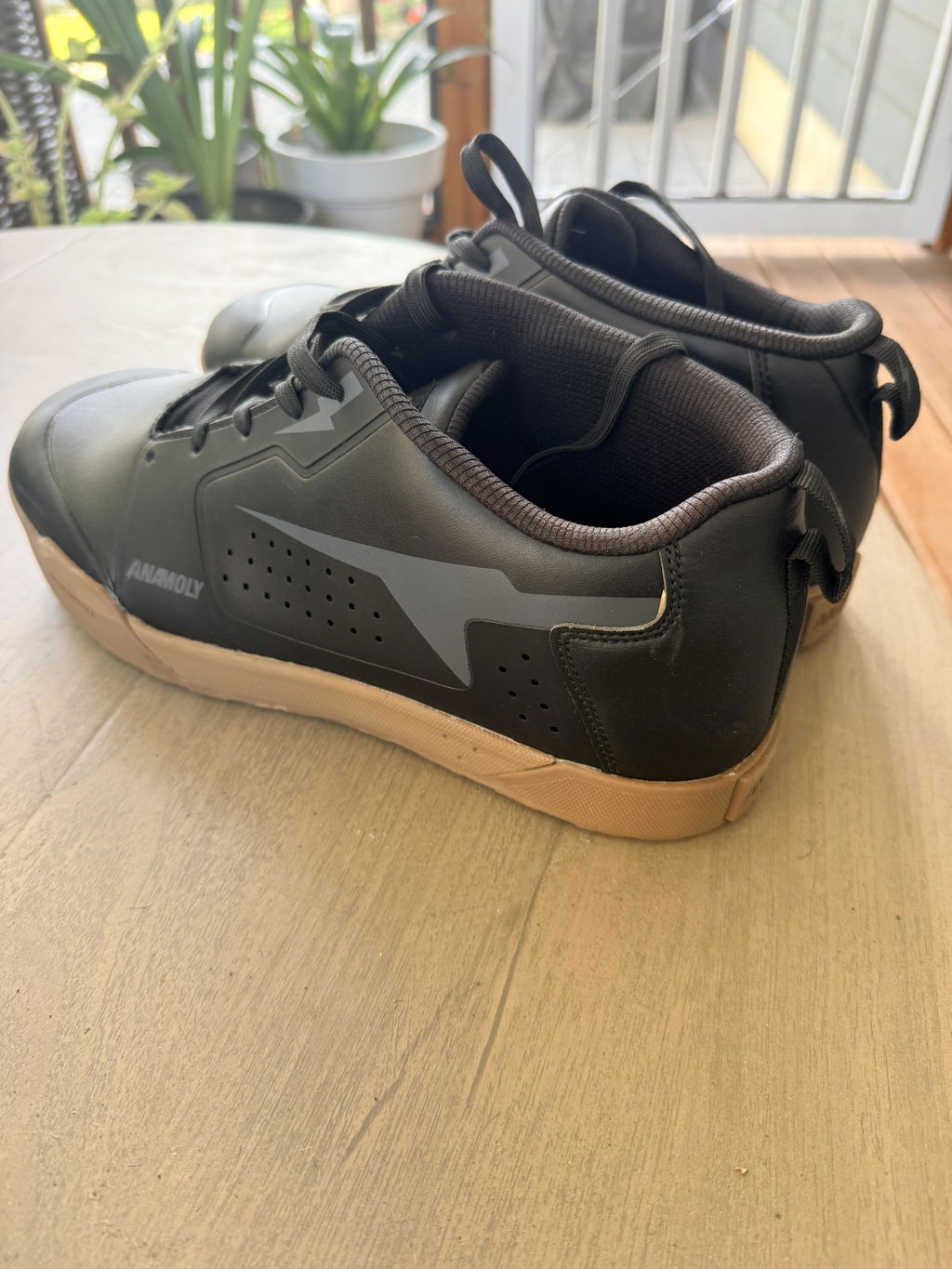
Running shoes generally do not include a court-specific outrigger that flares the base of support beyond the foot. That missing structure matters when a player plants near the shoe's outside edge—an outrigger helps resist lateral rollover by creating a wider mechanical footprint, and our Lateral Control Pro uses Lateral Stability Outriggers for this purpose. For the full design rationale, see our Lateral Control Pro engineering breakdown.
These limitations explain why rapid lateral movement in running shoes can increase the risk of ankle rolls or trips, particularly when the sole catches during a high-friction pivot. For a deeper look at the ankle mechanics involved, see why ankle support matters in pickleball shoes. The practical distinction is simple: running shoes cushion a forward impact, while court shoes must keep the foot controlled through repeated sideways loading.
What Pickleball Movement Demands From a Court Shoe
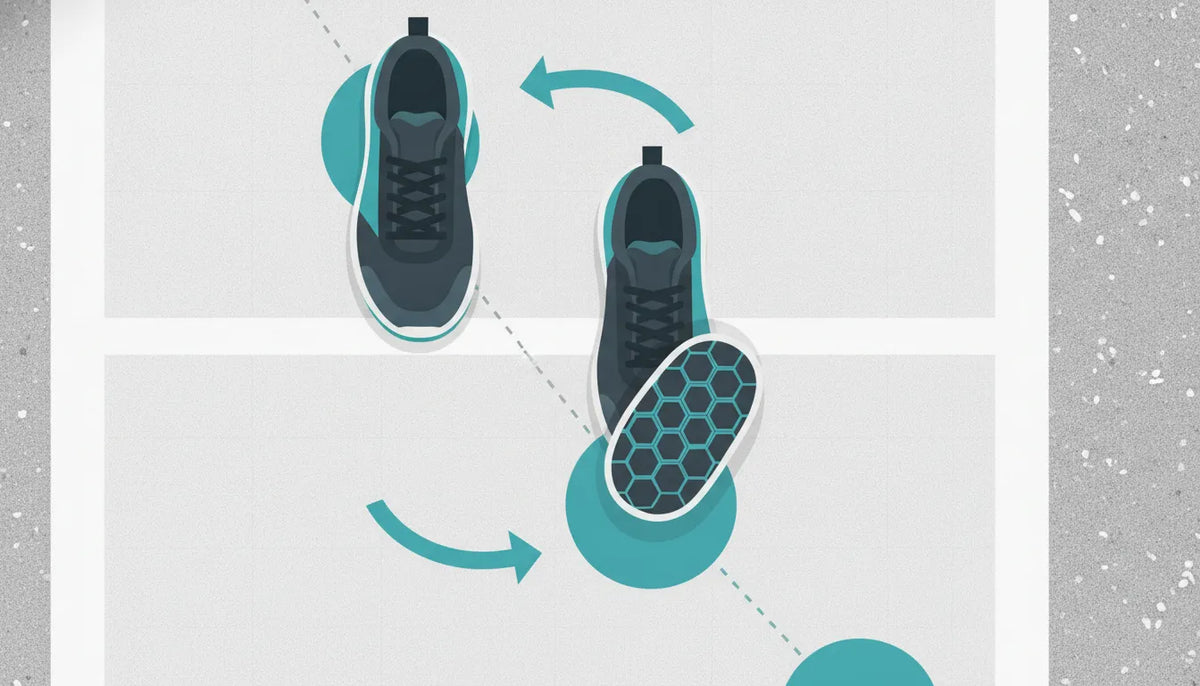
Pickleball loads the lower limb through repeated movement in several directions, not a single forward stride. A player may side-step, plant, cut toward the kitchen, brake, and accelerate again within a few seconds. That sequence creates frequent lateral forces and rapid changes in ground reaction force; the shoe must keep the foot connected to the court while allowing controlled movement.
Cutting creates torsional demand
A side-step cut is not simply a running step turned sideways. The foot plants while the body continues to rotate and redirect its momentum—that interaction produces torsional strain through the shoe, ankle, knee, and lower limb. Biomechanical research identifies footwear torsional stiffness as an important factor in lower-extremity behavior during side-step cutting, a movement common in court sports but relatively uncommon in linear running (PMC study on torsional stiffness and side-step cutting).
Research on badminton footwear reaches a similar engineering point: increased torsional stiffness can influence lower-limb biomechanics during demanding cutting maneuvers (study of torsional stiffness in court footwear). The goal is not to make the shoe rigid everywhere—it is to control unwanted twisting while preserving enough cushioning for repeated impacts. A soft running midsole under lateral load can behave like a foam wedge being pushed from its edge: it compresses unevenly, then asks the ankle to manage the resulting motion.
Acceleration and braking repeat the load
Pickleball movement also cycles quickly between propulsion and deceleration. Players stop short for a dink, push laterally to cover an angle, then accelerate to recover position. These repeated changes increase mechanical strain on the lower limb, particularly when the shoe does not provide adequate lateral support. A court shoe therefore needs a stable platform that resists collapse as the player brakes, rather than cushioning designed mainly to absorb a straight-line heel strike.
The Achilles tendon is another reason this distinction matters. Video analysis of pickleball and tennis gameplay identifies Achilles tendon stress as a relevant injury concern in court-based movement (video analysis of pickleball and tennis gameplay). Footwear cannot remove injury risk, but a court-specific construction can help manage how force travels through the foot and ankle during cuts, pivots, and explosive starts. Studies of side-step cutting likewise point to a balance between cushioning and torsional stability, rather than maximum softness alone.
Translate biomechanics into shoe selection
When comparing running shoes vs pickleball shoes, look beyond cushioning volume. Check for a broad base for lateral stability; lateral sidewall support; a sole that supports controlled pivots; and construction that maintains its shape under repeated torsional loading. Our court shoe selection guide explains how these features work together for lateral stability, ankle support, and fit.
How Running Shoes vs Pickleball Shoes Differ in Lateral Stability
The main structural difference is the direction each shoe is designed to control. Running footwear is primarily built around forward propulsion, while pickleball footwear must keep the foot centered during side-steps, cuts, pivots, and sudden stops. That changes the required relationship between the sole, sidewall, and ankle.
An outrigger extends the shoe's supporting platform beyond the upper footprint. By widening the base of support on the lateral side, it gives the foot more resistance against rolling outward when body mass shifts rapidly toward the sideline. In our Lateral Control Pro, we call this structure a Lateral Stability Outrigger, or LSO—it is engineered to manage lateral loads that standard running footwear is not built to stabilize.
The outrigger works with the sidewall rather than replacing it. A stiffer lateral sidewall creates a mechanical constraint against excessive eversion, the outward rolling motion that can destabilize the ankle during a hard cut. Sole stiffness and torsional stiffness also matter: the platform needs enough resistance to keep the foot connected to the shoe without becoming so rigid that it prevents controlled movement. Research on side-step cutting identifies torsional stiffness as an important footwear variable for lower-extremity biomechanics; court footwear uses that principle for repeated multidirectional loading.
- Running shoes: A softer, forward-focused platform can deform when lateral force arrives from the side. With limited lateral sidewall stiffness and no dedicated outrigger, the foot may move beyond the shoe's stable base before the player can recover.
- Pickleball shoes: A flatter platform, reinforced sidewalls, and a lateral outrigger distribute side loads across more of the sole. That supports more consistent foot contact during a cut or pivot.
- Our Lateral Control Pro: The LSO system is designed specifically for court movement, adding lateral structure where a linear running shoe typically has none.
This is why the issue is not simply cushioning versus no cushioning. It is whether the shoe can resist lateral collapse while the player decelerates and changes direction. Players looking specifically at ankle support in pickleball shoes should inspect the sidewall height, lateral stiffness, and width of the outsole, not just the softness of the insole.
Court Traction vs Running Rubber: Soles That Grip and Pivot
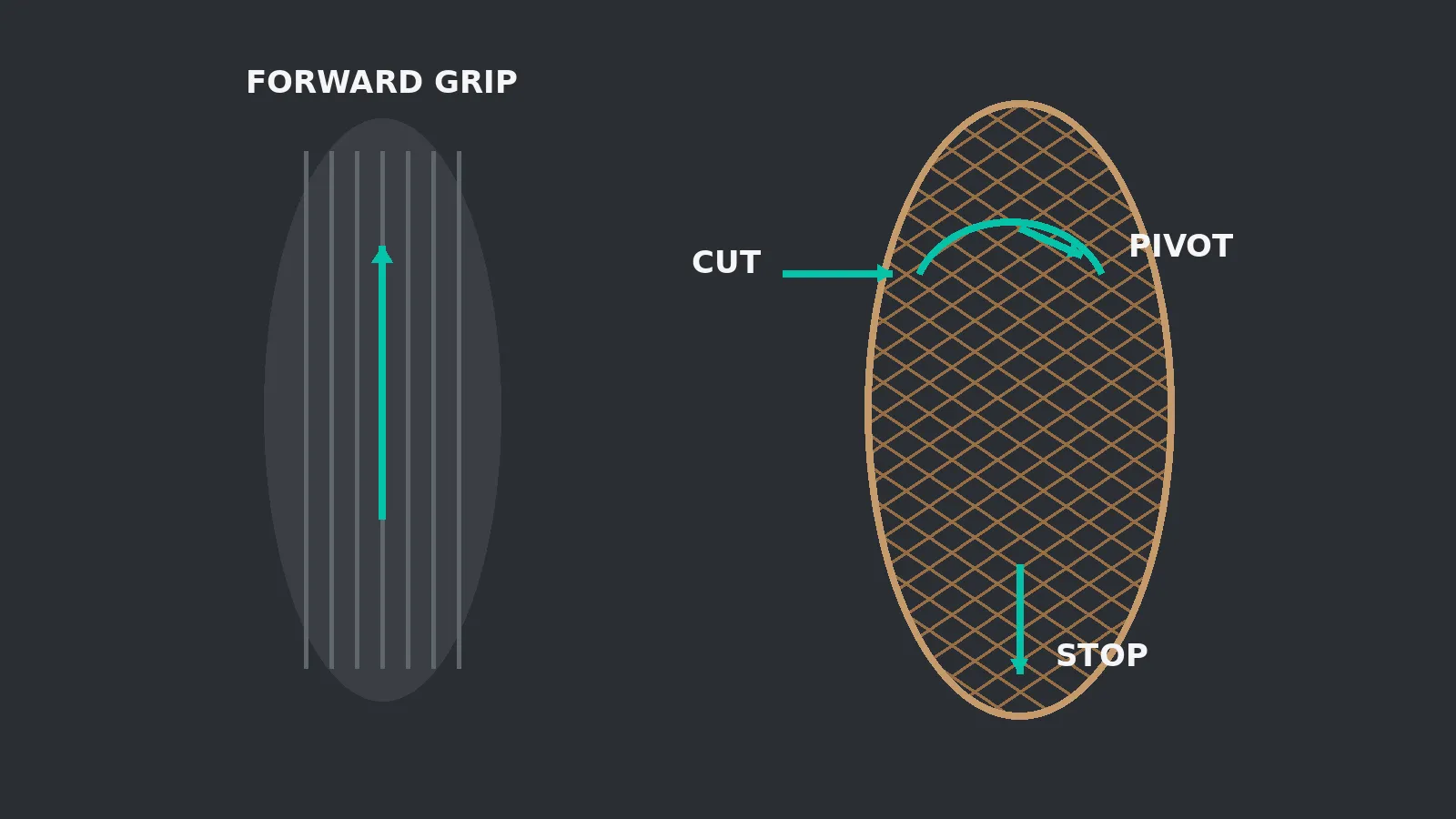
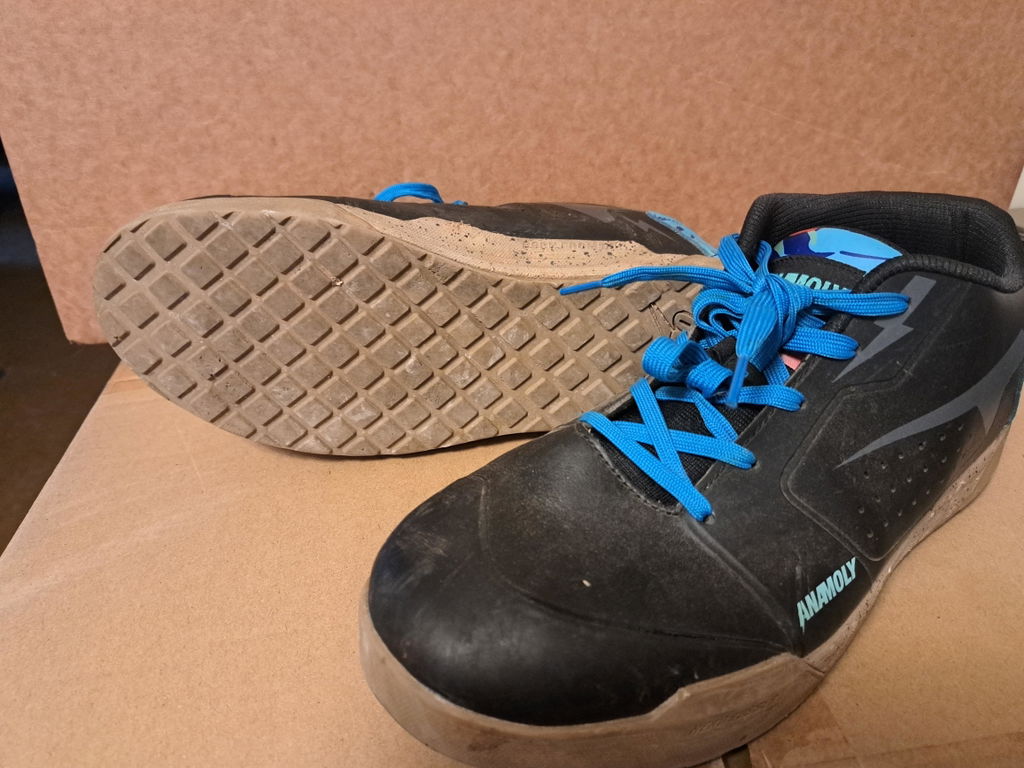
Traction is not simply a question of how much rubber contacts the floor. The tread has to create predictable friction while your foot starts, stops, rotates, and changes direction. Pickleball court shoes use flatter sole geometries and court-tuned friction characteristics for multidirectional movement; running shoes are generally shaped around forward propulsion and linear impact absorption.
That distinction matters most during a sharp lateral move. A running outsole can offer dependable forward grip yet interact poorly with a hard court when the foot needs to pivot. Aggressive forward-oriented tread may catch instead of release, increasing the chance of a stumble or a forced ankle movement. Court traction is designed to keep the foot connected without making every rotation fight the sole.
- Court-specific sole: A flatter outsole supports consistent contact across the foot, with a friction profile intended for controlled pivots, side-steps, and multidirectional starts.
- Running sole: Forward-facing traction patterns are optimized for a linear gait; during a sudden side-step, the pattern and edge geometry may snag or provide less predictable release.
- Pivot control: The goal is not maximum grip at every instant. It is reliable traction during acceleration, followed by controlled rotation when the movement demands it.
- Surface contact: A court-tuned sole helps maintain stability on hard court surfaces, where inconsistent contact can interrupt footwork and load the ankle unexpectedly.
Why compound behavior matters in wet conditions
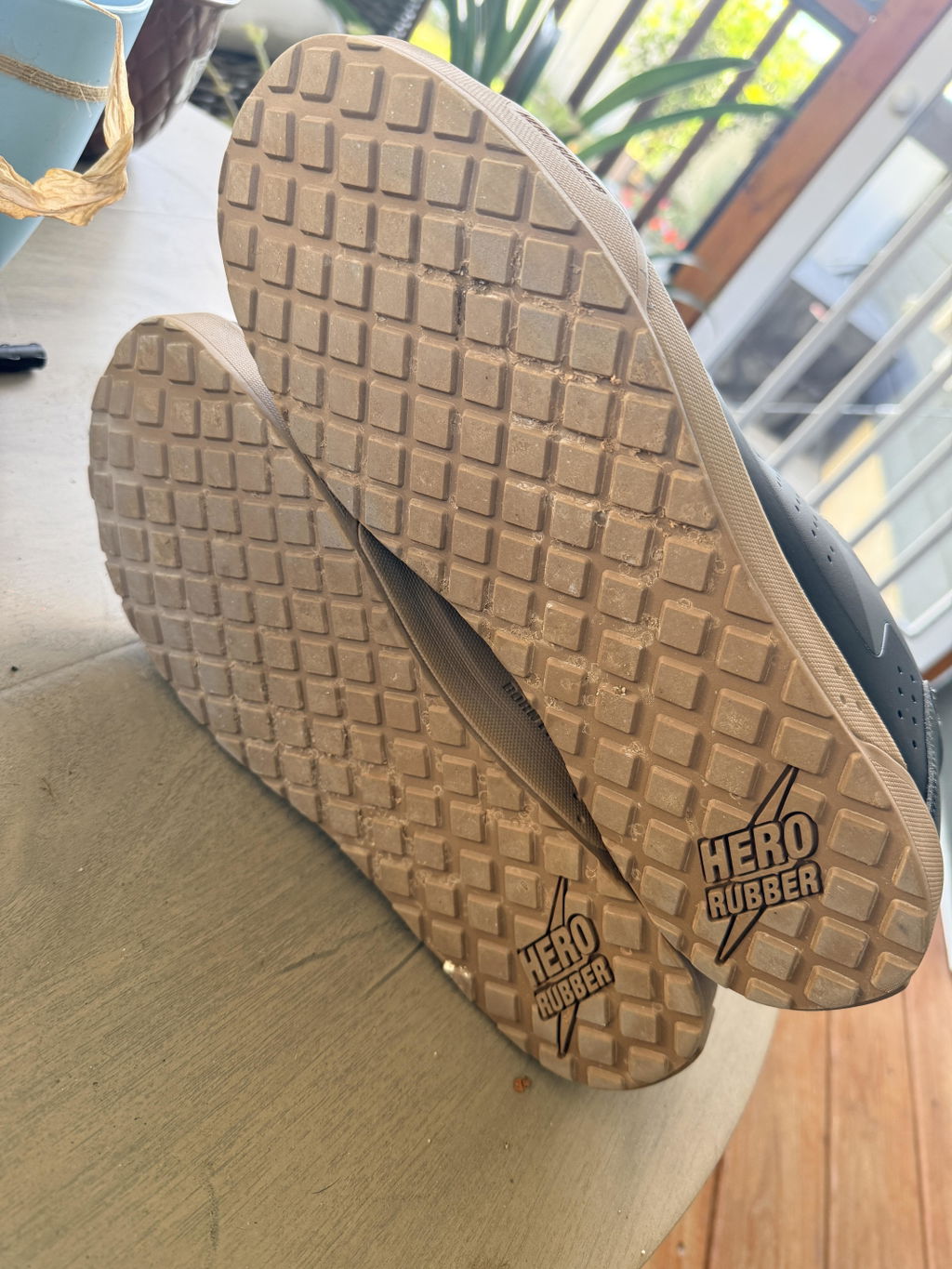
Sole geometry is only one part of traction. The compound itself determines how the outsole responds as the surface changes. we use Hero Rubber™, which is engineered to become grippier when wet rather than simply losing friction as moisture builds between the sole and surface. That counterintuitive behavior is part of the compound's performance story, not a substitute for clean court conditions or sound footwork.
For a deeper explanation of how rubber compound behavior affects traction, see the Hero Rubber™ traction science. The same engineering principle matters when a player moves between a dry court, a damp entry area, or a surface affected by light moisture.
Traction works with the rest of the shoe
Grip cannot correct an unstable platform by itself. The outsole needs to work with sidewall stiffness, torsional control, and the shoe's lateral support so force stays organized as the body changes direction. The Lateral Control Pro applies that system-level approach through its court-specific construction and Lateral Stability Outriggers. Review the Lateral Control Pro engineering for the full design rationale.
In practical terms, choose traction that lets you push, brake, and pivot without either sliding unexpectedly or catching at the wrong moment. That is the functional difference between a sole built for court movement and rubber designed mainly to carry a runner forward.
When Running Shoes Wear Out Faster on Court
Running shoes can feel comfortable at first because their soft midsoles are designed to absorb repeated forward impact. Pickleball applies that cushioning system differently: every side-step, hard stop, and pivot adds lateral and torsional load that a linear-focused shoe was not built to manage. As the foam deforms, it can lose the support and responsiveness that made the shoe feel stable in the first place.
That change is not only a comfort issue—a softened midsole can allow the foot to roll toward the outside of the platform during a cut, while limited sidewall stiffness gives the upper and sole less structural resistance. Research on footwear torsional stiffness and side-step cutting shows why this matters: court movement requires a balance between cushioning and torsional control, not cushioning alone. The biomechanical study on altered torsional stiffness examines this relationship during cutting maneuvers.
Wear follows the movement pattern
Running shoes commonly show wear at the heel or ball of the foot, where a mostly linear gait repeatedly loads the same contact zones. Court shoes experience a different pattern. Repeated lateral pushes and pivots concentrate abrasion along the outside edge of the sole, and rapid acceleration and deceleration also stress the heel-to-toe transition. A worn lateral edge, flattened sidewall, or visibly compressed midsole is a practical signal that the shoe is no longer providing consistent support.
Court shoes are engineered around these repeated torsional demands. Their midsole, sidewall, and outsole work as a structural system intended to preserve foot contact and stability through multidirectional play. The relevant distinction in running shoes vs pickleball shoes is therefore not simply how much cushioning each shoe contains. It is whether that cushioning remains controlled when force arrives from the side. Research on torsional stiffness in court footwear links that construction choice to lower-limb biomechanics during demanding cutting movements.
Use the table below as a quick inspection guide—it compares typical design purposes and wear zones, while actual service life still depends on playing frequency, surface, body weight, and cleaning practices.
| Midsole purpose | Running shoe: forward-impact absorption with softer cushioning; Court shoe: cushioning controlled for lateral and torsional loads. |
|---|---|
| Sidewall | Running shoe: limited lateral stiffness; Court shoe: reinforced to resist side-to-side deformation. |
| Outrigger | Running shoe: typically absent; Court shoe: expands the support platform during lateral changes. |
| Sole traction | Running shoe: forward-traction pattern; Court shoe: flatter pattern for controlled pivoting. |
| Typical wear zone | Running shoe: heel or ball of the foot; Court shoe: lateral edge and high-load transition zones. |
| Wet grip | Running shoe: varies by compound and tread; Court shoe: varies by compound, with some materials designed to retain friction when wet. |
Choosing a Shoe That Fits How Pickleball Moves
The right court shoe should make the court's demands feel predictable underfoot. Start with fit, then evaluate how the shoe manages lateral force, repeated pivots, and the balance between cushioning and structural support. A shoe that feels comfortable while standing still can still allow the foot to slide, the heel to lift, or the ankle to roll when a player has to reach wide and recover quickly.
Check the three contact zones
- Toe room: The forefoot should allow the toes to spread and absorb directional changes without pressing against the upper. Excess space is also a problem because the foot can shift inside the shoe during a hard stop.
- Heel lockdown: The heel should remain seated without requiring the laces to be tightened until they create pressure. Heel movement changes the timing of each push-off and can make a recovery step feel unstable.
- Width and sidewall support: The upper and platform should hold the foot securely across its width. Sidewall height and stiffness help constrain excessive eversion, a mechanical factor in ankle stability during side-step cutting.
These details matter because poor fit increases the opportunity for a trip or ankle roll during high-intensity play. Fit is not a substitute for shoe construction, but it is the interface that lets the construction work. The shoe's base, sidewalls, and outsole cannot control movement effectively if the foot is sliding inside them.
Match cushioning to lateral durability
Cushioning still matters on a hard court, especially during repeated deceleration. The useful question is not whether a shoe feels soft—it is whether the cushioning remains controlled when force arrives from the side. Court footwear should balance impact absorption with resistance to lateral collapse and torsional shear. That balance helps preserve consistent foot contact, so players can react to an opponent's shot without waiting for a soft midsole to settle.
For a deeper explanation of how this construction affects movement, see our guide to pickleball shoes and ankle support. Our court shoe selection guide covers sizing and wear checks in more detail.
Players switching from running footwear commonly ask whether the change will feel stiffer, how much toe room is appropriate, and when a worn outsole has become a safety concern—those questions are easier to answer once fit, lateral support, and cushioning are treated as connected parts of the same movement system.
Test drive the Lateral Control Pro risk-free
Frequently Asked Questions
Can I wear running shoes for pickleball?
You can, but they are not engineered for the repeated side-steps, cuts, and pivots of pickleball. Running shoes prioritize forward propulsion and impact absorption; their softer cushioning and limited lateral structure can deform under side loading. A court shoe provides a more stable platform for multidirectional movement and lateral stability.
What is the main difference between pickleball shoes and running shoes?
The main difference is the load path. Running footwear is built around linear heel-to-toe motion, while pickleball footwear manages lateral ground reaction forces, braking, acceleration, and rotation. That requires a more supportive sidewall, a controlled sole-stiffness profile, and construction designed to resist torsional shear during cuts.
Why do pickleball shoes use outriggers?
An outrigger extends the shoe's effective base of support toward the lateral edge. During a sudden side-step or pivot, that added platform helps resist excessive ankle roll and keeps the foot more centered over the sole. The Lateral Control Pro uses Lateral Stability Outriggers specifically to manage these court-driven lateral loads.
How do sole designs differ between pickleball and running shoes?
Pickleball soles are generally flatter and use court-specific traction patterns for controlled grip during starts and pivots. Running soles are optimized for forward traction and may catch or feel awkward during sharp lateral movements. Our Lateral Control Pro also uses Hero Rubber™ for traction that becomes grippier in wet conditions.
Ready to Choose a Court-Specific Shoe?
Running shoes can work for forward motion, but pickleball asks your footwear to manage repeated cuts, pivots, and lateral loading. A court-specific design gives those movements a more appropriate structural platform, with traction and support built around how the game actually moves. If that difference matches your playing style, explore the Lateral Control Pro pickleball shoe and take the next step toward footwear built for the way the game moves.
Test drive the Lateral Control Pro risk-free
Our quality guarantee covers workmanship defects, and we offer free returns and free size exchanges within our 30-day US return window: order your size, put them through their paces on the court, test the lateral chassis on hard cuts, and feel how the wide toe box relieves forefoot pressure. If the fit is not right, use the return or exchange options within that window—no friction, just a more informed court-shoe decision.
Sources & Scientific Citations
- PLOS ONE, Altered footwear torsional stiffness and side-step cutting biomechanics, https://pmc.ncbi.nlm.nih.gov/articles/PMC10903810/
- Journal of Sports Science and Medicine, Torsional stiffness of court footwear and lower-limb biomechanics during cutting, https://pmc.ncbi.nlm.nih.gov/articles/PMC10915609/
- Foot & Ankle Orthopaedics, Video analysis of Achilles tendon stress in pickleball and tennis gameplay, https://pmc.ncbi.nlm.nih.gov/articles/PMC11686687/
About the Author
Anamoly Press Team: The Anamoly Press editorial team combines footwear engineering knowledge with hands-on testing across mountain biking, pickleball, and trail sports. Every guide reflects real court and trail experience, backed by our proprietary technology. When we are not writing, we are playing, drilling, and verifying that the biomechanics we explain hold up under actual games.


Leave a comment
This site is protected by hCaptcha and the hCaptcha Privacy Policy and Terms of Service apply.