

By Anamoly Press Team
Technical Review & Accuracy Check by Christopher Armstrong, Founder & Head of R&D
Our team researches and writes the gear guides you love, but every scientific claim and compound specification is personally vetted by our lead engineer to ensure absolute accuracy.
📌 Short Answer
Wide pickleball shoes can help prevent lateral court injuries, but width alone is not enough: the right shoe pairs a wide toe box with a lower stack height and a lateral stability outrigger, so the foot sits fully over the platform and holds its line through hard cuts. A broad measurement across the midsole matters more than how the shoe looks.
On a pickleball court, a shoe that feels merely snug can become a stability problem: every split step, recovery, and kitchen-line lunge asks the foot to manage rapid side-to-side loading, and if the foot spills over the midsole, the ankle and shoe must compensate at the exact moment control matters most. A wider fit is therefore more than a comfort upgrade—it gives the forefoot room to splay, keeps the plantar surface supported, and helps the shoe maintain contact with the court during lateral cuts.
Test drive the Lateral Control Pro risk-free
Wide pickleball shoes can help prevent lateral court injuries by matching the foot's actual width: reducing midsole overhang and creating a broader, more stable platform for hard stops and changes of direction. The right pair must combine anatomical room with dedicated lateral support, not simply use a wider upper.
That distinction matters because many conventional court shoes were adapted from narrower tennis-oriented patterns: understanding where those patterns lose control is the first step toward choosing a shoe that supports your movement instead of fighting it.
Wide Pickleball Shoes: Why Standard Court Shoes Fail Wide-Footed Pickleball Players
Pickleball is not simply a slower version of tennis; its short reaction windows, split steps, and repeated cuts across the kitchen line create a movement profile that places unusual demands on the shoe. One gear analysis estimates that pickleball involves approximately 40% more lateral movement than tennis, which makes width and side-to-side stability central performance variables, not cosmetic fit preferences.
A D-width shoe can leave the foot unsupported
For many men's shoes, D is the standard medium width; that designation may work for a neutral foot shape, but it can become a structural problem when the forefoot or midfoot extends beyond the shoe's intended platform. If the foot hangs over the midsole, the shoe is no longer supporting the full contact area during a lateral cut.
That overhang can create a noticeable rolling sensation: the foot reaches the edge of the platform before the outsole and upper have finished controlling the movement. A narrow court shoe can also push the foot into pronated or supinated positions, changing how force travels through the ankle; under a fast direction change, those altered positions may increase the likelihood of an ankle roll or sprain.
Pickleball movement exposes the weakness
A shoe adapted from a general tennis design may provide acceptable forward traction, yet still be poorly matched to pickleball's repeated lateral transitions. A podiatrist-authored buying guide notes that many regular athletic shoes are not designed for the sport's distinct movement demands; the issue is not that tennis construction is inherently inadequate, but that a court shoe must control the forces produced by the player's actual movement pattern.
During a split step, the foot needs a stable base beneath the entire stance; during a lateral push-off, it needs the upper, midsole, and outsole to work together without allowing the foot to spill over the edge. A medium-width shoe on a wide foot compromises that relationship before the point of contact.
Overhang also accelerates wear
When the foot consistently lands outside the shoe's supported geometry, loading becomes uneven: the outsole may wear more heavily along one edge, while the upper and midsole experience stresses they were not shaped to manage. Over time, that uneven wear can reduce structural support even further, creating a feedback loop—less support leads to more instability, which produces more uneven loading.
The practical takeaway is straightforward: choose wide pickleball shoes based on the platform under the foot, not just a roomy-looking toe box. A genuinely wide fit should keep the foot centered over the midsole and preserve a stable base when the game demands an abrupt lateral change.
The Biomechanics of Lateral Court Injuries
Pickleball is not simply a slower version of running: the movement pattern is shorter, more abrupt, and dominated by repeated lateral cuts, split steps, lunges, and recoveries. One competitor analysis estimates that 50% of pickleball movements are lateral; at the kitchen line, those movements happen in a compressed space, often while the player is reaching outside the body's midline.
That combination changes the load path through the foot and ankle. During a lateral push-off, the foot must create force against the court while the body shifts sideways; during the next plant, the ankle and shoe must control the transition from outward motion to a stable base. Lateral court movements are frequent and intense, unlike the longer, more linear stride pattern of running—a running shoe can be comfortable in a straight line and still be poorly matched to this repeated side-to-side demand.
Why the ankle rolls during a lateral cut
The most common pickleball injury is an ankle sprain; mechanically, the risk increases when the foot lands near the edge of the shoe or when the shoe cannot keep the foot centered over its platform. The ankle may move too far into inversion (the sole turns inward) or into eversion (it rolls outward); under a fast lateral cut, the ankle ligaments have to resist that motion while the player is still carrying momentum.
Width is relevant because it changes the size and shape of the base supporting that load: a wider base gives the foot more room to remain planted as the center of mass moves sideways, and it also allows toe room, which improves the base of support during an explosive push-off. The goal is not a loose fit; it is to let the forefoot spread without forcing the toes into a tapered front or allowing the foot to hang over the midsole.
Why the kitchen line is a high-load zone
Anamoly Labs' internal injury analysis reports that 62% of pickleball injuries occur at the kitchen line, where lateral movements are especially common; that figure helps explain why court footwear must be evaluated for cutting stability rather than cushioning alone. Hard court surfaces provide little natural shock absorption, so the footwear becomes the primary interface for managing traction, impact, and lateral force.
A wider platform can help dissipate energy more efficiently, reducing the peak load transferred to the ankle ligaments during a plant. It does not eliminate injury risk—technique, conditioning, and court awareness still matter—but properly fitted wide pickleball shoes give the foot a more stable mechanical starting point for the next cut.
What Makes a Pickleball Shoe "Wide": Decoding 2E, 4E, and Anatomical Fit
Width labels are a useful starting point, but they are not a complete description of how a pickleball shoe will fit or perform. In men's sizing, D is the standard medium width, 2E is wide, and 4E is extra-wide; in women's sizing, B is standard, D is wide, and 2E is extra-wide. These designations describe the shoe's overall last, or internal shape, rather than guaranteeing generous space at every point around the foot.
2E and 4E: what the label actually tells you
A 2E shoe may provide more room through the midfoot, while still narrowing toward the toes; that distinction matters during a split step or lateral stop, because if the forefoot is compressed, the shoe can feel wide on paper but restrictive where the foot needs to spread. A 4E model offers more total volume, but it is not automatically the right choice for every wide foot: excess space can allow the foot to move inside the upper, reducing precision during fast direction changes.
Look for both the width designation and the shape of the toe box: a wide toe box gives the toes room to splay; a high-volume fit adds room vertically or through the midfoot. They overlap, but they are not interchangeable; some 2E shoes taper at the toe, so read the product's actual fit notes. When possible, inspect the outsole and upper shape rather than relying on the width code alone.
| Width Label | Men's Size | Women's Size | Typical Toe Box | Best For |
|---|---|---|---|---|
| Standard (D/B) | D | B | Tapered | Narrow to medium feet, lower volume |
| Wide (2E/D) | 2E | D | Moderate | Medium-wide feet needing midfoot room |
| Extra-Wide (4E/2E) | 4E | 2E | Generous | Wide feet requiring full forefoot space |
Width is also a stability decision
During a lateral stop, the foot needs a stable platform beneath it; extra room can help prevent the foot from rolling over the edge of the sole, but volume in the upper is only part of the equation. True lateral stability comes from a reinforced sidewall, a broad and supportive footprint, and an upper that holds the foot securely without crushing the toes; a wider platform gives the body a more confident foundation for pivots, and construction determines whether that platform remains connected to the foot under load.
This is why a nominally wide shoe can still feel unstable, while an anatomically shaped shoe with a controlled fit can feel planted; evaluate the relationship between the toe box, sidewalls, heel hold, and outsole width as one system. Pickleball demands repeated lateral movement, so comfort that disappears during a hard stop is not a meaningful fit solution.
For reference, commonly listed wide options include the K-Swiss Express Light 2E at about $115, the ASICS Gel-Resolution X 2E at about $130, and the Skechers Viper Court Pro 2.0 at about $115. Prices and availability vary, but the more important comparison is whether each model provides usable forefoot space and structural support for your specific foot shape.
Lateral Stability Outriggers: How Wide Shoes Prevent Ankle Rolls
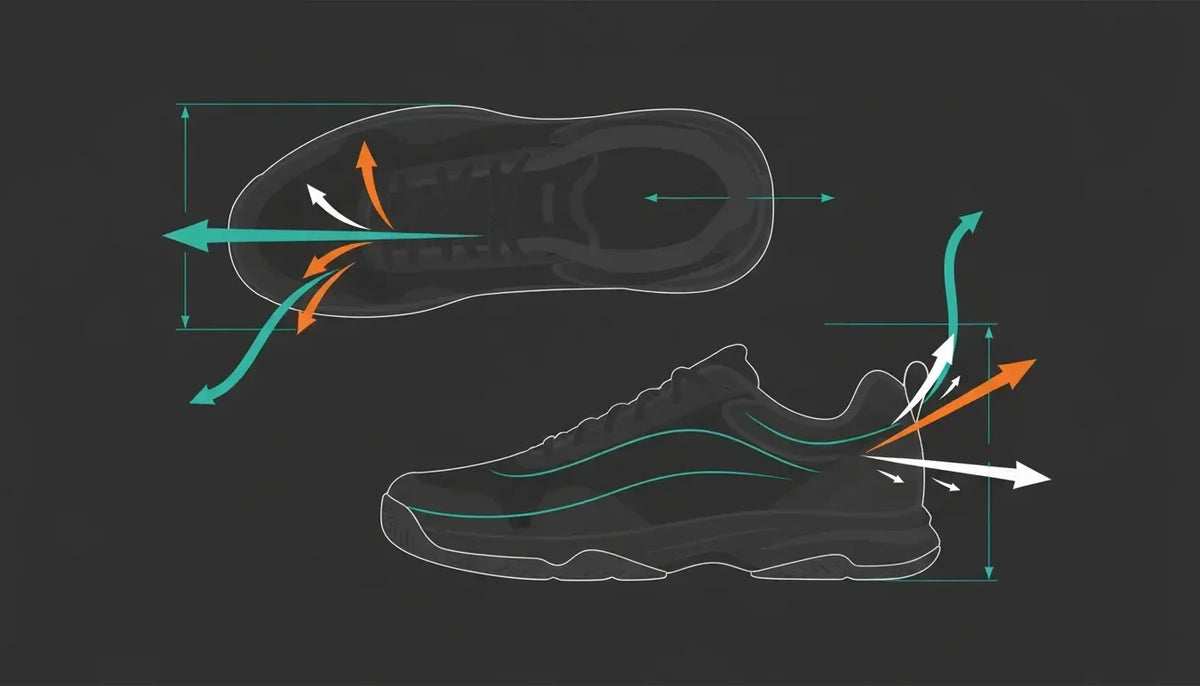
Width matters most when the foot has to change direction before the rest of the body has finished decelerating: a kitchen-line pivot creates high-torque forces across the shoe, foot, and ankle. If the platform is too narrow, the foot cannot dissipate the energy of a sudden stop across its full surface area, and the load concentrates at the outside edge, increasing the chance of an uncontrolled roll.
A physical boundary against excessive motion
Anamoly Labs addresses that problem with the Lateral Stability Outrigger, or LSO: the LSO extends the shoe platform by approximately 4 to 6 mm on the lateral side. That extension is not simply extra material for a wider appearance; it creates a physical barrier that helps keep the foot supported when a hard lateral cut pushes it toward the edge of the outsole.
This is the mechanical role of lateral stability: provide enough base and outrigger support to counteract torque during pivots, keeping the foot more securely aligned over the platform, which can reduce internal torque at the ankle joint and the likelihood of a sprain. It does not replace sound movement mechanics or court awareness, but it gives those mechanics a more stable foundation.
Why the platform shape matters
A wide fit is useful because it gives the foot a larger platform during split-steps, lunges, and recovery steps; the goal is not to make the shoe feel bulky. A broader base can support a lower-profile construction, improving court connection and reducing the top-heavy sensation that often appears when a shoe is tall but narrow.
That distinction separates functional width from a merely roomy upper: the outsole and midsole must support the foot where force is actually transferred, while the upper must hold the heel and midfoot securely enough to prevent sliding inside the shoe. For a deeper look at the design principles, see our guide to stability and lateral support for pickleball.
Key Technical Insight
A wider base distributes lateral loads over more surface area; the LSO adds a defined outer boundary when a pivot drives the foot toward the shoe's edge.
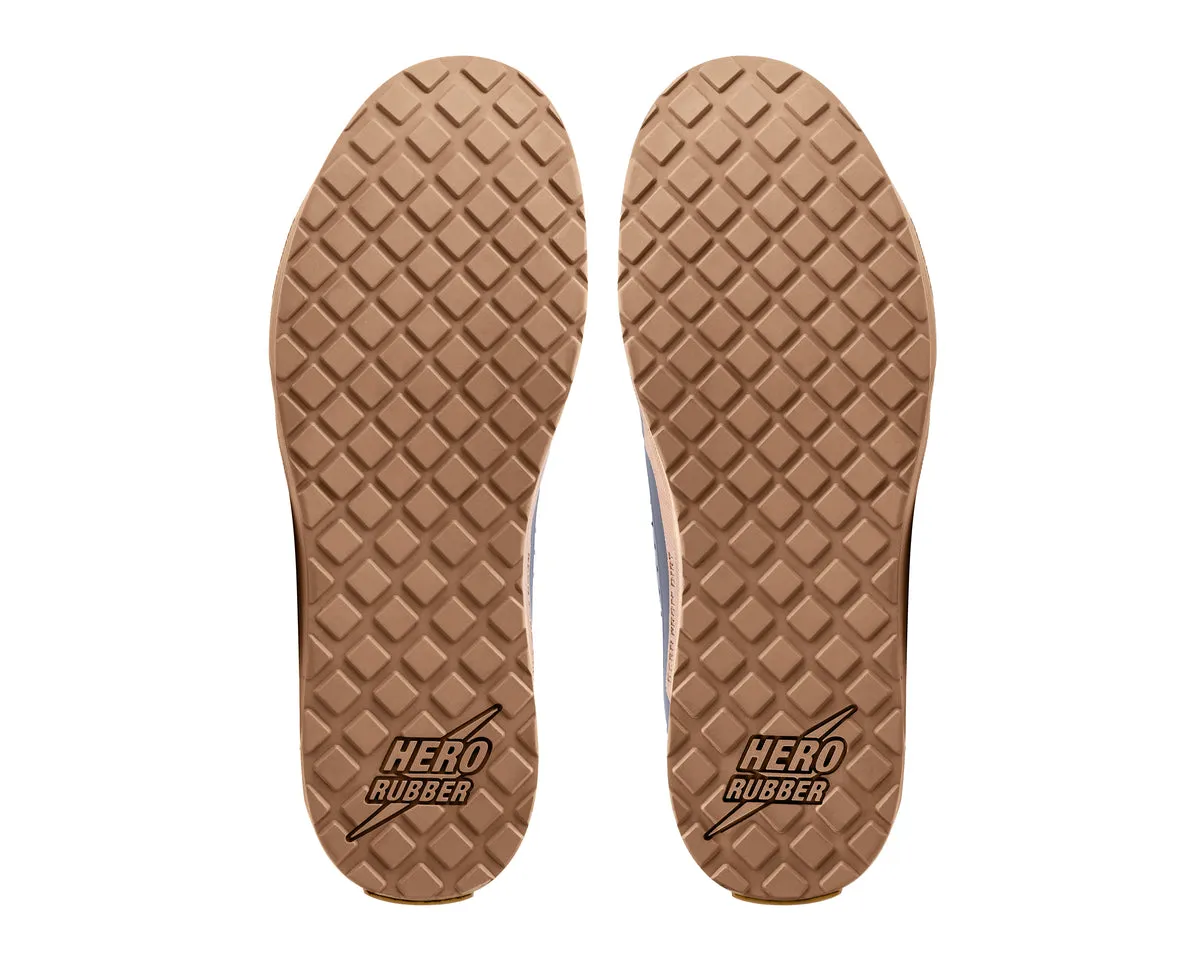
The LSO works as part of a larger stability system rather than as an isolated feature; explore the Trail Tech chassis and Hero Rubber technology to see how the chassis, platform, and outsole are designed to work together.
Wide Fit Meets Pickleball Engineering: The Anamoly Labs Solution
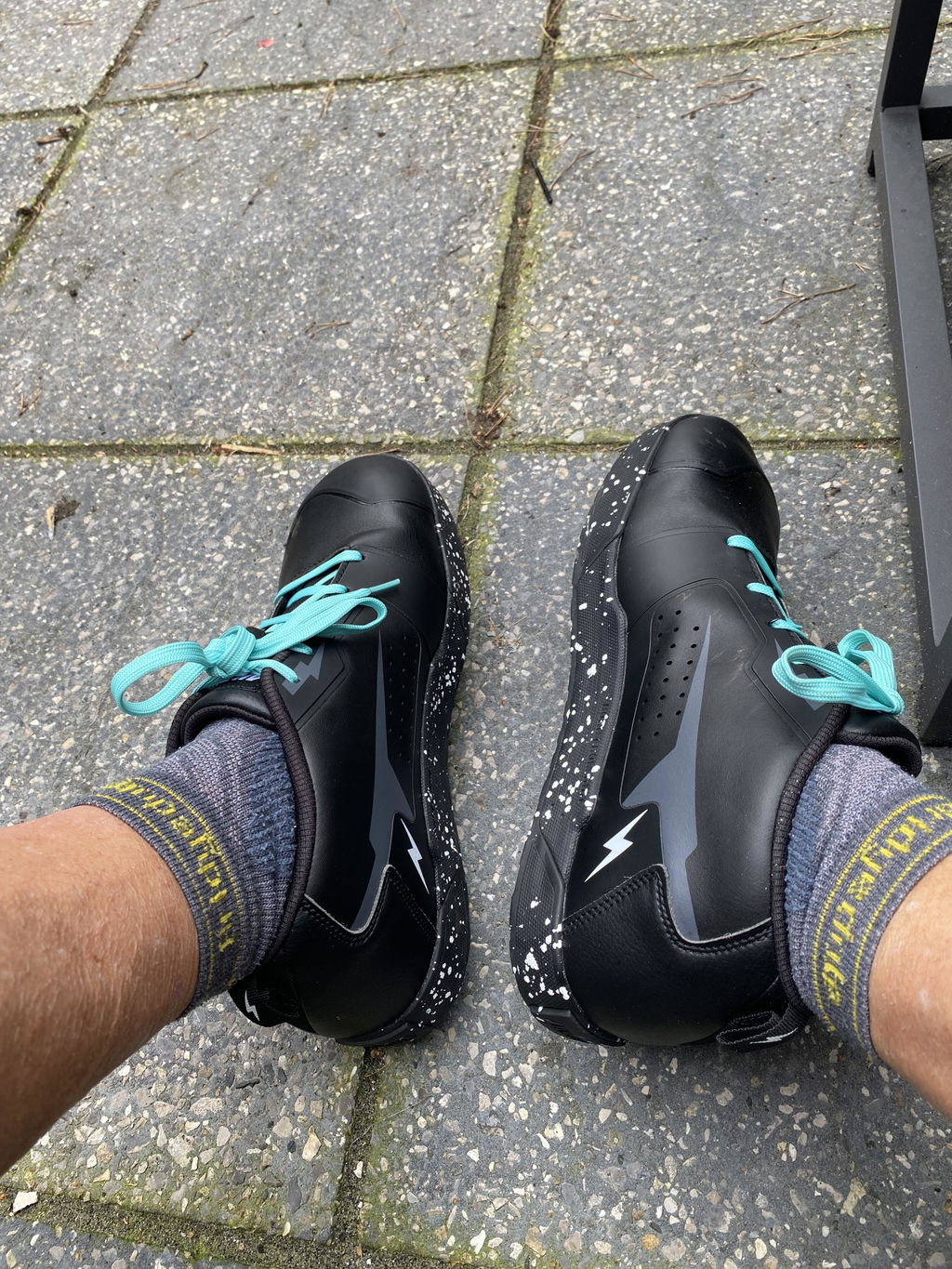
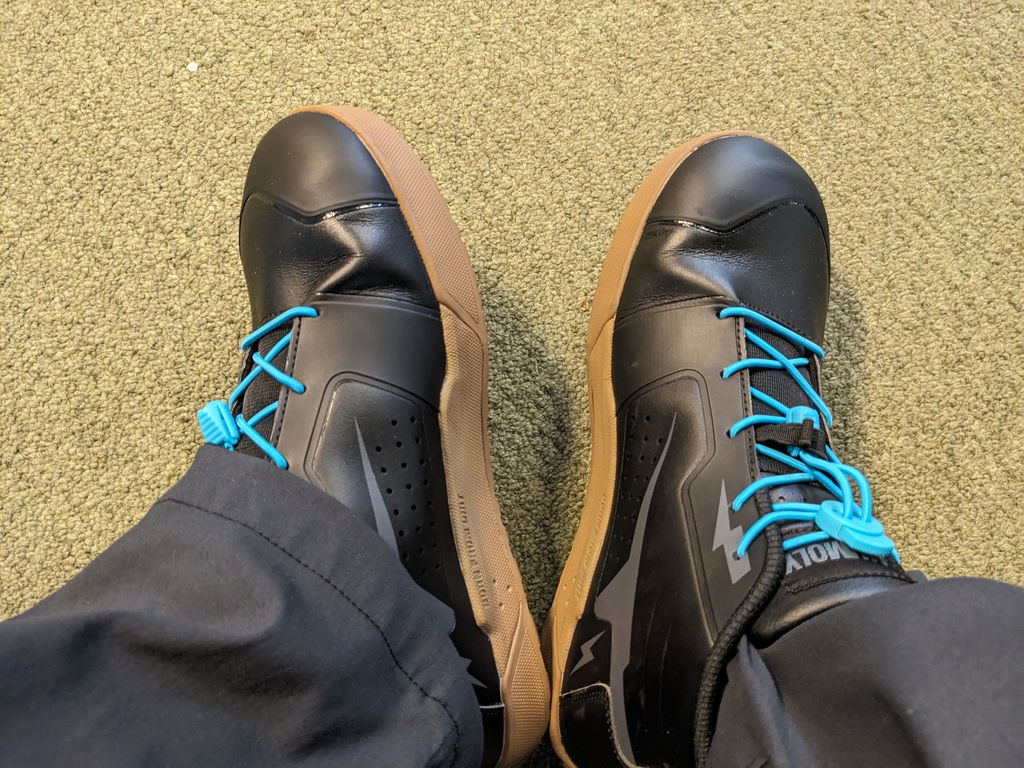
For wide-footed players, fit is not a comfort upgrade added after the engineering is complete; it is part of the stability system. The Lateral Control Pro pickleball shoe is built around a 2.0 wide fit that runs true to size, giving the foot room to spread without asking the wearer to compensate with an oversized length.
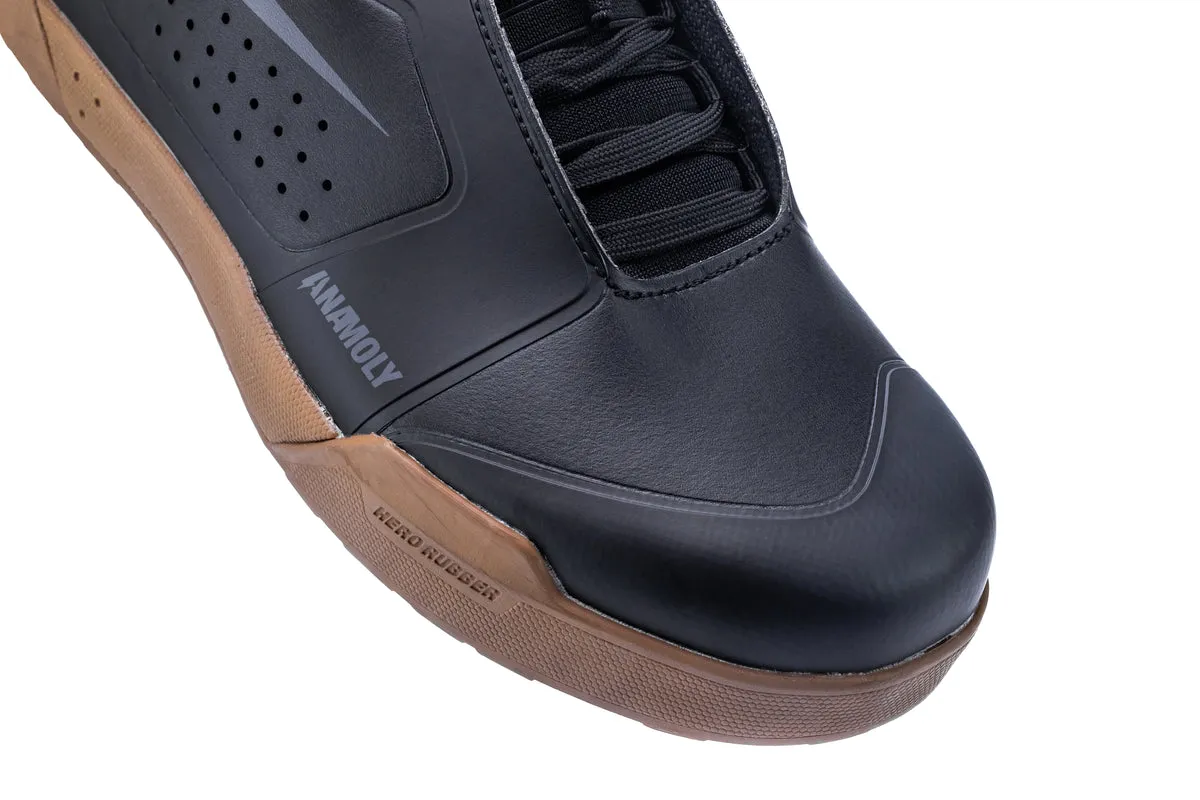
Anamoly Labs creates that width through a mechanically heat-widened process in its Texas shop; the method is adapted from the ski-boot industry: controlled heat and manual shaping change the usable geometry of the shoe rather than simply adding volume around the upper. The toe box is widened by hand, creating a closer-to-barefoot feel while preserving the structure needed for aggressive lateral movement.
That distinction matters at the kitchen line: a shoe can be labeled wide yet still taper over the toes, leaving the forefoot compressed when the player loads into a split step or lunges laterally. A properly shaped wide fit allows the foot to remain closer to neutral alignment; proper footwear cannot eliminate injury risk, but keeping the foot aligned and supported can help reduce the severity of a misstep by limiting avoidable movement inside the shoe.
The Lateral Control Pro is also purpose-built for pickleball's lateral demands, rather than adapted from a tennis shoe: its construction combines the Trail Tech™ Stability Chassis, a Lateral Stability Outrigger, and Hero Rubber™ made with the MTB-G Compound. The chassis supports the platform, while the outrigger adds a physical boundary against excessive roll; the fit gives that structure a stable base to work from.
Key Technical Insight
Hero Rubber™ is engineered for high-friction adhesion during controlled stops; that grip helps the shoe hold its line through a hard plant, reducing the need to create the same stop with excessive ankle torque.
In that sense, wide pickleball shoes are a stability tool, not merely a sizing category: the fit, outsole compound, and chassis must cooperate—the foot needs room to splay, the platform needs to resist unwanted roll, and the rubber needs to generate dependable traction under lateral load. Read the engineering breakdown of the Lateral Control Pro, then read the Lateral Control Pro engineering breakdown before you test the full stability system for yourself.
How to Measure Your Foot for the Right Wide Court Shoe
- Measure both feet at the end of the day. Feet can expand during play, so measure when they are at their largest rather than first thing in the morning. A Brannock device at a shoe store gives you a useful reading for both foot length and width. Record the larger measurement; small differences between feet are common, and the shoe must accommodate the foot that needs more room.
- Trace your standing foot outline. Place a sheet of paper on a firm, level floor and stand on it with your full weight distributed naturally. Have someone trace around the foot without angling the pencil inward. Repeat for the other foot, then compare the outlines at the forefoot and toe area. This reference can reveal where a nominally wide shoe still tapers too aggressively.
- Separate width from volume. A wide label does not guarantee an anatomical fit. Some shoes add height over the instep while keeping a narrow or tapered toe box. Look for enough forefoot width for the toes to spread without pressure, plus a secure midfoot hold and heel that does not slip. Forced toe bunching can reduce balance and proprioception, increasing the likelihood of an ankle roll during a rapid cut.
- Try the shoes with your game-day socks. Sock thickness changes the usable space inside the shoe, so test with the pair you actually wear on court. Stand, walk, and perform a few controlled split steps. Your toes should not touch the front, and the upper should not compress the widest part of the foot. Early foot fatigue is a warning sign that the shoe is restricting natural expansion, not a discomfort to ignore.
- Test lateral movement before buying. If the store permits it, make short side steps, controlled shuffles, and a few simulated kitchen-line lunges. Check whether the foot stays centered over the sole during each change of direction. Players new to pickleball often have less lateral muscle conditioning, making mechanical shoe support more important while movement patterns develop. Players over 50 returning after inactivity should be especially conservative: stable, well-fitting footwear is part of the return-to-sport setup.
- Use the movement test to judge stability, not just comfort. A shoe that feels top-heavy may improve when it has a broader base, more usable width, and a lower stack height. The correct fit should let the foot expand without allowing it to slide inside the shoe. Choose the pair that keeps your contact surface stable through lateral movement; cushioning alone cannot correct a width mismatch.
Ready to Choose a Wider Court Fit?
If your current shoes leave your foot crowded during lateral cuts, a purpose-built wide fit can give you a more stable starting point at the kitchen line; the Lateral Control Pro combines a wide 2.0 fit with the stability features discussed in this guide. Every pair is backed by Anamoly's Quality Guarantee covering workmanship defects, free returns, and free size exchanges; USA customers have a 30-day return window.
Test drive the Lateral Control Pro risk-free
Frequently Asked Questions
Are 2E shoes wide enough for pickleball?
Often, but width notation is only a starting point: in men's sizing, D is standard, 2E is wide, and 4E is extra-wide, while women's sizing commonly uses B as standard, D as wide, and 2E as extra-wide. Check whether the toe box remains broad through the forefoot, because some shoes add volume without providing enough space for the toes to spread.
How do I know if my pickleball shoes are too narrow?
Look for pressure at the little toe, bulging upper material, numbness, or a foot that feels as if it is spilling over the midsole during a lateral cut; those signs indicate that the shoe is constraining your foot or failing to support its full contact area. Measure both length and width, then test the fit in the socks you wear for matches.
Are wide pickleball shoes better for ankle stability?
A wider fit can improve stability when it lets the foot sit fully over the platform, but width alone does not prevent an ankle roll; the shoe also needs a stable chassis, secure heel hold, lateral containment, and an outsole that maintains traction during a cut. Test those features together with controlled side-to-side movement before committing to a pair.
Should I choose New Balance or ASICS for wide pickleball feet?
Both brands offer models with multiple width options, but the correct choice depends on the actual forefoot shape and the shoe's lateral construction; compare the measured toe-box width, midsole platform, heel security, and court traction rather than choosing by brand name. A generous toe box is useful only when the rest of the shoe keeps the foot centered during lunges.
Test drive the Lateral Control Pro risk-free
Sources and Scientific Citations
- UTHealth Houston, Pickleball Foot and Ankle Injuries: Prevention Tips, med.uth.edu/ortho/2026/03/24/pickleball-foot-and-ankle-injuries-prevention-tips/
- Harvard Health Publishing, Practical Pointers for Pickleballers, health.harvard.edu/heart-health/practical-pointers-for-pickleballers
- The Pickleball Gang, Best Wide Width Pickleball Shoes for 2026, thepickleballgang.com/wide-width-pickleball-shoes/
- FORWRD, Best Pickleball Shoes for Wide Feet 2026, forwrd.co/blogs/gear-guides/best-pickleball-shoes-for-wide-feet-2026
About the Author
The Anamoly Press Team brings you in-depth gear coverage rooted in real-world testing and engineering insight; every article is reviewed by our Head of R&D to ensure the technical claims match the science behind our designs.



Leave a comment
This site is protected by hCaptcha and the hCaptcha Privacy Policy and Terms of Service apply.