

By Anamoly Press Team • October 13, 2026
💡 Technical Review & Accuracy Check by Christopher Armstrong, Founder & Head of R&D
Our team researches and writes the gear guides you love, but every scientific claim and compound specification is personally vetted by our lead engineer to ensure technical accuracy.
📌 Short Answer
The most useful pickleball safety tips are to warm up dynamically, move before reaching for the ball, use short diagonal steps instead of frantic backpedaling, wear court-specific shoes with secure lateral support, inspect the court and equipment, and increase playing time gradually. Stop for sharp or persistent pain rather than trying to play through it.
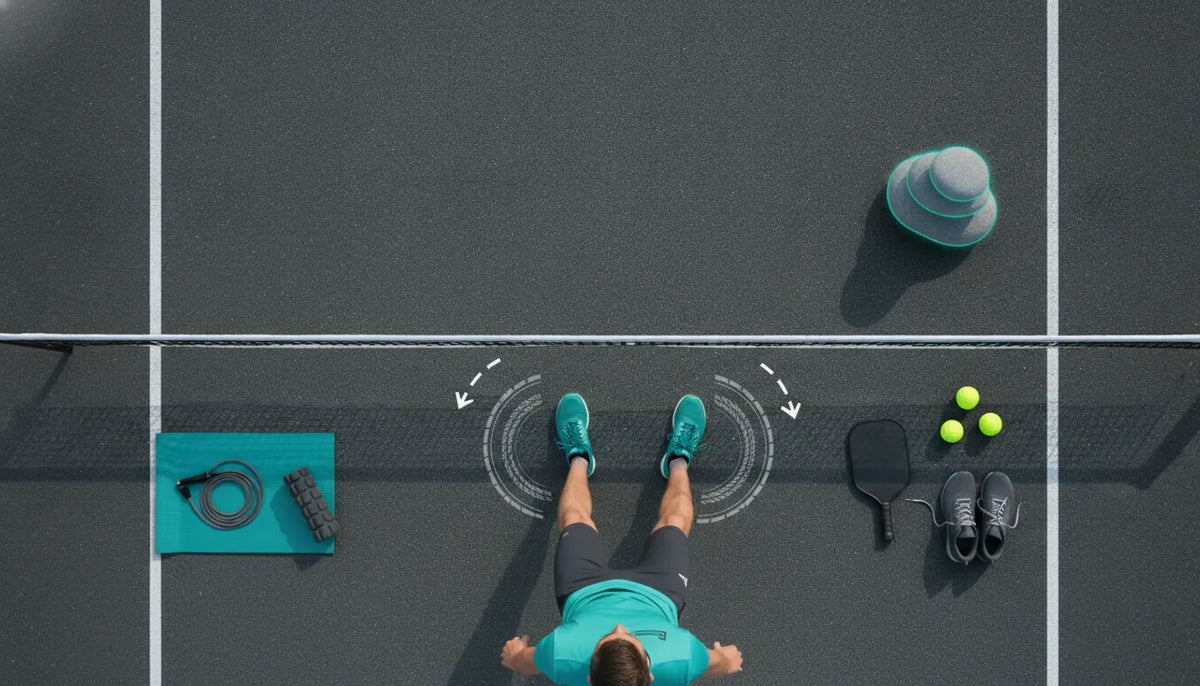
Good pickleball safety starts with a simple movement rule: get your feet into position before you swing. Small steps, a controlled plant, court-ready traction, a short warm-up, and sensible recovery habits help you respond to quick changes without turning every late ball into a reach, twist, or panic stop. The goal is not to promise injury prevention; it is to build a more deliberate system for moving, checking your equipment, and knowing when to back off.
Test drive the Lateral Control Pro risk-free
What are the most important pickleball safety tips?
Direct answer
The highest-value habits are movement preparation and restraint: warm up before hard play, arrive behind the ball instead of lunging, keep your base under control, wear footwear made for side-to-side court movement, and build session volume in stages. Equipment supports those habits, but no shoe can guarantee that an injury will not occur.
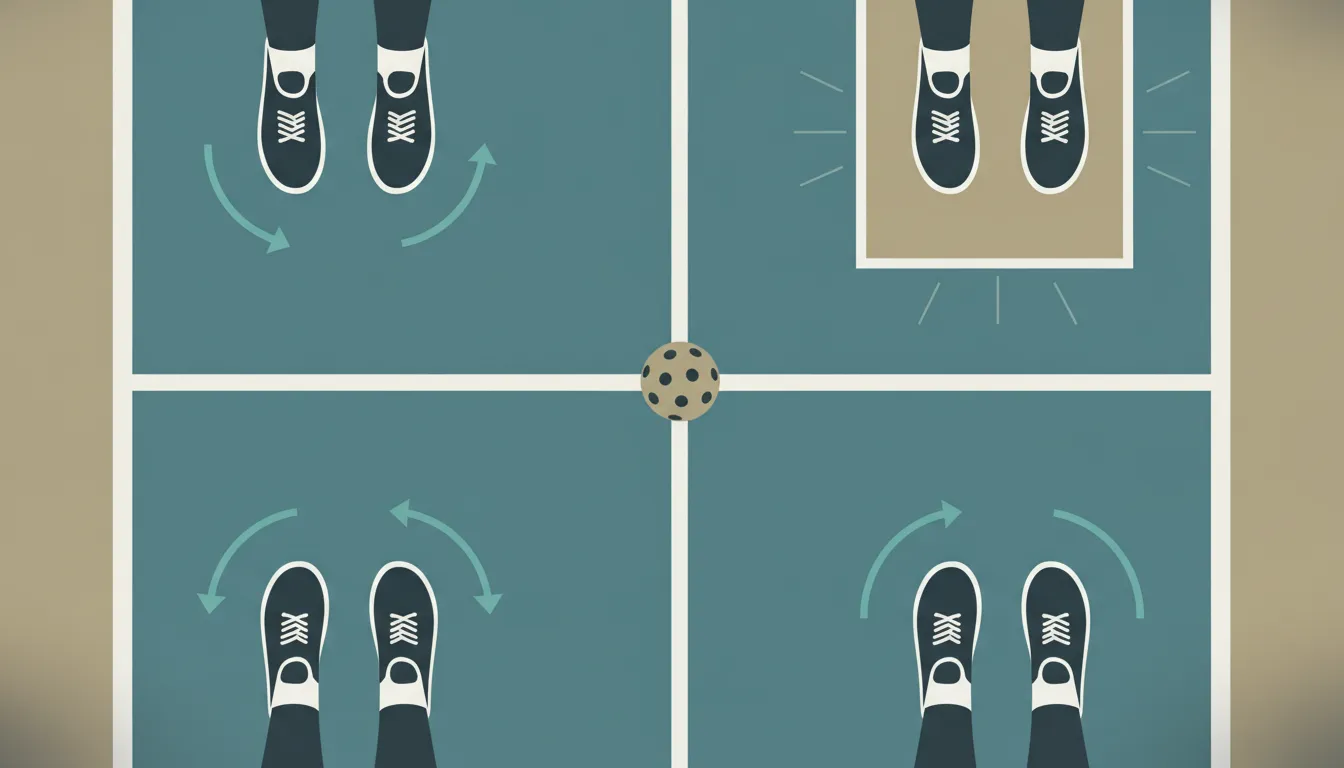
Pickleball combines short sprints, lateral shuffles, split steps, lunges, pivots, and repeated braking. That movement profile makes positioning more useful than simply trying to move faster. A player who reads the ball early and uses small steps can often reach the same location with less last-second twisting.
- Warm up first: Raise your temperature with light movement, then rehearse the directions you will use on court.
- Move before hitting: Let your feet establish a stable base before your paddle makes contact.
- Choose court-ready footwear: Look for a secure fit, lateral support, and an outsole matched to your playing surface.
- Check your environment: Scan for damp spots, loose grit, worn tread, untied laces, and other avoidable hazards.
- Manage the dose: Increase play time and intensity gradually, especially after a break.
- Respect warning signs: Stop for sharp or persistent pain and seek qualified medical advice when needed.
These are practical risk-management habits, not a medical treatment plan. The Scripps Health court-safety guidance likewise emphasizes supportive shoes, warm-up, gradual progression, and stopping when pain is sharp or persistent.
How should you warm up for pickleball?
Direct answer
Use five to ten minutes of easy aerobic movement followed by dynamic drills that resemble pickleball: gentle side shuffles, controlled forward and diagonal steps, leg swings, walking lunges, and arm circles. Finish the warm-up with a few gradual accelerations, not all-out sprints, so your first point is not your hardest effort.
A useful warm-up has two jobs: increase general readiness and preview the movement directions of the sport. Start with an easy walk or jog around the court; add arm circles, leg swings, walking lunges, and gentle side shuffles. Then rehearse split-step timing and short diagonal recoveries at an easy pace.
Dynamic preparation is different from forcing a deep stretch while cold. Keep the range comfortable and controlled; the goal is to move through the positions you will use, not to test flexibility at the edge of discomfort. The American Medical Association's pickleball guidance also recommends dynamic movement before play and gradual progression when building activity.
How can stable footwork reduce avoidable stress?
Direct answer
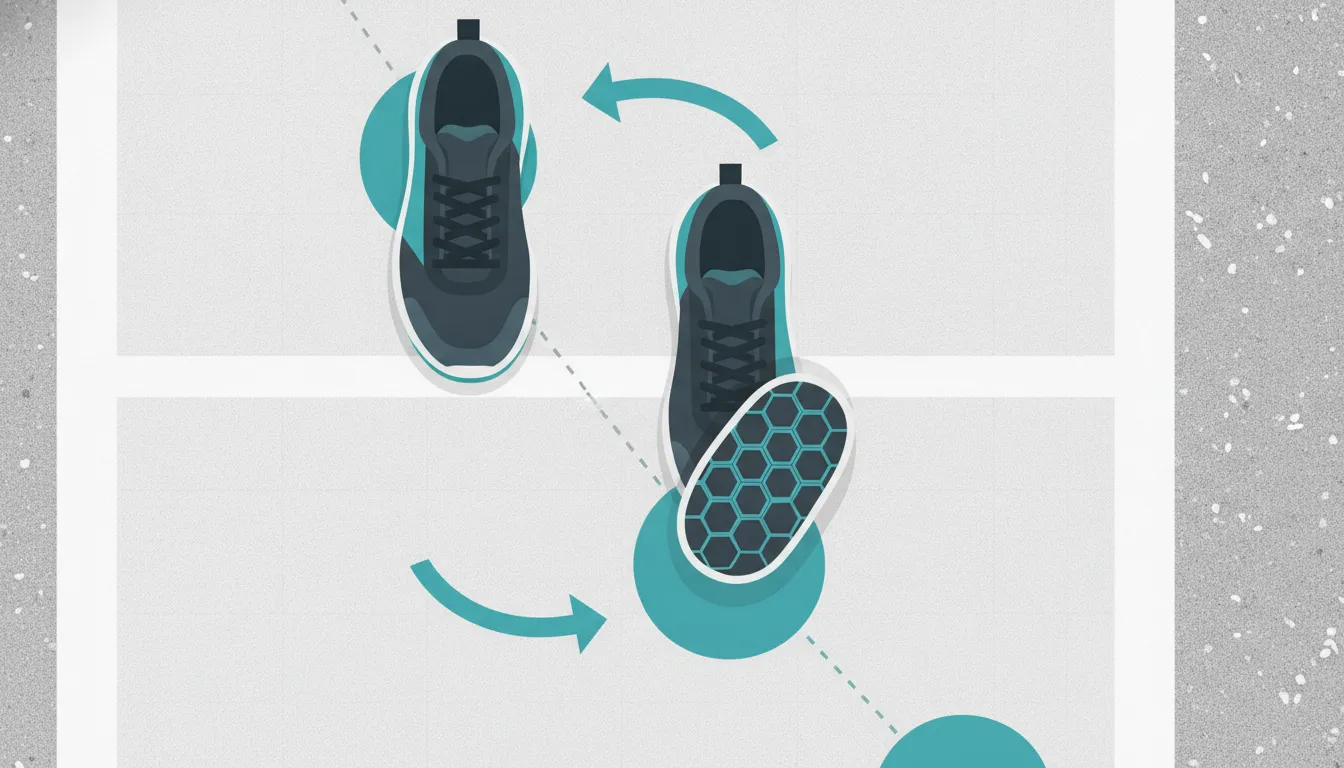
Stable footwork gives your body time to organize the plant before the swing. Move first, hit second: use small steps to get behind the ball, choose a diagonal route when appropriate, and avoid reaching from a twisted or overextended position. Better positioning does not eliminate risk; it reduces avoidable improvisation.
Think of the sequence as read, move, set, hit, recover. As soon as you read the opponent's shot, begin moving; once you arrive, let your feet settle enough for the paddle to work from a balanced base. A late reach often combines rotation, braking, and impact in one rushed action, which is a poor setup for control.
- Use short steps: Choppy steps let you adjust distance without overcommitting to a single stride.
- Prefer diagonals: When the ball is behind and to one side, turn and travel diagonally instead of taking a straight backpedaling route.
- Plant under your base: Try to place the foot that will absorb the plant under your center rather than far outside it.
- Recover with purpose: After the shot, use controlled steps to return to a useful court position instead of standing tall and flat-footed.
For a deeper explanation of shoe geometry and lateral movement, see our running shoes versus pickleball shoes guide. The point is not that one category guarantees safety; the point is that different shoes are engineered for different force directions.
What court grip and shoe stability should you look for?
Direct answer
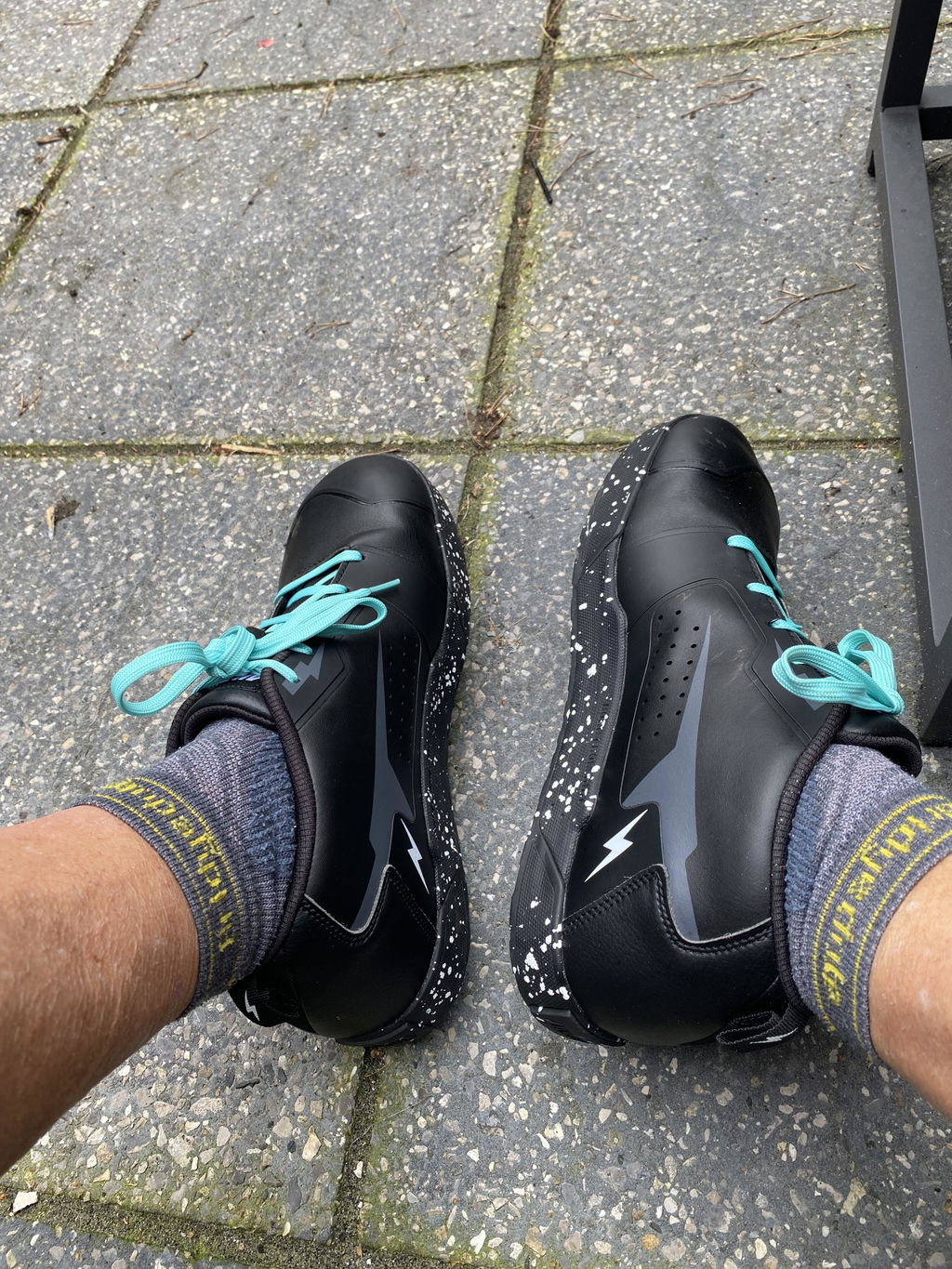
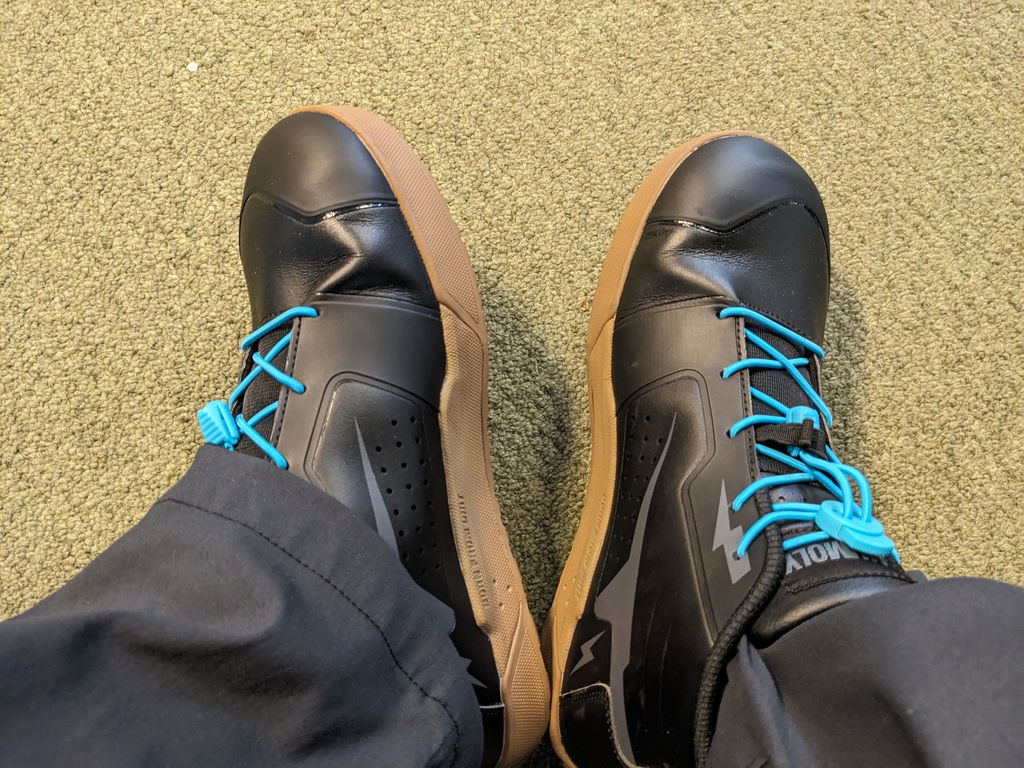
Choose a non-marking court outsole with dependable contact on your surface, plus a platform that feels planted during shuffles and hard cuts. The Lateral Control Pro combines a Trail Tech™ Stability Chassis, Lateral Stability Outrigger, and Hero Rubber™ compound; these are design features to evaluate, not promises that an injury will not occur.
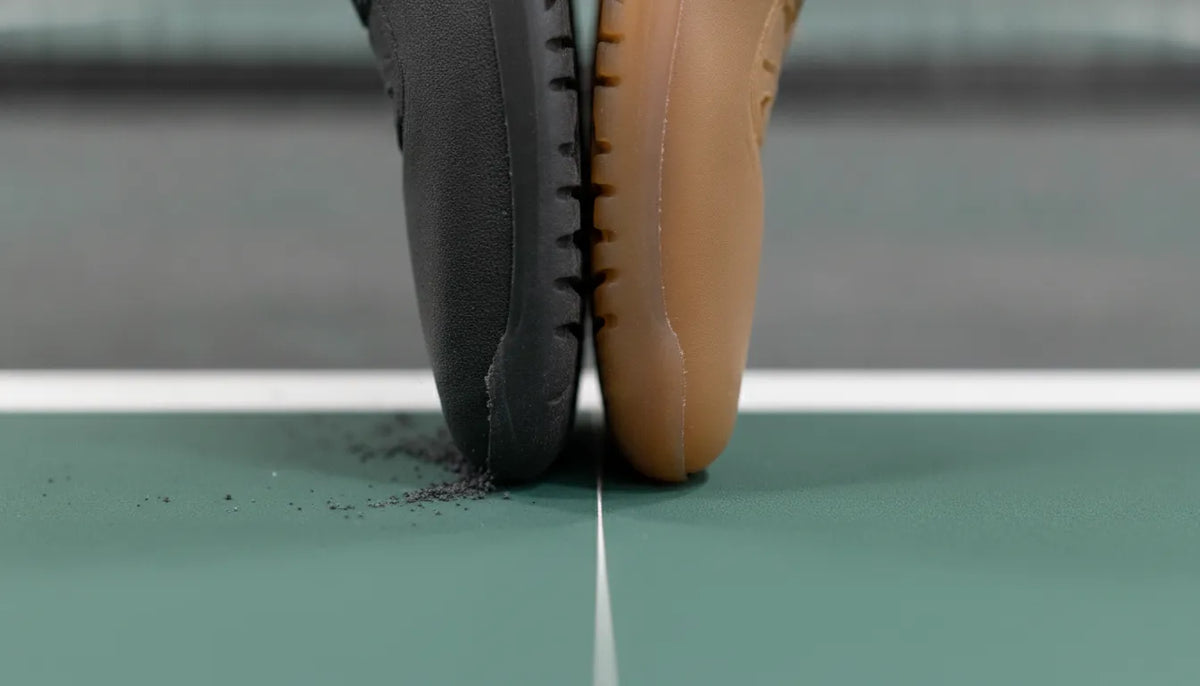
Grip is a control variable: if the sole slips on dust or a damp patch, the rest of your movement plan has less time to work. Inspect the actual court conditions and select footwear that matches them. Outdoor hard courts can carry fine grit; indoor floors may require a different balance of traction, non-marking performance, and tread contact.
Fit matters just as much as the outsole. Your heel should stay secure without pressure, your toes should have usable room, and the closure should remain consistent through a session. A shoe that is too loose can let the foot move inside the upper; a shoe that is too tight can create a different distraction. If you need more room, our Lateral Control Pro has a dedicated wide-fit option that is mechanically heat-widened in our Texas shop.
For the Lateral Control Pro, we evaluate the Hero Rubber™ and Trail Tech™ technology platform through friction, abrasion, and torsion testing, followed by field feedback. That engineering approach is relevant to safety because it treats contact and stability as systems rather than as one marketing feature.
| Pre-game check | What to look for |
|---|---|
| Outsole | Even tread contact, no smooth wear patch, and a non-marking court formulation. |
| Platform | Stable lateral base that does not feel wobbly when you shuffle and plant. |
| Fit | Secure heel, usable toe room, and no pressure point that changes your movement. |
| Closure | Laces or speed-lacing hardware secured so nothing can catch or loosen during play. |
| Surface | Dry, clear court with loose grit, puddles, and debris removed where possible. |
Which equipment checks belong in a safety routine?
Direct answer
Before play, check the court, shoe outsole, closure, and essential gear. Remove loose grit when the facility allows it, avoid visibly wet areas, replace footwear when the tread or structure is compromised, and keep paddle and ball equipment in good condition. A quick check is easier than adapting mid-rally to a preventable distraction.
Look at the outsole rather than judging a shoe only by how the upper appears. A clean-looking shoe can still have a rounded lateral edge, a smooth forefoot, or a separation that changes contact. Flex the shoe gently, inspect the bond between upper and sole, and look for anything that could catch the court or let the foot slide inside.
Secure loose laces or closure components before the first serve. If you share a court, scan the playing area for balls, damp spots, cracks, and loose debris; also give nearby players enough space for swings and recovery steps. Safety includes the environment around your movement, not just the shoe on your foot.
How should you manage playing load and pain?
Direct answer
Treat playing time like a training load: after a long break, begin with shorter sessions, add volume gradually, and allow recovery between demanding days. Mild fatigue is a reason to reduce intensity; sharp, worsening, or persistent pain is a reason to stop and seek qualified medical guidance rather than testing it through another game.
Pickleball can feel conversational while still asking for repeated accelerations and decelerations. That mismatch is why a gradual return matters after time away. Start with fewer games or shorter rallies, keep the first session below your maximum, and leave room for recovery before adding more.
Hydration, sleep, and strength work can support general readiness, but they do not replace professional evaluation. If you have a known condition, a recent injury, or uncertainty about returning to sport, ask a qualified clinician for individualized guidance. Stop and seek prompt care for severe pain or swelling, deformity, inability to bear weight, possible fracture, head injury symptoms, or persistent pain.
How do you practice safer movement during a game?
Direct answer
Use warm-up patterns in live play: split step before the opponent's contact, move early, take the simplest route, and recover before the next ball. When a drill or rally pushes you into repeated late lunges, lower the pace and rebuild the position instead of treating exhaustion as a technique challenge.
Practice one safety habit at a time. During a cooperative rally, call out the movement cue before you act: "early step," "diagonal," or "recover." This keeps the lesson mechanical and observable. You can then increase speed only after the route feels repeatable.
When fatigue changes your footwork, shorten the session or switch to a lower-intensity drill. Controlled movement is a better training target than forcing one more spectacular save. A coach or experienced partner can also help identify whether you are reaching because of late ball reading, poor court position, or a movement pattern that needs attention.
For more on choosing a stable, durable court shoe, use our pickleball shoe selection and durability guide alongside the pre-game checklist above.
Test drive the Lateral Control Pro risk-free
Pickleball Safety FAQ
Are pickleball shoes safer than running shoes?
Pickleball shoes are designed for lateral and multi-directional court movement, while running shoes are primarily designed for forward motion. That makes court shoes the more appropriate tool for the movement demands of pickleball, but neither category can guarantee that an injury will not happen. Fit, surface, technique, fatigue, and individual health all matter.
Can good court grip prevent slips?
Appropriate court grip can help you control starts, stops, and plants when the sole and surface are compatible. It cannot compensate for a wet spot, loose grit, worn tread, poor fit, or a rushed movement. Check the court before play and keep your steps controlled when conditions change.
How long should I warm up before pickleball?
A five-to-ten-minute warm-up is a practical starting point for many recreational sessions: begin with easy aerobic movement, then add dynamic leg, arm, and side-to-side patterns. Adjust the duration and intensity to your age, fitness, temperature, and experience; individualized questions belong with a qualified professional.
Should I play through pickleball pain?
Do not try to push through sharp, worsening, or persistent pain. Stop, assess the situation, and seek qualified medical guidance when symptoms are significant or do not settle. Severe swelling, deformity, inability to bear weight, possible fracture, head injury symptoms, or persistent pain warrant prompt medical attention.
What should I check on pickleball shoes before a match?
Check outsole wear, sole separation, heel security, toe room, closure tension, and any areas that rub or shift. The shoe should feel stable during a few easy shuffles and controlled plants before you play hard. Replace footwear when the structure or tread no longer supports consistent contact.
Does a wide-fit pickleball shoe help every player?
A wide fit can be useful for players whose forefoot feels compressed in standard profiles, but width should match the actual foot and the rest of the shoe should remain secure. The Lateral Control Pro offers standard and wide-fit options; use the product sizing guidance rather than sizing up only to create toe room.
Ready to move with more control on court?
If you want footwear built for pickleball's lateral demands, our Lateral Control Pro pairs a low, wide platform with court-ready traction and a secure fit to support controlled movement through shuffles, plants, and recoveries. Court-specific footwear cannot remove every risk, but it can give you a more deliberate foundation for the movement habits covered in this guide.
Every pair of the Lateral Control Pro comes backed by our 30-Day Trail/Court Test Guarantee: order your size, put them through their paces on the court, test the lateral chassis on hard cuts, and feel how the wide toe box relieves forefoot pressure. If they don't deliver the exact fit, stability, and comfort you need, return them within 30 days for a hassle-free exchange or refund. No friction. Just better court performance.
Test drive the Lateral Control Pro risk-free
Sources & Scientific Citations
- Scripps Health: How to Prevent Pickleball Injuries: 7 Safety Tips, covering footwear, warm-up, gradual progression, court movement, and warning signs.
- Houston Methodist: Pickleball: Proper Footwork to Prevent Injury, covering small steps, diagonal movement, positioning before contact, and court-specific footwear.
- American Medical Association: What doctors want patients to know about preventing pickleball injuries, covering dynamic preparation, gradual activity increases, lateral support, and responding to pain.
- Our Lateral Control Pro Pickleball Shoe, product details for the Trail Tech™ Stability Chassis, Lateral Stability Outrigger, Hero Rubber™, and fit options.
- Our Tech Stack, the brand's description of friction, abrasion, torsion, and field-feedback testing.
About the Author
The Anamoly Press Team brings you in-depth gear coverage rooted in real-world testing and engineering insight. Every article is reviewed by Christopher Armstrong, Founder and Head of R&D, to ensure the technical claims match the science behind our designs.

Leave a comment
This site is protected by hCaptcha and the hCaptcha Privacy Policy and Terms of Service apply.