

By Anamoly Press Team • October 12, 2026
💡 Technical Review & Accuracy Check by Christopher Armstrong, Founder & Head of R&D
Our team researches and writes the gear guides you love, but every scientific claim and compound specification is personally vetted by our lead engineer to ensure technical accuracy.
📌 Short Answer
Non-marking sticky rubber court shoes vs gum rubber is not a simple winner-takes-all comparison: non-marking describes how much material transfers to the court, while gum rubber describes a formulation family that can vary. Either category may be engineered for useful traction—neither label alone proves wet grip, durability, or controlled release during rotation.
Non-marking sticky rubber court shoes vs gum rubber can behave very differently under a hard lateral cut, even when both leave no visible streak. The difference begins with more than color or the word sticky—compound chemistry, tread geometry, court texture, dust, and moisture all shape how the outsole interacts with the surface.
That distinction matters for pickleball—starting, stopping, and turning load the outsole in different ways. Before comparing compounds, separate a clean court appearance from the friction and material behavior that produce reliable movement.
Test drive the Lateral Control Pro risk-free
What Does Non-Marking Mean When Rubber Is Sticky?
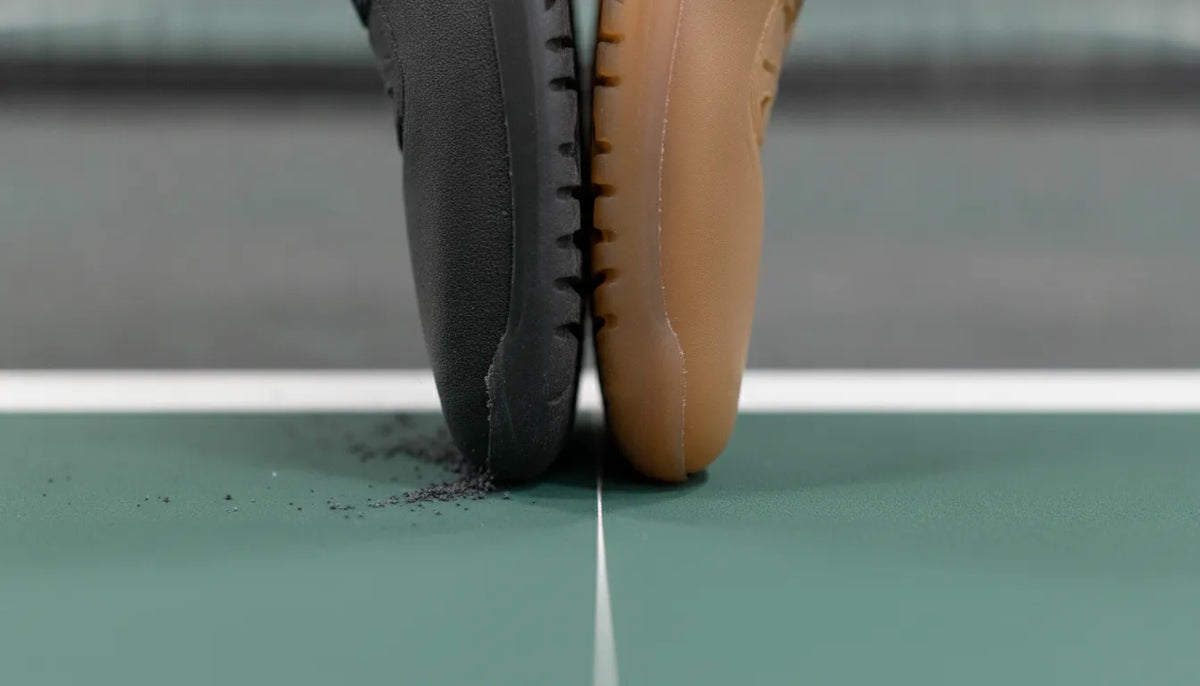
Non-marking and sticky describe different behaviors at the outsole-court interface—non-marking refers primarily to material transfer, or whether the outsole leaves dark residue when compressed, dragged, or sheared across a finished surface. Sticky describes how the compound and tread create friction against that surface; one property concerns what the court receives, while the other concerns how the shoe resists movement.
A shoe can limit marking without being frictionless, just as an adhesive-feeling outsole is not automatically non-marking; court traction still depends on compound behavior, tread geometry, loading, and surface condition. Dust or moisture can change the contact interface—worn tread can also reduce the rubber engaging the court—so the label is a starting point, not a complete performance profile.
Gum rubber is not one guaranteed formula
Gum rubber is often used as a visual or material description—especially for the tan or amber outsole appearance associated with indoor court footwear. It should not be treated as one universal formulation with one guaranteed level of grip, durability, or marking behavior; different manufacturers can use different compounds, additives, hardness levels, and tread designs under the same broad description.
For the same reason, non-marking does not identify one chemical recipe: it describes intended transfer behavior, while a compound name or color describes something else. A non-marking outsole may still be engineered for useful friction, and a gum-colored outsole should be evaluated through the manufacturer's specifications and the facility's rules.
Sticky friction needs a court context
When players say rubber feels sticky, they usually mean it resists sliding during a plant or push-off. That sensation can help lateral movement—but maximum stickiness is not the only goal, because predictable release during pivots matters too. The shoe, tread, player, and court work as a system, so avoid choosing by color or a single adjective.
For our Lateral Control Pro, we treat non-marking behavior and traction as separate design questions, then evaluate how they work together for pickleball movement. Check the current product specifications and your venue requirements before deciding which outsole fits.
Choosing Between Non-Marking Sticky Rubber Court Shoes vs Gum Rubber
These labels describe different things, so they should not be treated as opposite outsole categories: non-marking describes how an outsole behaves when it contacts a court, specifically whether it leaves visible material transfer under normal use; gum rubber is commonly used as a material, color, or outsole-family description, but it does not identify one universal formulation with a guaranteed friction or wear profile. A gum-colored outsole can be non-marking, and a non-marking outsole can use a compound that is not described as gum rubber.
| Description | What it tells you | What it does not guarantee |
|---|---|---|
| Non-marking | That the compound and surface interaction are intended to limit visible court marks. | A particular compound chemistry, traction level, tread pattern, or wet-court result. |
| Gum rubber | A descriptive material or color convention associated with a rubber outsole family. | One fixed recipe, one friction value, or automatic superiority on every court. |
The useful comparison is therefore not simply "non-marking versus gum"—look at the compound, tread geometry, court surface, and loading together. A sticky compound may increase the outsole's ability to resist sliding; however, the final result also depends on how much rubber contacts the floor and how the tread deforms during a lateral cut. Translational traction concerns resistance to horizontal outsole movement, while rotational traction concerns the force needed to release the outsole during a turn. Those forces are related, but they are not interchangeable measures of grip (sports-footwear traction research).
Surface conditions add another variable: dust, moisture, and court finish can change the contact interface, so neither label supports a blanket promise about wet or dusty performance. The available customer research does not provide controlled comparative data for these categories; claims about friction, wear life, or condition-specific performance should be verified through product-specific testing rather than inferred from color or terminology.
For our Lateral Control Pro Pickleball Shoe, the relevant question is how our outsole system is engineered to support traction and lateral stability as a complete design—not whether one familiar material label sounds more technical. Check the product-specific construction and use case, then judge the shoe by the court interaction you actually need.
How Do Compound, Tread, and Court Surface Change Friction?
Friction is not a single outsole property, and "sticky" is not a complete performance diagnosis. The rubber compound contributes to the way the outsole interacts with the court—but tread geometry, contact area, surface texture, contamination, and the forces created by the player all change the result. A non-marking compound can therefore be engineered for different friction behavior, while a gum-colored outsole is not automatically a higher-grip outsole.
Translational traction helps you move; rotational traction controls release
Translational traction is the horizontal force required to overcome resistance between the outsole and playing surface. It matters when you accelerate, decelerate, or push side to side, because insufficient resistance allows the shoe to slide before the body can use the force effectively. Translational traction research links greater traction with improved performance in agility and acceleration tasks—although that evidence is not a promise that every high-friction shoe will suit every player.
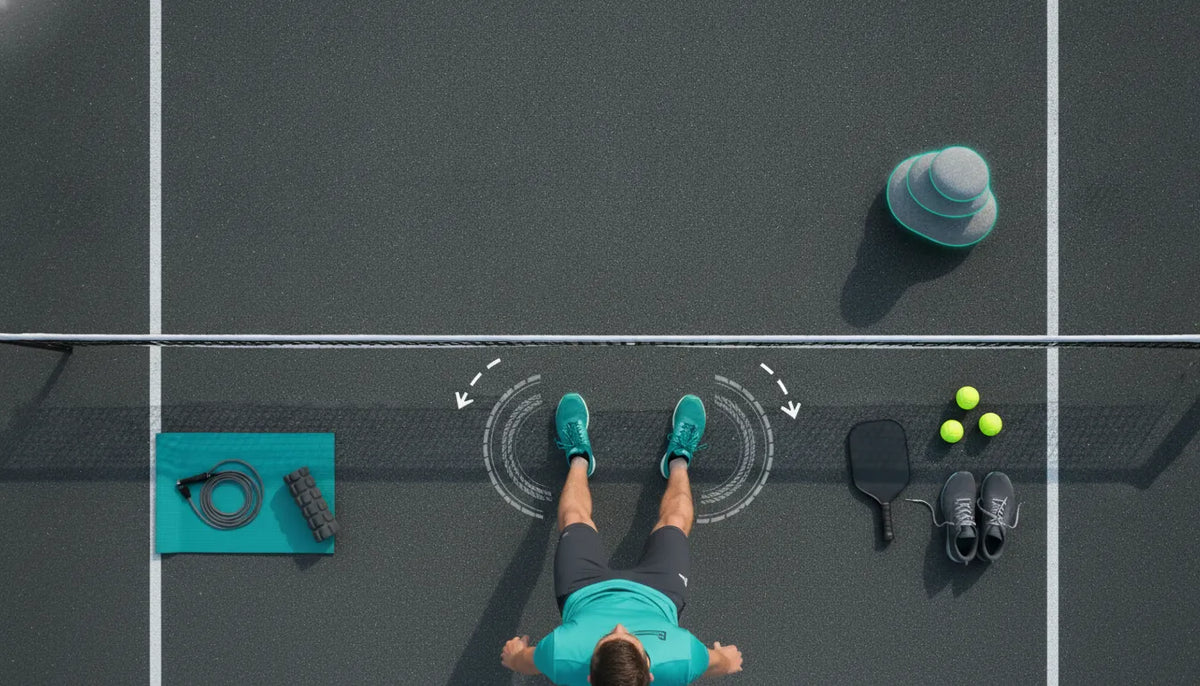
Rotational traction is different: it concerns the force needed to release the outsole while the foot twists. More rotational resistance is not automatically better, since higher levels have been linked with greater lower-limb injury risk. The useful design objective is a balance, maintaining enough translational traction for controlled movement while allowing appropriate rotational release, rather than maximizing one friction value in isolation.
Tread and court surface complete the friction system
Tread depth, edge shape, spacing, flex zones, and the outsole's overall configuration determine how compound is presented to the court. The same rubber can behave differently when a tread pattern changes the contact area or sheds dust differently. Court characteristics matter just as much; texture, hardness, moisture, and surface debris alter the resistance available under load. The player then adds another variable through body mass, acceleration, braking angle, and the direction of each step.
That is why compound labels should be evaluated alongside wear and contamination—not in isolation. Our outdoor pickleball outsole durability guide covers how abrasion, dust, and court use affect the outsole over time. Maximum stickiness is not always the goal; predictable traction, controlled release, and durable contact are more useful targets for real court movement.
What Happens on Wet, Dusty, or Abrasive Courts?
A court shoe does not experience one permanent traction condition. Moisture, dust, heat, surface texture, and accumulated wear can change how the outsole meets the floor—so a compound label alone cannot predict every session. The same shoe may feel different after a light shower, on a dusty outdoor court, or after repeated play on a rough acrylic surface.
Moisture changes the evidence you need
Wetness can reduce confidence in foot placement, particularly when water forms a film between the outsole and court. A review of slip-resistant footwear reports that high slip-resistant outsoles can reduce slip-and-fall risk on wet and icy surfaces: read the PMC wet-slip research. That finding supports taking wet traction seriously, but it is not a direct gum-rubber-versus-sticky-rubber pickleball shoe trial; it does not establish a universal winner between those categories or prove that one compound will perform the same way on every court.
Dust, heat, and abrasion are separate variables
Dust can sit between tread edges and the playing surface, changing contact at the moment of a lateral push. Heat may also change the feel of materials and the condition of the court, while abrasive surfaces can gradually alter tread edges and contact geometry. These effects should be evaluated as part of the shoe and court system, not assigned automatically to gum rubber or to a non-marking compound. Non-marking describes material transfer behavior; it does not guarantee wet grip, dust rejection, or a particular wear rate.
Before choosing between non-marking sticky rubber court shoes vs gum rubber, ask where and how you play: indoor or outdoor, clean or dusty, dry or moisture-prone, smooth or abrasive. Look for evidence tied to the intended court and construction, then inspect the outsole as it wears. Our guide to outdoor pickleball outsole durability provides the related framework for assessing surface demands without turning an untested category assumption into a product promise.
What Does Court-Footwear Research Suggest About Grip?
Court-footwear research supports a more useful definition of grip than maximum stickiness. In a basketball study, researchers varied outsole traction, forefoot bending stiffness, and shoe mass while participants performed sprints, jumps, and cutting drills. Outsole traction had the largest influence among the three properties tested, and performance declined when traction was reduced. Increasing traction also improved cutting-drill performance in that study. These findings are adjacent court-footwear evidence, not pickleball-specific proof, but they show why a court shoe needs a deliberate traction and stiffness balance.
Forefoot bending stiffness mattered too, with a moderate effect on sprint and cutting performance. That does not mean every player needs the stiffest possible shoe; the forefoot should support force transfer during acceleration and direction changes without undermining the movement pattern. Compound, tread geometry, flex behavior, and the court surface work as a system—a rubber label alone cannot predict how a shoe will feel during a hard lateral plant.
The distinction between translational and rotational traction helps explain the limit of an all-out stickiness goal. Translational traction is the horizontal force that resists outsole movement across the surface, which supports acceleration, braking, and side-to-side agility. Rotational traction concerns the force needed to release the outsole during rotation. Research links greater translational traction with improved agility or acceleration tasks, while higher rotational traction has been linked with greater lower-limb injury risk. The practical objective is strong directional traction with controlled rotational release, not a sole that resists every twist.
That balance is central to lateral stability in court shoes. When comparing non-marking sticky rubber court shoes vs gum rubber, ask how the full outsole interacts with the intended court, not which category sounds stickier. The basketball study tested recreational players in a controlled setting, so its results should guide questions rather than serve as a guarantee for every pickleball shoe or surface.
Read the basketball footwear study and the research on translational and rotational traction for the underlying evidence.
How Should You Evaluate a Court Shoe Compound Claim?
Marketing language can compress several different variables into one word, such as sticky, non-marking, or gum. Evaluate the evidence in sequence, keeping compound chemistry, tread geometry, court surface, and player movement separate—the goal is not to reward the loudest claim, but to determine whether the claim matches your use.
- Identify what the maker actually claims. Is the statement about material transfer, friction, durability, or a named compound? Non-marking describes whether an outsole leaves visible marks; it does not identify the formulation or guarantee a particular level of traction. Likewise, gum rubber is a descriptive category, not one universal recipe or fixed performance profile. Anamoly Labs explains these distinctions in its engineering background.
- Ask which court and surface the claim targets. A statement supported on a clean indoor court may not answer questions about textured acrylic, dust, moisture, or outdoor abrasion. Look for the intended surface and test conditions, not just a general promise of grip. If the maker provides no conditions, treat the claim as incomplete rather than filling the gap with assumptions.
- Inspect contact and tread design. Find out how the outsole presents its compound to the floor: contact zones, channels, edges, flex areas, and tread depth all affect the shoe-surface interaction. Research describes traction as dependent on both outsole configuration and surface characteristics, so a compound label alone cannot predict movement behavior. See the discussion of translational and rotational traction in the footwear traction review.
- Account for contamination and wear. Dust, moisture, transferred residue, and abrasion can change the interface during play. Ask whether the evidence covers a clean, new outsole only, and whether the maker reports how performance changes as the contact surface wears. Do not accept precise friction, wear-life, wet, or dusty-condition numbers without a stated method and source.
- Verify facility rules before buying. Confirm whether your club or court requires non-marking footwear, then check the shoe's current product information and return policy. Facility compliance answers one practical question; it does not replace evidence about traction, comfort, or durability.
How Our Lateral Control Pro Applies the Materials Comparison
Material labels are useful only when they lead to a better question: how will the outsole interact with the court during the movements you actually make? Our Lateral Control Pro is our pickleball shoe designed around traction and lateral stability, so we evaluate the complete footwear system rather than treating "sticky," "non-marking," or "gum" as automatic performance guarantees.
That distinction matters because gum rubber is not one universal formulation, while non-marking describes material-transfer behavior rather than a complete compound specification. A non-marking outsole can be designed to limit visible court marks, but that label alone does not establish how it will respond to every court surface, dust level, temperature, or movement pattern. The same care applies to broad grip language: traction depends on the compound, tread configuration, surface, and forces produced during play.
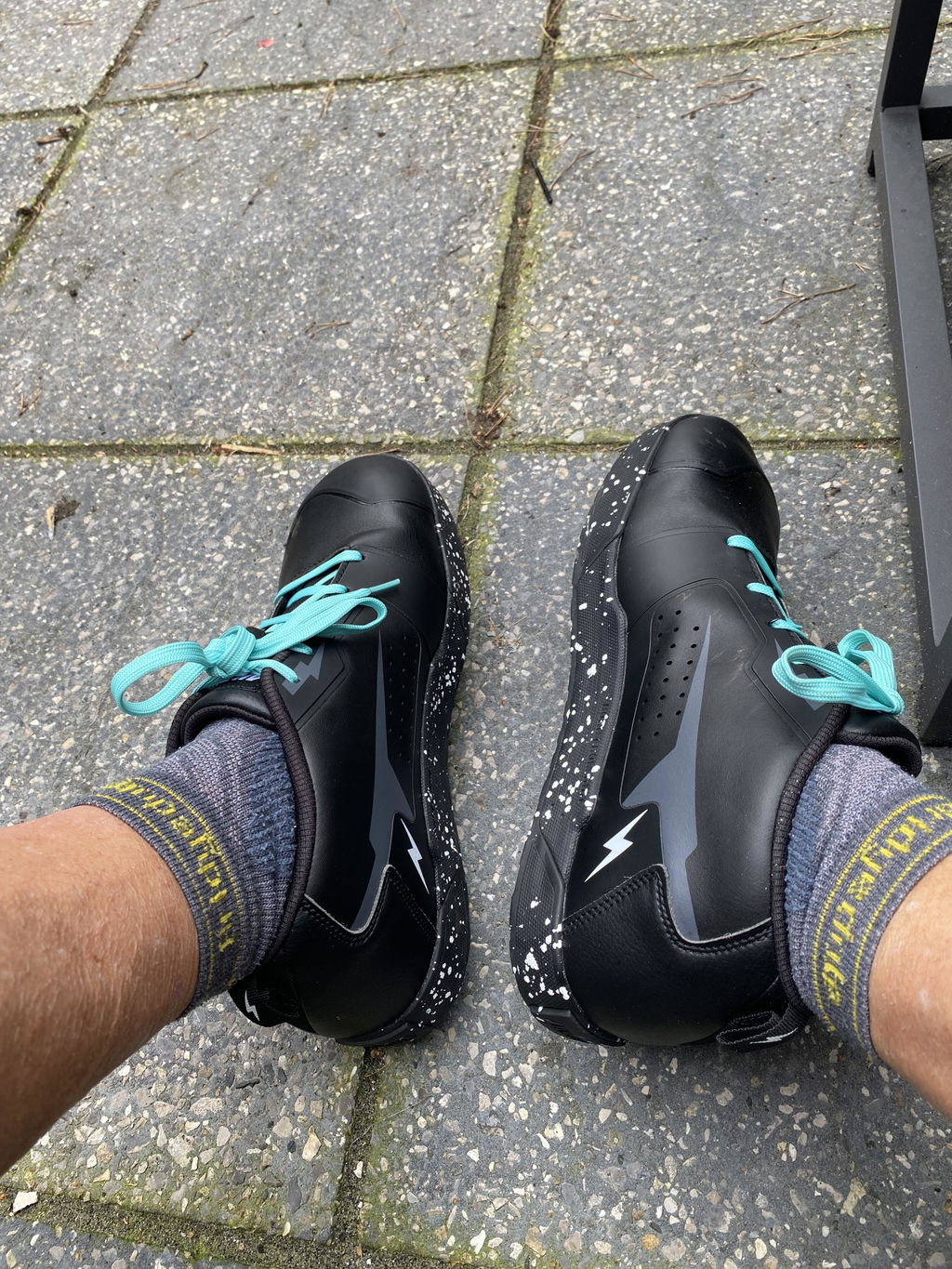
We apply that materials comparison to the way pickleball shoes support repeated lateral movement. The goal is not to assign a universal winner between non-marking sticky rubber court shoes and gum rubber—it is to make the tradeoffs clear, then match the shoe to the player and court conditions. Our design focus is controlled side-to-side movement and reliable court contact, with product details kept current on the Lateral Control Pro Pickleball Shoe product page.
For the current outsole specifications, construction details, and available fit information, review that product page rather than relying on a general materials label. You can also learn more about the engineering principles behind our footwear on our About Anamoly Labs page. This keeps the comparison grounded: understand what each material term means, then verify the actual shoe design before choosing it for your game.
Test drive the Lateral Control Pro risk-free
Frequently Asked Questions
Is gum rubber always non-marking?
No. Gum rubber is a descriptive category, not one fixed formulation or guaranteed performance profile. Non-marking describes how an outsole transfers material to a court. So a shoe must be evaluated by its tested marking behavior rather than color or the label gum rubber.
Does non-marking mean a court shoe will not slip?
No. Non-marking and slip resistance describe different properties. A non-marking outsole may still behave differently as tread geometry, compound chemistry, court dust, and moisture change; non-marking status alone does not prove traction on every surface.
How can I compare traction between sticky rubber and gum rubber?
Look beyond the material name: ask what surface the shoe was designed for. Inspect the contact pattern and channels, and consider whether the evidence addresses straight-line movement and turning separately. Research distinguishes translational traction, which resists horizontal movement, from rotational traction, which affects release during turning. The goal is useful forward and lateral grip without excessive rotational resistance (PubMed research).
Which outsole is better on a dusty or damp court?
There is no universal winner based only on whether the outsole is called sticky, non-marking, or gum rubber. Dust, moisture, surface texture, tread design, and wear all change the shoe-surface interaction, while controlled comparisons between these categories are not established here. Clean the outsole and follow the facility's court-use guidance, then judge performance under the conditions you actually play in.
Ready to Evaluate Your Court Shoe Compound?
Material labels only tell part of the story; tread design, court conditions, and your movement demands all shape how a shoe performs. Review the outsole materials and lateral-stability design of our Lateral Control Pro, then consider whether its court-focused construction fits the way you play.
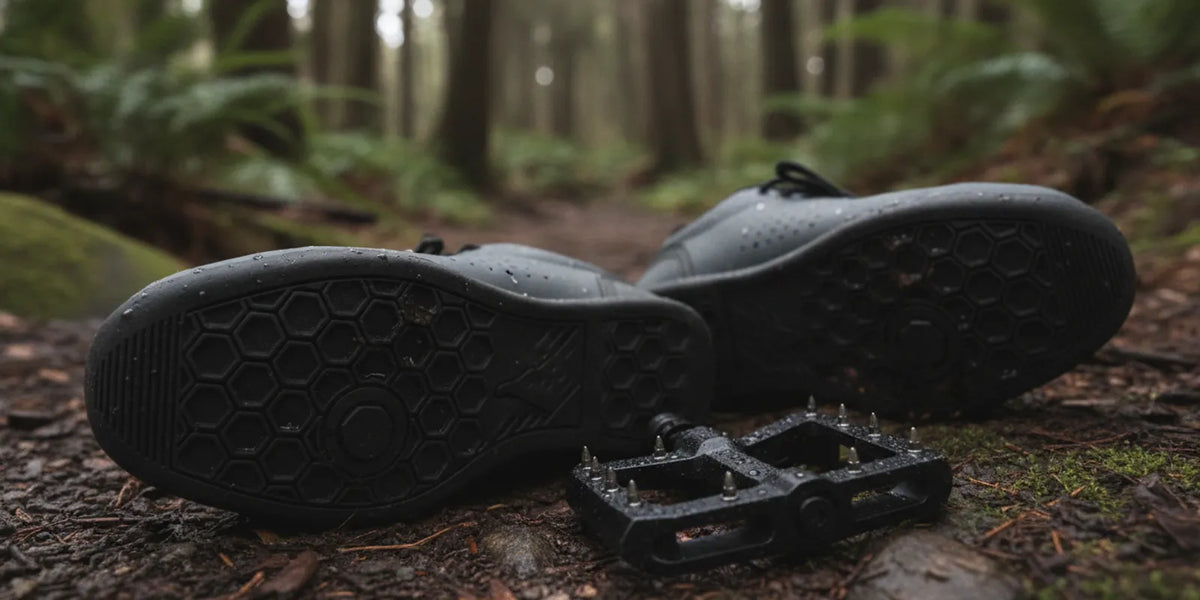
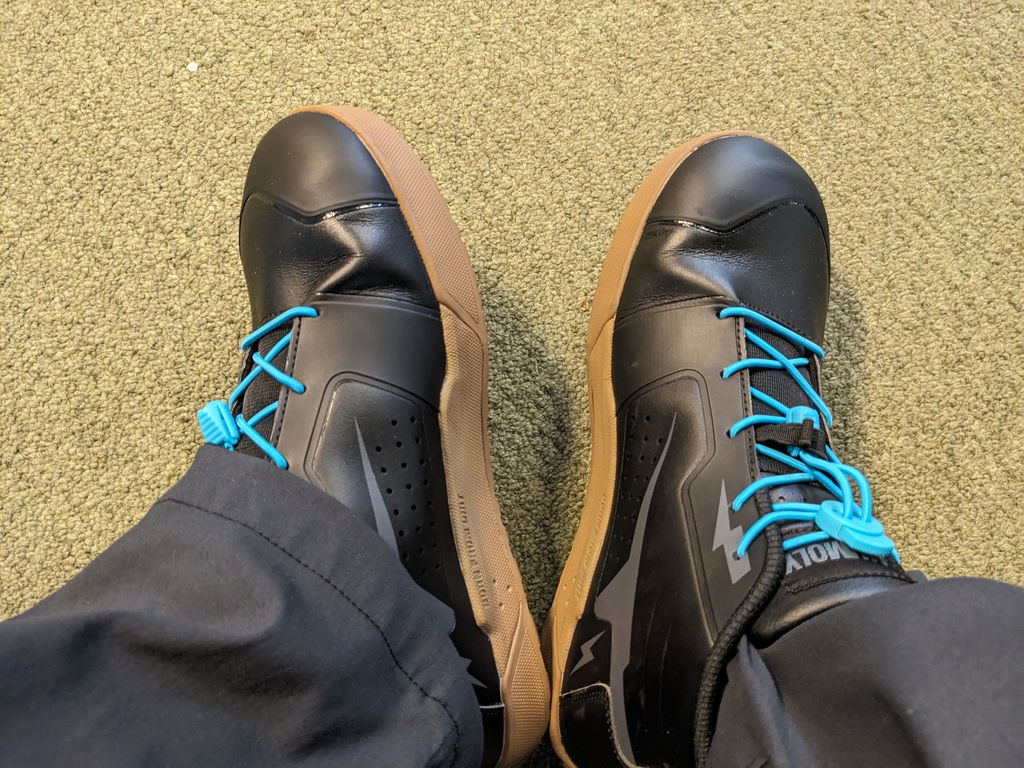
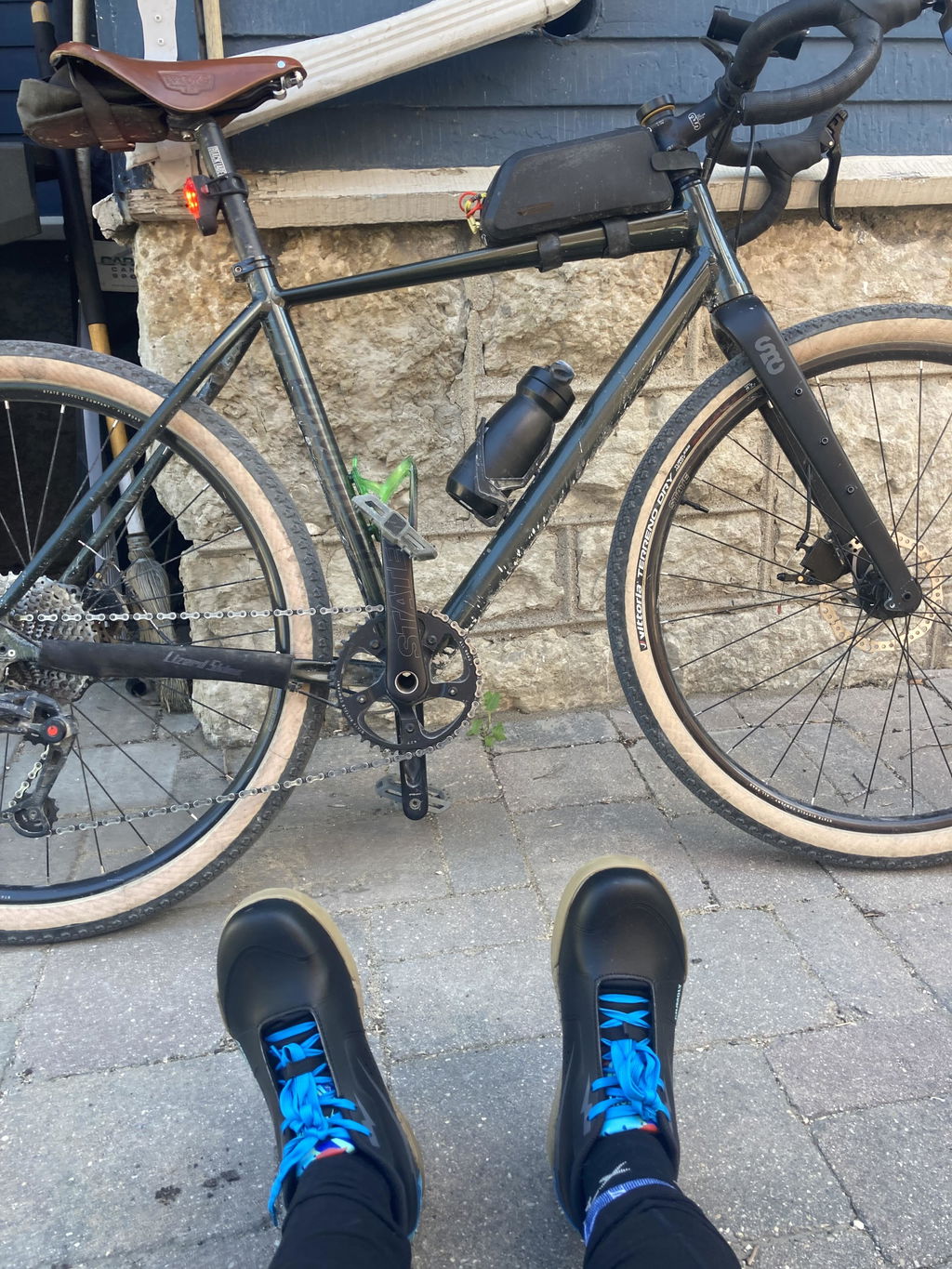
Every pair of Pin-Lock MTB Shoes is backed by our 30-Day Trail/Court Test Guarantee: order your size, ride them on your own flat pedals, test the Pin-Lock sole interface on real mountain bike terrain, and feel the difference in grip, support, and forefoot comfort. If they do not deliver the fit, traction, and control you need, return them within 30 days for a hassle-free exchange or refund.
Test drive the Lateral Control Pro risk-free
Sources & Scientific Citations
- The influence of basketball shoe mass, outsole traction, and forefoot bending stiffness on performance, used for adjacent court-footwear traction evidence.
- Football shoe-surface traction research, used for translational and rotational traction definitions and surface variables.
- Slip-resistant footwear research on wet and icy surfaces, used for condition-specific slip-resistance context.
About the Author
The Anamoly Press Team brings you in-depth gear coverage rooted in real-world testing and engineering insight. Every article is reviewed by our Head of R&D to ensure the technical claims match the science behind our designs.

Leave a comment
This site is protected by hCaptcha and the hCaptcha Privacy Policy and Terms of Service apply.