
By Anamoly Press Team • October 14, 2026
💡 Technical Review & Accuracy Check by Christopher Armstrong, Founder & Head of R&D
Our team researches and writes the gear guides you love, but every scientific claim and compound specification is personally vetted by our lead engineer to ensure technical accuracy.
📌 Short Answer
Durable mountain bike shoes combine an abrasion-resistant, pedal-compatible outsole with protected uppers, bonded or reinforced seams, and weather-ready materials. Evaluate how those parts handle pedal-pin shear, rock strikes, mud, repeated flexing, and drying cycles; service life depends on the rider, terrain, pedal setup, walking, and care.
Durable mountain bike shoes should do more than look rugged on the first ride: they need to keep their outsole predictable under pedal-pin shear, protect the upper when a line goes wrong, resist water and mud without trapping moisture, and remain structurally useful as the miles accumulate. The right way to judge service life is to inspect the construction that takes the abuse—not to trust a vague promise that a shoe is simply tough.
Test drive the Pin-Lock MTB risk-free.
What durability means in a mountain bike shoe
Durability is not one material property: a shoe can have a long-wearing rubber compound but fail at the lace area, or have a heavily protected toe yet lose traction when the tread rounds off. Separate the major failure modes before comparing construction:
- Wear resistance: How slowly the outsole and tread lose material under abrasion and repeated loading.
- Pedal interface stability: How well the compound and tread keep their shape around metal pins without excessive tearing or movement.
- Protection: How the toe, heel, medial side, and lace area handle impacts, crank contact, and abrasion.
- Water resistance: How well the upper slows water entry; this is not automatically the same as a waterproof construction.
- Service life: How long the complete shoe remains safe, comfortable, and functional for the rider's actual use.
That distinction matters because a softer rubber may create excellent initial grip while wearing faster under a rider who walks on rough pavement; a dense upper may resist scuffs while holding more heat, and a waterproof membrane may block rain while slowing drying. Durable design is the balance between competing loads—not maximum hardness or maximum thickness everywhere.
Durable mountain bike shoes start at the pedal-pin interface
Flat pedals subject a shoe to concentrated forces—pins press into the outsole, the foot shifts during cornering, and the shoe experiences repeated shear as the rider repositions. Those loads differ from ordinary walking abrasion, so a casual sneaker's thick-looking rubber does not automatically make it a durable mountain bike shoe.
Compound compliance and mechanical interlocking
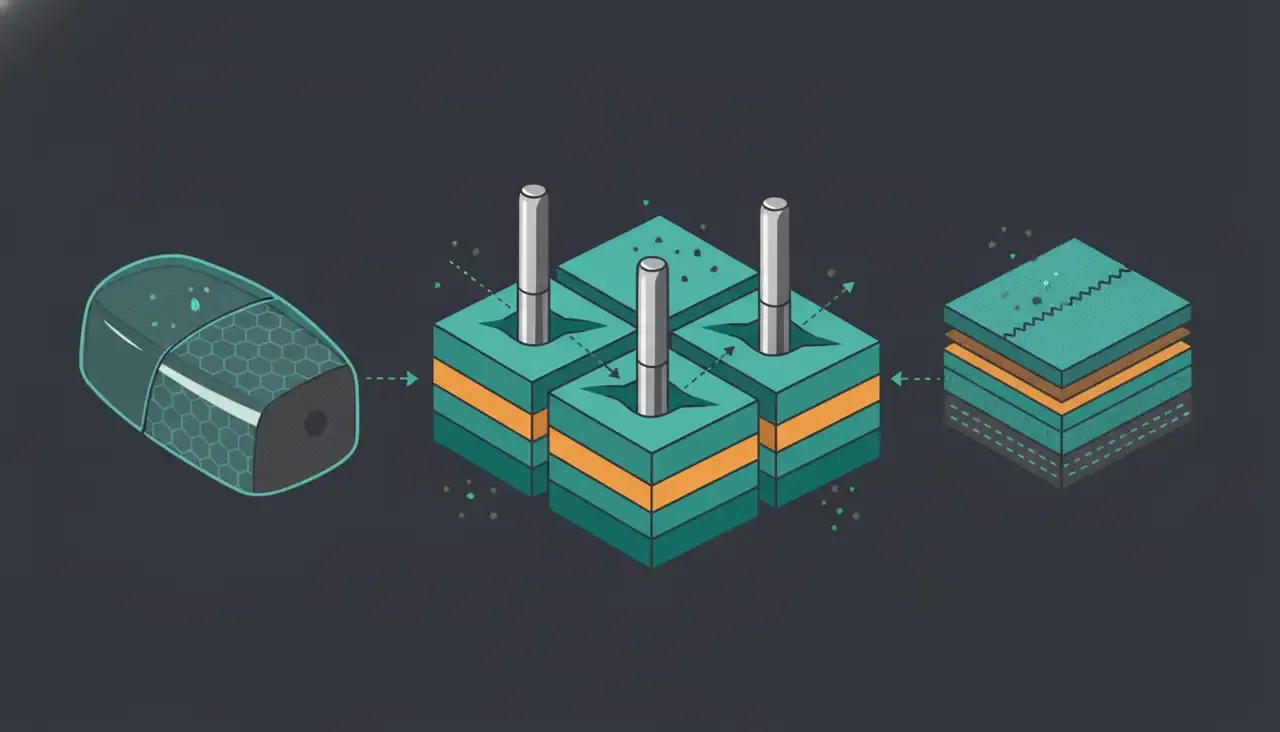
A high-friction compound needs enough compliance to conform to the pedal surface, yet it also needs enough structural integrity to resist being cut, peeled, or permanently distorted by the pins. Tread geometry adds a second layer of performance: individual blocks and channels can create a mechanical interlocking sensation, but only while their edges remain defined.
Water changes the interface: a wet pedal or wet outsole can separate surfaces with a thin film, while contamination changes which parts of the rubber and pedal are actually contacting. Research on water-lubricated rubber soling found that soling surface roughness is a major determinant of friction, so the practical implication for riders is clear—inspect the tread surface, not just the brand name or a dry-floor feel. For a deeper explanation of that relationship, see Anamoly's guide to how grippy mountain bike shoe traction works.
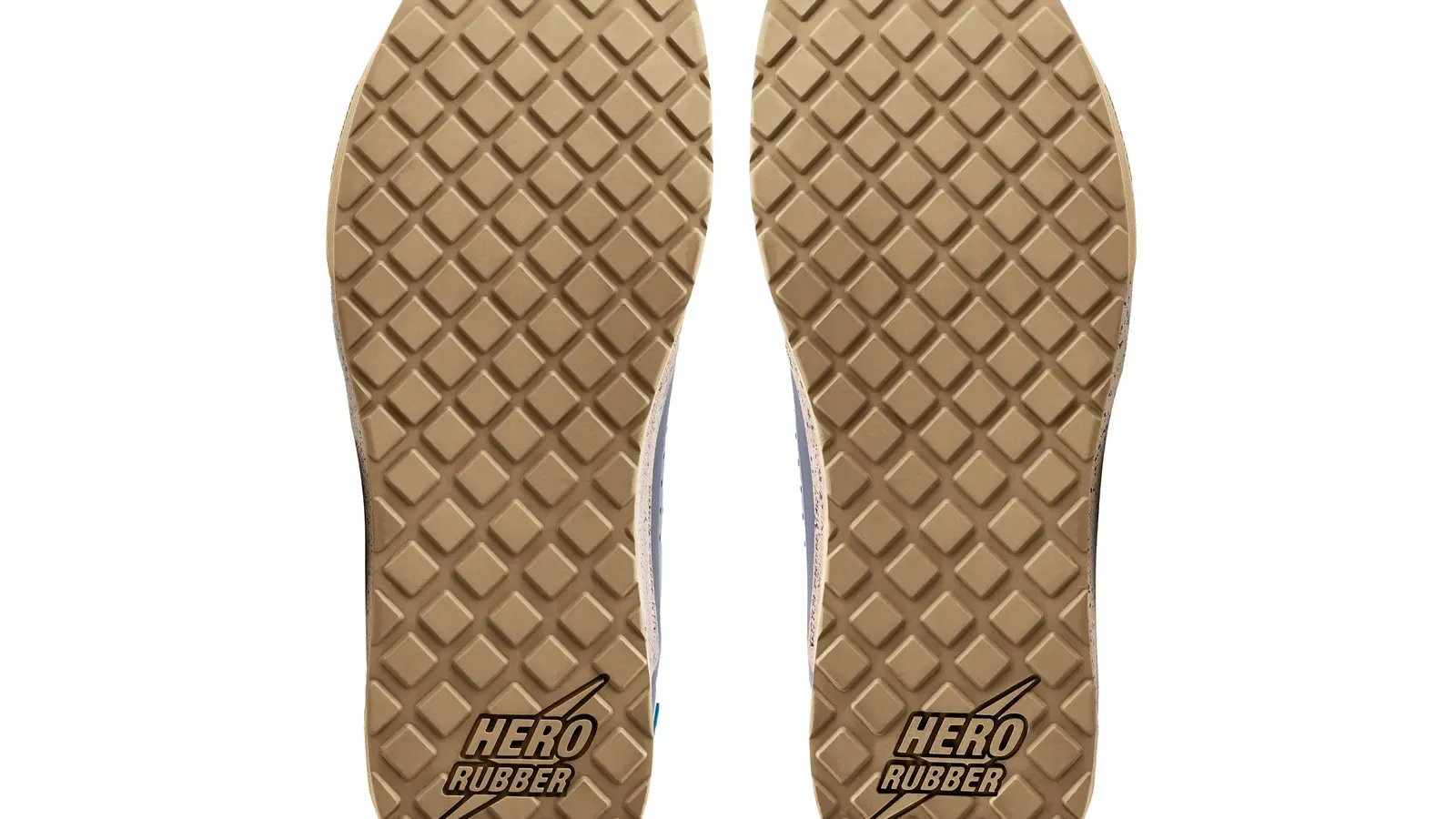
Our Pin-Lock MTB Shoe uses the Hero Rubber™ MTB-G compound platform, developed through two and a half years of testing and refinement. Its stated design target is high friction with better-when-wet behavior, while the product construction also emphasizes low rebound and durability. The useful question is not whether any rubber can last forever—it is whether the compound remains predictable for the terrain and pedal setup you actually use.
How to inspect an outsole after a ride
- Block edges: Look for rounded, torn, or missing edges where pins repeatedly load the same area.
- Pin channels: Check for deep cuts or elongated holes rather than mistaking normal pin impressions for failure.
- Heel and toe zones: Compare the lug profile with a less-used section; heavy walking can wear these areas faster than the pedal contact zone.
- Bond line: Look for separation where the outsole meets the midsole or upper; a small cosmetic mark is different from an opening that admits water.
Pedal maintenance is part of shoe durability—sharp, damaged, or excessively tall pins can concentrate load and accelerate outsole damage, while clean, correctly tightened pedals distribute contact more consistently. If the pins are reshaped by impact or the platform has developed a sharp burr, replacing or servicing the pedal may protect the next pair of shoes better than changing compounds.
Upper protection and seam construction prevent early failure
Outsole wear is visible, but upper failure can end a shoe's useful life first—rock strikes, trail debris, crank contact, repeated kneeling, and lace abrasion all attack different areas. A durable build puts material where those loads occur instead of adding bulk uniformly.
Toe, heel, and medial protection
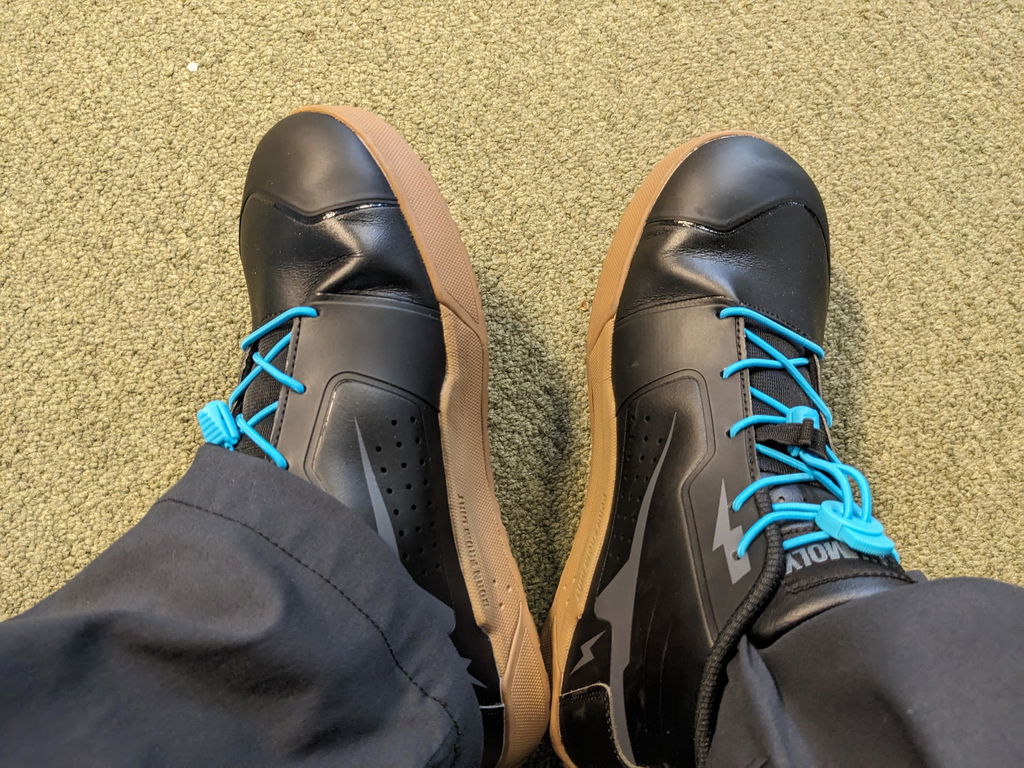
A reinforced toe cap gives the forefoot a sacrificial barrier against rocks and awkward dabs. The Pin-Lock MTB Shoe uses a thermo-welded, three-dimensional heat-molded toe cap. This is a construction detail worth looking for because protection should be integrated into the shape of the shoe rather than left as a thin decorative overlay.
Inspect the toe after hard rides for deep creases, exposed reinforcement, and separation at the transition into the upper. Also check the medial side where the crank can brush the shoe. A raised medial cut and protected lace path can reduce repeated abrasion in a location that is easy to overlook when evaluating a product from the top.
Why bonded seams matter
Every needle hole and seam is a potential stress concentrator. Stitching is not inherently weak, but the thread, surrounding material, and seam treatment must all survive flexing, mud, water, and abrasion. The Pin-Lock uses stitchless, seamless thermo-welded construction in key areas; the goal is to reduce openings that can admit water and to distribute loads across bonded material.
When examining a shoe, run a finger around the toe cap, lace eyelets, heel counter, and outsole transition. Look for lifting edges, bubbling, thread breaks, and changes in stiffness. A cosmetic scuff is ordinary trail evidence; progressive separation is a service-life signal.
Weather exposure is a durability test, not just a comfort issue
Rain, mud, dust, heat, and repeated drying cycles affect materials differently: water can soften contamination, carry grit into seams, and increase the time needed for a shoe to dry, while heat can stiffen or embrittle some materials over time and direct sunlight can age exposed surfaces. This is why water resistance, waterproofing, and drying behavior should be evaluated separately.
The Pin-Lock product is described as waterproof and includes strategic ventilation plus thermal insulation for variable conditions. Those features address weather exposure, but no upper stays clean or dry by itself after repeated immersion. A waterproof construction can still become uncomfortable if mud blocks ventilation or if the shoe is put away wet.
After a wet ride, remove loose dirt before it dries into the tread and seam transitions. Open the tongue and loosen the laces so air can reach the interior; dry the shoes at room temperature, away from radiators, heaters, and direct high heat. Do not use solvents to remove trail grime unless the manufacturer specifically approves them, because aggressive cleaners can change rubber and adhesive surfaces.
For riders who regularly cross streams or ride in wet clay, record how long the shoe takes to dry and whether the upper returns to its normal shape. That field observation is more useful than treating a waterproof label as a guarantee against every moisture problem.
Maintenance extends useful service life
Maintenance cannot turn worn rubber into new rubber, but it can prevent avoidable damage—a short routine after demanding rides keeps small failures visible while they are still manageable:
- Brush or rinse away grit, mud, and plant material from the outsole, lace area, and seams.
- Inspect the tread for torn blocks, deep cuts, and unusual pin damage before the next ride.
- Check the toe cap, heel, lace holes, elastic lace keeper, and outsole bond line for lifting or cracking.
- Loosen the shoe and let it dry fully at room temperature; avoid sealed bags and high heat.
- Clean the pedal pins and inspect the platform for sharp damage that could concentrate load.
- Replace the shoe when the tread no longer holds the pedal predictably, protection has separated, or the upper can no longer secure the foot.
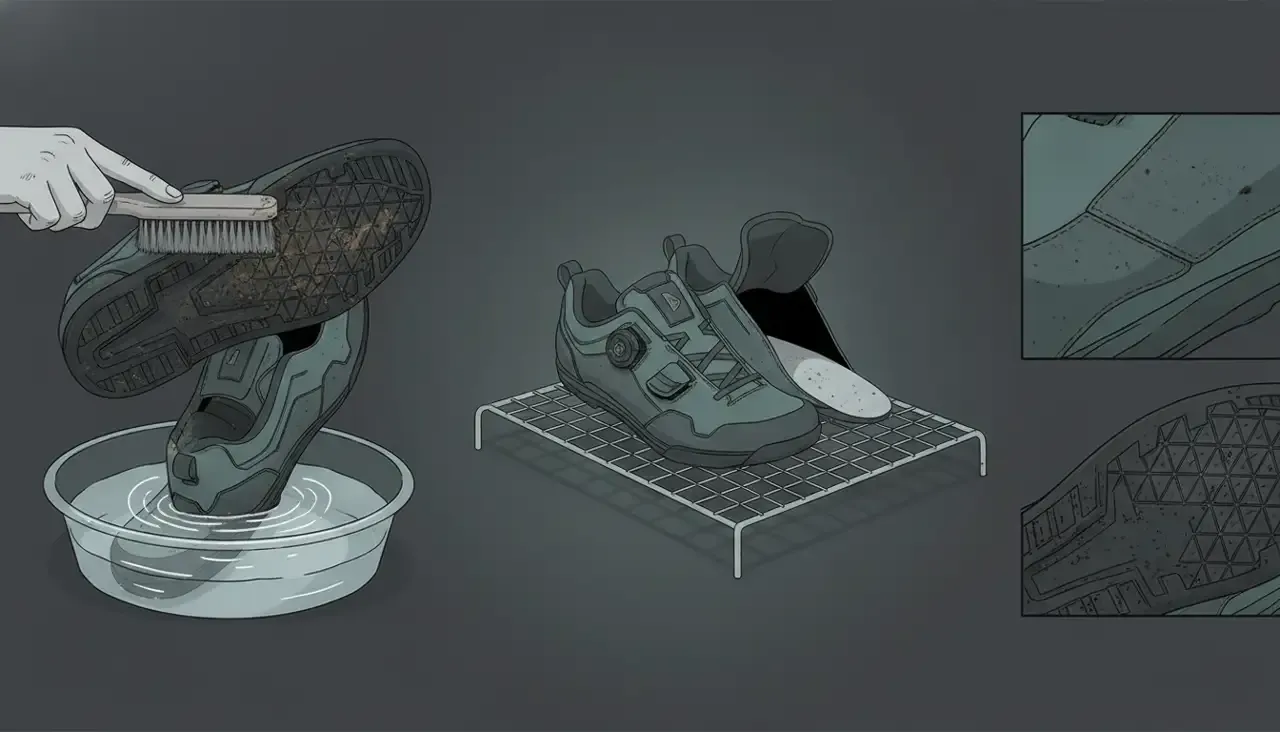
Fit is also a maintenance variable: a shoe that is too short or too narrow forces excess pressure into the toe and can distort the upper, while a shoe that is too loose allows internal movement that increases rubbing. Our Pin-Lock 2.0 Wide Fit is mechanically heat-widened in our Texas shop, while the standard and wide options have different sizing behavior. Use the product sizing information before ordering so the construction is not undermined by a poor fit.
How durable mountain bike shoes handle real trail wear
Use this checklist when comparing a new shoe, and use it to judge whether a current pair is nearing replacement:
- Outsole compound: Is the rubber designed for the pedal surface, and does the manufacturer explain the balance between grip and wear?
- Tread geometry: Are the contact blocks and channels still defined after repeated rides, or do they appear shallow and rounded?
- Pin interaction: Are pin impressions controlled, or are they turning into tears and elongated holes?
- Toe protection: Is there a reinforced cap or structured zone where rock strikes occur?
- Upper transitions: Are the heel, medial side, lace area, and outsole bond reinforced for their specific loads?
- Seam treatment: Are high-exposure joins thermo-welded, reinforced, or otherwise protected against water and flexing?
- Weather system: Is the claim specific about waterproofing, water resistance, ventilation, and drying?
- Fit retention: Does the shoe hold the foot without pressure points or internal sliding?
- Care requirements: Can you clean and dry it without damaging adhesives, rubber, or upper materials?
- Replacement signal: What visible condition tells you the shoe no longer delivers predictable grip or protection?
For a technical material background, our Anamoly Labs tech stack explains how we approach traction, stability, and compound development. For the science behind rubber behavior on contaminated surfaces, a 2025 Tribology Letters study also shows why hardness, roughness, particles, and interface conditions must be considered together rather than reduced to one score.
Pin-Lock MTB construction at a glance
| Metric | Pin-Lock MTB Shoe detail |
|---|---|
| Primary use | Flat-pedal mountain biking and trail-to-hike use. |
| Outsole | Hero Rubber™ MTB-G high-friction compound. |
| Tread systems | Diamondstok tread and DualTraction Pedal + Hike Grid. |
| Toe protection | Thermo-welded, three-dimensional heat-molded reinforced toe cap. |
| Construction | Stitchless, seamless thermo-welded construction in key areas. |
| Fit options | 2.0 Standard Fit and 2.0 Wide Fit. |
| Weather design | Waterproof construction, ventilation, and thermal insulation. |
These specifications describe construction, not a guaranteed mileage figure: a rider on abrasive rock who walks frequently and uses aggressive metal pins will load the shoe differently from a rider on smooth trails. A rider who spends nearly every minute clipped to the pedals creates another loading pattern, so the credible service-life question is whether the shoe's compound, protection, fit, and maintenance routine match the use case.
Test drive the Pin-Lock MTB risk-free
Frequently asked questions
What makes mountain bike shoes durable?
Durability comes from the complete system: a pedal-compatible outsole, protected toe and heel zones, reinforced upper transitions, weather-ready construction, secure fit, and practical maintenance. No single hardness rating or thickness measurement predicts how long a shoe will last in every riding environment—it is the interaction of those elements that matters.
Do metal pedal pins damage mountain bike shoes?
Metal pins create concentrated pressure and shear, so they can accelerate wear when they are sharp, damaged, unusually tall, or poorly matched to the shoe. Normal pin impressions are not automatically failure—inspect for torn tread blocks, deep cuts, and loss of predictable contact.
Are waterproof mountain bike shoes more durable?
Waterproof construction can reduce water entry and protect comfort in wet conditions, but waterproofing alone does not determine service life. Outsole wear, rock protection, seam integrity, fit, cleaning, and drying all matter—a waterproof shoe still needs to be cleaned and dried after muddy rides.
How should I clean durable mountain bike shoes?
Remove loose grit and mud with water and a soft brush, pay attention to the tread and seams, then loosen the shoe and air-dry it at room temperature. Avoid high heat and unapproved solvents, and inspect the outsole, toe cap, lace area, and bond line before the next ride—small defects are easier to manage before the next trail session.
When should I replace my mountain bike shoes?
Replace them when the outsole no longer holds the pedal predictably, tread blocks are torn or substantially rounded, protective zones have separated, the upper cannot secure the foot, or water enters through a structural opening. Cosmetic scuffs alone do not necessarily mean the shoe has reached the end of its service life.
Every pair of our Pin-Lock MTB Shoe is covered by our 30-day US return window, with free returns and free size exchanges: order your size, put them through their paces on the trail, test the Pin-Lock sole interface against your pedal pins on rough descents, and feel how the wide toe box relieves forefoot pressure. If they don't deliver the exact fit, grip, and comfort you need, return them within 30 days for a hassle-free exchange or refund, no friction, just better trail performance.
Test drive the Pin-Lock MTB risk-free
Sources & Scientific Citations
- Grosch, K. A., et al. The Surface Roughness of a Rubber Soling Material Determines the Coefficient of Friction on Water-Lubricated Surfaces. Journal of Biomechanics.
- The Effect of Hardness and Surface Roughness of Elastomer on Friction Between Shoe Soles and Particle-Contaminated Floors. Tribology Letters, 2025.
- Multiple Intermolecular Interaction to Improve the Abrasion Resistance. Peer-reviewed materials research available through PubMed Central.
- Pin-Lock MTB Shoe product specifications and construction details. Anamoly Labs.
About the Author
The Anamoly Press Team brings you in-depth gear coverage rooted in real-world testing and engineering insight. Every article is reviewed by our Head of R&D to ensure the technical claims match the science behind our designs.

Leave a comment
This site is protected by hCaptcha and the hCaptcha Privacy Policy and Terms of Service apply.