

By Anamoly Press Team, October 19, 2026
💡 Technical Review & Accuracy Check by Christopher Armstrong, Founder & Head of R&D
Our team researches and writes the gear guides you love, but every scientific claim and compound specification is personally vetted by our lead engineer to ensure absolute accuracy.
📌 Short Answer
Lightweight pickleball shoes can improve maneuverability and reduce fatigue, but lighter construction does not automatically mean better court performance. The useful choice balances low mass with enough cushioning, lateral stability, torsional control, outsole durability, and a wide toe box for secure toe room.
Lightweight pickleball shoes are appealing because every split step, brake, and lateral cut asks the shoe to move with you, then hold its shape when you stop. Reducing material can make that movement feel quicker and can help limit fatigue during longer sessions. It can also reduce the room available for cushioning, torsional control, protection, and outsole wear resistance.
Explore the Lateral Control Pro
Review the current fit details, construction, and posted return terms before ordering.
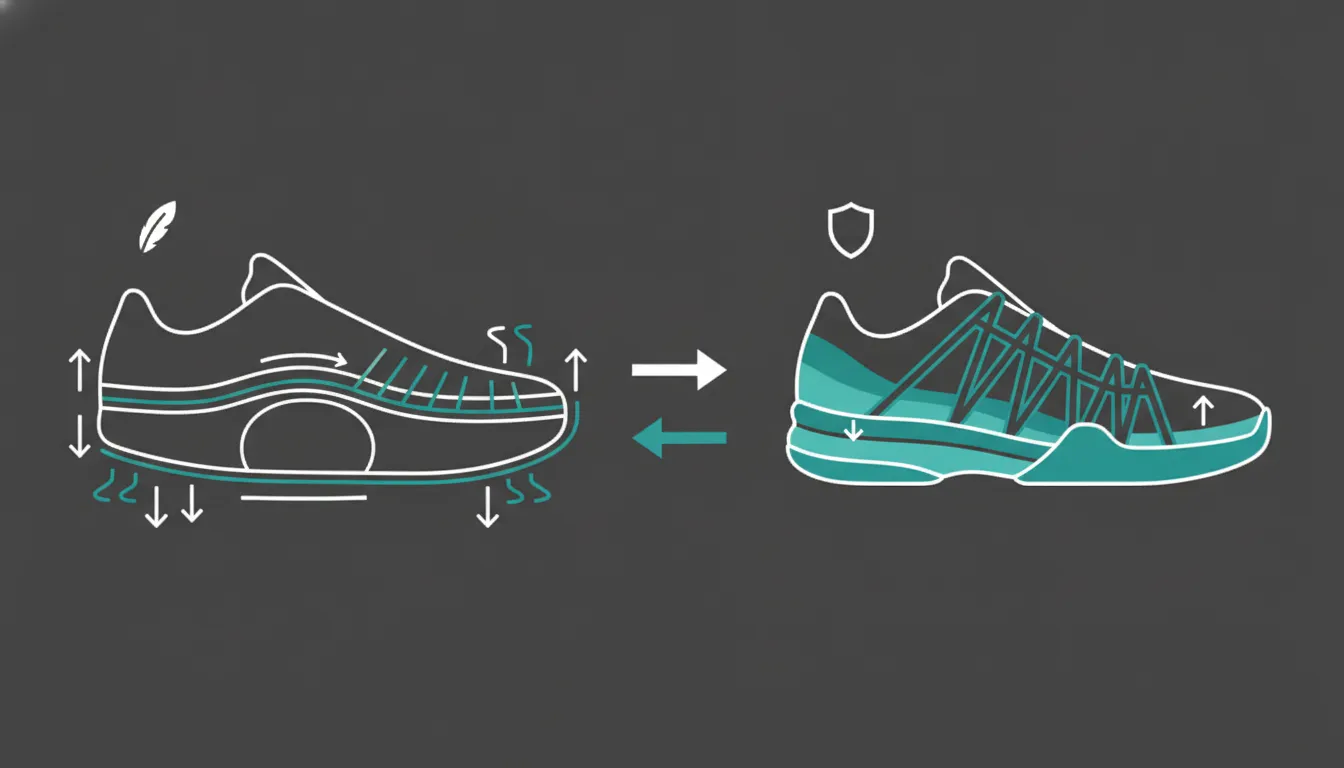
The key is to treat weight as one design variable rather than a finish-line specification. Look at what the construction changes under your foot, especially when you accelerate, absorb a hard stop, and push back into the next shot.
What Do Lightweight Pickleball Shoes Actually Change?
Low mass is a design variable, not a performance category by itself. Removing material can change how quickly the shoe responds during a lift, plant, and redirection. It does not automatically make the platform more stable, more protective, or more durable. The useful question is not simply whether a court shoe feels light in your hand. Ask what the design kept, removed, or redistributed to achieve that result.
Swing weight affects quick footwork
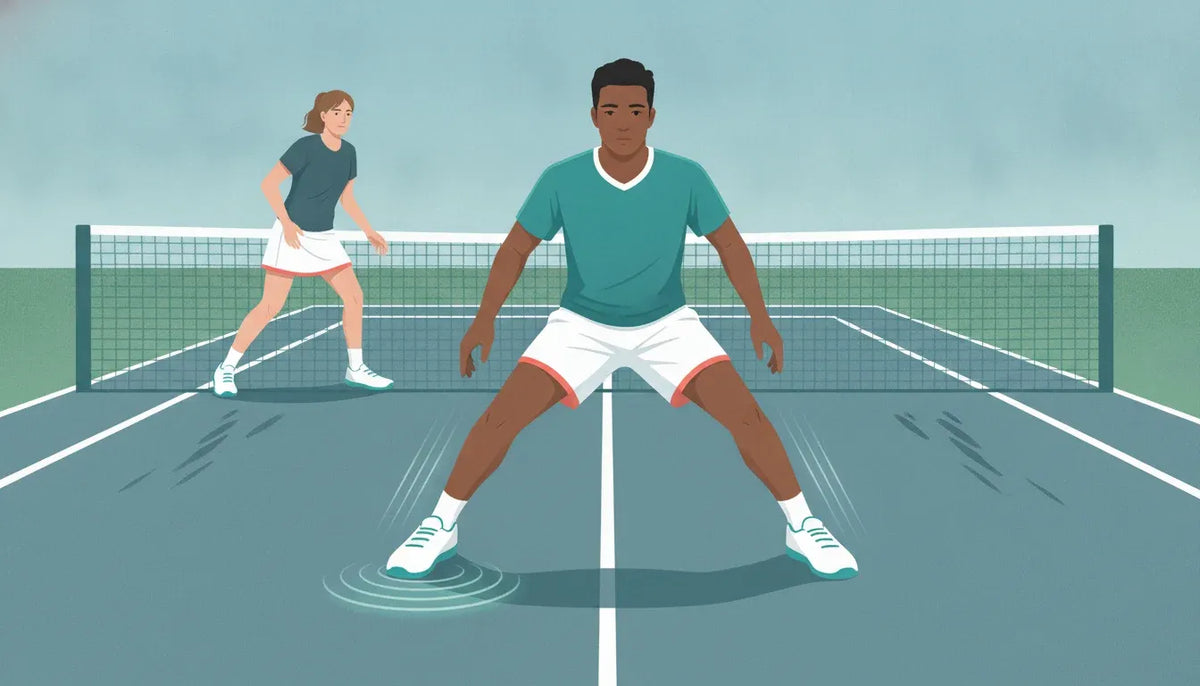
Every step requires the leg to move the shoe through space. Mass positioned farther from the ankle has a larger effect on rotational effort than mass concentrated close to the foot; this is the practical idea behind swing weight. A lighter construction can make repeated split steps, recovery steps, and short directional adjustments feel more responsive. The benefit is most noticeable when points demand frequent foot repositioning rather than a single explosive sprint.
That responsiveness is a mechanical advantage; it is not a measured promise of faster play. Footwork also depends on traction, fit, court surface, technique, and whether the shoe stays aligned with the foot during a cut. If the upper allows movement inside the shoe or the platform twists too readily, a nominally light design can waste the very quickness it was meant to provide.
Lower mass may reduce fatigue, but agility does not settle the choice
Weight reduction can help prolong performance during long sessions because the player repeatedly lifts and redirects the shoe. That does not mean every gram removed has equal value, and it does not justify trading away useful structure. The main engineering tension is between minimizing mass and preserving enough cushioning volume, support, and integrity for the demands of hardcourt play.
Lightweight pickleball shoes therefore deserve evaluation as a system. Look at how the shoe manages lateral loading, torsional control, heel hold, cushioning, and outsole contact alongside its weight. A lighter upper may improve movement while a less supportive base increases instability. A reduced midsole may bring the foot closer to the court while providing less impact attenuation. The right balance depends on your playing style, session length, body tolerance, and need for protection.
Use low mass as a signal to investigate the construction, not as the final buying criterion. Agility matters, but it has to survive the stop, plant, and redirection that follow every quick step.
Where Lightweight Construction Can Give Up Protection
Reducing material is not the same as removing unnecessary material. The engineering problem is deciding where a shoe can become lighter without leaving the foot exposed to the repeated impact, twisting, and contact forces of court play. A lightweight pickleball shoe can feel quick during a split step, but that sensation does not tell you whether the upper will hold the foot securely or whether the platform will remain composed during a hard stop.
The clearest tradeoff is between mass and cushioning volume: a larger midsole can absorb more shock, while a leaner construction may feel closer to the court and reduce fatigue over a long session. The midsole is a primary energy-absorption component, and research indicates that softer midsoles can attenuate impact forces and loading rates. However, cushioning is not automatically better when added without a stability plan: thicker midsoles can reduce plantar sensation and proprioception, which may make court feedback less immediate.
That does not mean a shoe should be stripped down. It means cushioning should be placed and tuned with purpose. A useful design may use material where the foot needs impact protection, then avoid excess volume where it would raise the athlete or blur contact with the court. This is a more meaningful distinction than simply comparing a shoe's listed weight.
The upper creates another compromise. Removing overlays, reinforcement, or padding can reduce mass and increase flexibility, but those parts may also help manage forefoot movement, abrasion, and pressure during lateral cuts. The goal is not a rigid shell; it is controlled support that keeps the foot aligned with the platform while allowing the toes enough room to function. A wide toe box can support forefoot comfort and distribute pressure, yet its value depends on the rest of the shoe securing the heel and midfoot.
Stiffness also needs to be selective. Performance footwear has to balance material stiffness for energy return with flexibility for comfort, rather than maximizing either quality in isolation. The same principle applies to protection: remove dead weight, not useful structure. When evaluating lightweight pickleball shoes, look for evidence of purposeful cushioning, a secure upper, and a stable base. Low mass is a benefit only when the construction still protects the foot through the movements that define the sport.
For the broader interaction between fit, platform width, and lateral control, see our pickleball shoe lateral stability guide.
How Much Cushioning Do You Need on a Hard Court?
Hardcourt play creates a real cushioning decision: you need enough midsole structure to manage repeated impact. But not so much soft, elevated material that the shoe feels disconnected from the court. The right target is controlled shock absorption with a stable, predictable platform for split steps, lateral cuts, and sudden stops.
The midsole is a primary energy absorption component in athletic footwear: research summarized in the biomechanics literature indicates that softer midsole materials can reduce impact forces and loading rates during ground contact. Other research has linked appropriate cushioning with reduced impact loading at the knee and ankle. Cushioning performance depends on the complete shoe and the player's movement pattern, not softness alone.
More cushioning is not automatically more control. Thicker midsoles can attenuate shock, but they may also reduce plantar sensation and proprioception. That matters when you are trying to feel where your foot is during a quick change of direction. A shoe that feels plush while standing may feel vague when you load the outside edge and redirect your body.
Ground feel is a control variable
Ground feel is the information that travels through the outsole and midsole as your foot contacts the court. It does not mean using an unprotected, minimal shoe. It means avoiding unnecessary distance between your foot and the playing surface. A lower, well-supported platform can make foot placement feel more immediate. The tradeoff is that it must still provide sufficient impact management for the intensity and duration of your sessions.
There is also a center-of-mass tradeoff. High-volume cushioning can elevate the athlete slightly, which may reduce lateral stability according to the engineering guidance in the research ledger. That does not make a thicker platform wrong. It means the cushioning system should work with the rest of the shoe: a stable base; a secure upper and appropriate torsional behavior can help preserve control while the midsole handles impact.
What to look for in lightweight pickleball shoes
- Balanced cushioning: Look for impact absorption without a soft, unstable sensation under the forefoot or heel.
- Useful ground feel: The shoe should communicate court contact clearly enough for quick repositioning.
- Controlled geometry: Judge the platform by stability during movement, not by stack height or softness in isolation.
- Session fit: A shoe that feels comfortable for a short test should remain supportive when repeated cuts and stops accumulate.
| Design variable. | Potential gain. | Tradeoff to check. |
|---|---|---|
| Lower mass. | Quicker repeated foot repositioning. | Less material for support or protection. |
| More cushioning. | Greater impact attenuation. | Less ground feedback or a higher platform. |
| More structure. | Better torsional and lateral control. | More material and potentially less flexibility. |
For pickleball, cushioning should support movement rather than define the shoe. Evaluate it alongside lateral stability, torsional control, traction, and fit.
Those systems determine whether comfort remains useful once the pace increases.
Why Lateral Stability and Torsional Control Still Matter
Pickleball footwork is not just forward motion: a point can require a split step. A hard lateral push, a sudden stop, and a recovery step within a few seconds. Lightweight pickleball shoes may make those movements feel quicker, but low mass does not automatically create a stable platform. The outsole, upper, heel counter, midsole geometry, and torsional structure must work together when force moves across the foot.
What happens during a cut or stop
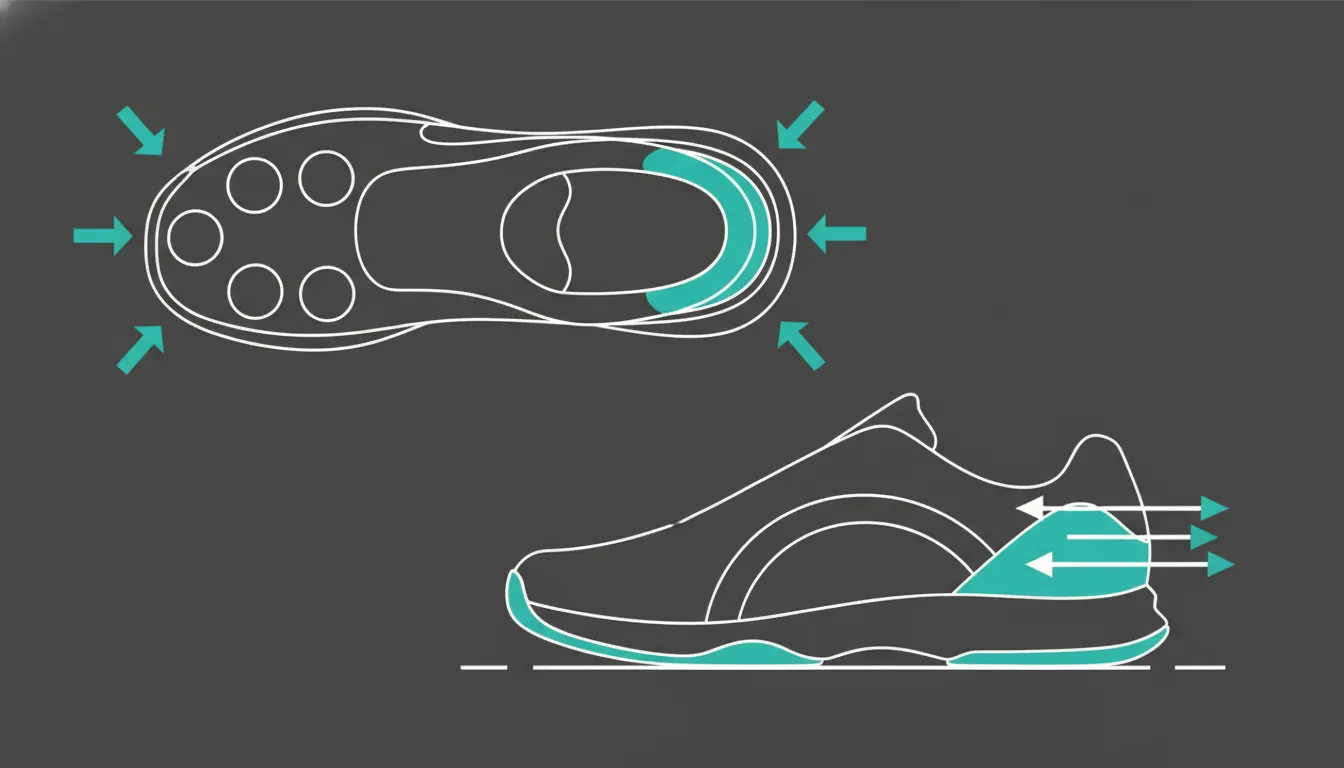
During a lateral cut, the foot needs a broad, predictable base so the shoe does not roll noticeably toward its outside edge. During a stop, the heel should remain seated rather than sliding inside the collar. A secure heel counter helps lock the foot in place during aggressive lateral maneuvers; that fit security supports repeatable movement without requiring the player to over-tighten the laces. It does not make a shoe a guarantee against injury, but it can reduce avoidable fit and mechanical compromises.
A wide toe box can contribute to that platform when it gives the forefoot usable room instead of forcing the toes together. An appropriately broad base of support may enhance lateral stability, while sufficient toe room allows the foot to function naturally as weight shifts from heel to forefoot. The goal is not maximum width everywhere; it is a secure heel and midfoot paired with enough forefoot space for stable contact.
Why torsional control is different from cushioning
Cushioning manages impact and comfort; torsional control manages unwanted twisting. If the forefoot and rearfoot rotate too freely relative to each other, the shoe can feel vague when a player plants and changes direction. A controlled amount of torsional stiffness helps stabilize the foot and transfer force during explosive movement. Research on athletic footwear also identifies stiffness as a factor in mechanical advantage. The useful level depends on the construction and activity; more structure is not automatically better.
Lateral outriggers extend the effective footprint at the side of the shoe, while a torsional shank or related internal structure helps resist excessive twisting through the platform. Together, those elements can make a light court shoe feel more composed without relying on bulky material everywhere. The engineering challenge is to preserve useful flexibility for natural foot motion; it must also control the rotations that make a cut feel unstable.
For a deeper explanation of heel hold, wide-fit geometry, and lateral support, see our pickleball shoe lateral stability guide. When comparing lightweight options, look beyond the scale: check whether the shoe holds the heel, supports the lateral edge, and maintains controlled torsion through repeated cuts and stops.
Can a Lightweight Court Shoe Still Be Durable?
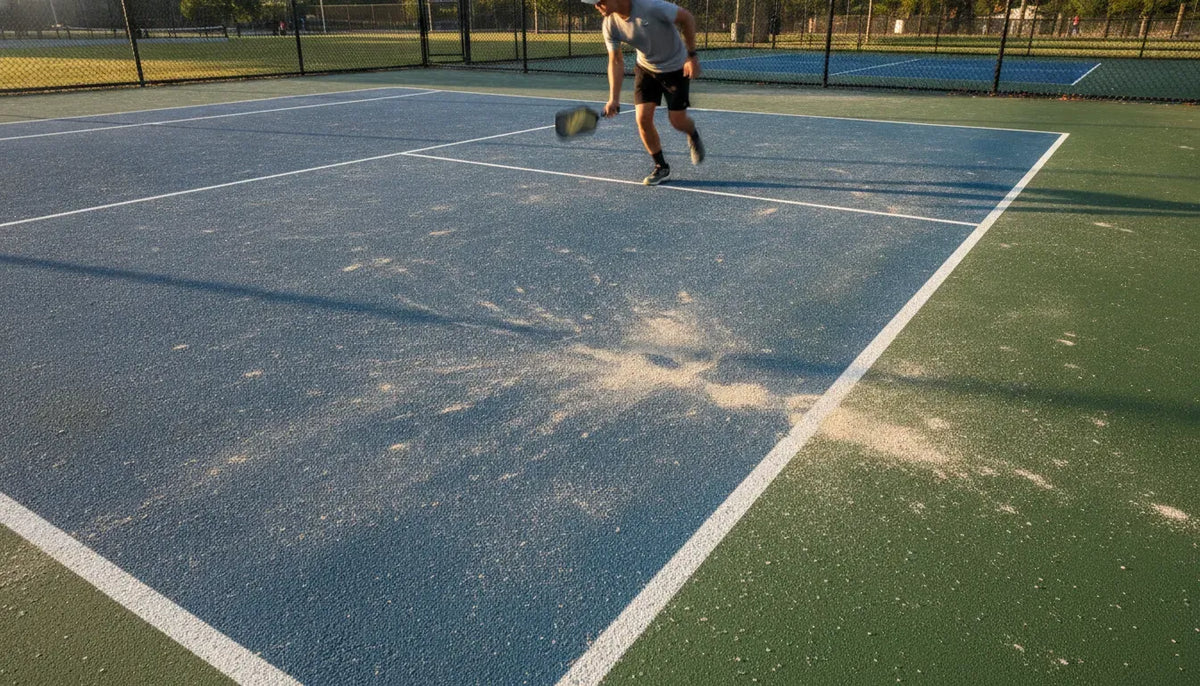
Yes, but low mass does not guarantee a long service life. Durability depends on where the shoe places material and how the outsole compound responds to repeated contact with the court. Pickleball is played on a hardcourt and demands rapid multidirectional movement, so the shoe must handle repeated braking, pivoting, and push-off rather than simply feeling light during the first session. Research on pickleball injuries and equipment supports treating court-specific footwear as part of injury prevention, not as an afterthought.
Hardcourt abrasion starts with the outsole
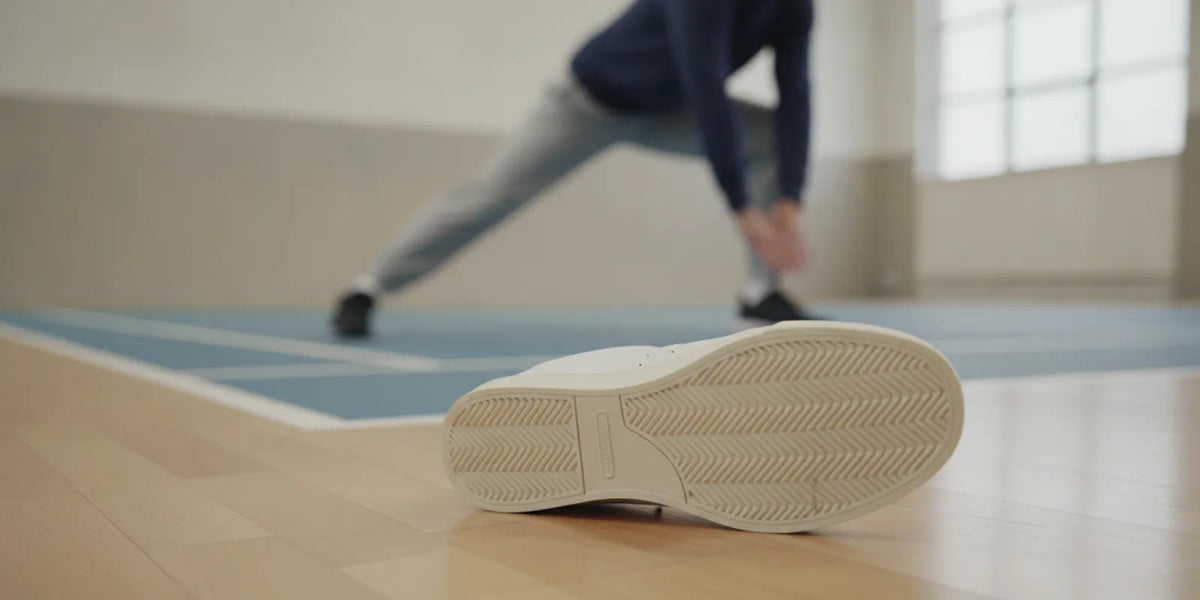
The outsole takes the most direct abuse. Every lateral stop loads the tread against the surface, while pivots create shear across the rubber. A lightweight upper cannot compensate for an outsole that wears quickly or loses its traction pattern under that stress. Hardcourts therefore require a durable, high-friction outsole; the compound must resist rapid wear while still providing enough grip for controlled cutting.
Tread geometry matters as well. Deep, widely spaced lugs are not automatically useful on a smooth court: the working surface needs a stable contact pattern that supports acceleration and stopping. Look for an outsole designed around court movement, with coverage in the zones that repeatedly meet the surface. The goal is not maximum rubber everywhere; it is useful rubber where abrasion and traction demands are highest.
Compound choice is a lifecycle tradeoff
Reducing material can reduce weight, but removing material from a high-wear zone can shorten the useful life of the shoe. A better approach is selective construction: keep the upper flexible where the foot needs to move. Then reinforce the outsole and other high-stress areas with a compound and tread pattern suited to hardcourt play. This is the difference between reducing unnecessary mass and weakening the platform.
Durability should also be judged by retained function, not appearance alone. A shoe may look intact while its traction, lateral support, or tread contact has degraded. Conversely, cosmetic scuffing is not automatically a performance failure. Inspect the outsole for meaningful tread loss, check whether the shoe still holds the foot securely during a cut, and notice any change in grip or rolling sensation.
For a deeper checklist covering outsole wear, fit, and replacement decisions, use this pickleball shoe durability guide. Lightweight pickleball shoes make sense when weight reduction preserves the structures that manage court abrasion and directional load. The right question is how much performance the shoe retains over its working life.
Does a Wide Toe Box Make a Shoe Too Heavy?
Not necessarily. A wide toe box can add useful width without turning a court shoe into a bulky shoe. The important question is not whether the shoe occupies more space on a scale; it is whether that space improves contact, comfort, and control during play. Weight reduction is valuable for reducing fatigue, but removing material from the forefoot can create pressure points or leave the foot moving inside the shoe.
Toe room helps distribute pressure across the forefoot during high-impact activity. It can also accommodate the swelling that commonly develops during a long, intense session. When the front of the shoe is too narrow, a player may compensate by tightening the laces, pushing the toes together, or changing how the foot loads during a stop. Those adjustments can make a shoe feel less secure even when its listed weight is low.
Judge the platform, not width in isolation
Fit security comes from the whole platform. The toe area needs enough room for the forefoot to spread comfortably, while the midfoot and heel need to hold the foot in place. A broader base of support can improve lateral stability during side-to-side movement; it does not require the entire upper to be oversized. A secure heel counter and controlled midfoot fit help prevent excess movement, allowing the added forefoot width to work as usable support rather than dead space.
This distinction matters in lightweight pickleball shoes. A lighter construction may improve quick foot movement and reduce fatigue. Low mass alone, however, does not tell you whether the shoe will stay aligned through a hard lateral cut. Torsional control also matters because it limits excessive foot rotation during rapid directional changes. The best design balances toe room with a stable chassis, instead of treating narrowness as the only route to lower weight.
What to look for when trying them on
- Toe room: Your toes should have space to spread and accommodate forefoot expansion without pressing against the upper.
- Fit security: The heel and midfoot should remain controlled when you shuffle, stop, and change direction.
- Usable platform: The outsole should support the wider forefoot with stable contact rather than creating a soft, unsupported edge.
- Construction balance: Width should be paired with appropriate torsional control and material stiffness, not added as isolated volume.
In practical terms, a wide toe box is not a penalty if it helps you maintain pressure-free contact and confident foot placement. Evaluate how the shoe supports your movement over a full session. That functional platform tells you more than a weight comparison alone.
How to Choose Lightweight Pickleball Shoes Without Chasing a Number
There is no useful weight target that works for every player. The right choice depends on how the shoe distributes material; it must also preserve the structure your movement demands. Pickleball includes repeated stops, starts, lateral cuts, and quick recovery steps; research on pickleball injuries also emphasizes sport-appropriate equipment and support, not weight alone. See the findings on pickleball injury prevention and sports equipment and the documented foot and ankle injury patterns in pickleball players.
Before comparing lightweight pickleball shoes, decide which compromises you will not accept. For one player, that may be a secure heel during a wide defensive slide; for another, it may be cushioning that stays comfortable through a long outdoor session. Treat the scale as one input in a larger fit-and-movement test.
- Start with your court and movement pattern: Indoor players may prioritize a clean, predictable court connection and quick footwork. Outdoor players should give more attention to outsole durability and traction because hardcourt surfaces are abrasive. If your game relies on wide defensive slides or aggressive lateral recovery, stability should move higher on the list than a small reduction in mass.
- Set a cushioning requirement, not a maximum weight: Softer midsole materials can reduce impact forces and loading rates, while thicker cushioning can reduce plantar sensation and ground feedback. Choose enough cushioning for your court time, body tolerance, and comfort; avoid treating minimal cushioning as automatically faster. A shoe that leaves your feet fatigued will not deliver a practical agility benefit late in a session.
- Test torsional control and lateral containment: Hold the heel in place, then check whether the platform resists unwanted twisting when you bend the forefoot. A lightweight upper is useful only if the heel, midsole, and outsole keep your foot connected during a cut. Pickleball support matters because injury prevention is tied to equipment selection and performance demands, as discussed in this clinical overview of pickleball injuries.
- Inspect the outsole for your playing frequency: Look for a high-friction compound and a tread pattern suited to the surface. Frequent outdoor play makes wear resistance a functional requirement; replacing a shoe early can erase the practical advantage of a lighter construction. Traction should remain consistent through stops rather than feel impressive only during the first few sessions.
- Judge fit by usable space and security: Your toes need room to spread and accommodate swelling, but the heel and midfoot should not slide. A wide toe box can improve forefoot pressure distribution and broaden the base of support during lateral movement. Compare the fit while standing and in a loaded athletic stance; do not reject a stable, well-fitting shoe because its scale number is not the lowest.
- Make the final comparison after all criteria pass: Once cushioning, torsional control, lateral stability, durability, and fit meet your needs, use weight as a tie-breaker. This keeps lightweight design in its proper role: a way to reduce unnecessary effort, not a substitute for court-specific structure.
Test drive the Lateral Control Pro risk-free
Frequently Asked Questions: Lightweight Pickleball Shoes
Do lightweight pickleball shoes provide enough support and stability?
They can, if weight reduction comes from unnecessary material rather than the structures that control motion. Look for secure heel hold, a stable lateral platform, and enough torsional control to resist excessive twisting during quick cuts. Low weight alone does not predict court stability.
Are lightweight pickleball shoes suitable for outdoor courts?
Yes, provided the outsole is designed for abrasive hardcourt surfaces. Outdoor play demands reliable high-friction rubber and a tread pattern that maintains contact through repeated stops and direction changes. A shoe built mainly for indoor feel may wear faster outdoors, even if its upper remains intact.
Are lightweight pickleball shoes durable enough for frequent play?
Durability depends more on the outsole compound, coverage, and construction than on the shoe's scale. Check the areas that drag or load during lateral movement, especially the medial and lateral forefoot. A modest amount of reinforcing material can extend usable life without making the shoe feel cumbersome.
What is the difference between running shoes and lightweight pickleball shoes?
Running shoes are optimized for primarily forward travel, while court shoes are built for braking, shuffling, and rapid lateral changes. A running shoe may feel light and cushioned, yet lack the lateral containment, torsional control, and court-specific outsole needed for confident pickleball movement.
Does a wide toe box make a shoe too heavy?
Not necessarily. A wide toe box can improve toe room and distribute pressure across the forefoot, while the shoe's overall mass depends on its materials and platform design. Judge the fit by whether your foot stays centered and comfortable during cuts, not by width or weight in isolation.
Ready to balance lightweight speed with court stability?
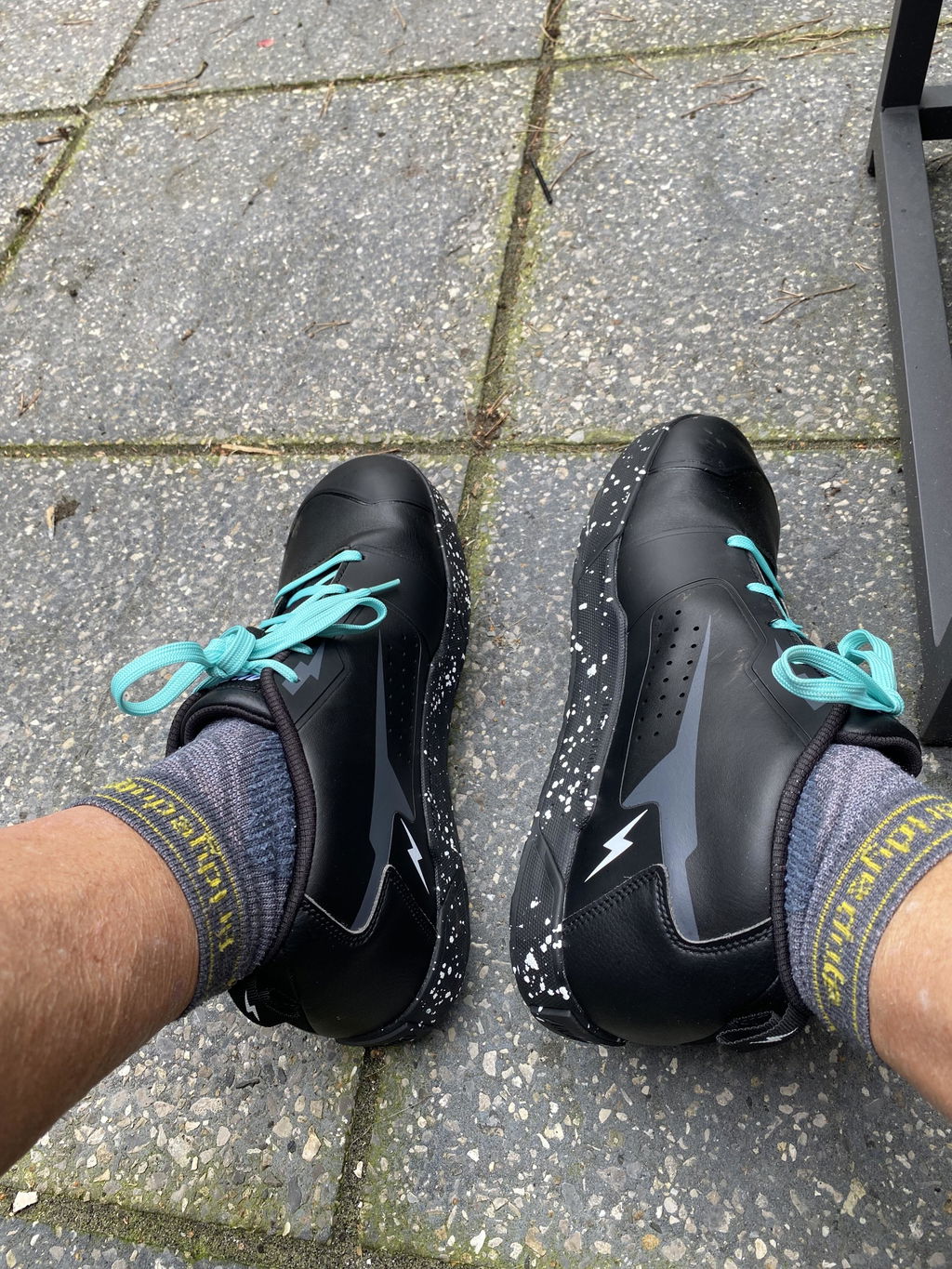
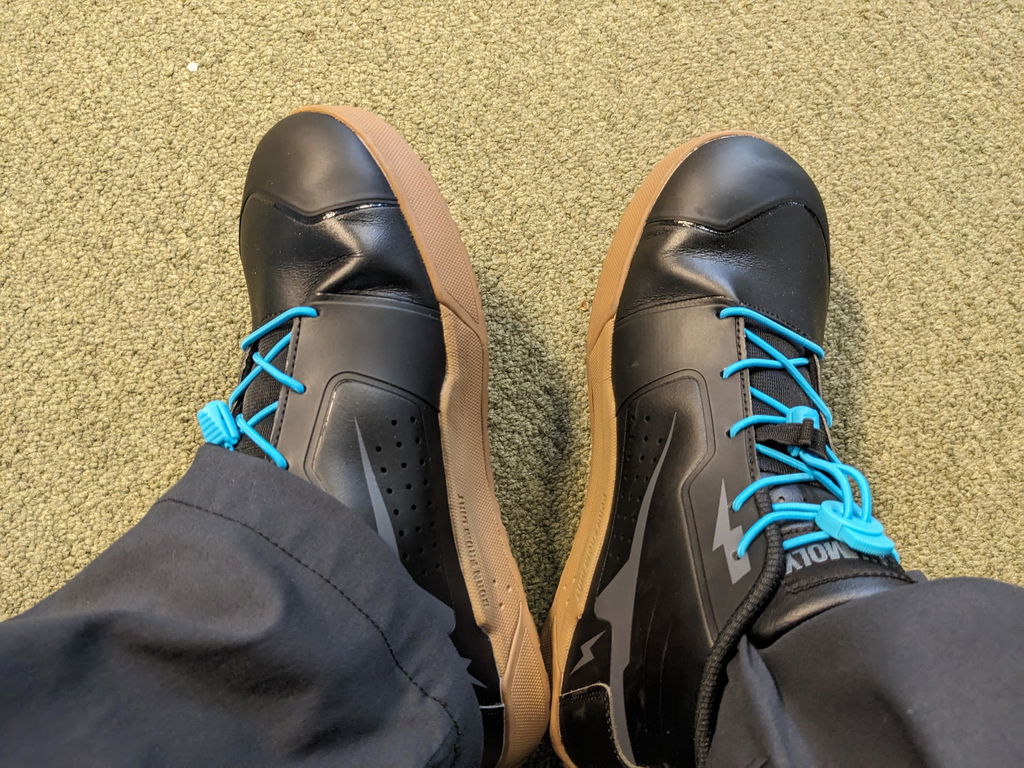
Low weight can make a court shoe feel quick, but the right choice also needs dependable cushioning and lateral stability. It also needs torsional control, durability, and a secure fit with useful toe room. If the Lateral Control Pro matches those priorities, our current product page explains the fit options and construction; our verified policy includes workmanship-defect coverage, free returns, free size exchanges, and a 30-day US return window.
Test drive the Lateral Control Pro risk-free
Sources & Scientific Citations
- Footwear biomechanics research, including cushioning and stiffness considerations.
- Pickleball injuries and prevention overview, including sport-appropriate equipment.
- Foot and ankle injury patterns in pickleball players.
About the Author
The Anamoly Press Team brings you in-depth gear coverage rooted in real-world testing and engineering insight. Every article is reviewed by our Head of R&D to ensure the technical claims match the science behind our designs.

Leave a comment
This site is protected by hCaptcha and the hCaptcha Privacy Policy and Terms of Service apply.