

By Anamoly Press Team • October 19, 2026
💡 Technical Review & Accuracy Check by Christopher Armstrong, Founder & Head of R&D
Our team researches and writes the gear guides you love, but every scientific claim and compound specification is personally vetted by our lead engineer to ensure absolute accuracy.
📌 Short Answer
For outdoor play, inspect the outsole at the forefoot, heel and edges, then check whether the upper is holding the foot securely during side steps. Hard courts can abrade rubber faster than smoother indoor surfaces, while toe drag and repeated lateral braking create local wear. Replace a shoe when damage or loss of support changes how it moves under you, not just because it looks scuffed.
Durable outdoor pickleball sneakers are not simply shoes with thick-looking soles; they need to handle repeated braking, lateral cuts, hard-court abrasion and the player's own movement patterns. The useful question is where your shoes are wearing, what that wear says about your play and court surface, and whether the shoe still feels stable enough for your next session.
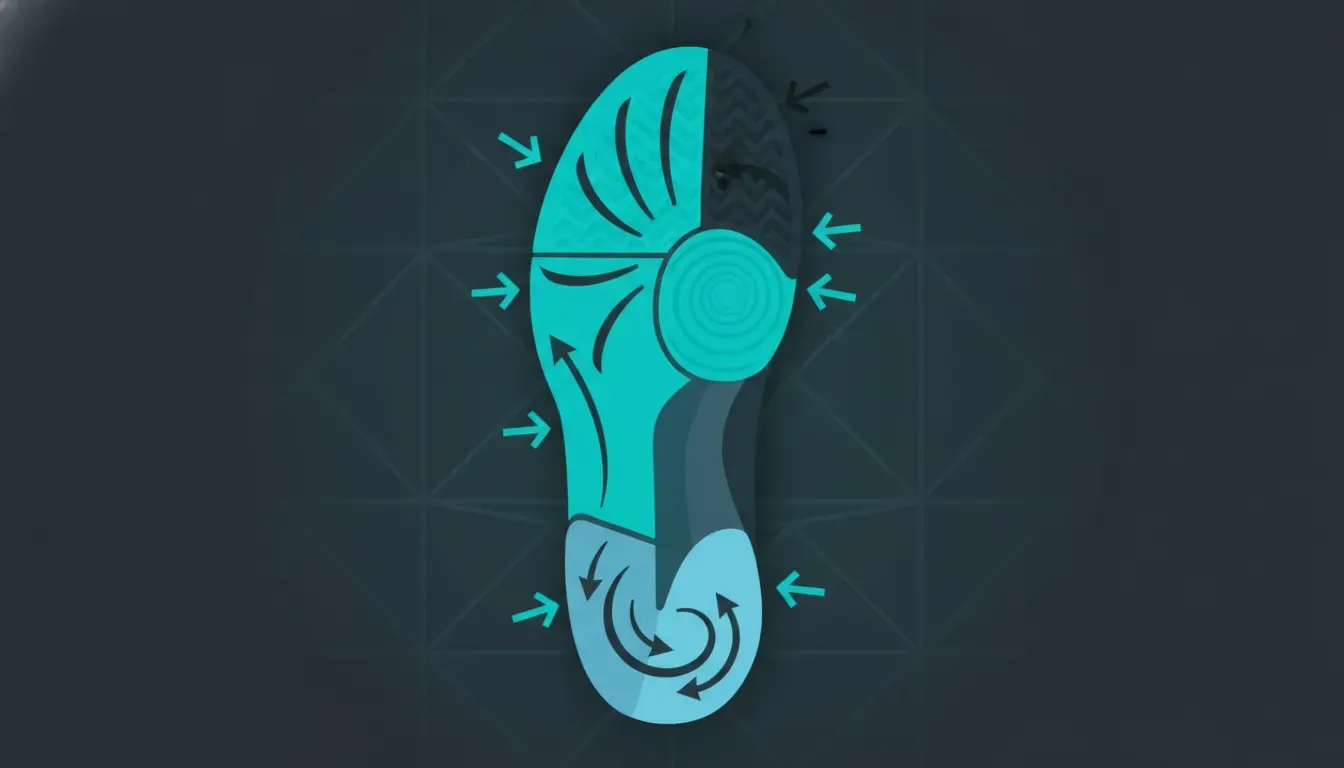
Outdoor wear map: inspect the shoe by zone
- Forefoot: friction during starts, stops and toe drag.
- Outer edge: abrasion and compression during lateral cuts.
- Heel: repeated braking and landing contact.
- Upper and seams: rubbing, stretching and separation that can affect containment.
What Makes Durable Outdoor Pickleball Sneakers Different?
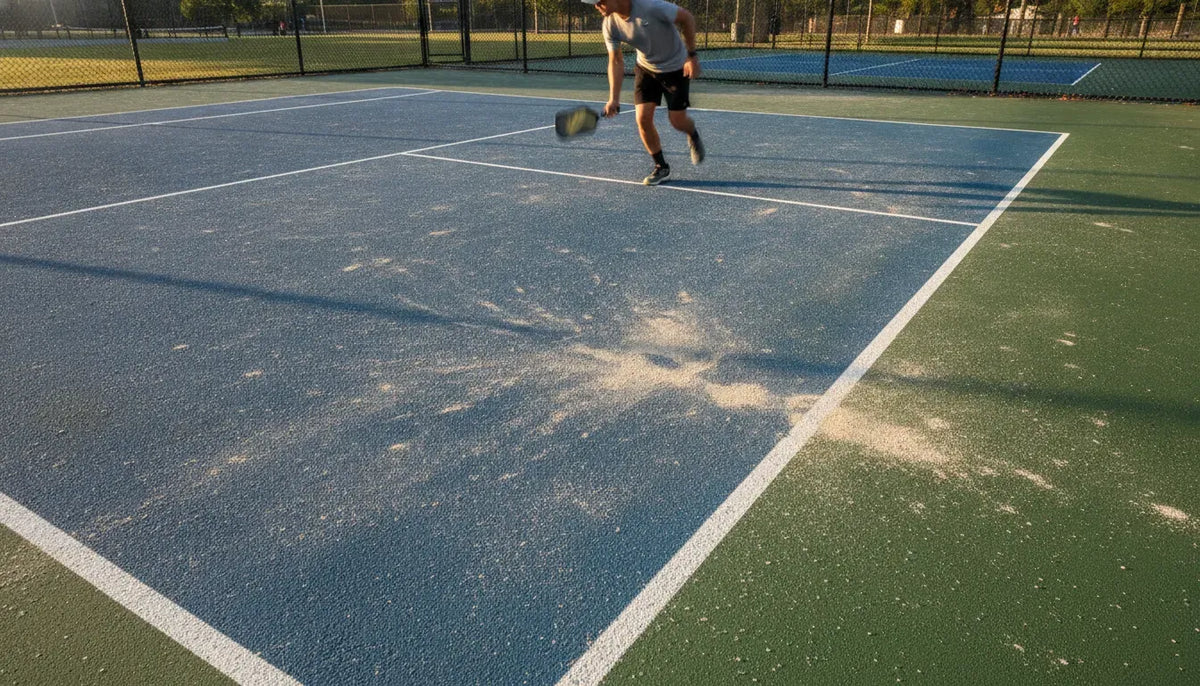
Outdoor pickleball is played on a range of hard surfaces, but the common demand is repeated contact with a relatively abrasive court. Each step loads the shoe as you accelerate, stop, pivot or recover toward the middle. The outsole is the part that touches the surface, yet outsole thickness alone cannot tell you how long it will remain useful.
Durability is a system. The rubber compound and tread layout affect the contact patch, while the midsole and chassis influence how force reaches the outsole; the upper helps keep the foot from shifting inside the shoe. A strong outsole paired with a loose fit may still let the foot slide during a cut. A supportive upper cannot compensate for rubber worn smooth at the points you rely on to brake.
Surface matters, but so do play habits. A player who slides into shots, drags a toe during recovery or favors one side can wear a shoe unevenly. Court texture, grit and how often you play add more variation. For this reason, durability is better assessed by examining your own shoes on a regular schedule than by relying on a single lifespan number.
It also helps to separate cosmetic wear from functional wear. A dusty outsole or light discoloration is not necessarily a problem. A visibly thinned area, a split at a flex point, exposed midsole material, loose upper panels or a shoe that no longer feels stable deserve closer attention.
How Does an Outdoor Court Wear Down a Pickleball Outsole?
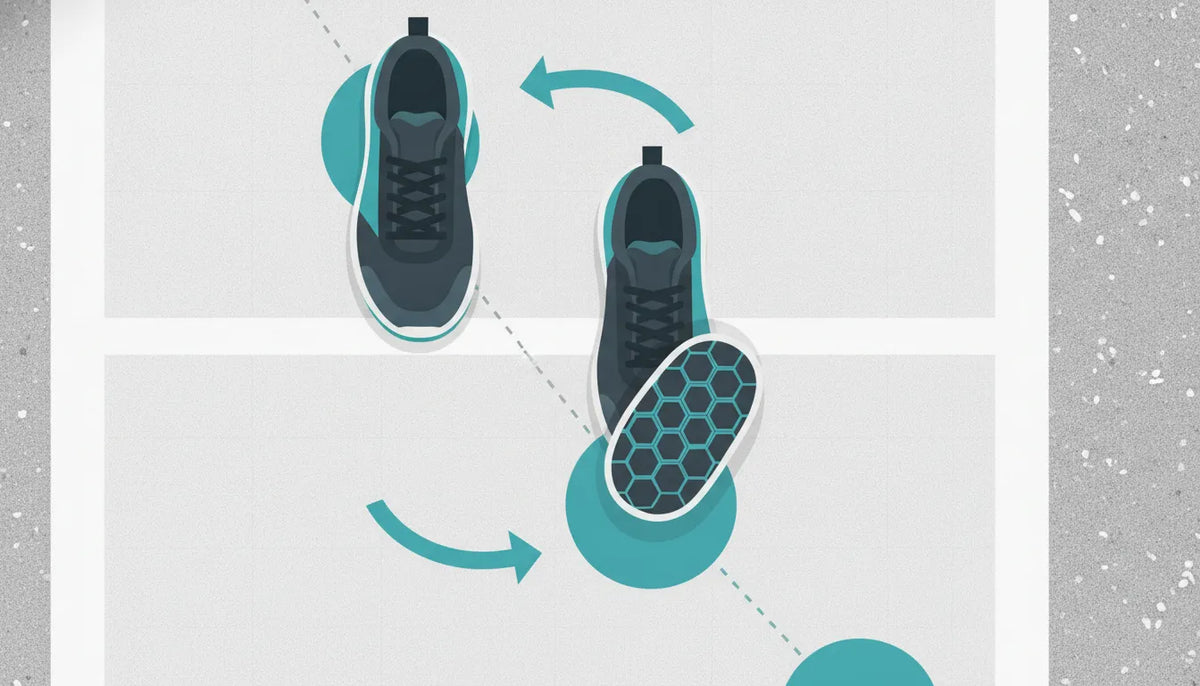
Outdoor court wear happens through repeated friction and loading. During a forward start, the forefoot pushes against the ground. During a hard stop, the heel or forefoot may absorb braking forces, depending on the player's foot strike. During a lateral cut, the outer edge of the shoe is loaded as the player changes direction. The same small areas can meet the court thousands of times over many sessions.
Look for these common signs:
- Smooth patches: tread detail is becoming less distinct where your shoe makes frequent contact.
- Uneven edge wear: one side of a shoe is wearing more quickly, which may reflect movement habits, fit or the court surface.
- Local thinning: the outsole is much thinner in one zone than elsewhere, especially if the area feels soft or shows another layer beneath.
- Splits or chunks missing: rubber has separated or broken away rather than simply becoming polished.
- Changed court feel: you notice inconsistent contact or reduced confidence while stopping and changing direction.
Do not infer that every smooth patch means the shoe has lost all traction. The shoe's condition, court cleanliness and movement all matter. Instead, compare both shoes and inspect the same zones every few sessions. A developing pattern is easier to interpret than a quick glance after one match.
Outsole thickness is only one part of the decision. Rubber formulation, tread geometry, the way the sole is bonded and the player's movement all influence use. Avoid judging a shoe by a deep-looking pattern alone. Tread depth does not tell you how the compound will behave on your particular court or how evenly the shoe will wear.
For a technical primer on how contact, rubber and tread interact in another sport, see our guide to the mechanics of grippy mountain bike shoes. The forces and surfaces differ, so the details should not be transferred directly to pickleball, but the general habit of evaluating the entire shoe-surface interface is useful.
Which Shoe Zones Wear Fastest During Lateral Play?
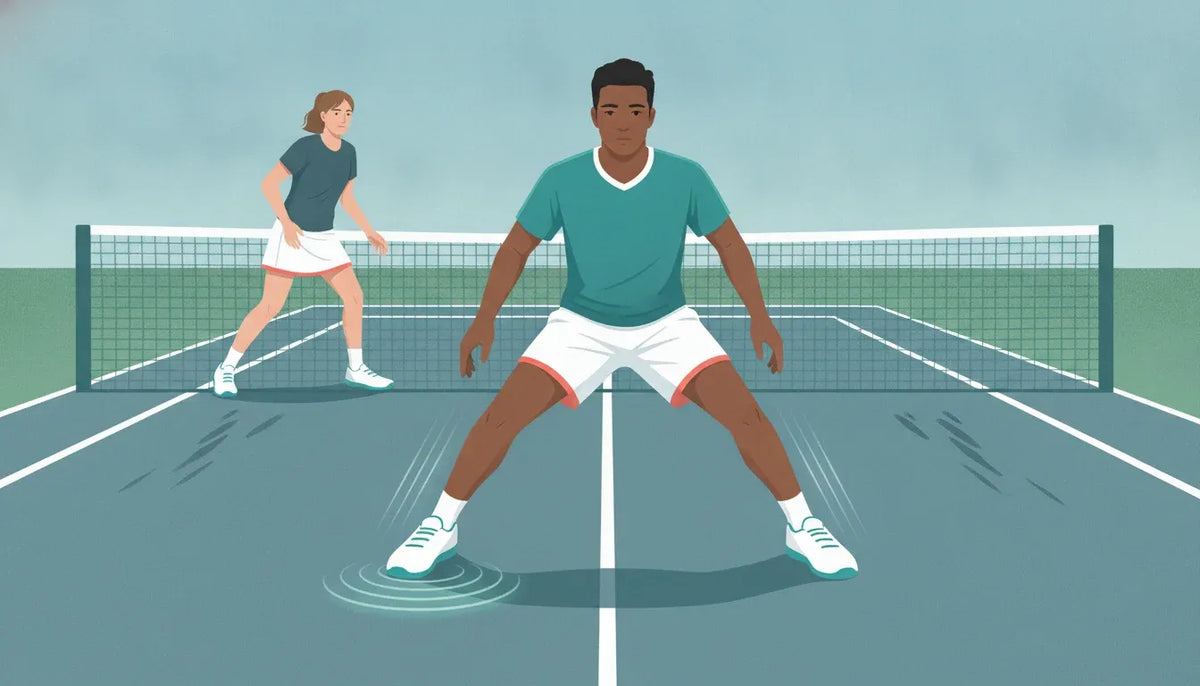
Pickleball includes short bursts, side steps and quick recoveries. Repeated lateral loading can concentrate wear at the shoe's outer edge and around the forefoot. That does not mean every player will wear the same zone: stance, foot placement, court position and movement strategy change the load pattern.
Forefoot and toe-drag zones
Some players brush or drag the toe when recovering, lunging or reaching for a low ball. Repeated contact can scuff the toe bumper, upper or outsole edge. A superficial mark may be cosmetic; a hole, split seam or exposed material is more serious because it can grow and compromise the shoe's structure.
Check the left and right toe areas separately. If one shoe has much more damage, consider whether your foot is catching during a particular movement or whether the shoe's length and fit allow excess motion. A shoe should not be so short that your toes are forced forward, nor so roomy that the foot slides around as you stop.
Outer forefoot and sidewall
During a lateral cut, the outer forefoot can meet the court while your body changes direction. Inspect the sole edge and the adjacent upper for polished rubber, tears, a lifted bond or a panel that has begun to stretch. A small mark does not prove the shoe is unsafe, but a shoe that rolls, shifts or feels less controlled deserves a closer fit and condition check.
Lateral stability is not a single feature that can be judged by looking at a shoe. Fit, platform geometry, upper containment and the way the shoe flexes all contribute to how it feels. Our pickleball shoe lateral-stability guide explains why side-to-side movement calls for more than a soft, comfortable upper.
Heel and midsole
The heel can show wear from stopping, landing or dragging a foot during recovery. Inspect it for uneven compression, separation and a change in how the shoe sits on a flat surface. Cushioning can also feel different with use, but a feeling of reduced comfort alone is not a precise measure of the midsole's condition. Compare how both shoes feel, and pay attention to a persistent change in stability or pressure.
Do not try to correct one-sided wear by assuming your gait needs a particular correction. Uneven wear can have several causes, including fit and movement patterns. If you have ongoing pain or a sudden change in how you move, consult a qualified health professional rather than relying on shoe appearance to diagnose it.
How Should You Judge Upper Wear and Foot Containment?
The upper keeps the foot in place as the shoe changes direction. Outdoor play can abrade the sides and toe, while repeated flexing stresses seams and bonded panels. The key question is not whether the upper looks new; it is whether it still holds the foot securely without a tear, loose panel or uncomfortable pressure point.
Inspect the following areas:
- Toe bumper and forefoot overlay: check for worn-through material, cracks or separation from the sole.
- Outer side panels: look for fraying, stretched material or a tear where the foot pushes against the shoe.
- Seams and bonding: check for loose threads, gaps or panels lifting during flex.
- Laces and eyelets: make sure the closure still holds tension without a broken eyelet or damaged lace.
- Heel counter area: check that the back of the shoe has not collapsed or become uncomfortable.
Test the shoe while standing and walking on a clean, safe surface. Lace it as you normally would, then make gentle side steps and controlled stops. Notice whether your foot moves independently inside the shoe, whether the upper presses painfully across the forefoot, and whether the shoe feels different from its partner. Do not perform aggressive cuts in a damaged shoe to "test" it.
Upper reinforcement is useful only when it supports the locations that experience contact and load without creating a poor fit. A heavy overlay is not automatically more durable for every foot, and a flexible upper is not automatically weak. Look at the construction, check the fit and review your own wear points together.
Does Cushioning Wear Out Before the Outsole?
It can be difficult to identify cushioning wear from the outside. An outsole may still have visible tread while the shoe feels less supportive, or the upper may fail before the midsole changes noticeably. There is no single visual marker that reliably predicts how much useful cushioning remains for every player and shoe.
Use repeatable observations rather than trying to estimate a precise remaining lifespan. Compare the feel of the pair after resting, check for permanent creases or asymmetry, and note whether comfort or stability has changed over several sessions. If the shoe feels unstable, is visibly damaged or causes a new pressure point, stop treating the outsole's remaining tread as the only criterion.
Rotation can help you notice differences, but it does not repair a worn shoe. If you alternate pairs, keep a simple record of when each pair was used and what you observe. That makes your own experience more useful than a calendar estimate borrowed from another player with a different court, body size, movement pattern and playing schedule.
What Should You Compare When Choosing Durable Outdoor Pickleball Sneakers?
Use our product description and, when possible, a direct inspection to answer practical questions. Do not assume a shoe is outdoor-ready because it is labeled a court shoe. Ask about the intended surface, sole material and construction, fit, support and return terms. If a product page does not state a technical detail, treat it as unknown rather than filling in the gap with a guess.
A useful way to assess a new pair is to establish a baseline before the first session. Check that both shoes sit evenly, the outsole is free of defects, the upper and seams are intact, and your heel feels secure when laced. Wear them for a short, controlled session first, then recheck the same points. This is not a laboratory test, but it helps you tell normal surface scuffing from a developing problem.
During that first session, notice comfort and fit without trying to judge long-term durability from one outing. Does your foot stay in place when you make a gentle side step? Does the shoe pinch, rub or allow the heel to lift? Do both shoes feel alike? If an issue appears, stop and review the fit or contact the maker while the shoe is still new and its return or exchange options may be available.
When you compare two models, keep the comparison specific to your needs. A player who repeatedly scuffs the toe should pay attention to toe coverage and fit. A player who feels unstable on side steps should examine containment and platform support; someone playing on rough courts should ask about the manufacturer's intended surface. These observations do not predict an exact number of sessions, but they make a product comparison more useful than relying on a generic durability claim.
| Feature to assess | What to check | Why it matters outdoors |
|---|---|---|
| Outsole | Material information, tread layout, coverage and bonding | It is the direct contact layer and takes repeated court abrasion. |
| Side support | Whether the upper and platform hold your foot during controlled lateral steps | Side-to-side movement can expose fit or containment problems. |
| Toe protection | Coverage and reinforcement where your own shoes tend to scuff | Dragging or brushing the toe can wear the front edge. |
| Fit and closure | Secure heel, adequate toe room and a closure that stays tensioned | Excess movement inside the shoe can affect comfort and control. |
| Care and replacement support | Cleaning instructions, return window and workmanship coverage | Clear policies help you assess fit and address product issues. |
Different shoes may prioritize different tradeoffs. A firmer platform may feel more stable to one player, while another may want a softer step-in feel. Do not assume that a feature label proves how the shoe will behave for you; fit and movement on your foot matter. If you need a broader selection and sizing overview, our outdoor court shoe selection guide covers those buying questions from a wider angle.
Product roundups can suggest what shoppers are comparing, but they are not controlled durability tests. For example, one pickleball-shoe roundup discusses outsole durability, while an outdoor shoe roundup focuses on grip and hard-court use. Treat those as shopping prompts, not proof that one shoe will last longer for your playing style.
When considering our Lateral Control Pro Pickleball Shoe, review the current product details and sizing information rather than assuming a particular material or wear life that has not been verified here. We designed the shoe around pickleball's lateral-stability needs; the fit you experience and how you use it remain part of the decision.
How Can You Make Outdoor Pickleball Shoes Last Longer?
Basic care cannot stop normal wear, but it can help you avoid unnecessary damage and notice problems earlier. Use a routine that takes less than a minute after play:
- Remove loose grit: brush or wipe the outsole after play, using a method appropriate for the shoe's materials.
- Let the shoes dry: air them out at room temperature; avoid direct high heat, which can damage some materials or adhesives.
- Keep them for court use: walking around outdoors in the same pair adds extra abrasion and debris before a session even starts.
- Store them clean and dry: do not leave damp shoes closed in a bag for extended periods.
- Inspect the same zones: compare both outsoles and uppers, and note any new smooth patch, split or separation.
Follow the manufacturer's care directions first. Avoid solvents, harsh cleaners, wire brushes or improvised treatments unless the shoe maker approves them; these can affect rubber, fabric, coatings or bonds. Cleaning the sole may remove dirt, but it does not restore rubber that has worn away.
Keep court shoes off rough pavement when practical. Grit can get pressed into the tread, and unnecessary walking adds contact that is separate from playing. If you travel to a court in your shoes, brush away debris before storing them so grit does not rub against the upper or other equipment.
Rotating pairs may allow each pair to dry between sessions and help you compare wear. It is not a guaranteed way to extend total shoe life; it is a practical way to manage use and notice changes. If you do rotate, record usage or keep the pairs in separate bags so you know which one has seen more court time.
When Should You Retire a Pair?
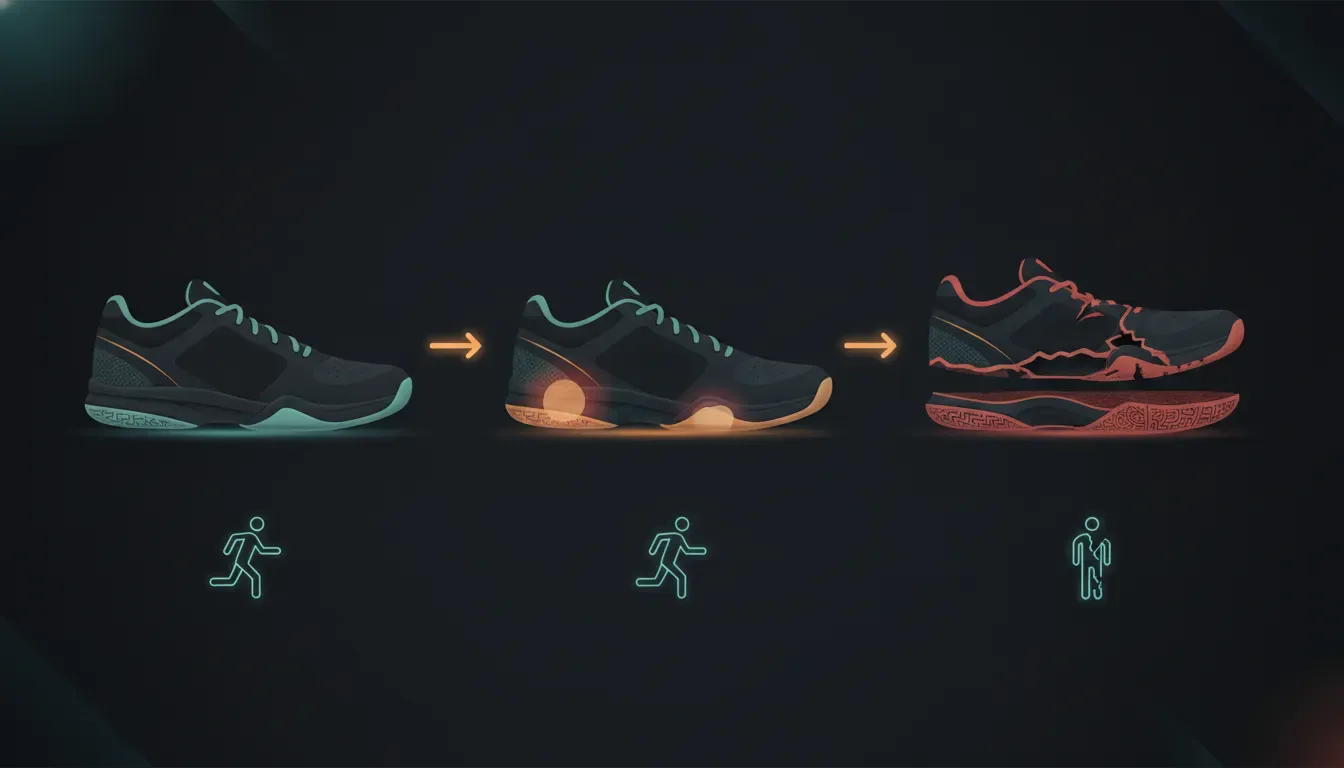
Retire shoes when the damage or loss of function makes them unreliable for your movement. There is no universal wear threshold that fits every outsole, player or court. Use a combination of inspection and feel rather than waiting for a hole in the sole.
- Stop using the pair for court play if: the outsole is separating, a structural tear is growing, the midsole is exposed or the shoe no longer stays secure on your foot.
- Assess promptly if: you feel a consistent change in stability, a new pressure point or one shoe behaving differently from the other.
- Do not rely only on: age, a single scuff, remaining tread in one spot or a fixed number of playing hours.
Damage is also a reason to review fit and movement, not to blame your body or the shoe automatically. A shoe can wear unevenly because of repeated sport-specific contact, while a poor fit can contribute to unwanted movement inside the shoe. If you are uncertain about whether the shoe is still suitable. Pause high-intensity play in it and ask the manufacturer about the damage and its care or warranty process.
Our frequently asked questions explain current fit and product-support information. For a sizing concern, use our contact page to ask directly; for our approach to footwear design, see our Tech Stack.
Test drive the Lateral Control Pro risk-free
Frequently Asked Questions
Are outdoor pickleball sneakers different from indoor court shoes?
They may be designed for different surface demands, but the label alone does not tell you exactly how a shoe will wear. Check the manufacturer's intended use and outsole information, then consider the court you play on, your fit and your movement. Avoid assuming an indoor shoe is suitable for an abrasive outdoor surface without guidance from its maker.
How can I tell if my pickleball shoe outsole is worn out?
Look for unusually smooth or thin zones, missing rubber, separation and a consistent change in how the shoe feels while stopping or changing direction. Compare both shoes and monitor the same areas over time. A little surface scuffing is not automatically a reason to replace a pair, but structural damage or reduced stability deserves attention.
Does a thicker outsole always last longer outdoors?
No. Thickness is one consideration, but material, tread design, bonding, fit, movement and court conditions also matter. A thick outsole can still wear unevenly or fail at a bond, while a thinner-looking outsole may perform differently depending on its construction. Look for specific product information and judge the pair by its condition in use.
Can I restore grip by cleaning the outsole?
Cleaning can remove dust or loose debris that is covering the surface, but it cannot replace rubber that has worn away or fix a split sole. Use the maker's recommended cleaning method, then inspect the outsole again. Do not apply unapproved substances that could change the rubber or make the court surface unsafe.
Should I keep playing if only one shoe is badly worn?
Not without checking why the shoes differ and whether the worn shoe still holds and supports your foot. One-sided wear can result from repeated movement patterns, but a tear, separation or unstable feel can make that shoe unsuitable even if its partner looks fine. When in doubt, stop using the damaged pair for hard play and ask the manufacturer about the issue.
For outdoor play, the most useful durability test is your own repeatable inspection: track where the shoe wears. Keep it clean, and respond when the outsole, upper or feel changes in a way that affects secure movement.
Ready to put your outdoor court shoes to the test?
Our Lateral Control Pro is built around the lateral stability, secure fit, and wide toe box that outdoor players evaluate during hard cuts and repeated recovery steps. If the fit is not right, our verified support includes free returns, free size exchanges, and a 30-day return window; review the current product details before your first session.
Test drive the Lateral Control Pro risk-free
Sources & Scientific Citations
- Best Pickleball Shoes 2026: Top Picks for Men & Women. Product-roundup context on shoe outsole durability.
- 9 Best Outdoor Pickleball Shoes in 2026 for Grip & Hard Courts. Outdoor-shoe roundup context on grip and hard-court use.
About the Author
The Anamoly Press Team brings you in-depth gear coverage rooted in real-world testing and engineering insight. Every article is reviewed by our Head of R&D to ensure the technical claims match the science behind our designs.

Leave a comment
This site is protected by hCaptcha and the hCaptcha Privacy Policy and Terms of Service apply.