
By Anamoly Press Team • September 16, 2026
💡 Technical Review & Accuracy Check by Christopher Armstrong, Founder & Head of R&D
Our team researches and writes the gear guides you love, but every scientific claim and compound specification is personally vetted by our Head of R&D to ensure the technical explanation matches the materials and construction behind the design.
📌 Short Answer
The strongest muddy-trail MTB shoe is built around a wet-grip compound, open enough tread to release contamination, and a stable flat-pedal contact zone. Look for rubber that preserves friction when wet, lugs that do not close into a mud pad, and a fit that keeps the foot planted during pedaling, dabs, and hike-a-bike sections.
Muddy trails expose the difference between a shoe that merely looks rugged and one that keeps working when the contact patch is contaminated. The best MTB shoes for muddy trails combine a wet-capable rubber compound with tread geometry that releases mud, a stable pedal interface, and a fit that stays controlled when the rider has to dab or hike. The decision is not simply "how deep are the lugs?"; it is how compound, spacing, upper construction, and walkability work together.
For flat-pedal riders, that system has two jobs at once: maintain predictable contact with metal pedal pins while riding, then provide usable purchase on soft ground when the bike has to be pushed. A tall lug can help off the bike yet feel vague on the pedal; a shallow skate-style sole can feel smooth on a dry platform yet pack with mud when the trail turns to slop.
Test drive the Pin-Lock MTB risk-free
What makes a mountain bike shoe work in mud?
Mud creates two different traction problems, so a shoe needs two corresponding solutions. First, soft soil can fill the spaces between tread blocks; once those channels close, the outsole stops behaving like separate contact points and starts behaving like a smooth layer of mud. Second, water and fine sediment can reduce friction at the rubber-to-ground interface even when the tread remains visible.
That is why outsole performance should be evaluated as a system:
- Compound: The rubber must stay compliant enough to conform to irregularities while preserving useful shear resistance in wet conditions.
- Geometry: The tread needs channels and edges that can release water and mud instead of trapping a continuous film beneath the foot.
- Platform: The sole must remain stable over pedal pins, where lateral movement and shear loads are different from a walking stride.
- Upper: The construction should limit water and grit entry without pretending that a low-cut cycling shoe is a fully sealed boot.
Research on muddy-surface footwear found that tread positioned in high-pressure forefoot areas and toward the front of the outsole can improve grip on clay-like surfaces.[1] Separate wet-traction research found that tread gaps can matter more than tread area when fluid is present; wider gaps improved fluid flow and wet traction in the tested outsole designs.[2] Those studies do not turn one dimension into a universal shoe ranking, but they explain the design logic: mud performance depends on where the tread carries load and whether the spaces remain functional under contamination.
1. Start with lug geometry, not lug height
Deep tread is easy to advertise because it is easy to see; spacing, direction, and contact-zone placement are more useful questions. A muddy-trail outsole should give contaminated material a path to move away from the loaded surface, while still presenting enough edge and rubber to resist shear when the rider leans into a climb or brakes during a dab.
Open channels help, but "open" is not a magic number
Very tight spacing can close quickly when clay-like mud is wet and cohesive. Very sparse blocks can reduce the amount of rubber supporting a pedal pin or make the shoe feel imprecise on hard rock. The useful middle ground depends on the surface: a shoe intended for soft, sticky soil needs more release capacity than one tuned only for hardpack.
Look for a zonal pattern rather than a uniform field of decorative blocks. A denser center or forefoot contact zone can support pedal-pin engagement, while more separated heel and toe zones can provide edges for walking. The pattern should also avoid a flat, uninterrupted "skate" surface; shallow, closely packed tread tends to smear contamination across the contact area instead of releasing it.
What the Pin-Lock tread is designed to do
The Pin-Lock MTB Shoe uses a Diamondstok tread pattern and a DualTraction layout: the forefoot is built around a dense grid for pedal contact, while the heel and toe zones use more rugged spacing for off-bike traction. That division matters for muddy rides because it recognizes that pedal grip and walking grip are related, not identical.
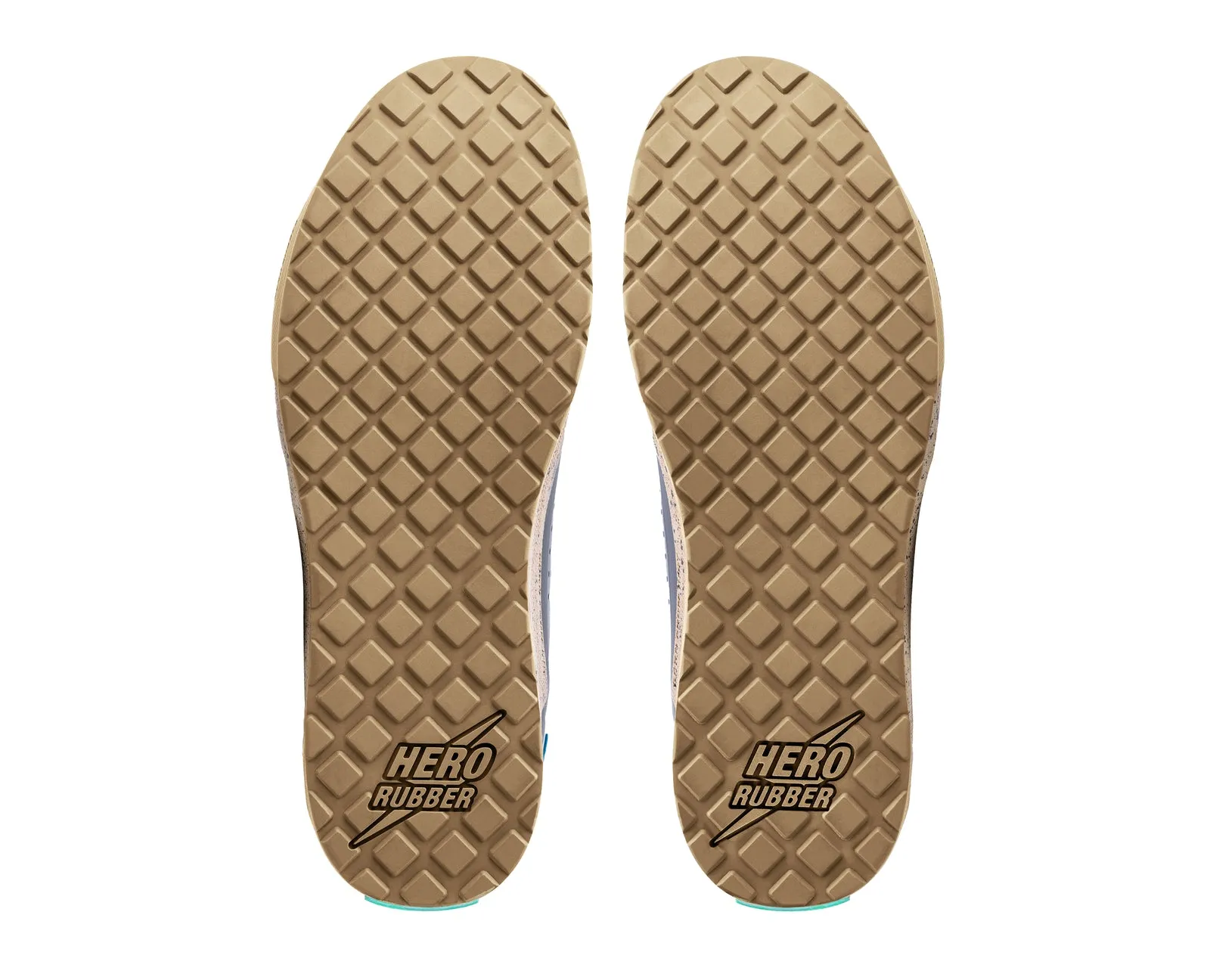
The photographed outsole shows the square block geometry clearly: a broad, stable contact field rather than a thin casual sole. It is not evidence that every mud condition will clear itself; mud depth, soil chemistry, temperature, and riding technique still matter. It is evidence of a deliberate compromise between a pin-friendly center and a walkable perimeter.
2. Choose rubber that stays useful when wet
Tread creates the contact architecture; compound determines how effectively the rubber uses it. A soft-feeling sole is not automatically a good wet sole, and a durometer number by itself does not describe adhesion, hysteresis, rebound, abrasion resistance, or behavior under pedal-pin shear.
When moisture enters the interface, the compound must continue to deform into small surface features without becoming unstable under load. That is the practical distinction between "sticky in a showroom" and predictable on a wet trail. The wet-weather rubber guide explains the underlying interface in more depth; this article keeps the focus on what to look for when selecting a muddy-trail shoe.
Hero Rubber™ and the MTB-G™ compound platform
The Pin-Lock MTB Shoe uses Hero Rubber™, the Anamoly Labs high-friction MTB-G™ compound. Product specifications describe a formulation developed over two and a half years of testing, with high friction in dry conditions, a claimed increase in stickiness when wet, low rebound, and a focus on durability. That combination is relevant to mud because a tread pattern cannot solve a wet-interface problem if the rubber loses useful friction when water and sediment arrive.
The right way to read a wet-grip claim is as a compound behavior claim, not a promise that the shoe cannot slip. A muddy root, polished rock, steep off-camber line, or pedal covered in clay can exceed any outsole's available traction. The engineering advantage is a more predictable contact response within those limits; the rider still needs line choice, pressure control, and a clean pedal surface.
🔬 Key Technical Insight
Mud performance is a contact-management problem: the tread has to keep the interface open while the compound keeps useful friction under moisture. Adding more lug height without preserving release and wet adhesion can create a shoe that looks aggressive but still slides once the channels pack.
3. Check the pedal interface separately from walking traction
A shoe can be excellent for hike-a-bike and still be frustrating on flat pedals. Walking traction rewards edges that bite into soft ground; pedal traction rewards stable contact around pins, controlled deformation, and a sole that does not fold or skate when the foot shifts laterally.
For a flat-pedal muddy-trail shoe, inspect three areas:
- Pin contact: The pedal zone should give steel pins enough rubber and structured surface to engage without forcing the rider onto a narrow ridge.
- Shear control: The compound and tread should resist sideways drift when the rider unweights, repositions, or loads the outside of the foot.
- Midsole support: The shoe should damp trail chatter without becoming so soft that pedal feedback disappears.
Pin-Lock pairs Hero Rubber™ with a high-density EVA midsole and an anti-shock, anti-vibration silicone insole pad. Those features are intended to manage repeated pedal strikes and rough-trail impact; they should not be confused with a rigid clipless sole or with a guarantee of zero foot movement. The goal is a stable flat-pedal platform that still feels usable when the ride includes walking.
For a broader explanation of compound, deformation, and pedal-pin mechanics, use the trail-traction science guide as the companion read. This muddy-trail guide adds the selection boundary: prioritize a sole that can transition from a contaminated pedal to soft ground without relying on one exaggerated feature.
4. Treat waterproofing and drainage as different questions
"Waterproof" and "draining" describe opposite strategies. Waterproof construction tries to limit entry; drainage accepts that water may enter and provides a fast exit. A low-cut MTB shoe can reduce spray and mud ingress while still allowing water over the collar during a deep crossing, so riders should assess the whole opening, tongue, upper, seams, and ventilation pattern rather than reading one label in isolation.
Pin-Lock product information describes waterproof construction, stitchless thermo-welded construction, and laser ventilation intended to let air in while keeping water, dirt, and debris out. Thermo-welding also avoids the needle holes created by conventional stitched construction. Those details support wet-weather resistance; they do not establish that the shoe has dedicated drainage ports or that the collar is sealed like a boot.
What to ask before a muddy ride
- Upper protection: Are the toe, sidewalls, and seams built to resist abrasion from grit and brush?
- Entry points: How much water can enter over the collar or through the tongue during a puddle or creek crossing?
- Drying routine: Can the insole be removed and the shoe be dried without high heat that damages adhesives or materials?
- Ventilation: Does the shoe manage heat and sweat without placing exposed perforations in the most mud-splashed zones?
That distinction is why this article does not promise dry feet in every crossing. For a more general rain, mud, and temperature framework, see the all-weather MTB shoe guide. The selection lesson is simple: upper resistance helps, but a shoe should be judged against the water depth and exposure it will actually see.
5. Fit changes how a muddy shoe performs
Mud magnifies small fit problems. If the heel lifts, the rider loses precision when stepping onto a slippery rock; if the forefoot is compressed, the toes cannot help stabilize the foot during a dab; if the shoe is too loose, pedal-pin engagement becomes less predictable as the foot shifts inside the upper.
Prioritize a secure heel and midfoot with enough toe room for the forefoot to spread. The Pin-Lock 2.0 Wide Fit is mechanically heat-widened before shipping and is designed to run true to size for most riders who need a wider or barefoot-style fit. The 1.0 Standard Fit tends to run about half a size large, so the two versions should not be sized by the same rule.
A wide toe box does not mean a sloppy shoe. The useful fit is one that allows the toes to work while keeping the heel and midfoot stable. If you ride in thick wet-weather socks, account for their volume before deciding between fits; do not create extra length to solve a width problem, because excess length can reduce control on the pedal.
6. Walkability matters when mud stops the bike
Muddy trails often turn a ride into a mixed movement problem: pedal through the firm section, dab through a slick corner, then push or carry the bike up a saturated climb. Shoes made only for a smooth pedal interface can become awkward on soft ground, roots, and rock steps; shoes made only for walking can feel vague when the rider returns to the pedals.
Look for traction in the heel and toe zones, a forefoot that can roll through a walking stride, and enough underfoot protection for repeated contact with rocks. The Pin-Lock design uses the DualTraction Pedal + Hike Grid, a reinforced toe cap, and a high-density EVA midsole. The wider fit can also help riders who feel unstable when a narrow cycling shoe forces the toes into a point.
Walkability is not the same as trail-running performance. A flat-pedal MTB shoe still has to manage pedal-pin contact and cycling-specific loads; that is why the best selection is a balanced one rather than the shoe with the deepest-looking lugs.
A concise muddy-trail shoe comparison
| Decision factor | What to look for | Pin-Lock MTB Shoe evidence and limit |
|---|---|---|
| Wet compound | Friction that remains predictable under moisture, with controlled deformation and durability. | Hero Rubber™ MTB-G™ is specified for high friction and better-when-wet behavior; the rider still must manage terrain and load. |
| Mud release | Functional gaps and zonal tread that resist packing. | Diamondstok and DualTraction zones separate pedal contact from hiking traction; no shoe clears every clay condition. |
| Pedal interface | Stable center contact around pins, controlled shear, and supportive midsole. | Dense forefoot grid, Hero Rubber™, high-density EVA, and anti-shock insole pad. |
| Water management | Upper resistance, protected seams, ventilation, and an honest plan for collar entry. | Thermo-welded construction, waterproof construction, and laser ventilation are documented; dedicated drainage ports are not documented. |
| Fit | Secure heel and midfoot with a wide toe box and enough toe room. | 2.0 Wide Fit is heat-widened and generally true to size; 1.0 Standard Fit generally runs about half a size large. |
| Walkability | Distinct heel and toe traction with a forefoot that can roll without losing structure. | DualTraction Pedal + Hike Grid and reinforced toe cap support the pedal-to-trail transition. |
How to choose for your actual muddy-trail use
Use the trail surface and ride format to set priorities:
- Sticky clay: Favor open release paths and a compound that maintains wet friction; inspect the outsole after a short test section because packed channels are a real-time failure signal.
- Wet roots and rock: Prioritize wet compound behavior, stable pedal contact, and controlled foot placement; tall lugs alone do not create grip on a slick, hard surface.
- Long hike-a-bike: Give more weight to heel and toe geometry, toe protection, and walking comfort without sacrificing the center pedal zone.
- Cold, rainy rides: Consider upper resistance, sock volume, ventilation, and drying time together; water management is a system, not a single waterproof label.
- Wide or barefoot-style feet: Choose toe room first, then secure the heel and midfoot; do not size up in length when the actual problem is forefoot width.
In every case, clean the sole when mud begins to fill the channels. Tread geometry can only release contamination while its gaps remain open; a quick stop to scrape the outsole may restore more control than another claimed millimeter of lug height.
Test drive the Pin-Lock MTB risk-free
FAQ: MTB shoes for muddy trails
Are deep lugs enough for muddy mountain bike trails?
No. Deep lugs can help a shoe penetrate soft ground, but mud can pack between closely spaced blocks and reduce the usable contact edges. Wet-compound behavior, lug spacing, forefoot placement, and pedal-interface stability matter together.
Should muddy-trail MTB shoes have a soft rubber compound?
Not automatically. The compound needs enough compliance to conform to the trail and pedal pins, but it also needs support, rebound control, and abrasion resistance. A softer feel is only useful when the rubber stays predictable under the loads and contamination you actually ride.
Are waterproof MTB shoes better than shoes that drain?
It depends on exposure. Waterproof construction can reduce rain and mud entry; drainage can be useful when water overtops the collar. A low-cut MTB shoe is not a sealed boot, so match the construction to puddles, crossings, rainfall, and drying conditions rather than treating one label as universal proof.
What fit is best for muddy flat-pedal riding?
Use a secure heel and midfoot with enough toe room for the forefoot to spread. The Pin-Lock 2.0 Wide Fit is designed for wider or barefoot-style feet and generally runs true to size; the 1.0 Standard Fit generally runs about half a size large. Check the current product sizing guidance before ordering.
Can a flat-pedal MTB shoe also work for hike-a-bike?
Yes, when the outsole uses distinct pedal and walking zones and the shoe retains enough forefoot flexibility for gait. The tradeoff is deliberate: a shoe optimized only for walking may feel vague on pedal pins, while a shoe optimized only for pedaling may be awkward on muddy climbs.
Test drive the Pin-Lock MTB risk-free
The Pin-Lock MTB Shoe is supported by Anamoly Labs' Quality Guarantee covering workmanship defects, free returns, and free size exchanges; USA customers have a 30-day return window. Confirm the current terms on the product page before ordering.
Sources & Scientific Citations
- Inomata, T. and Nishiwaki, T. "Footwear grip designing for muddy surface," Proceedings of the Symposium on Sports and Human Dynamics, 2012. https://doi.org/10.1299/jsmeshd.2012.220
- Gupta, S., Chatterjee, S., and Chanda, A. "Influence of Vertically Treaded Outsoles on Interfacial Fluid Pressure, Mass Flow Rate, and Shoe-Floor Traction during Slips," Fluids, 2023. https://doi.org/10.3390/fluids8030082
About the Author
The Anamoly Press Team brings you in-depth gear coverage rooted in real-world testing and engineering insight. Every article is reviewed by our Head of R&D to ensure the technical claims match the science behind our designs.


Leave a comment
This site is protected by hCaptcha and the hCaptcha Privacy Policy and Terms of Service apply.