
By Anamoly Press Team • October 20, 2026
💡 Technical Review & Accuracy Check by Christopher Armstrong, Founder & Head of R&D
Our team researches and writes the gear guides you love, but every scientific claim and compound specification is personally vetted by our lead engineer to ensure absolute accuracy.
📌 Short Answer
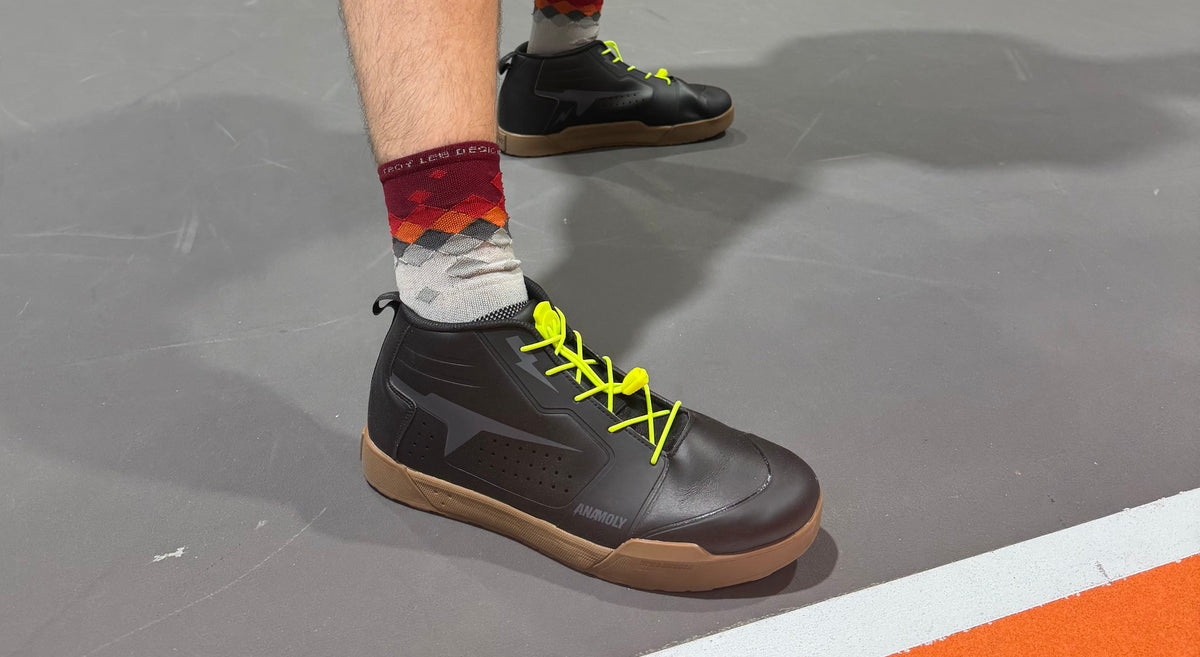
Outdoor pickleball shoes should combine an abrasion-ready outsole, predictable court grip, lateral structure, a secure heel, and useful toe room. Hard courts add grit, dust, and moisture to each plant and recovery step. A purpose-built shoe manages that changing interface without squeezing the forefoot or letting the foot move inside the upper.
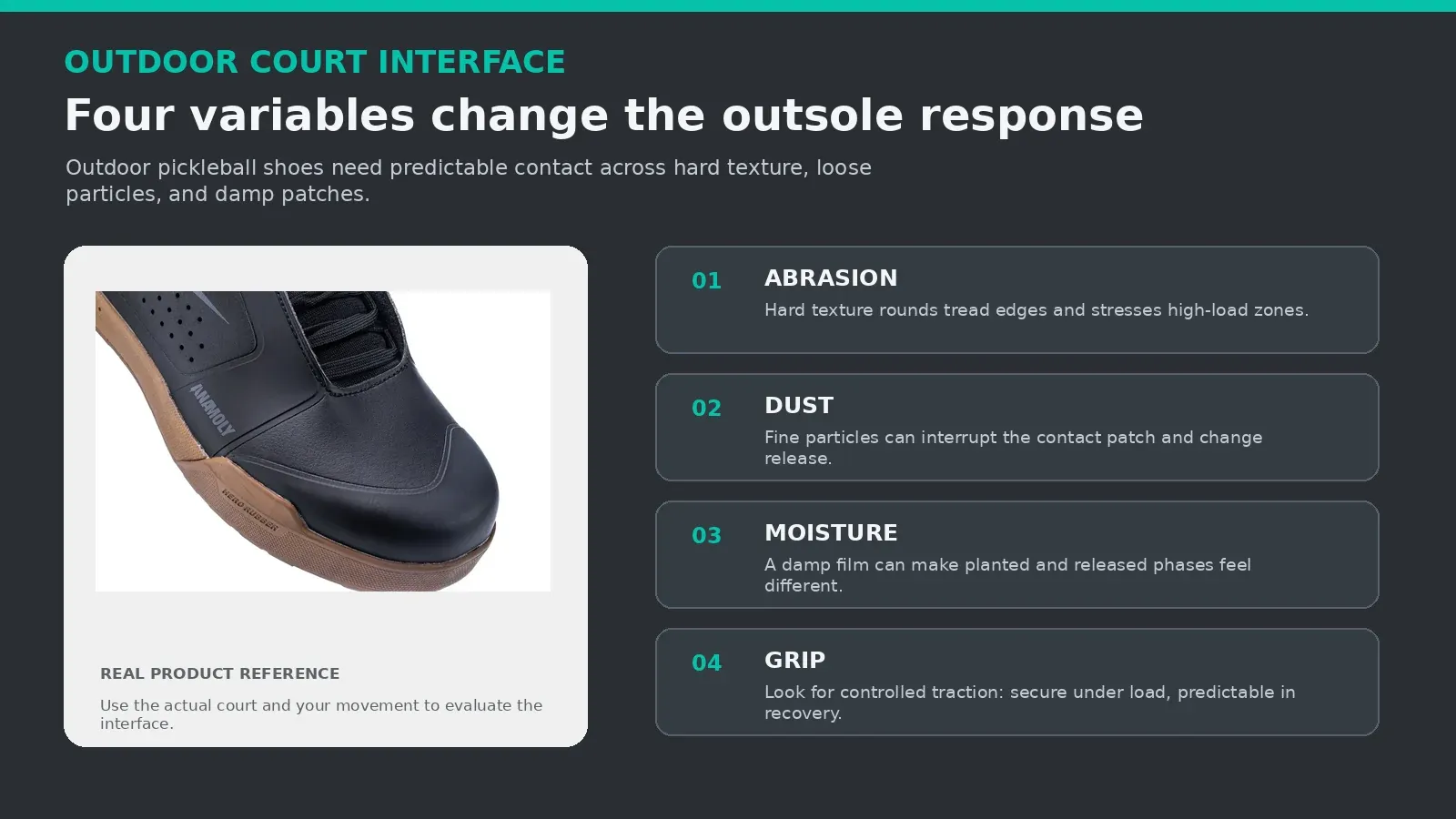
Outdoor pickleball shoes have to solve a more demanding interface than a casual sneaker. Asphalt and concrete are hard, textured, and abrasive; dust can sit between the outsole and court; moisture can change how the rubber releases. Pickleball then adds repeated split steps, lateral cuts, lunges, braking, and recovery. The result is a footwear problem with four connected variables: traction, durability, lateral control, and fit.
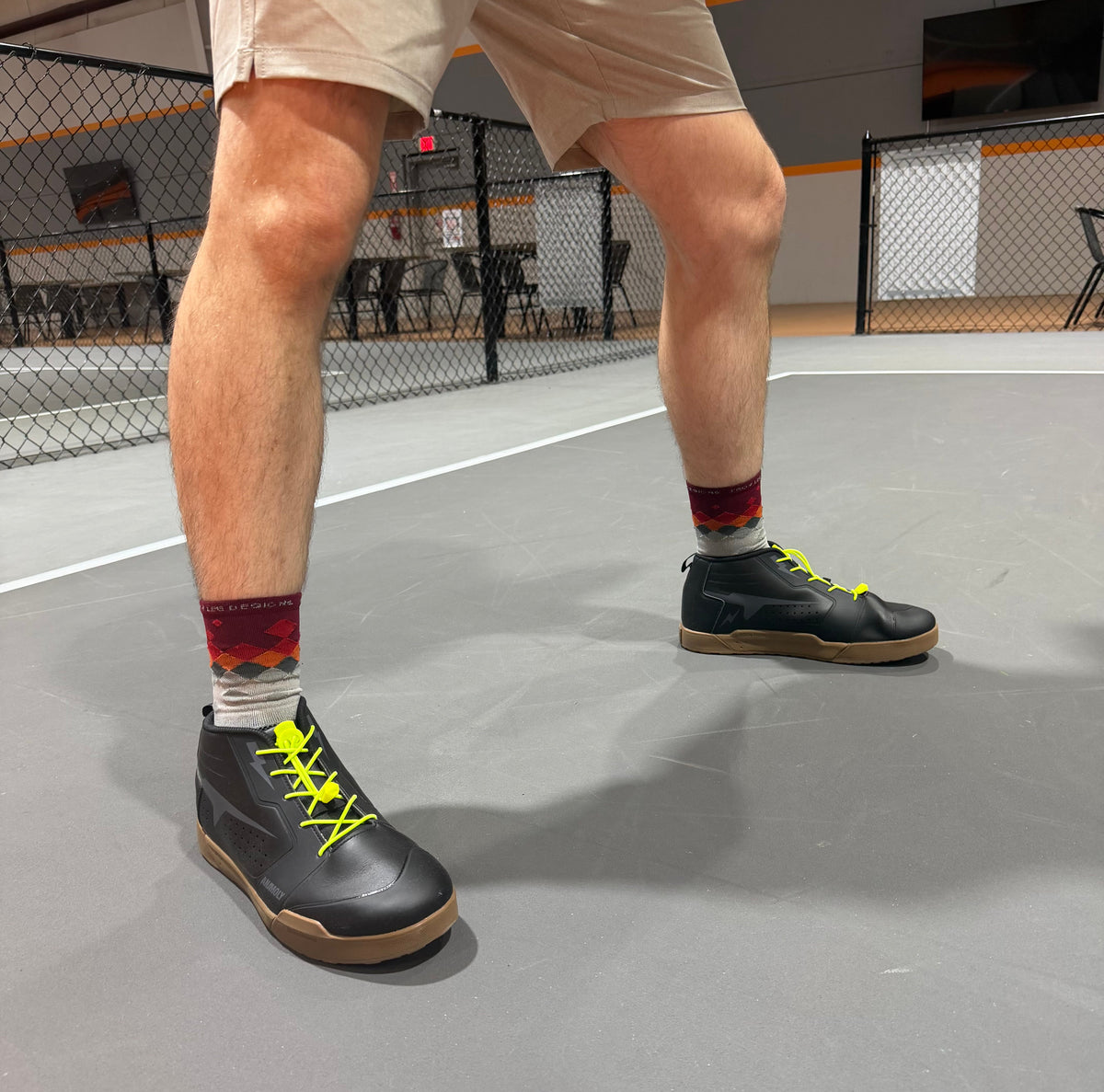
Explore the Lateral Control Pro for outdoor court stability
The right choice is not simply the shoe with the softest foam or the strongest marketing language. It is the shoe whose compound, outsole geometry, upper, chassis, and fit work together under the movements you actually make. This guide explains what to inspect before buying, then shows how the Lateral Control Pro approaches those demands.
Why outdoor courts change the shoe design brief
Outdoor courts expose footwear to a rougher, less controlled surface than a clean indoor court. Courts built over asphalt or concrete give the outsole a textured contact patch; every step transfers load through that patch as the player accelerates, brakes, or changes direction. The scholarly history of pickleball documents the game's early asphalt-court setting, which helps explain why outdoor durability and grip remain central footwear concerns.
Hard-court texture can improve mechanical contact, but it also removes material over time. Repeated scraping rounds tread edges and stresses the outsole at the forefoot and lateral perimeter. A very soft compound may feel tacky during an initial test while wearing faster under abrasive play. A very hard compound may resist wear but feel less compliant over fine surface texture. Outdoor pickleball shoes need a deliberate balance between usable friction and service life.
Dust and moisture make traction less predictable
Dust is not just a cosmetic problem. Fine particles can collect between outsole rubber and painted court texture, reducing the consistency of the contact patch. The player may still have grip, but the transition from planted to released can feel different near a sideline, baseline, or dusty corner. That change matters during a fast recovery because the foot is already moving under load.
Moisture adds another layer of uncertainty. Morning condensation, humidity, or a damp section of court can change the rubber-surface interaction. A practical evaluation should include clean and dusty sections, controlled stops, and moderate lateral movement; a showroom floor cannot reproduce every outdoor condition. The goal is not maximum stickiness in one ideal test, but a predictable response across normal play.
Pickleball loads more than the outsole
Outdoor play also stresses the upper, heel counter, sidewall, and midsole. A running shoe may feel comfortable during straight-line movement while allowing too much torsion when the player plants and cuts. A casual court sneaker may have rubber coverage but lack the edge structure needed for repeated lateral loading. The shoe should hold the foot, resist unwanted roll, and preserve enough flexibility for a natural split step.
For the broader surface comparison, read our indoor versus outdoor pickleball shoe guide. That article explains how compound, construction, and fit respond when abrasion, dust, moisture, and lateral force arrive together.
How should outdoor pickleball shoes handle grip?
Direct answer
Outdoor pickleball shoes should deliver controlled traction: secure contact during a loaded stop, predictable release during recovery, and enough outsole durability for abrasive courts. Compound behavior, tread geometry, and court contamination work together; a sticky label alone cannot predict grip.
Grip is the frictional behavior between the outsole and the court. It is not a single score that can be separated from surface texture, contamination, loading direction, or release behavior. A player needs enough friction to brake and cut, but not an unpredictable sole that grabs abruptly during a recovery step. The useful target is controlled traction: secure when loaded, consistent when released, and durable enough to keep its working geometry.
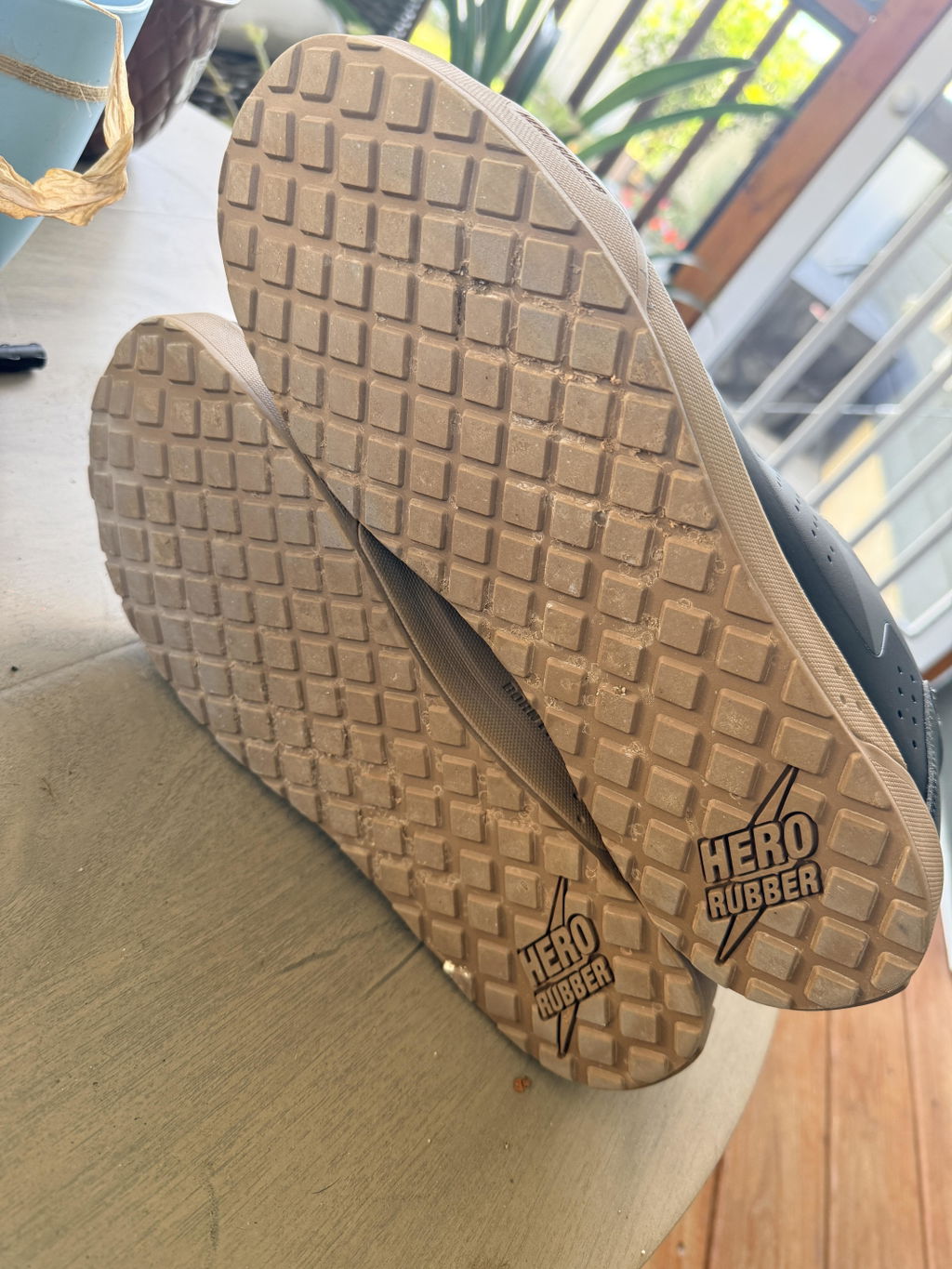
Compound behavior matters because rubber must deform into small surface irregularities as force increases. If the compound is too hard, it may not conform effectively to a gritty surface. If it is too soft, the tread can wear quickly or deform under repeated lateral loads. Tread geometry determines how much compound reaches the court and how dust is displaced, so the compound and pattern must be judged as one system.
Look for a stable contact patch, not a sticky label
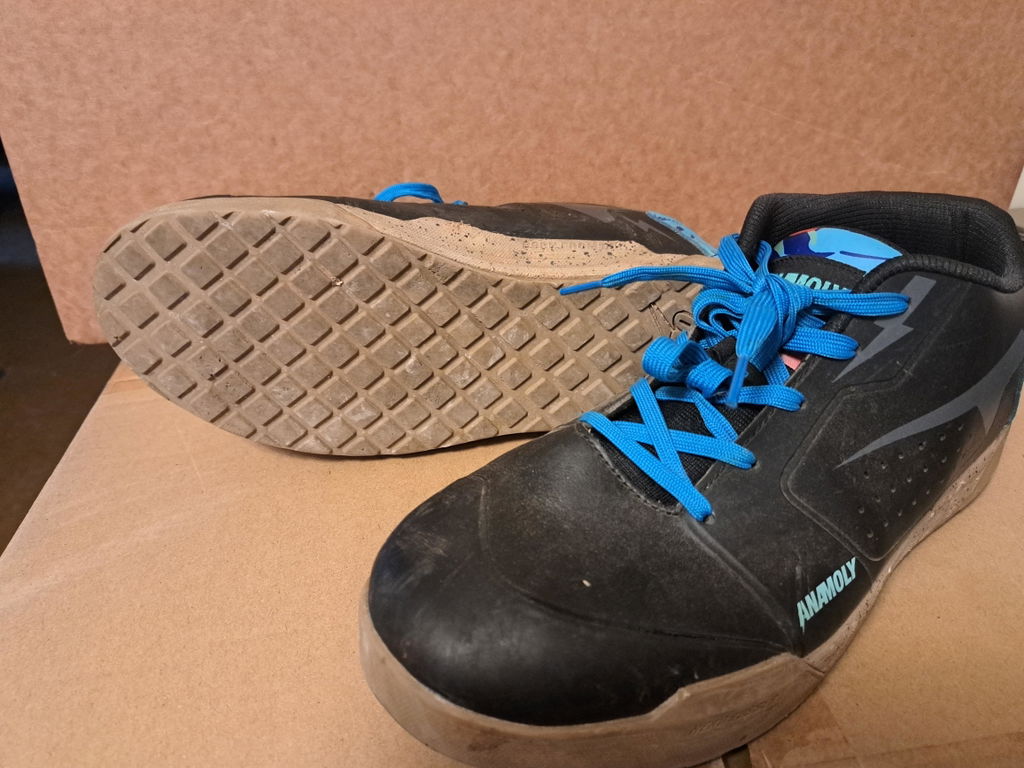
Marketing terms such as high grip or court traction do not reveal how a sole behaves after several weeks of outdoor use. Inspect the outsole for broad, continuous contact zones under the forefoot and heel, with geometry that supports lateral movement rather than only forward rolling. Pay attention to the lateral edge because a loaded cut can move the center of pressure outside the shoe's middle.
We use Hero Rubber™, identified on the product page as the MTB-G Compound, as the high-friction material platform for the Lateral Control Pro. We formulate the compound to conform to the court interface and support deceleration. Those are design claims to evaluate through fit and movement testing; they are not a substitute for checking the actual court, player, and wear conditions.
Use a repeatable traction check
- Clean-court check: Perform controlled forward stops and lateral shuffles at moderate speed; note whether the sole feels planted without catching abruptly.
- Dust check: Repeat the movement near a dusty edge or after walking through a gritty area; look for a large change in release or foot movement.
- Edge check: Load the outside of the forefoot during a controlled cut; the upper and outsole should remain connected without folding over the edge.
- Wear check: Inspect the forefoot and lateral perimeter periodically; rounded edges, exposed midsole, or a smooth contact zone are reasons to reassess the shoe.
These checks do not create a laboratory coefficient of friction; they create a useful player-level comparison between shoes and conditions. For more detail on compound behavior, review the our technical overview.
What makes outdoor pickleball shoes durable?
Direct answer
Durable outdoor pickleball shoes protect the forefoot, preserve outsole texture, and keep the heel and sidewall supportive as abrasive sessions accumulate. Look for compatible upper, bonding, tread, and chassis construction; outsole thickness alone does not tell you how long the complete shoe will remain controlled.
Durability is the ability to maintain useful structure and traction after repeated exposure to abrasive court texture, toe dragging, lateral movement, dust, moisture, and compression. A durable shoe is not merely one with a thick outsole; the upper, bonding, toe protection, midsole, and tread must age at compatible rates.
Start with the forefoot. Players often load or drag the toe while reaching for a short ball, so exposed upper material can wear before the outsole is finished. Reinforcement in that zone protects the fit and delays a failure that would allow the foot to move inside the shoe. The outsole should also extend around vulnerable edges rather than stopping at the bottom of the upper.
Next, inspect the lateral sidewall and heel. A court shoe that repeatedly flexes or collapses at the same edge can lose containment even when the tread still looks usable. Secure construction keeps the foot centered over the platform, which helps the outsole do its job during cuts. Stitching, overlays, and bonding are construction choices, not guarantees.
| Area to inspect | Healthy wear | Replacement warning |
|---|---|---|
| Forefoot outsole. | Defined contact texture remains. | Smooth patch or exposed midsole. |
| Lateral edge. | Upper stays supported over the sole. | Edge folding or separation. |
| Toe and upper. | Protection remains bonded and secure. | Opening, tearing, or loose overlay. |
| Heel and collar. | Heel stays seated during movement. | Excessive slip or collapsed counter. |
Extend useful life by removing loose grit after each session, wiping the upper with a damp cloth when needed, and allowing the shoe to dry naturally. Avoid hot direct heat because it can stress adhesives and materials. This inspection is more useful than a calendar-based replacement rule because court texture, playing frequency, and movement style vary.
How does lateral stability support cuts and recovery?
Direct answer
Lateral stability comes from a wide, connected platform, secure heel and midfoot containment, torsional control, and edge support that work together during a cut. The Lateral Control Pro applies this system through its Trail Tech Stability Chassis and Lateral Stability Outrigger, while fit and movement skill remain essential.
Pickleball movement is multidirectional. A player may split step, push sideways, reach forward, brake, and recover within a few seconds. Each action shifts force through the foot and changes the pressure placed on the shoe's medial and lateral edges. The shoe must provide a stable platform without becoming so rigid that normal movement feels blocked.
Lateral stability comes from several parts working together: outsole width, sidewall geometry, torsional control, heel hold, and the relationship between the foot and the insole. A wide outsole can create a more stable base, but only if the upper keeps the foot over that base. A supportive sidewall can reduce unwanted roll, but only if the heel and midfoot do not slide first. Stability is a system, not a single badge.
What to look for during a controlled cut
- Heel connection: The heel should remain seated as you lower into a split stance and push sideways.
- Midfoot containment: The lacing and upper should hold the arch area without creating a painful ridge or pressure point.
- Edge support: The platform should resist excessive tipping when the outside of the forefoot is loaded.
- Recovery freedom: The shoe should release cleanly enough for a recovery step instead of trapping the foot after the cut.
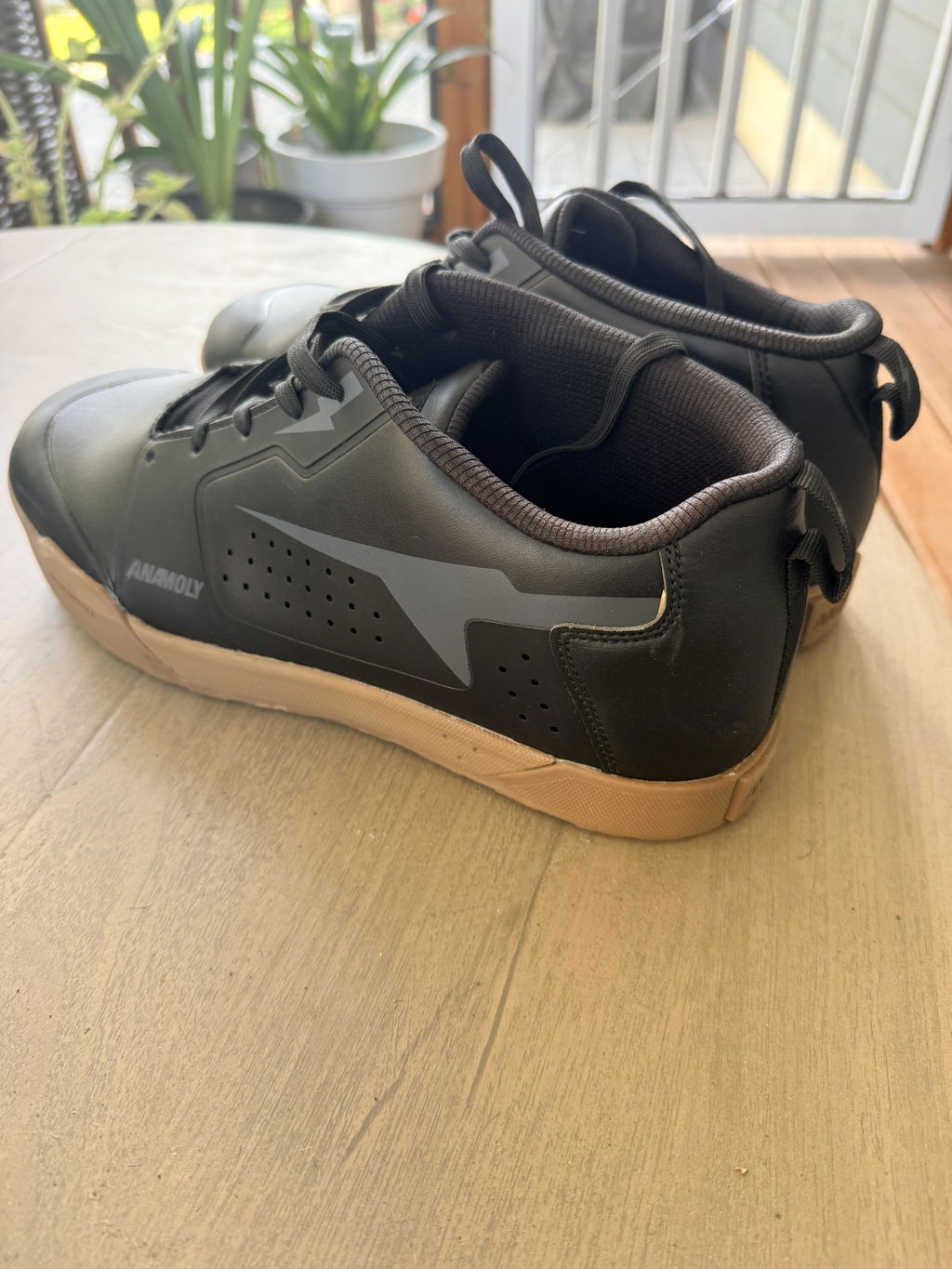
The Lateral Control Pro combines the Trail TechTM Stability Chassis with a Lateral Stability Outrigger, or LSO. We engineer the LSO as a physical extension intended to support the loaded edge. The product also uses Hero Rubber™ for the outsole interface. Together, those features are intended to resist roll, twist, and slip during lateral movement; they are not a promise of injury prevention.
A movement study on change of direction in recreational pickleball provides context for why cutting mechanics deserve attention. Footwear cannot replace strength, balance, or movement skill, but a stable interface can help the player evaluate movement with fewer avoidable fit problems.
How should outdoor pickleball shoes fit wide feet?
Direct answer
Wide feet need usable forefoot room without sacrificing heel and midfoot containment. A wide toe box lets the toes spread without sizing up into excess length. The correct test is coordinated toe room, heel hold, midfoot security, and outsole contact during a controlled lateral step.
Fit determines whether traction and stability features can work as designed. A wide foot needs useful space through the forefoot, while the heel and midfoot still need controlled containment. If the toe box is narrow, the player may compensate by sizing up; that can create excess length and heel movement. If the whole shoe is loose, the foot can shift before the outsole responds.
The target is a secure platform with a wide toe box, not a long shoe with empty space at the front. Stand in the shoes with the socks you use for play, then check the following sequence.
- Confirm forefoot width: Your toes should have practical side-to-side room without pressing against the upper or spilling over the insole edge.
- Check length separately: The longest toe should not contact the front during a lunge, but extra length should not solve a narrow shape.
- Secure the heel: Lace the shoe firmly, walk, shuffle, and stop; the heel should remain seated without painful collar pressure.
- Evaluate the midfoot: The upper should hold the foot without a pressure ridge across the broadest area or a large gap at the sides.
- Test the complete interface: Repeat moderate lateral steps on court; look for coordinated toe room, heel hold, midfoot security, and outsole contact.
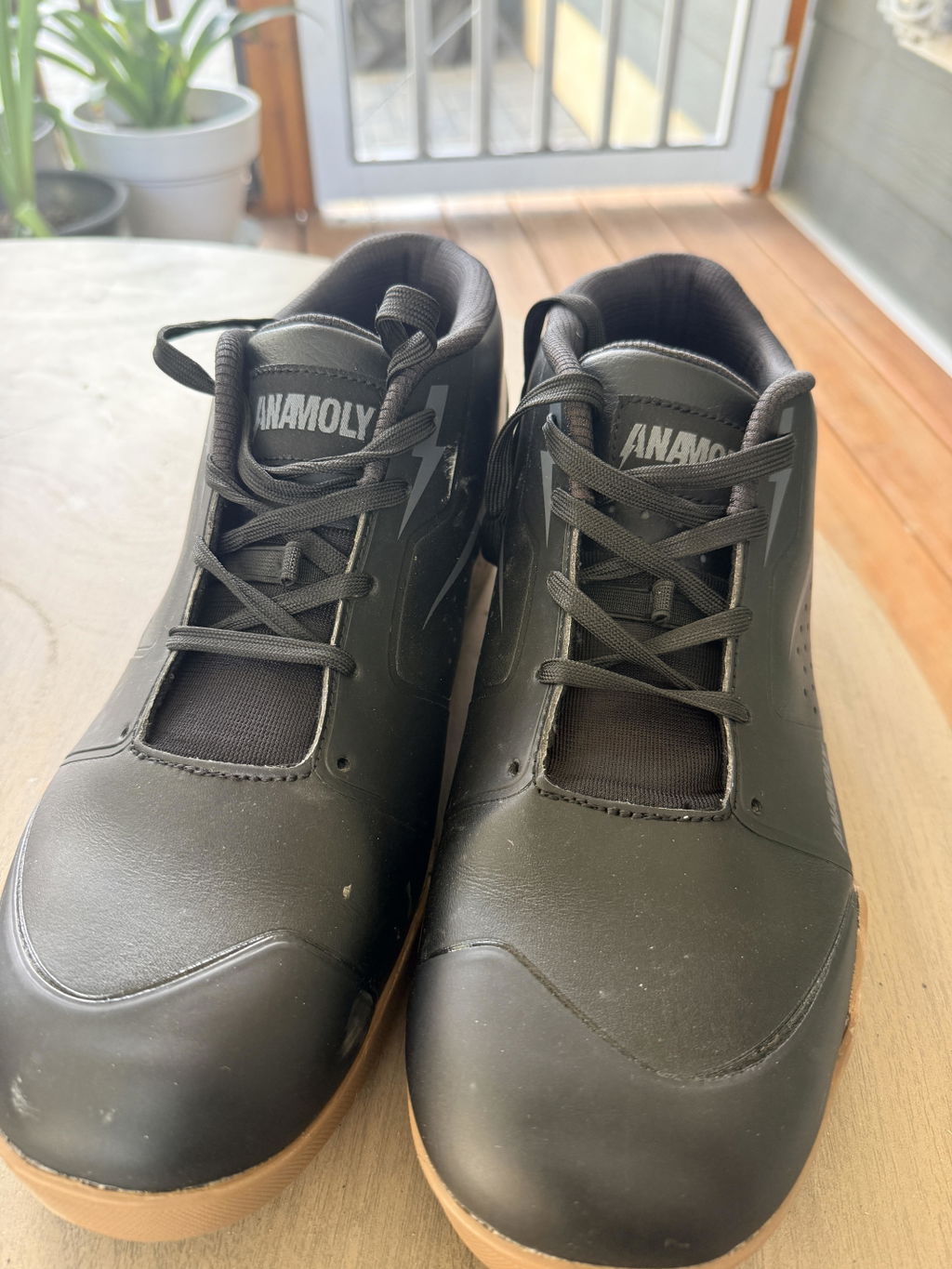
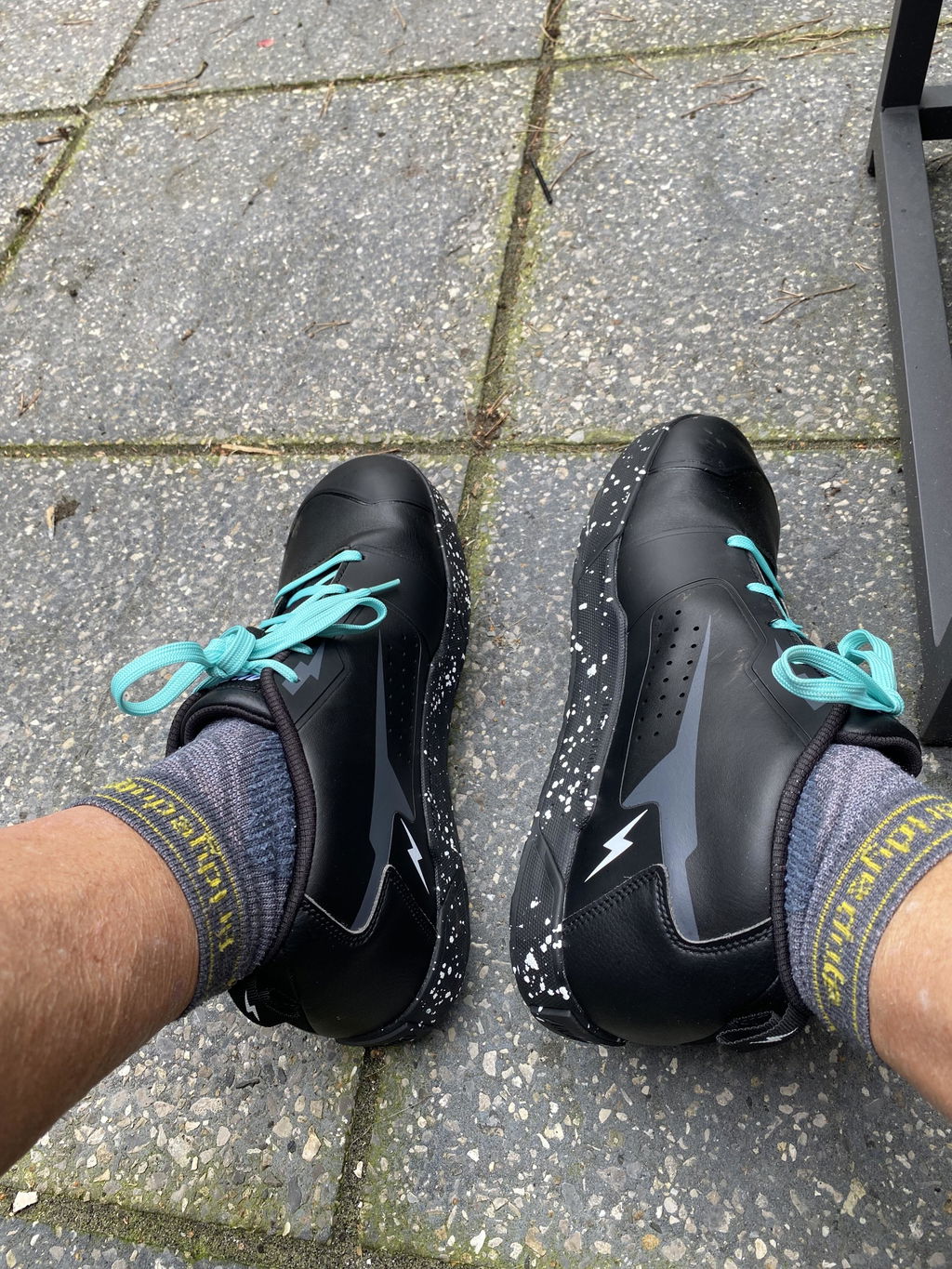
The current Lateral Control Pro 2.0 fit is manually widened in the toe box before shipping, according to the product page. The same page lists the 2.0 wide fit as true to size for most players with wider feet. Review the current size chart and product instructions before ordering because individual foot shape still matters.
For a deeper explanation of width, containment, and court movement, read the lateral stability and wide-fit court shoe guide. The best fit is the one that gives your toes room while keeping the shoe attached during a loaded cut.
How do you maintain outdoor pickleball shoes?
Direct answer
Maintain outdoor pickleball shoes by removing grit, drying them naturally, and checking the forefoot, lateral edge, heel, and outsole after regular sessions. Avoid prolonged direct heat and aggressive solvents; both can stress or damage materials that support traction and containment.
Outdoor court care is straightforward, but consistency matters. Brush loose grit from the outsole after play, wipe the upper with a damp cloth when needed. Then let the shoes air dry away from radiators, dryers, and prolonged direct heat. Heat can change adhesives and materials; aggressive solvents can damage the upper or outsole compound.
Keep the shoes dedicated to court use when possible. Walking long distances on rough pavement adds abrasion that does not contribute to play, while carrying loose grit onto the court increases contamination at the outsole interface. If the sole feels different after a dusty session, clean it before deciding that the compound has failed.
Check the shoe at the same points every few sessions: forefoot texture, lateral edge, toe reinforcement, heel hold, and any separation between upper and sole. Replace the pair when the outsole no longer produces predictable traction, the upper cannot contain the foot, or the platform has developed a visible structural failure. The pickleball shoe lifespan guide adds a practical wear framework.
Explore the Lateral Control Pro for outdoor court stability
Frequently Asked Questions
Are outdoor pickleball shoes different from indoor court shoes?
They can be. Outdoor play exposes the outsole to harder, rougher, and more abrasive surfaces, plus dust and weather-related moisture. Look for a compound and tread design intended to maintain predictable contact under those conditions; do not choose only by the label.
What makes a pickleball shoe good for lateral movement?
A good lateral platform combines outsole width, edge support, torsional control, and a secure heel and midfoot. The shoe should resist unwanted roll during a controlled cut while still allowing a clean recovery step. Fit and movement skill remain essential.
Do wide feet need a longer pickleball shoe?
Not necessarily. A longer shoe can create heel movement and reduce control, so first look for a wide toe box and a secure heel. Check length separately, then consider a true wide-fit option or a manufacturer-supported widening process when available.
How can I tell when outdoor court shoes are worn out?
Inspect the forefoot and lateral outsole for smooth patches, the upper for tearing or separation, and the heel for loss of containment. If traction becomes inconsistent or the foot moves inside the shoe during a normal cut, the pair no longer provides the intended interface.
Ready to choose outdoor pickleball shoes with more control?
The Lateral Control Pro is built for players who want a stable platform, a secure heel, and useful toe room for hard-court movement. Our current Quality Guarantee includes workmanship-defect coverage, free returns, free size exchanges. And a 30-day US return window; review the live product terms, size chart, and available options before ordering.
Explore the Lateral Control Pro for outdoor court stability
Sources & Scientific Citations
- Pickleball: a scholarly history and overview, National Library of Medicine.
- Hip strength, change of direction, and falls in recreational pickleball players, International Journal of Sports Physical Therapy.
- our technical overview, current product and technology reference.
About the Author
The Anamoly Press Team brings you in-depth gear coverage rooted in real-world testing and product engineering insight. Every article is reviewed by Christopher Armstrong, Founder and Head of R&D, to ensure technical claims match the science and design behind our footwear.

Leave a comment
This site is protected by hCaptcha and the hCaptcha Privacy Policy and Terms of Service apply.